
Erasmus Mundus Scholar, Sharif Mutasim Billah from Bangladesh, Shares His Journey of Pursuing a Master’s in Applied Ecohydrology (MAEH) Across Four European Universities
University: University of Antwerp, Belgium, University of Algarve (Portugal), University of Łódź (Poland), Technische Hochschule Lübeck (Germany)
Degree: Erasmus Mundus Joint Master’s in Applied Ecohydrology (MAEH)
Previous Education: Bachelor’s and Master’s in Environmental Science – Khulna University, Bangladesh
Scholarship: Erasmus Mundus Joint Master’s Scholarship – Fully Funded (tuition, monthly stipend, travel, and installation support)
Social Media
LinkedIn: linkedin.com/in/sharif-mutasim-billah/
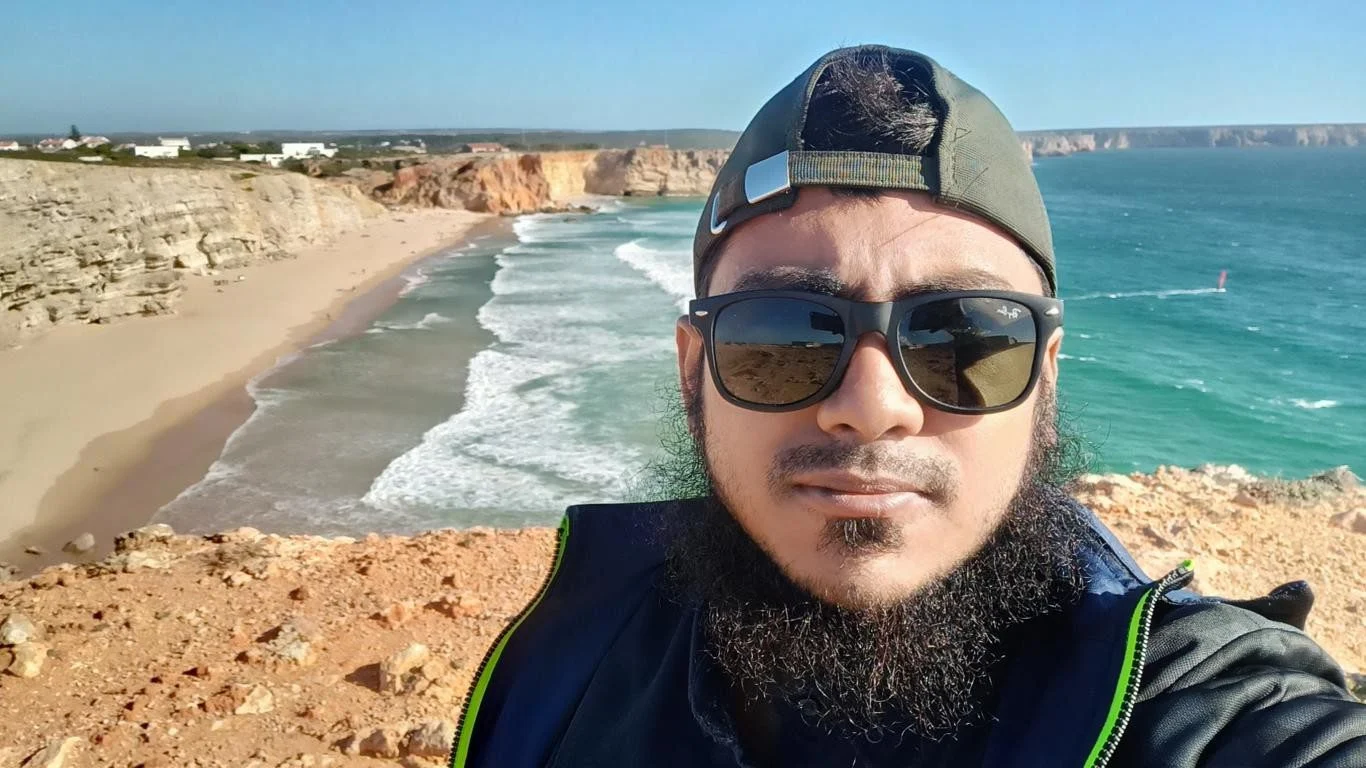
The Journey
I am Sharif Mutasim Billah, though those closest to me know me simply as Shakib. I am an environmental scientist whose journey has been shaped by crossing disciplines, borders, and academic traditions. My work lies at the intersection of environmental chemistry, ecohydrology, and applied environmental research, driven by a deep concern for how human-made chemicals and nutrient flows transform aquatic ecosystems. Each step of my academic and professional path has been guided by a desire to understand complex environmental challenges and translate that knowledge into research that is both rigorous and impactful.
I completed the Erasmus Mundus Joint Master’s in Applied Ecohydrology (MAEH), graduating in September 2024 from the University of Antwerp, Belgium. This journey took me across four European countries and academic cultures: 1st semester: University of Algarve & University of Łódź (Portugal & Poland); 2nd semester: Technische Hochschule Lübeck (Germany); 3rd & 4th semesters (thesis semester): University of Antwerp (Belgium). Each institution offered a distinct lens, including hydrology, biogeochemistry, ecological modeling, and applied water management, which collectively shaped how I approach environmental problems today. Living and studying across Europe gave me a profound appreciation for cultural diversity, collaboration, and adaptability, qualities that now define both my scientific and personal identity.
My research interests focus on contaminants of emerging concern, particularly PFAS and micropollutants, alongside nutrient cycling and aquatic ecosystem processes. I am especially motivated by questions that bridge molecular-scale processes with ecosystem-level consequences, aiming to produce science that is both rigorous and societally relevant, addressing some of the most pressing environmental challenges of our time.
Educational Background
Before joining the Erasmus Mundus program, I completed both a Bachelor’s and a Master’s degree in Environmental Science at Khulna University, Bangladesh. During this time, my research spanned critical environmental challenges, including invasive species management, allelopathy, greywater recycling, and environmental pollution. Through a Research Assistantship with my supervisor, I gained extensive hands-on experience in laboratory techniques, analytical methods, and standard water quality assessments. This rigorous training provided me with a solid technical foundation, cultivated research independence, and strengthened the adaptability needed to navigate diverse academic environments.
How Did You Prepare to Apply for the Erasmus Mundus Scholarship?
Before embarking on the Erasmus Mundus journey, I dedicated myself fully to securing the Erasmus Mundus Scholarship, exploring and carefully considering other international funding opportunities, including European and global scholarships. However, I was drawn to Erasmus Mundus for its unique multi-country structure, its strong emphasis on mobility, and the unparalleled opportunity to immerse myself in diverse academic cultures within a single degree.
The scholarship is highly competitive, yet I believe my application stood out because of:
- A clear academic narrative connecting my prior training to ambitious future research goals
- Strong technical and methodological expertise honed through rigorous academic and professional experiences
- A demonstrated international outlook, coupled with leadership and active engagement in research and outreach initiatives
- Perfect alignment between my research interests, water, ecosystems, and pollutants, and the program’s core focus
My dedication to this opportunity, combined with a carefully crafted application, allowed me to secure a place in this transformative program, setting the stage for an unparalleled academic and personal journey across Europe.
Erasmus Mundus Program and Field of Study
I was selected for two programs: one in MAEH and another in Islands and Sustainability. I pursued the Erasmus Mundus Joint Master’s in Applied Ecohydrology (MAEH). The program focuses on understanding hydrological and biogeochemical processes in aquatic and terrestrial ecosystems, with strong applications in water quality, ecosystem functioning, and environmental management. It combines theory, fieldwork, laboratory analysis, and applied research, making it particularly relevant for students aiming for research-oriented or policy-relevant careers.
Cost of Living Across Countries
The cost of living varied significantly between countries. Generally:
Southern European countries were more affordable in terms of food and daily expenses
Northern and Western European countries were more expensive, particularly for housing
I managed financially by budgeting carefully, choosing student housing where possible, cooking regularly, and planning travel in advance. The Erasmus Mundus stipend was adequate, but financial discipline was essential.
Language Barriers
The language of instruction was English, which remained consistent across countries. However, daily life often required navigating local languages. I managed this through basic language learning, using translation tools, and, most importantly, by engaging openly with local communities. Over time, this became an enriching rather than limiting experience. In each country, we had a Basic Survival Language course. I did Portuguese A1.1, German A1.1, and Basic Survival Polish Language. The experience was really amazing.
Would You Recommend Erasmus Mundus?
Yes, absolutely. I would recommend Erasmus Mundus to anyone who is:
- Academically motivated
- Open to mobility and cultural diversity
- Willing to adapt quickly to new systems
My advices:
- Start preparing early
- Craft a coherent personal and academic story
- Emphasize adaptability, motivation, and alignment with the program
- Speak to alumni and current students before applying
Looking Back – Anything You Would Do Differently?
In hindsight, I would have invested even more time in networking across cohorts and institutions and possibly engaged earlier in career-oriented planning, such as PhD positioning or industry pathways. However, overall, the experience was transformative both academically and personally. I would have done internships and would have chosen to find a paid thesis in other countries. I heard from my other Erasmus friends that some of them did their thesis in Germany and France in industry, so alongside the monthly allowance from the consortium, they also got a handsome amount for the thesis.
Want to submit your
scholarship journey?
Submit Your Story Here!
More Scholarship Recipients
My name is Mirza Fareedh Akbar Ali, and I am from Tamil Nadu, India. I am currently pursuing my M.Sc. in Intelligent Manufac .... Read more
Hi, my name is Daris Fajar Ramadan, and I’m from Bogor, Indonesia. I have a background in mechanical engineering, where I .... Read more
I’m Benjamin from Ghana. I have completed a bachelor's in Biological Sciences at Kwame Nkrumah University of Science and T .... Read more
Leave A Comment