
M.Sc. Biohealth Convergence Student Rutchelle Joyce Pugoy from the Philippines Shares Her Journey of Studying at Kangwon National University, South Korea
University: Kangwon National University
Degree: MSc in Biohealth Convergence
Previous Education: BSc in Medical Technology – Philippines | 4 years clinical experience as Medical Technologist
Scholarship: Global Korea Scholarship (GKS) – Fully Funded (tuition, stipend, settlement allowance, health insurance, Korean language training, round-trip airfare)
Social Media
LinkedIn: linkedin.com/in/rjfpugoy/
The Journey
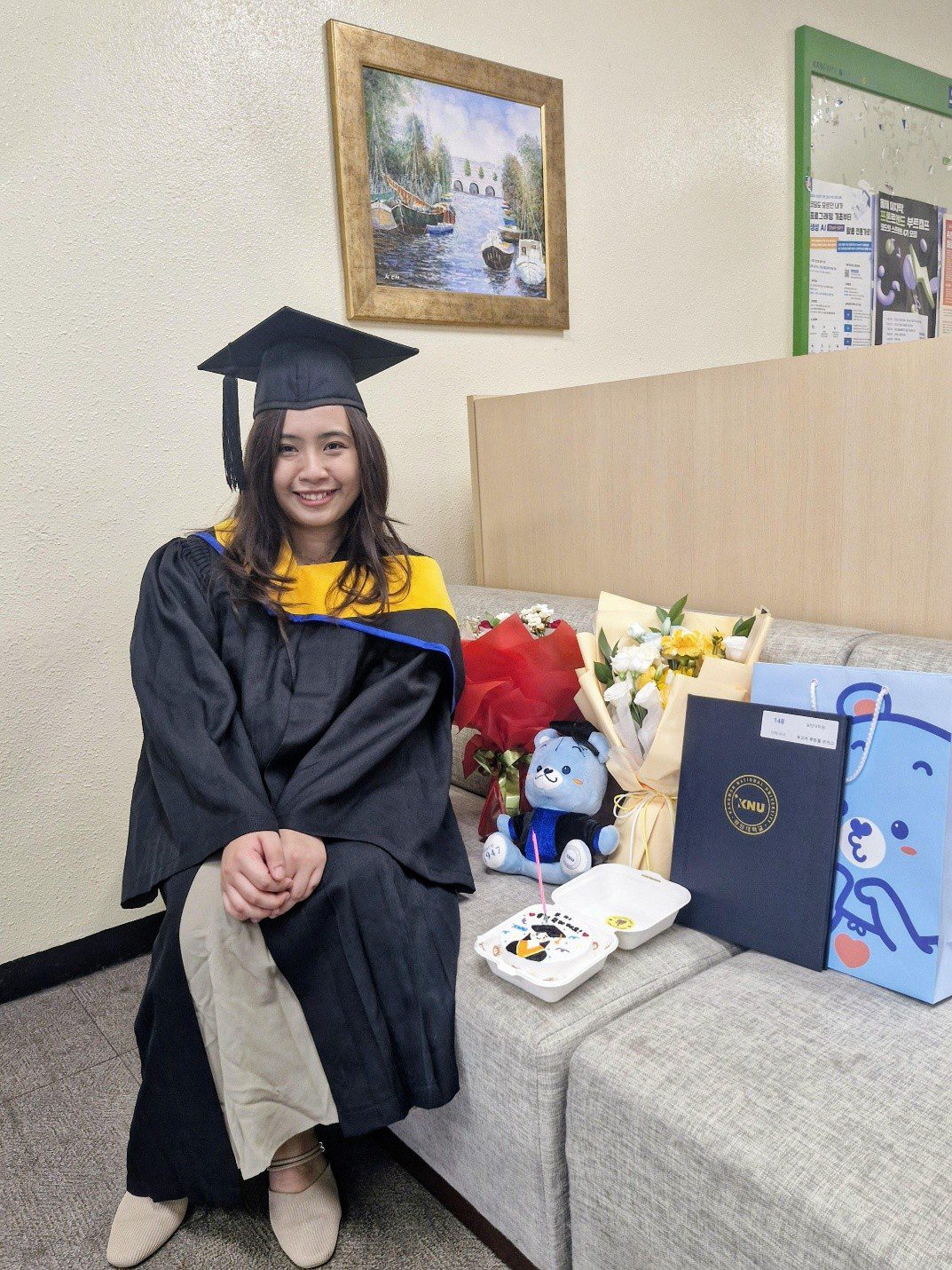
My name is Rutchelle Joyce Pugoy, and I am from the Philippines. I came to South Korea to pursue a Master’s degree in Biohealth Convergence at Kangwon National University through the Global Korea Scholarship (GKS).
Biohealth Convergence is an interdisciplinary program that combines biomedical science, biotechnology, and translational medicine to develop innovative solutions for healthcare. The program focuses on integrating different scientific fields to address complex medical challenges, particularly in areas such as drug development, diagnostics, and therapeutic technologies.
During my graduate studies, I became part of a research laboratory that specializes in antibody engineering and cancer therapeutics. Our research focuses on designing and developing antibody-based therapies that can specifically target cancer cells, which is a promising area in modern precision medicine. These therapies aim to improve treatment effectiveness while minimizing damage to healthy cells.
Being part of this research environment gave me the opportunity to work on projects related to antibody discovery and engineering, as well as explore how these molecules can be used to develop next-generation cancer treatments such as targeted antibodies and immunotherapies.
My decision to pursue this field was driven by my background in clinical laboratory science and my desire to contribute to the advancement of medicine through research. I wanted to move beyond diagnosing diseases in the laboratory and instead work toward discovering new therapeutic strategies that could potentially improve patient outcomes in the future.
Studying Biohealth Convergence at Kangwon National University allowed me to combine my clinical background with cutting-edge biomedical research, ultimately shaping my career path as a researcher in the field of biotechnology and cancer therapeutics.
Global Korea Scholarship Details
I received the Global Korea Scholarship (GKS) for my master’s degree at Kangwon National University in South Korea.
At the time, the scholarship provided approximately 1,000,000 KRW per month as a living stipend, along with full tuition coverage, settlement allowance, health insurance, Korean language training support, and a round-trip airfare. These benefits allowed international students like me to fully focus on our studies and research without the heavy financial burden of studying abroad.
I applied through the University Track, which means I applied directly to Kangwon National University, rather than through the Korean embassy in my home country. In the university track, applicants are first evaluated and nominated by the university itself, and then the final approval is granted by the National Institute for International Education (NIIED) under the Korean government.
The University Track can be very competitive because applicants are evaluated not only on their academic credentials but also on their research potential, personal statement, and recommendation letters. One advantage of this track is that applicants can sometimes communicate directly with potential professors or departments before applying, which can help align research interests with the program.
Being selected as a GKS scholar was a life-changing opportunity for me. It allowed me to pursue graduate education in Korea, gain international research experience, and build connections in the global scientific community.
Educational Background
I completed my Bachelor of Science in Medical Technology in the Philippines and worked in hospitals as a medical technologist for four years.
Medical Technology is an interdisciplinary field that combines biology, chemistry, physics, and medicine to support disease diagnosis and patient care in hospitals. Through this profession, I gained practical experience in laboratory techniques and clinical diagnostics.
While it is a noble and fulfilling profession, I eventually realized that I wanted to pursue something closer to my heart: scientific research. I wanted to contribute to the frontiers of science, where discoveries are made that can shape the future of medicine.
Fortunately, many of the skills and knowledge I developed as a medical technologist translated well into research. My background in medical sciences, along with experience in laboratory techniques such as flow cytometry, ELISA, and other immunological assays, helped prepare me for the academic coursework and research training during my master’s program.
How Did You Prepare to Apply to Kangwon National University?
How Did You Find Information About Scholarships and Kangwon National University?
Most of my information came from online research and connecting with people who had already gone through the program. Hearing from previous scholars was especially helpful because they could share practical advice and real experiences about studying in Korea.
Did You Take Any Standardized Tests?
Yes, I took the IELTS.
Although some universities may not strictly require it for the GKS program, having a good English proficiency score can strengthen your application. I spent time preparing to achieve a good score because I knew it could help make my application more competitive.
How Did You Prepare to Apply to the GKS Scholarship?
The GKS scholarship application is a rigorous and highly competitive process, so I made sure that all the required documents were complete, accurate, and carefully prepared.
Attention to detail is very important during the application process. Even small mistakes can affect your application, so I made sure to review everything multiple times before submission.
Are Your Classes Conducted in English or Korean?
Most of my classes were conducted in Korean. However, many of the lecture materials and research resources were in English, which helped.
Additionally, most professors were very approachable and helpful, especially when it came to assisting international students.
What Did You Pursue After the Scholarship? (Work, Further Study, Research or Something Else?)
Currently, I am working as a researcher, continuing projects related to the work I began during my master’s program.
Would Potential Students Have Any Problems Academically Not Knowing Korean?
Honestly, yes.
I don’t want to sugarcoat it. It can be difficult to sit through lectures when you understand little or none of the language being spoken. Knowing the native language of the country you are studying in can make a huge difference.
You should not expect the system to fully adjust to you as an international student. Instead, making the effort to learn the language and adapt to the environment will help you succeed academically and socially. If you work hard to learn Korean, it will reward you greatly.
What Do You Think Made Your Application Stand Out?
I believe my experience as a healthcare professional played a role.
As a medical technologist, I interacted directly with patients and saw firsthand how laboratory diagnostics impact real people’s lives. That experience fueled my desire to pursue medical research, where I could contribute to developing better diagnostics and therapies.
My career pivot from clinical laboratory work to research may not be very common, but it made sense for my personal goals and motivations.
What Would You Have Done Differently if You Were Going Through the Process Again?
Honestly, nothing.
I am extremely grateful to be where I am today because of the effort I put into applying. No one is ever completely prepared for opportunities like this. Sometimes you just have to take the leap and trust yourself.
If something is meant for you, it will find its way to you. But I also believe that you have the power to make things “meant for you” through hard work, persistence, and courage.
What Advice Would You Give Those Looking to Apply for a Similar Scholarship?
I have three pieces of advice for anyone applying for scholarships like GKS.
First, follow your dreams and do your best. It sounds cliché, but it is true. Do not let others dictate your path. Choose a path where your passion and happiness lie. Happiness is not just about money or fame; it is about being content with the life you are building.
Second, do not apply just because you like K-pop or Korean entertainment. South Korea is much more than that. It is one of the world’s leading countries in technology, science, and innovation, with strong research institutions and academic opportunities. If you come here, come with the mindset to learn, grow, and contribute.
Third, if you fail the first time, do not give up. I personally know people who were rejected before but eventually succeeded in obtaining the scholarship. Their persistence is truly admirable.
Sometimes the difference between success and failure is simply trying again.
Want to submit your
scholarship journey?
Submit Your Story Here!
More Scholarship Recipients
My name is Samita Thongbut, and I’m originally from Thailand. I pursued my MBA in South Korea because I wanted to gain int .... Read more
My name is Reaksa, and I’m originally from a small town in northeastern Cambodia, known for its rivers and local charm. I .... Read more
My name is Rashmi Venkatesh, and I am from Bengalore, India. I am currently pursuing a Master of Science in Electromobility .... Read more
Leave A Comment