
Kangwon National University Scholarships for International Students 2027
If you are planning your budget for Kangwon National University, these scholarships are a practical place to start. The list is prioritized by typical funding strength.
If you are focusing on university provided awards tied to Kangwon National University, the following scholarships are commonly among the most impactful options. Special Scholarship for First-Year Students is full tuition and typically covers 60% tuition fee for TOPIK level 4 students, full scholarship for TOPIK level 5 or higher students, and 35% tuition fee for students with TOPIK level 3 or have completed Korean course Level 4 at the KNU Language Training Institute and attended the Korean course at Language Training Institute for at least 6 months with a minimum attendance of 80%. Samcheok Dogye Campus Student Additional Scholarship is commonly categorized as partially funded support, and coverage that often includes 40% tuition fee for the first semester of first-year students and part of the dormitory fee for the first registered semester regardless of dormitory residence.
External and government scholarships can complement university funding for Kangwon National University students. The following options are often reviewed alongside campus awards. Global Korea Scholarship (GKS) is a fully funded award, and the listed benefits often include tuition fees, airplane tickets, and living stipend. Yuhan Foundation Scholarship is usually considered full tuition, and typical coverage can include full tuition support for selected university students, undergraduate living-expense support of KRW 3,000,000 twice per year and totaling KRW 6,000,000, and KRW 5,000,000 per year for North Korean-born university students.
More scholarships connected to this institution are listed further down. Scroll to explore the full set of opportunities.
Kangwon National University Scholarships for International Students
The scholarships at Kangwon National University can help fund your study expenses. There are currently 5 scholarships being offered to international students at the Kangwon National University, all with varying requirements, benefits, and application processes. We have compiled them in this list to help you find the scholarship that best fits you.
Undergraduate Scholarships
External Scholarships
There are many degrees that are open to international students right now — find yours.
Kangwon National University Admissions
Here are the official admission pages for Kangwon National University:
| Degree | Admissions Pages |
|---|---|
| Bachelor's | International Students Admissions Page |
| Master's | International Students Admissions Page |
Tuition Fees at Kangwon National University for International Students
Indicative annual tuition fee ranges for international students at Kangwon National University. Exact fees vary by program, so always confirm the current cost on the university's official tuition fee pages.
| Degree Level | Typical Annual Range |
|---|---|
| Bachelor's Tuition | 3,424,000 – 4,618,000 KRW |
| Master's Tuition | 4,892,000 – 6,834,000 KRW |
Please note that tuition fees can vary based on the specific program you choose. For the most accurate and current fee information, consult the official tuition fee pages linked above.
Kangwon National University Scholarship Recipients
International students who received scholarships to study at Kangwon National University, documented by Global Scholarships.


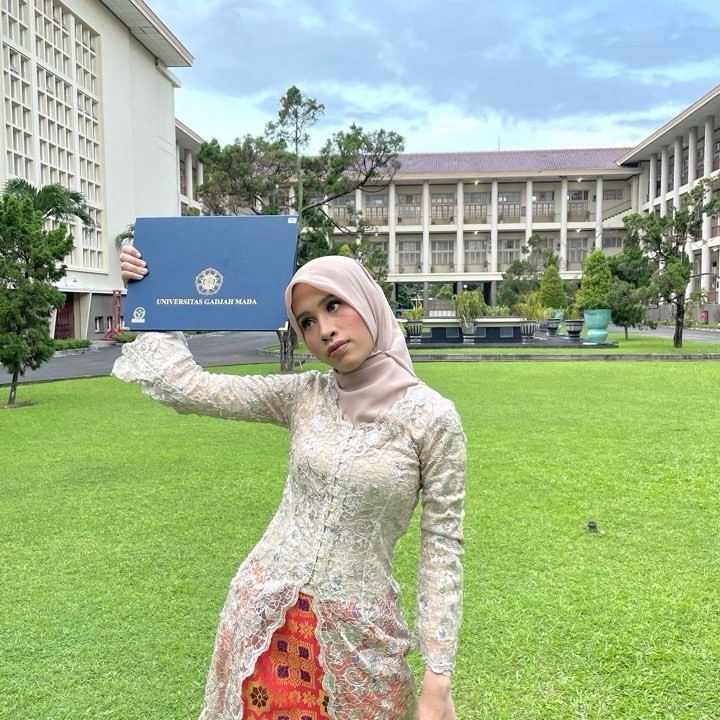
What Scholarship Recipients Say
Advice and insights from international students who successfully secured funding to study at Kangwon National University.
"At the time, the scholarship provided approximately 1,000,000 KRW per month as a living stipend, along with full tuition coverage, settlement allowance, health insurance, Korean language training support, and a round-trip airfare."
"Start early. Get your documents translated, notarized, and apostilled way before the call opens."
"Through this scholarship, I was able to spend one semester at Kangwon National University majoring in Korean Language and Literature."
"Additionally, most professors were very approachable and helpful, especially when it came to assisting international students."
"Beyond language, I had the opportunity to learn directly from native professors, interact with local students, and experience daily life in Korea, making my education not only academic but also deeply immersive and personal."
"I came to Korea with zero experience in my new field, but soon found opportunities, working at a broadcast radio station, contributing to a local magazine, interning at an NGO, and more."
Frequently asked questions
Common questions about scholarships, admissions, and studying at Kangwon National University.
Most major scholarships connected to KNU (like degree/exchange funding) are designed for enrolled students (on-campus or officially registered exchange/degree pathways), not for “online-only” short courses. KNU does run online programs (for example, short seasonal “Online Summer/Winter Program” style offerings), but these are typically treated as non-degree/short-term programs rather than the main scholarship tracks.
Both exist. KNU publishes course lists separated by language (including courses taught in Korean and courses taught in “English and other languages”), so you can usually build a semester that is mostly Korean-taught, mostly English-taught, or mixed depending on what’s available in your department and term.
It depends on the scholarship. For Korean government scholarships like GKS, age limits can apply (and can differ for undergraduate vs. graduate tracks). KNU’s own scholarships (such as internal tuition-exemption style awards and BEST-KNU-type programs) are usually structured around academic/language requirements rather than publishing a single universal age cap.
In general, KNU scholarships for international students are not limited to one subject area; many are university-wide (tuition exemptions, merit-based awards, etc) and can apply across colleges as long as you meet the criteria (admission status, GPA/credit rules, and language benchmarks).
That said, KNU’s offerings span major fields including medicine/health, engineering, business, STEM, and humanities. For example, KNU recruits and teaches across areas like Business Administration (business), Engineering departments, Humanities & Social Sciences, and Medicine/Veterinary Medicine (medicine/health), alongside broader STEM options like Natural Sciences and interdisciplinary programs.
Medicine note for international students: some pathways can be restricted depending on the program type. For example, KNU’s exchange program notes restricted departments such as Medicine and Veterinary Medicine for exchange applicants, even though KNU also lists graduate-level medicine-related departments. If your goal is medicine, check the exact track (exchange vs. degree, undergraduate vs. graduate) and language/licensing realities early.
KNU’s international admissions and many scholarship schemes are built around “foreigner” eligibility (commonly meaning you and your parents are non-Korean nationals, depending on the track). Government scholarships like GKS add another layer: eligibility can depend on invited/designated countries and the current-year guideline.
Scholarship recipients featured for KNU include applicants from different countries, such as Yasmeen (Indonesia) and Yousra (Algeria), showing how international the pool can be.
For admission, KNU commonly recognizes multiple ways to meet language expectations (Korean: TOPIK; or completion of a Korean-language program level; or English tests like TOEFL/IELTS and similar benchmarks). Some graduate routes may also allow a professor/adviser recommendation pathway when submitting language proof later, depending on the guideline and department practice.
For university-awarded scholarships, language scores can directly affect eligibility and/or the amount. In KNU materials, scholarship criteria for new students often reference TOPIK levels and (for certain “English Track” cases) IELTS/TOEFL thresholds. In real applicant terms: Yasmeen said “I took the TOPIK… and achieved Level 4,” and noted TOEFL “wasn’t mandatory” if TOPIK was submitted; Yousra said her key improvements included “obtaining an official English test score.”
KNU admissions can be competitive and department-specific, and not every track publishes a single universal minimum GPA for admission. However, certain pathways do publish grade expectations (for example, exchange eligibility pages can list minimum GPAs), and many scholarship programs clearly do set GPA/percentage thresholds.
From recipient examples, strong academics helped: Yasmeen reported a prior GPA of 3.79/4.00, while Yousra shared she “graduated with a GPA of about 4.0/5.0” in her first master’s, useful context for what competitive profiles can look like.
A strong scholarship profile at KNU usually combines (1) solid grades, (2) fit with the department, and (3) language readiness (TOPIK or English scores depending on track). Many KNU scholarships also include continuation rules (credits completed and minimum semester GPA to keep the award).
Recipients show different “winning styles.” Yasmeen emphasized long-term commitment. She described a “long-standing passion” for Korean studies, while Yousra showed how to compensate for a field switch using extracurricular proof, saying she backed up her interest with “strong extracurriculars.”
Exact documents vary by campus/program (degree, exchange, language institute), but common requirements include an application form, personal statement and/or study plan, passport copy, transcripts and graduation/degree certificates (often needing apostille or embassy notarization), proof of finances (bank statement/guarantor documents), and sometimes recommendation letters.
Recipients highlight the same reality: Yasmeen said she collected “all required documents” and included “a recommendation letter,” plus academic records; Yousra specifically called out “properly apostilling my academic documents” as a key upgrade.
- Common examples you may see requested: application + personal statement + study plan; passport; diploma/degree certificate; transcripts; recommendation letter (especially for some graduate tracks); language score report (TOPIK/TOEFL/IELTS); financial proof/bank balance certificate; translations/notarization/apostille where required; photos; and fee payment proof.
KNU is a comprehensive national university with broad offerings across humanities, social sciences, business, engineering, natural sciences/STEM, arts/sports, and medicine/health fields. It also publishes course lists for students to browse by term (including language-separated lists for Korean-taught and English/other-language-taught classes).
Yes, many KNU application routes include an application fee, and KNU pages commonly show KRW 70,000 as a non-refundable application fee in relevant application guidance.
Practical tip from a recipient angle: Yousra noted the process “wasn’t cheap,” mentioning costs like translation, apostille services, and test fees, so budgeting for both university fees and document/testing costs is smart.
There are many degrees that are open to international students right now — find yours.
About the Author: Hyun Lee


Leave A Comment