
Marie Skłodowska-Curie Doctoral Network Scholar Ralph Carlo Evidente from Philippines Shares His Journey of Securing a Fully Funded PhD at the Technical University of Denmark, Denmark
University: Technical University of Denmark (DTU)
Degree: PhD (Marie Skłodowska-Curie Doctoral Network) in Sustainability-Oriented Engineering / Energy Systems
Previous Education: Bachelor’s in Chemical Engineering, Mapúa University; Erasmus Mundus Joint MSc in Sustainable and Innovative Natural Resource Management (Ghent University; Uppsala University; TU Bergakademie Freiberg)
Scholarship: Marie Skłodowska-Curie Doctoral Network (MSCA-DN) – Full Funding (Salary, Mobility Allowance, Research Funding)
Other Offered Scholarships: SusMatEner MSCA-DN PhD – Full Funding (Grenoble INP; Université catholique de Louvain); PHOS4PLANT PhD (Interreg) – Full Funding (K1-MET GmbH; BOKU University); Erasmus Mundus Programs (SINReM; Chemical NanoEngineering; SARENA) – Admission Offers
Social Media
LinkedIn: linkedin.com/in/ralph-carlo-evidente-msc-8a84a0188/
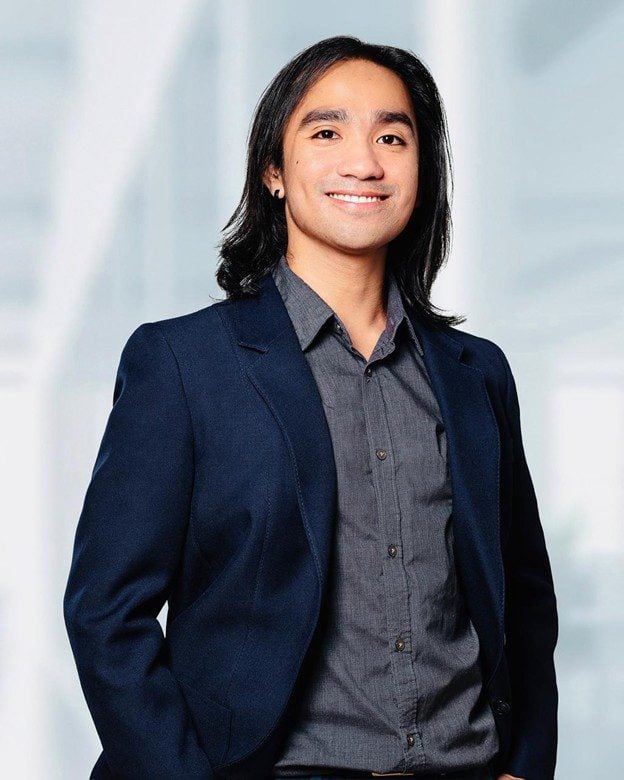
The Journey
My name is Ralph Carlo Evidente, and I am from the Philippines. I am a chemical engineer by training, and I am about to begin a Marie Skłodowska-Curie Doctoral Network (MSCA-DN) PhD at the Technical University of Denmark (DTU). My academic journey has consistently focused on sustainability, energy systems, and resource recovery, driven by a central question: how can we design engineering systems that are not only efficient, but also environmentally and socially sustainable? I chose to pursue further education because I realized early on that solving complex challenges, such as climate change, resource depletion, and food security, requires more than technical optimization. It requires a systems-level understanding of how materials, energy, and industrial processes interact. This realization shaped my decision to specialize in sustainability-oriented engineering.
Marie Skłodowska-Curie Doctoral Network Details
I was recently selected for a Marie Skłodowska-Curie Doctoral Network (MSCA-DN) PhD position at the Technical University of Denmark (DTU) under the FrameBio project, which has already started in the beginning of this year. This is a fully funded doctoral position supported by the European Union under Horizon Europe, which includes a competitive salary, mobility allowance, and research funding.
My research will focus on developing a sustainability assessment framework for feedstock-to-protein systems, integrating life cycle assessment (LCA), techno-economic analysis (TEA), and process modeling to evaluate emerging bio-based production pathways.
Were You Offered Any Other Scholarships?
Yes, I was fortunate to receive multiple PhD offers in Europe.
These include:
SusMatEner Marie Skłodowska-Curie Doctoral Network (MSCA-DN) jointly hosted by Grenoble INP (France) and Université catholique de Louvain (Belgium), focusing on sustainable materials for energy systems.
Interreg-funded PHOS4PLANT PhD project at K1-MET GmbH in collaboration with BOKU University (Austria), centered on circular economy and sustainable metallurgical processes.
Earlier in my academic journey, during my Erasmus Mundus application, I was also offered admission to three competitive master’s programs:
- Sustainable and Innovative Natural Resource Management (SINReM)
- Chemical NanoEngineering (CNE)
- SARENA – Safe and Reliable Nuclear Applications
I ultimately chose SINReM because it provided interdisciplinary training across materials science, resource systems, and sustainability, an experience that strongly shaped my research direction.
Similarly, for my PhD, I chose DTU because of its strong integration of sustainability modeling, process systems engineering, and bio-based innovation, which aligns closely with my long-term research goals.
Educational Background
I completed my Bachelor’s degree in Chemical Engineering at Mapúa University, graduating with distinction (GPA equivalent: 1.57/1.0 scale). During this time, I developed a strong foundation in thermodynamics, transport phenomena, and process design.
My undergraduate thesis focused on the life cycle assessment of a sugar industrial complex, where I compared conventional production with by-product valorization through ethanol production and cogeneration. This work introduced me to sustainability assessment and showed me how engineering decisions directly influence environmental outcomes.
I then pursued an Erasmus Mundus Joint MSc in Sustainable and Innovative Natural Resource Management (SINReM), studying across Ghent University, Uppsala University, and TU Bergakademie Freiberg, where I graduated magna cum laude (800/1000). My training combined materials science, circular economy, and sustainability assessment.
Alongside this, I completed additional graduate training in nuclear engineering at POSTECH and nuclear safeguards at Politecnico di Milano, which strengthened my systems-level perspective on energy and policy.
How Did You Prepare to Apply to the Technical University of Denmark (DTU)?
I approached applications strategically rather than applying broadly. I focused on programs that aligned with my research direction in sustainability and systems modeling.
Finding Information
I identified opportunities through:
- European research networks (MSCA, Horizon Europe)
- university research groups
- LinkedIn and academic collaborations
I also reviewed project descriptions carefully and reached out to researchers when needed.
Since my academic programs were conducted in English and I had prior international education experience, I was not required to take additional standardized tests, such as IELTS or TOEFL.
How Did You Prepare to Apply for the Marie Skłodowska-Curie Doctoral Network?
I focused on building a coherent research profile over time rather than preparing only at the application stage.
For example, during my undergraduate studies, I worked on sustainability-focused LCA projects. More so, during my master’s, I expanded into materials and process systems. In my recent work, I contributed to developing a life cycle inventory of the Philippine power grid, where I modeled energy systems and environmental impacts
For each application, I aligned my experience directly with the research topic and wrote motivation letters that clearly explained both my technical background and my research interests.
How is Your Experience at the Technical University of Denmark (DTU)?
My experience during my Erasmus Mundus studies was both academically demanding and deeply transformative. Studying across multiple institutions in Europe forced me to constantly adapt, not only to different academic systems but also to different ways of thinking about engineering problems. For example, in Ghent and Freiberg, I engaged in sustainability-driven research where I had to integrate materials science, process engineering, and environmental assessment into a single framework. At Uppsala, I was exposed to georesource exploration and entrepreneurial thinking, which pushed me to consider how technical innovations translate into real-world applications. Beyond coursework, I also worked in laboratory and research environments, including collaborations with institutes such as INEMET and Helmholtz centers, where I applied theoretical knowledge to experimental systems. These experiences shaped how I approach research today, not as isolated experiments, but as interconnected systems that require both technical depth and sustainability awareness.
How Do You Rate Technical University of Denmark (DTU) Academically?
I would rate the institutions I attended very highly from an academic perspective because they emphasize research-driven learning and critical thinking rather than rote memorization. What stood out to me was how professors consistently challenged us to justify assumptions, quantify uncertainties, and connect our work to broader societal impacts. For instance, in my master’s program, I was not only expected to perform material synthesis or process modeling, but also to evaluate the environmental and economic implications of those systems using tools like life cycle assessment. This level of integration between engineering fundamentals and sustainability analysis is something I did not fully experience before. Additionally, access to advanced research facilities, interdisciplinary courses, and collaboration with international experts created an environment where learning felt directly connected to real-world challenges. It prepared me not just to pass exams, but to think like a researcher.
How Does the Technical University of Denmark (DTU) Support International Students?
The institutions I attended provided strong and structured support for international students, which made a significant difference in my experience. From the beginning, there were orientation programs that helped us understand academic expectations, administrative processes, and even cultural norms in each country. Since Erasmus Mundus cohorts are inherently international, the system is designed to ensure that students from different backgrounds can integrate smoothly. I also benefited from academic advising, where professors and coordinators were approachable and willing to guide us not only in coursework but also in research direction and career planning. In addition, there were student networks and support services that helped with housing, visas, and daily life adjustments. Personally, what helped me the most was the collaborative environment; working with classmates from different countries made it easier to build a support system, both academically and socially.
Are Your Classes Conducted in English or Danish?
All of my classes were conducted in English, even though I studied in countries where English is not the native language. This is standard for international programs like Erasmus Mundus, especially at the master’s and PhD levels. Lectures, assignments, laboratory work, and research discussions were all delivered in English, which allowed students from different countries to fully participate without language barriers. This also extended to academic materials, including textbooks, research papers, and presentations. Because of this, I was able to focus entirely on the technical and research aspects of my studies rather than worrying about language limitations.
Would Potential Students Have Any Problems Not Knowing Danish?
From my experience, not knowing the local language does not create significant academic barriers. All essential academic activities, lectures, coursework, research, and communication with professors are conducted in English, so students can perform well without prior knowledge of the native language. However, I found that not speaking the local language can present small challenges in daily life, such as handling administrative tasks, reading local documents, or interacting outside the university environment. Over time, I picked up basic phrases, which helped with integration and made everyday interactions easier. That said, academically, the system is designed to support international students fully in English, so language is not a limiting factor for success.
What Do You Think Made Your Application Stand Out?
I believe my application stood out because of the consistency and progression of my research focus.
Rather than working on unrelated topics, I built a trajectory across sustainability assessment, energy systems, materials, and resource recovery. I combined hands-on experimental work (such as MXenes synthesis and electrochemical systems) with systems-level modeling (LCA, energy systems, and process optimization). This combination allowed me to approach problems from both a technical and a sustainability perspective.
What Would You Have Done Differently if You Were Going Through the Process Again?
If I were to go through the process again, I would start earlier in engaging with potential supervisors and refining my research direction even further. Having a clear research narrative early on makes the application process much smoother. Most importantly, follow what your heart says. It will only be considered the best and most fruitful journey if you love what you are doing. It takes time to figure it out, so always have a life reflection.
What Advice Would You Give Those Looking to Apply for a Similar Scholarship?
Build a consistent research profile over time. Focus on quality over quantity in your experiences. Align your application with the specific research project, not just the institution. Write your motivation letter in a way that reflects your personal journey and curiosity. Most importantly, stay persistent. Rejections are part of the process, and each application helps you improve.
Want to submit your
scholarship journey?
Submit Your Story Here!
More Scholarship Recipients
My name is Krishna Sharma, and I am a public health professional and SRHR activist from Dailekh, a rural district in western .... Read more
Hello, I am Mehenaz Mashreen, and I am from Bangladesh. I am currently pursuing a Master’s degree in International and Dev .... Read more
Hello, I am Charles Agyei from Ghana. I did my undergraduate degree in Land Economy at Kwame Nkrumah University of Science a .... Read more
Leave A Comment