
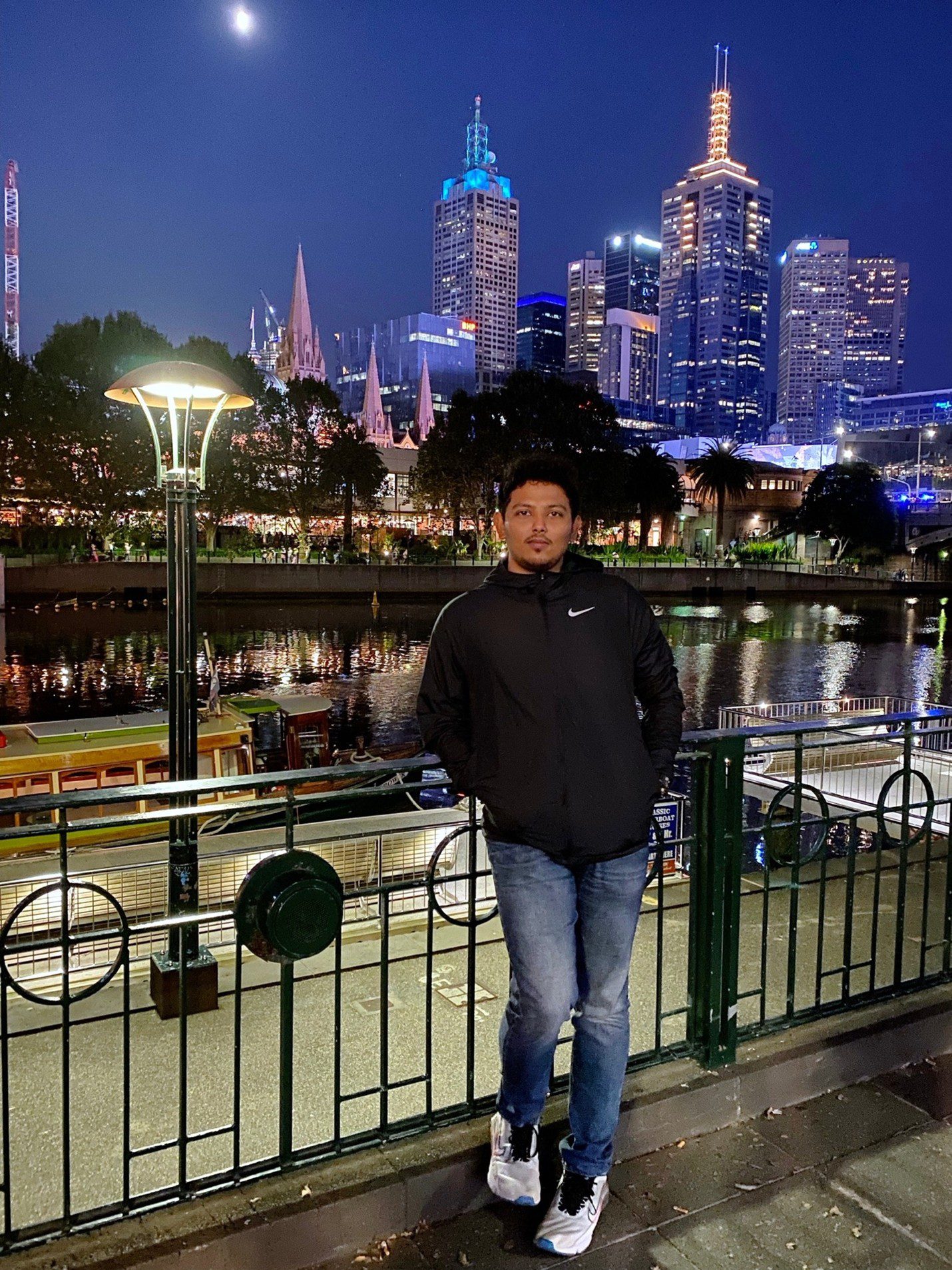
Ph.D. Medicine Student Parikshit Banerjee from India Shares His Journey of Studying at Monash University, Australia
University: Monash University, Australia
Degree: PhD in Medicine (Research at Australian Regenerative Medicine Institute – ARMI & EMBL Australia)
Previous Education: M.Sc. in Tissue Engineering and Regenerative Medicine – Kaohsiung Medical University, Taiwan (GPA 4.27/4.3); M.Sc. in Pharmaceutics – China Pharmaceutical University, China (GPA 91/100); Bachelor of Pharmacy – India (GPA 8.3/10)
Scholarship: Monash Graduate Scholarship (MGS) – Living Stipend; Monash International Tuition Scholarship (MITS) – Tuition & Health Insurance; EMBL Australia Partnership PhD Scholarship – Research Training Support
Other Offered Scholarships (if any): Hong Kong PhD Fellowship Scheme (HKPFS) – University Grants Committee (UGC), Hong Kong; CUHK Vice-Chancellor’s HKPFS Scholarship; CUHK Postgraduate Studentship (PGS); Chinese Government Scholarship (Master’s); Kaohsiung Medical University International Scholarship; Rotary Club Taipei International Student Award
Social Media
LinkedIn: linkedin.com/in/parikshit-banerjee007/
The Journey
Hi! I am Parikshit Banerjee, from West Bengal, India. Growing up, I was always curious about how things worked, especially when it came to health. That curiosity slowly grew into a deeper interest in biology and eventually into a desire to use science to make a real difference.
My academic journey took me across several countries, each step shaping my perspective and strengthening my commitment to research. What began as an interest in pharmacy gradually evolved into a passion for regenerative medicine- the idea that we could design therapies to repair damaged tissues and improve lives.
Currently, I am pursuing my PhD at Monash University in Australia, conducting research at the Australian Regenerative Medicine Institute (ARMI) and EMBL Australia. My work focuses on gene-based therapeutic strategies aimed at enhancing tissue repair and regeneration. Looking back, the path was not linear, and there were a lot of setbacks along the way. But each experience, both successes and challenges, helped shape my journey positively.
Monash Graduate Scholarship Details
I was awarded the Monash Graduate Scholarship (MGS), which covers a living stipend throughout the PhD. In addition, I was supported by the Monash International Tuition Scholarship (MITS), which covered my tuition fees and health insurance costs, and the EMBL Australia Partnership PhD Scholarship, which supported my overall research training. When I received the confirmation, I remember feeling relief more than anything else. It meant I could focus on research instead of constantly calculating expenses in my head.
Were You Offered any Other Scholarships?
Yes, throughout my academic journey, I was fortunate to receive several scholarships, starting from my master’s studies through my PhD.
During my time in China, I was awarded the Chinese Government Scholarship, which provided full funding support for my master’s studies. That was my first major international scholarship, and it played a crucial role in supporting me to study abroad. Later, when I moved to Taiwan for my second Master’s in tissue engineering and regenerative medicine, I received the Kaohsiung Medical University International Scholarship. During this period, I also received the Rotary Club Taipei International Student Award, which was both encouraging and humbling.
When I applied for PhD programs, I was awarded the Hong Kong PhD Fellowship (HKPFS) by the University Grants Committee (UGC) of Hong Kong. Alongside this, I received the Chinese University of Hong Kong (CUHK) Vice-Chancellor’s HKPFS Scholarship and the Chinese University of Hong Kong Postgraduate Studentship (PGS) award. Receiving these offers was a major milestone for me, as it validated my academic profile at a global level. Looking back, these scholarships represent different chapters of my academic journey from China to Taiwan to Hong Kong, and now Australia. Each one came at a time when I needed encouragement the most. More than the financial value, they gave me confidence to keep aiming higher and to continue building my career internationally.
Educational Background
I began with a Bachelor of Pharmacy in India, graduating with a GPA of 8.3/10 and later becoming a Registered Pharmacist. At that stage, I was learning the foundations of how drugs are designed, how they work inside the body, and how they can be improved. It was structured learning, but it sparked something deeper in me. I realized I didn’t just enjoy studying medicine, I was genuinely curious about how therapies could be made better.
Therefore, after graduation, I moved to China to pursue a Master’s in pharmacy with a major in Pharmaceutics at China Pharmaceutical University, where I graduated with a GPA of 91/100. My research focused on developing nanostructured lipid carriers for targeted anticancer drug delivery. That was my first real immersion into hands-on research. I still remember the long hours in the lab experiments failing, reformulating nanoparticles, and analyzing data repeatedly. It was during those late evenings that something really changed for me. I stopped feeling like a student completing assignments and started thinking independently, trying to solve a problem.
At that point, I felt ready for a PhD and applied directly. But my first round of applications didn’t succeed. It was disappointing, and honestly, a little discouraging. However, that experience forced me to reflect more seriously. I realized that if I truly wanted to pursue a PhD at a globally reputed institution, I needed to mature further both technically and intellectually. So instead of giving up, I made a conscious decision to try harder. I moved to Taiwan to pursue a second Master’s at Kaohsiung Medical University, completing an M.Sc. in tissue engineering and regenerative medicine with a GPA of 4.27/4.3. That period was transformative. I felt deeply connected to the field of regenerative medicine. The idea that we could design materials and biological systems to repair damaged tissues felt powerful and meaningful.
After completion, I briefly began a PhD study at The Chinese University of Hong Kong before eventually transitioning to my current doctoral studies. That phase helped me further refine what I truly wanted to work on in the long term.
Today, I am pursuing my PhD in Medicine at Monash University, conducting research at the Australian Regenerative Medicine Institute (ARMI) and EMBL Australia. My work focuses on gene therapies to enhance tissue healing and regeneration, a direction that feels like a natural evolution of everything I have learned so far. When I reflect on my journey, I realize that while strong grades helped open doors, they were not the most important factor. What truly prepared me for doctoral research was resilience built on failed experiments, critical feedback, restarting protocols from scratch, learning to question my own assumptions, and navigating life away from my comfort zone. I truly believe these experiences, more than any GPA, prepared me for competitive scholarship applications and for the realities of a PhD.
How Did You Prepare to Apply to Monash University?
Preparing to apply abroad was a gradual process. I began by researching universities and labs that genuinely aligned with my interests. Instead of focusing only on rankings, I read research papers from potential supervisors to understand the direction of their work. When I reached out, I made sure every email was personalized and clearly explained how my background connected to their research.
For scholarships, I relied mainly on official university websites and national funding portals. I carefully checked funding structures for each country and eventually learned that many PhD positions are directly tied to specific research grants. Over time, I became more strategic in searching for fully funded positions within labs rather than only looking for centrally awarded scholarships.
I also sought advice from seniors and mentors who had gone through the process before me. Their practical guidance helped me refine my research proposal and application materials. As an international applicant, I took the IELTS to meet the English requirement. For IELTS, I prepared using official practice materials, YouTube videos, and focused on consistency and timing. Overall, preparation was less about proving I am exceptional and more about being persistent, organized, and thoughtful in how I presented my journey.
How Did You Prepare to Apply to the Monash Graduate Scholarship?
Preparing for the scholarship applications took more time than I expected. I rewrote my research proposal several times and personalized it for each application. In the beginning, I was trying too hard to sound impressive. But eventually, I realized that clarity was more important than complexity.
I started asking myself some honest questions: Why does this research truly matter? Why am I the right person to pursue it? How does my previous experience naturally lead to this next step? Once I focused on answering those questions clearly, my statement stopped feeling forced and started feeling authentic. It became less about showcasing achievements and more about presenting an honest journey. I also shared my drafts with mentors and colleagues and asked them for their feedback, honestly. Some of the feedback was tough, but it strengthened my application significantly. Looking back, that openness to revise, simplify, and accept criticism made a real difference.
How is (was) Your Experience at Monash University?
Doing a PhD at Monash University has been both rewarding and humbling. There are phases where everything seems to move forward, experiments work, data makes sense, and ideas start connecting. And then there are phases where nothing goes as planned. Experiments fail. Hypotheses fall apart. I questioned my approach, and sometimes even myself. But over time, I learned to be more patient, more analytical, more practical, and more consistent than trying to be excellent. Living in Australia as an international student has also shaped me in ways beyond research. I learned independence from managing life in a new country to navigating academic expectations during my doctoral journey. These experiences at Monash built confidence, perspective, and learnings that will likely stay forever with me.
How Do You Rate Monash University Academically and Why?
Academically, I would rate Monash very highly because of its strong research culture and top-notch facilities. You’re not just guided through tasks here, you’re encouraged to think independently and critically. There is a clear emphasis on questioning assumptions and communicating science effectively. It is tough, but in a constructive way. This environment pushes you to grow and builds long-term confidence as a researcher and also as a person.
How Does Monash University Support International Students?
Monash provides structured support through academic skills workshops, wellbeing services, and visa-related guidance. These formal systems are helpful and well-organized. However, what made the biggest difference for me was the collaborative research environment and openness to discussion without hierarchy. Also, the welcoming environment impacted me positively. When you are far from home, that sense of community matters deeply and helps immensely.
Would Potential Students Have Any Problems Academically Not Knowing Mandarin or Cantonese?
Since Australia is an English-speaking country, language is generally not a barrier if you are comfortable communicating in English. However, based on my experience studying in China, Taiwan, and Hong Kong, I would say it depends on both the institution and your level of comfort adapting to a new environment.
In China, many postgraduate programs, especially in pharmacy and biomedical fields, offer courses and research supervision in English, particularly for international students. Academically, I did not face major barriers in the lab or in coursework because scientific communication was conducted in English. However, daily life outside the lab can be challenging without basic Mandarin. Simple things like grocery shopping, transportation, or administrative procedures become easier if you learn at least conversational Mandarin.
In Taiwan, the situation was somewhat similar. Research work and thesis supervision were conducted in English, especially in international programs. Most faculty members were comfortable communicating academically in English. That said, outside the academic environment, Mandarin is the primary language. While many younger people understand some English, daily interactions become smoother if you make an effort to learn basic Mandarin. I found that even minimal language effort helped build stronger social connections.
In Hong Kong, English is widely used in academia. Universities like CUHK operate primarily in English for teaching and research, so academically, not knowing Cantonese is usually not a barrier. In daily life, many people are bilingual, so communication is generally manageable even if you do not speak Cantonese. Among the three places, Hong Kong was probably the easiest in terms of language transition.
Overall, academically, I did not face serious obstacles in any of these places because science tends to operate in English at the postgraduate level. However, learning some of the local language even at a basic level significantly improves daily life, cultural integration, and overall experience. It shows respect for the local culture and makes living and studying abroad much more enjoyable.
What Do You Think Made Your Application Stand Out?
I think what made my application stand out was clarity, consistency, and authenticity. I believe my academic journey wasn’t random, and each step led somewhat naturally to the next. From pharmacy to drug delivery, then to tissue engineering, and finally to regenerative medicine, there was a clear progression. When I wrote my application, I made sure that the story was easy to understand. I didn’t try to impress (I did in earlier days of application) with complicated language. I focused on showing how my past experiences logically prepared me for the research I was proposing. I also think honesty helped. I didn’t present myself as someone who had everything figured out. I acknowledged my limitations, setbacks, and learning experiences. That made my application feel real rather than overly polished. Most importantly, I tried my best to align my skills, research interests, and long-term goals to the lab and the institution I was applying to. It wasn’t just about wanting a PhD for me; it was about wanting that specific research environment. Looking back, I believe clarity, authenticity, and a somewhat deliberate journey improved my application.
What Would You Have Done Differently if You Were Going Through the Process Again?
If I were going through the process again, I would start earlier and be more strategic from the beginning.
In my first round of applications, I was enthusiastic but not as focused as I could have been. I applied with hope, but without fully understanding how competitive the process was or how important alignment with supervisors truly is. With experience, I realized that timing, preparation, and targeted applications matter a lot. I would also reach out to more supervisors in parallel instead of waiting too long between applications. The process can be slow, and having multiple conversations at once reduces uncertainty and saves time.
Finally, I would worry less. At the time, every rejection felt very personal. Looking back, I understand that many factors were beyond your control, such as funding cycles, lab capacity, and timing. I would remind myself to be patient and trust that persistence eventually pays off. I would also try to ask for help from people who have prior experience, without worrying too much about rejection. Overall, I wouldn’t change the journey itself, even though the setbacks helped me and taught me a lot. But I would approach it with more confidence, clarity, and more strategically, keeping the long-term goal in mind.
What Advice Would You Give Those Looking to Apply for a Similar Scholarship?
If I had to give advice to someone applying for a similar scholarship, I would say this first: don’t underestimate yourself, but also don’t underestimate the preparation required. Start early. Much earlier than you think you need to. Research takes time. Writing a strong statement takes time. Finding the right supervisor takes time. If you rush the process, it slows down and gets messy.
Second, focus on clarity, not complexity. Many applicants (including me) try to sound extremely impressive by using complicated language or listing every achievement. However, from my experiences, I feel what really matters is whether your journey makes sense. Can someone reading your application clearly understand who you are, what you’ve done, and why this next step is logical for you? If the answer is yes, you’re on the right track.
Third, align yourself properly. Don’t apply randomly. Look carefully at the lab, the supervisor’s recent work, and the institution’s strengths. Show clearly how your background fits that environment. Scholarships are not just about grades; they are also about fit and potential.
Fourth, ask for feedback. Share your proposal and statement with mentors or seniors. Honest criticism can feel uncomfortable, but it improves your application significantly. Many of my strongest revisions came from tough feedback.
Fifth, be prepared for rejection. Not every application will succeed. Actually, most applications will never succeed. That doesn’t mean you are not capable. Sometimes it’s timing. Sometimes it’s funding limitations. Use rejection as information and a lesson, not as a verdict on your potential.
Finally, remember why you are applying. A scholarship is not just financial support; it’s a commitment to years of focused work. Make sure you genuinely care about the research you are proposing. Passion and curiosity sustain you much longer than external validation.
If you stay consistent, reflective, patient, and open-minded, opportunities do open. It may not happen in the first attempt, may not happen in the second attempt, but it will happen eventually.
Try not to compare your journey with anyone else’s. Everyone’s timeline is different, and progress is rarely as smooth as it looks from the outside. Keep applying, keep improving. Keep trying until you reach the place you truly want to be.
Sometimes the journey will take much longer than you ever imagined. There will be stress. There will be moments of doubt. Imposter syndrome may show up more than once. Still, don’t stop if it really means something to you. Because in the end, better late than never.
Want to submit your
scholarship journey?
Submit Your Story Here!
More Scholarship Recipients
I am Edgar Abaho from Uganda, currently pursuing a Joint Master’s Degree in Mathematical Modelling and Optimization at the .... Read more
Hello, I am Virda from Indonesia. I come from a small city and was fortunate to have the opportunity to pursue my bachelor� .... Read more
Tessia Boateng, affectionately known as AmaTess among family and close friends, is a young Ghanaian professional with a grow .... Read more
Leave A Comment