
Erasmus+ Scholarship Scholar Muhammad Aiesh Ghayoor from Pakistan Shares His Journey of Securing a Fully Funded Master's Degree at the Aalto University, Finland
University: Aalto University; RWTH Aachen University; Montanuniversität Leoben
Degree: Master’s in European Mining Course (EMC) – Triple Degree in Mining Engineering / Mineral Processing / Metallurgy
Previous Education: Bachelor’s in Metallurgy and Materials Engineering, National University of Sciences & Technology (NUST)
Scholarship: Erasmus+ Scholarship / Finland Government Scholarship / FEMP Scholarship – Full Funding (Tuition Waiver, Monthly Stipend, Travel & Mobility Support)
Other Offered Scholarships (if any): Deutschlandstipendium – Monthly Stipend (Germany); AMIR Scholarship – Full Funding (Declined); SUMA Scholarship – Full Funding (Declined)
Social Media
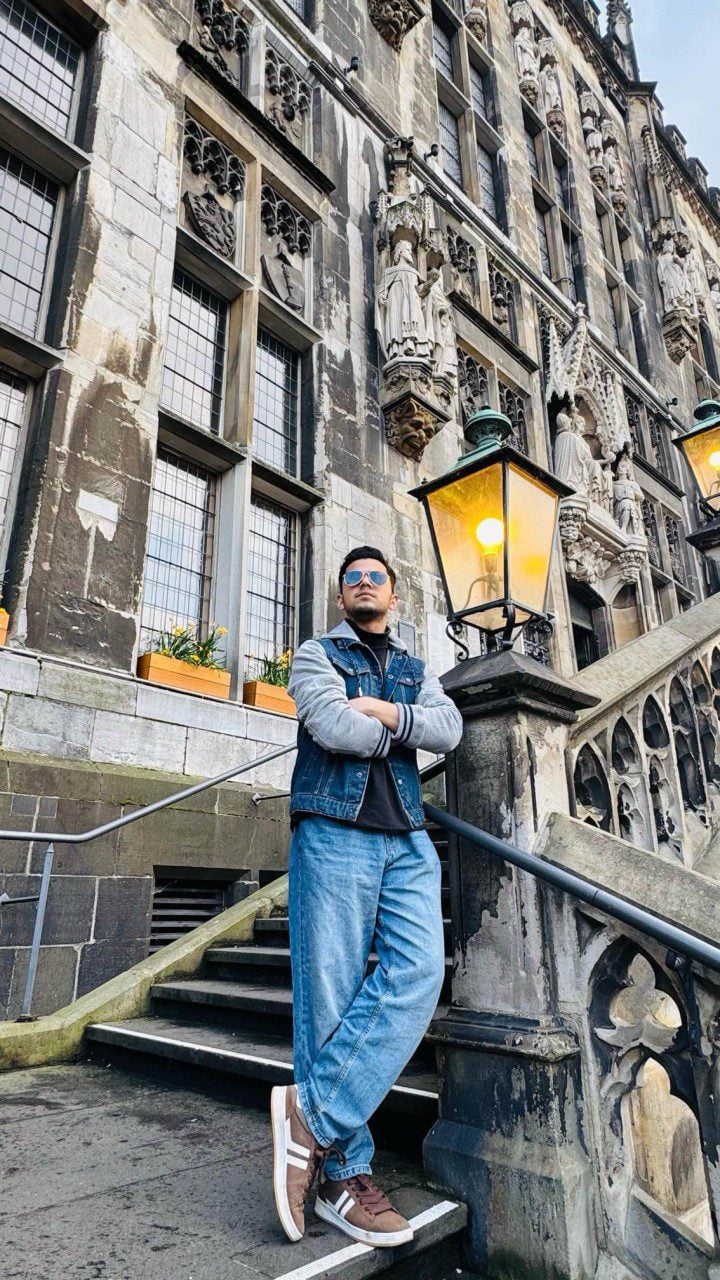
The Journey
My name is Muhammad Aiesh Ghayoor, and I am originally from Islamabad, Pakistan. I am currently in my thesis semester of the Erasmus+ Triple Degree European Mining Course (EMC), a prestigious triple-degree master’s program jointly offered by Aalto University (Finland), RWTH Aachen University (Germany), and Montanuniversität Leoben (Austria).
I hold a Bachelor’s degree in Metallurgy and Materials Engineering, and my academic journey has been strongly focused on pyrometallurgy, sustainable raw materials, and advanced materials engineering. My core motivation lies in developing environmentally responsible technologies for critical raw materials recovery, recycling, and circular economy applications, which are essential for the global transition toward sustainable and high-tech industries.
Erasmus+ and the Finland Government Scholarship Details
I was awarded the Finland Government Scholarship, Erasmus+ scholarship, and Deutschlandstipendium award for this Erasmus+ triple master’s program, which included a full tuition fee waiver and a monthly stipend. This financial support allowed me to fully concentrate on advancing my technical and research capabilities without financial constraints, and to make the most of the academic and professional opportunities offered by the program. In addition to this, I received an Erasmus+ mobility scholarship that covered my travel and living expenses across Finland, Germany, and Austria, enabling me to experience diverse academic systems and industrial environments without financial burden. I was also supported by the Federation of European Mineral Programs (FEMP) scholarship, which contributed to my living expenses during the program and ensured financial stability throughout my studies. Furthermore, I was awarded the Deutschlandstipendium, a prestigious monthly scholarship funded by the German government and industry partners, which recognizes both academic excellence and personal achievements.
Beyond these scholarships, I was honored with the Larry Kaufman Student Scholarship (LKSS) at the CALPHAD 2025 Conference in South Korea. This was a particularly significant achievement, as I was the only master’s student selected among 22 PhD researchers from around the world. This recognition not only validated my research work in computational thermodynamics and materials engineering but also provided me with the opportunity to present my work on an international platform, engage with leading experts in the field, and expand my professional network. Overall, these scholarships have played a crucial role in supporting my academic journey, allowing me to focus on research, gain international exposure, and develop the skills necessary to contribute to sustainable advancements in the mining and metallurgical industries.
Were You Offered Any Other Scholarships?
Yes, I was also admitted to the Advanced Materials Innovative Recycling (AMIR) and International Master's on Sustainable Materials (SUMA), where I was offered a full scholarship. However, I chose the Erasmus + EMC program because of the highly ranked universities and scholarship.
Educational Background
My primary and high school education is from Beaconhouse School System, Islamabad, and I hold a Bachelor’s degree in Metallurgy and Materials Engineering from the National University of Sciences & Technology (NUST), where I graduated with strong academic standing and received multiple Dean’s List recognitions across multiple semesters. My undergraduate thesis focused on a green approach for synthesizing reduced graphene oxide for water purification, where I achieved significantly improved filtration performance using sustainable nanomaterials. In addition, I worked on projects related to recycling biomass waste into graphene and developing sustainable materials aligned with the United Nations Sustainable Development Goals. Currently, my master’s thesis focuses on sulfation roasting of LFP battery scrap under the BATCircle 3.0 project in collaboration with Umicore and Metso, targeting battery recycling and critical raw material recovery.
How Did You Find Information About Erasmus+ and Finland Government Scholarship?
My main priority was to enroll in a diverse Erasmus Metallurgical Engineering or Mineral Processing master’s program. While exploring different programs, I discovered the European Mining Course (EMC) through the Erasmus Mundus and EIT Raw Materials platforms, which list globally recognized programs. Information about the Finland Government Scholarship was available on Aalto University’s admissions portal and through international student communities. I also reached out to previous EMC alumni on LinkedIn, which helped me understand the selection process, expectations, and overall experience.
How Did You Prepare to Apply for the Erasmus+ and Finland Government Scholarship?
I invested considerable time in crafting a clear, authentic, and well-structured motivation letter that demonstrated a strong alignment between my goals and the scholarship’s focus on innovation, sustainability, and the circular economy in mining. I emphasized my research experience, technical background, and leadership skills, while clearly explaining how I plan to use my knowledge to address some of the most pressing challenges in developing regions.
In addition, I reached out to alumni who provided valuable insights and constructive feedback. Their input helped me refine my application, improve the clarity of my narrative, and present my motivations in a more compelling and effective way.
How is Your Experience at the Institution?
My experience in the European Mining Course has been truly transformative. Studying across three leading European universities has exposed me to diverse mining cultures, technologies, and academic environments. During my semester at Aalto University, I experienced a Scandinavian academic system that emphasizes innovation, teamwork, and sustainability, along with completing a research internship focused on thermodynamic modeling of the chromium–carbon system using FactSage. At RWTH Aachen University, the focus shifted toward technical depth and academic rigor, where I worked on a pre-feasibility mining project using Geomine and later joined GTT Technologies as a research intern, working on Modified Quasichemical Modeling and CALPHAD-based simulations. Currently, at Montanuniversität Leoben, I am experiencing a balance between applied research and industry collaboration within a strong mining tradition, which has further enriched my academic and professional growth.
How Do You Rate the Institution Academically?
I would rate the institutions in the European Mining Course as academically excellent due to their high standards, strong industry connections, and integration of theoretical knowledge with real-world applications. Each university contributes uniquely to the program, with Aalto University focusing on innovation and sustainability, RWTH Aachen University emphasizing technical rigor and analytical depth, and Montanuniversität Leoben offering applied research opportunities and close collaboration with industry partners. This combination provides a comprehensive and world-class learning experience.
How Do the Institutions Support International Students?
All three partner universities in the European Mining Course provide comprehensive and well-structured support for international students, ensuring a smooth academic and personal transition across multiple countries. From the very beginning, students receive guidance with visa procedures, residence permits, housing arrangements, and orientation programs, which significantly reduces the stress of relocating to a new country. Each university also offers academic advising, counseling services, and student support systems that help international students adapt to different teaching styles and academic expectations.
A key strength of the program is the role of the EMC consortium, which actively coordinates logistics, academic schedules, and mobility transitions between Finland, Germany, and Austria. This centralized support system ensures that students can move seamlessly between universities without administrative complications, allowing them to focus primarily on their studies and professional development rather than bureaucratic challenges.
Financial support plays a crucial role in enhancing this experience. Through the Finland Government Scholarship, I received a full tuition fee waiver, which allowed me to fully dedicate myself to academic and research activities. In addition, the Erasmus+ mobility scholarship covered my travel and living expenses across the three countries, making it possible to experience diverse academic and industrial environments without financial strain. The Federation of European Mineral Program (FEMP) scholarship further supported my living costs, while the Deutschlandstipendium provided additional monthly financial support in Germany, recognizing both academic performance and overall achievements.
Beyond financial stability, the institutions also encourage practical learning and industry exposure. Students are given opportunities to engage in internships, research collaborations, and part-time work during academic breaks, which not only support their living expenses but also strengthen their professional skills and industry connections. Overall, the combination of administrative support, financial assistance, academic guidance, and industry integration creates a highly supportive and enabling environment for international students throughout the program.
Are Your Classes Conducted in English or Finnish/German?
All courses in the European Mining Course (EMC) are conducted entirely in English, making the program highly accessible to students from a wide range of international backgrounds. Since there is no obligation to learn the local languages of Finland, Germany, or Austria, students can fully focus on their studies, research, and professional growth without any language-related challenges.
At the same time, the program encourages students to explore local cultures and, if they are interested, pick up basic knowledge of the native languages. This enhances the overall experience by adding cultural depth without affecting academic performance. Professors and administrative staff are fluent in English and provide clear guidance, constructive feedback, and continuous support, enabling students to grow both academically and personally.
The teaching environment is interactive and student-focused, with a strong emphasis on open discussions, critical thinking, and active engagement. This inclusive, English-medium approach allows international students to adapt quickly, build confidence in communication, collaborate effectively in diverse teams, and develop key skills needed for global career opportunities.
What Do You Think Made Your Application Stand Out?
I believe that my Letter of Motivation was highly relevant to the program I applied for. My academic background, work experience, and research activities were closely aligned with the core objectives of the master’s program. In particular, my bachelor’s thesis focused on recycling and sustainability, which was not only innovative but also directly connected to the key themes of the program. This helped me present myself as a strong and suitable candidate with a clear direction.
Moreover, I made a conscious effort to build a unique and compelling narrative in my motivation letter by clearly outlining my future goals. I chose to focus on a global challenge: recycling, especially in the context of critical raw materials, and used this as the central theme of my story. At the very beginning of the letter, I stated my long-term ambition to establish a startup dedicated to the recycling of critical raw materials, which immediately set a clear purpose for my application.
Throughout the letter, I consistently linked this goal with the specific features of the master’s program. I explained how the curriculum, research opportunities, and international exposure offered by the program would equip me with the necessary technical knowledge and practical skills to achieve my vision. I also ensured that each part of my story, my past experiences, current motivation, and future aspirations, was logically connected and reinforced the same objective.
Overall, this strong alignment between my profile and the program’s objectives, along with a clear and purpose-driven narrative, made my application more coherent, focused, and impactful.
What Would You Have Done Differently if You Were Going Through the Process Again?
I don’t think there is anything fundamentally different that I would have done in my application process. However, I would like to strongly emphasize the importance of conducting detailed and thoughtful research on the program you are planning to apply to. In my opinion, one of the most critical factors for success is how well your profile aligns with the specific objectives and focus areas of the master’s program. Relevance is key; your academic background, experiences, and future goals should clearly reflect what the program is looking for.
Looking back, I believe I was able to address this aspect quite well in my own application. I made a conscious effort to understand the program’s structure, its core themes, and how it connects to my long-term goals. That said, there is one area where I believe I could have improved even further.
If I had to do something differently, I would focus more on getting my Letter of Motivation reviewed by a larger number of alumni or current students from the same or similar programs. Their insights are extremely valuable because they have already gone through the process and understand what evaluators expect. They can provide practical, experience-based feedback that is often difficult to obtain elsewhere.
In addition, receiving feedback from multiple people allows you to view your application from different perspectives. Each reviewer may point out something unique, whether it is clarity, structure, content, or alignment with the program, which helps you refine your letter further. This makes the entire process highly iterative. You are not simply writing your motivation letter once; instead, you are continuously revising and improving it based on constructive feedback.
Over time, this iterative approach significantly strengthens your application. It helps you communicate your story more effectively, eliminate weaknesses, and better highlight your strengths in relation to the program’s objectives.
In summary, while I am satisfied with my overall approach, I would place even greater emphasis on actively seeking detailed feedback from experienced individuals and using that feedback to continuously improve my application materials.
What Advice Would You Give Those Looking to Apply for a Similar Scholarship?
In one line, “Align your profile closely with the objectives of the program you are applying to.”
This is my favorite question, and I’ll try to explain it in a simple and practical way. Imagine you are selling a pen to someone who is looking for very specific features. Naturally, you would highlight exactly those features the buyer needs; otherwise, they will simply move on to another seller who can meet their expectations.
The same principle applies to highly competitive scholarships. In this case, you are the “product,” and the evaluators are the “buyers.” Your success depends on how clearly and effectively you understand the program’s objectives and align your profile with them. This means carefully analyzing what the scholarship is looking for and presenting yourself as someone who fits that vision.
A good starting point is to thoroughly explore the Erasmus Mundus catalogue and shortlist programs that genuinely match your academic background and future goals. I recommend creating a structured database where you track each program, its requirements, necessary documents, and deadlines. This helps you stay organized and reduces last-minute stress.
For most programs, the Letter of Motivation (LOM) is a critical component. A strong approach is to identify a global or societal issue that connects both to your field and the program’s focus. Then, build your story around it, clearly explaining how your experiences, interests, and future plans contribute to addressing that issue.
One important piece of advice is to avoid relying on AI tools like ChatGPT in the early stages of your application. Instead, use platforms like LinkedIn to connect with alumni or current students of your target programs. Reach out professionally, share your drafts, and ask for feedback. Be respectful and thoughtful in your communication. Sending a well-written message with your connection request makes a strong first impression. Also, try to get feedback from multiple people, as this will give you diverse perspectives and help you improve further.
Keep in mind that writing a strong LOM is an iterative process. It does not happen overnight; it evolves over weeks or even months. You will continuously refine your ideas, structure, and language. In terms of writing style, clarity is more important than complexity. Avoid overly complicated vocabulary or grammar. Many evaluators are not native English speakers in Europe, so being clear, concise, and direct is far more effective than trying to sound overly sophisticated.
Most importantly, your application should clearly demonstrate your goals and explain how the specific master’s program will help you achieve them. You need to show that this program is not just an option, but a necessary step in your journey.
It’s also important to understand the level of competition. Out of around 2000–2500 applicants, only a very small number are selected. This makes it essential to be strategic and thoughtful in how you present your application.
In conclusion, think of the process as presenting the best version of yourself. You are essentially “selling” your profile, so make sure it reflects exactly what the evaluators are looking for. That final alignment between your story and the program’s objectives is what makes your application stand out.
Lastly, if any prospective applicants would like feedback on their documents or general guidance, they are always welcome to reach out to me on LinkedIn. I would be happy to help.
Cheers,
Aiesh Ghayoor
Want to submit your
scholarship journey?
Submit Your Story Here!
More Scholarship Recipients
My name is Min Htet Myint, and I am from Myanmar. I am currently pursuing a Ph.D. in Global Smart City at Sungkyunkwan Unive .... Read more
My name is Min Gyu, and I am a 1st year PhD student at the University of Cambridge, pursuing Stem Cell Biology. My research .... Read more
I am Micheale Haileslassie, originally from the northern part of Ethiopia, where I completed my early education. I have alwa .... Read more
Leave A Comment