
Global Korea Scholarship (GKS) Scholar Min Htet Myint from Myanmar Shares His Journey of Securing a Fully Funded Master's Degree at the Seoul National University of Science and Technology, South Korea
University: Sungkyunkwan University
Degree: PhD in Global Smart City
Previous Education: Master of Engineering in Civil Engineering (Construction Management), Seoul National University of Science and Technology; Bachelor of Engineering in Civil Engineering, West Yangon Technological University
Scholarship: Global Korea Scholarship (GKS) – Full Funding (Tuition, Monthly Stipend, Airfare, Insurance, Settlement Support)
Other Offered Scholarships: STEM Scholarship – Full Tuition Coverage (Sungkyunkwan University)
Social Media
LinkedIn: linkedin.com/in/minhtetmyint28/
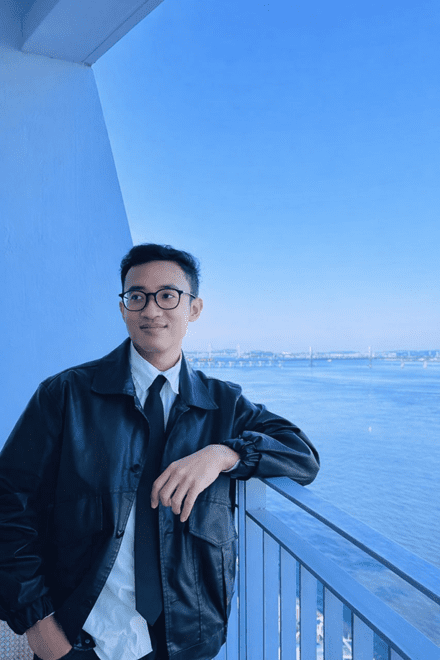
The Journey
My name is Min Htet Myint, and I am from Myanmar. I am currently pursuing a Ph.D. in Global Smart City at Sungkyunkwan University in South Korea. My academic background is in Civil Engineering, and I have long been interested in how engineering, technology, and smart systems can be integrated to improve cities and the built environment.
I first studied Civil Engineering at West Yangon Technological University (WYTU), where I built a strong foundation in construction and infrastructure. Over time, I became more interested in going beyond traditional engineering approaches and exploring how advanced technologies can be applied to solve real urban and construction challenges. This interest led me to pursue further studies in Construction Management for my master’s degree at Seoul National University of Science and Technology (SeoulTech), and later continue into the field of Global Smart City at the doctoral level.
I decided to pursue higher education in this field because I want to contribute to the development of smarter, more sustainable, and more efficient cities. I believe that combining civil engineering knowledge with digital technologies, data, and innovative urban systems can create practical solutions for future communities. My goal is to grow as a researcher and professional who can contribute meaningfully to both academia and industry.
Global Korea Scholarship Details
I received the Global Korea Scholarship (GKS) 2021 to pursue my Master of Engineering in Civil Engineering (Construction Management) at Seoul National University of Science and Technology (SeoulTech), South Korea. The scholarship provided full financial support, including tuition coverage, a monthly living allowance, settlement support, medical insurance, and airfare, in accordance with the GKS program benefits.
Were You Offered Any Other Scholarships?
Yes. I was also awarded the STEM full Scholarship at Sungkyunkwan University (SKKU), South Korea, for my doctoral studies. The scholarship was provided by the university to support international students in STEM-related fields. The scholarship amount covers 100% tuition fees. (Approx: around 10 million won)
Educational Background
My academic background is in Civil Engineering, which has given me a strong foundation in infrastructure, construction, and the built environment. I earned my B. Tech in Civil Engineering in 2017 and B.E in Civil Engineering in 2019 from West Yangon Technological University (WYTU), Myanmar, with a cumulative GPA of 4.89 out of 5.0. Later, I completed my Master of Engineering in Civil Engineering (Construction Management) at Seoul National University of Science and Technology (SeoulTech), South Korea, with a GPA of 4.38 out of 4.5. I am currently pursuing a Ph.D. in Global Smart City at Sungkyunkwan University (SKKU), South Korea.
My educational background has prepared me well for this field by allowing me to gradually expand my knowledge from core civil engineering to more specialized and interdisciplinary areas. During my undergraduate studies, I developed a solid understanding of structural systems, construction principles, and the fundamentals of the built environment. My master’s degree in construction management further strengthened my skills in project planning, technical problem-solving, and the application of engineering knowledge in real-world contexts.
This academic journey naturally led me to pursue further education in the field of Global Smart City, where I can integrate engineering knowledge with smart technologies, sustainability, and urban innovation. My previous studies have helped me build both the technical foundation and academic discipline needed to apply for and succeed in this field.
How Did You Prepare to Apply to Sungkyunkwan University?
I prepared for my applications by carefully researching both the scholarship and the universities I was interested in. In my experience, one of the most effective ways to get accurate and practical information is to directly contact the admissions team of the university. Many applicants hesitate to send emails and rely only on scholarship or admissions guidelines posted on official websites. While those websites are very useful for public information, contacting the admissions office directly can help you gain a deeper understanding of the application process, required documents, deadlines, and program expectations.
When preparing to apply, I focused on several important factors, such as whether the university matched my research interests, how the research teams were working in that field, what kind of academic and career opportunities the program could offer, the professor profiles, and the ranking of the university both nationally and globally. I believe university reputation and academic quality can also be important for future career development and job opportunities after graduation.
How Did You Find Information About Global Korea Scholarship and Sungkyunkwan University?
For scholarship information, I mainly referred to the official GKS guidelines, which provide detailed information about participating universities, eligibility, required documents, and application procedures. I also reviewed university websites to understand each institution’s academic programs, research strengths, and admission requirements. In addition to publicly available information, I highly recommend reaching out directly to the university admissions team to clarify any questions and better understand the overall process.
Did You Take Any Standardized Tests? If So, How Did You Prepare for Them?
For my GKS application, I took the TOEIC test. To prepare, I focused on improving my English skills through regular practice, especially in listening and reading. I reviewed the test format, practiced sample questions, and worked on time management so that I could perform effectively during the exam.
How Did You Prepare to Apply for the Global Korea Scholarship?
I prepared for my applications through detailed research on both scholarships and universities. I strongly recommend that students not rely only on the information available on websites, but also contact the admissions team directly. Many applicants are hesitant to send emails, but in my experience, direct communication with the university can provide deeper insight into the admissions process and help clarify important details that may not be fully explained online.
When selecting institutions, I considered whether the program aligned with my research interests, how active and relevant the research groups were, the professors’ expertise, the opportunities available for academic and professional growth, and the university’s ranking both within the country and internationally. These factors are important not only for academic success but also for future employment opportunities.
How is Your Experience at Both Institutions, and How Do You Rate Them Academically?
My experience at the institution has been meaningful both academically and personally. During my time at SeoulTech, I would rate my overall experience around 7/10. One advantage was its location in Seoul, which provided access to a vibrant academic environment and city life, and the university also offered good laboratory facilities. It was a valuable place for building my academic foundation and gaining experience in research.
At my current institution, Sungkyunkwan University (SKKU), I would rate my experience 8/10. I find that SKKU offers stronger research opportunities and broader academic exposure. In particular, it has better collaboration with private industries, including major companies such as Samsung Group, which creates more practical and career-related research opportunities. Compared with SeoulTech, where research was more connected to national R&D projects, SKKU gives me a stronger sense of connection between academic research and industry application.
Overall, both institutions have contributed positively to my academic journey, but SKKU has provided a broader platform for advanced research and industry-linked opportunities.
How Does Sungkyunkwan University Support International Students?
All the institutions support international students in many ways, including orientation programs, academic guidance, administrative support, and opportunities to participate in campus and cultural activities. In South Korea, universities also often provide helpful information related to visas, academic registration, housing, and student life, which makes it easier for international students to adjust
Are Your Classes Conducted in English or Korean?
In my experience, most classes are conducted in Korean. Although some English-medium courses are available, especially at the graduate level or depending on the program, students should honestly expect that Korean is still widely used in classes, academic communication, and university life in South Korea.
For this reason, I strongly recommend learning Korean if you are planning to study in Korea. Even if you are able to take some courses in English, knowing Korean will give you better opportunities in class participation, communication with professors and classmates, understanding administrative processes, and handling daily life more comfortably. In my opinion, Korean language ability is very important not only for academic success but also for adapting and surviving well in Korea.
What Did You Pursue After the Global Korea Scholarship?
After completing my Master’s degree, I continued my academic journey by pursuing a Ph.D. in Global Smart City at Sungkyunkwan University. Alongside my studies, I have also continued working in education and mentoring as a Freelance Engineering Instructor for City & Guilds of London Institute (UK) diploma courses and as a STEM Education Mentor for Myanmar applicants aspiring to study in Korea.
Would Potential Students Have Any Problems Not Knowing Korean?
Yes, in South Korea, students may face some academic difficulties if they do not know Korean. Although some universities offer English-taught courses, many classes, academic discussions, notices, and administrative communications are still conducted in Korean. This can make it harder to fully understand lectures, participate actively in class, communicate with professors and classmates, and manage university-related matters smoothly.
In addition, not knowing Korean can also affect daily life outside academics, such as handling documents, using services, or adapting socially. For these reasons, I strongly recommend that students learn at least basic Korean before or during their studies. Even a moderate level of Korean can greatly improve both academic performance and overall life in Korea.
What Do You Think Made Your Application Stand Out?
I also believe my profile stood out because of my international academic experience and scholarship history. Being selected for the 2019 GKS for ASEAN Countries’ Science and Engineering Students Exchange Program, later receiving the 2021 Global Korea Scholarship (GKS) for my master’s degree, and then being awarded the STEM scholarship at SKKU demonstrated that I had already proven myself in competitive academic environments.
In addition, I had more than just academic credentials. My experience as an Engineering Trainer, Freelance Instructor, and STEM Education Mentor showed that I was not only a student with good grades, but also someone actively contributing to education and professional development. I think this helped present me as a well-rounded candidate with both academic potential and practical experience.
What Would You Have Done Differently if You Were Going Through the Process Again?
Since I applied through the GKS University Track, I could only choose one university, and I selected Seoul National University of Science and Technology (SeoulTech). I do not completely regret that decision, because my master’s journey there was still valuable, and my academic supervisor was highly respected and well known in his research field. It gave me meaningful research experience and helped me continue my academic path in Korea.
However, if I were going through the process again, I would think more strategically about choosing a top-tier university with a stronger overall ranking. Based on my academic profile and background, I believe I could have aimed higher in terms of university ranking. From my job-hunting experience in Korea, I have realized that university ranking can matter a lot, especially when looking for career opportunities after graduation. So, while I appreciate the academic value of my experience, I would probably place greater emphasis on institutional reputation and long-term career impact if I had to choose again.
What Advice Would You Give Those Looking to Apply for a Similar Scholarship?
My advice would be to think beyond the scholarship itself and consider your long-term future. Your proposed research topic and academic interests are very important, but they are not the only things that matter. The ranking and reputation of the university can also play a major role in shaping your career and job opportunities after graduation. From my experience, this is something applicants should take very seriously. I would also emphasize that working proficiency in the local language is important. In Korea, Korean language ability is often necessary not only for daily life but also for better academic, networking, and job opportunities.
Want to submit your
scholarship journey?
Submit Your Story Here!
More Scholarship Recipients
My name is Min Gyu, and I am a 1st year PhD student at the University of Cambridge, pursuing Stem Cell Biology. My research .... Read more
I am Micheale Haileslassie, originally from the northern part of Ethiopia, where I completed my early education. I have alwa .... Read more
My name is Michael Gillesberger, and I am currently pursuing a Master’s in International Economic Policy at Sciences Po Pa .... Read more
Leave A Comment