
Global Korea Scholarship (GKS) Scholar Livia from the United Kingdom Shares Her Journey of Securing a Fully Funded Master's at the Ewha Woman’s University, South Korea
University: Ewha Woman’s University
Degree: Master’s in Modern Korean Literature
Previous Education: Undergraduate degree in English Literature and Korean
Scholarship: GKS (Global Korea) Scholarship – Full Funding (Full Tuition, Monthly Allowance of 1,400,000 Won, Korean Language School Support)
Social Media
LinkedIn: linkedin.com/in/livia-bishop-80b100257/
The Journey
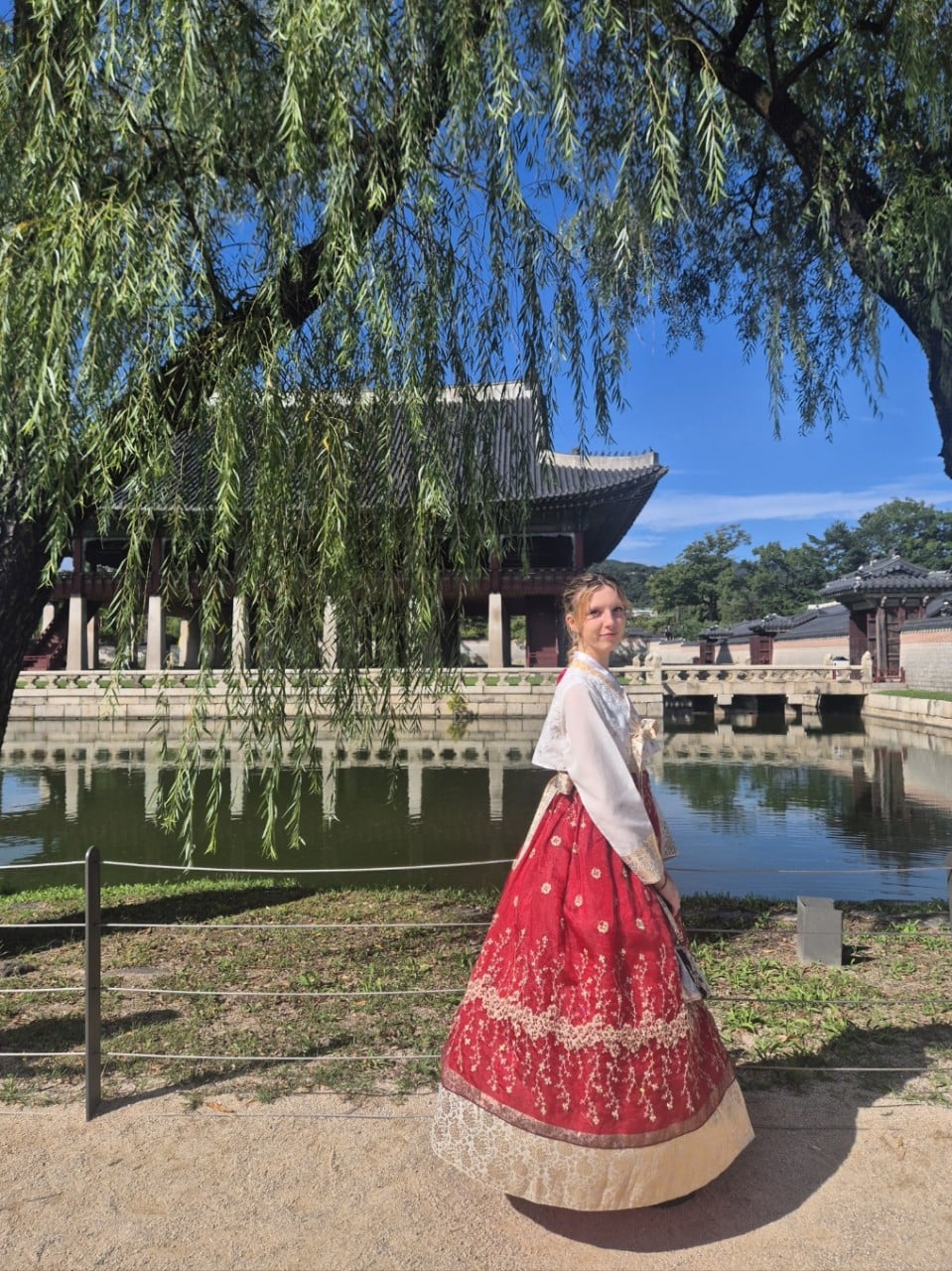
My name is Livia, and I am from Eastwood, a small town in Nottingham in the UK. I am a recipient of the GKS (Global Korea) Scholarship. I am currently writing a thesis in order to complete my master’s degree in modern Korean literature from Ewha Woman’s University in Seoul, South Korea. My sub major is modern novels, so while I am required to study all aspects of modern literature, as well as select aspects of classical literature, novelists are my specialty. I have been an avid reader since childhood, and literature has always been my biggest passion throughout my academic life. There was never any doubt in my mind that I would pursue higher education in the literary field. I have always loved to travel and have also always envisioned myself living abroad. Alongside literature, I enjoy learning foreign languages. So studying another country’s literature, in the country itself, was the perfect way for me to combine all of my passions and pursue my dreams through the GKS scholarship.
GKS Details
The GKS scholarship is offered by the Korean government to cover full tuition expenses of either an undergraduate, master’s, or PhD program in a wide range of universities all throughout South Korea. As well as a full tuition exemption, a monthly allowance of 1,400,000 won is given to all students under the scholarship. I study at Ewha Woman’s University in Seoul. When applying for the scholarship, students are required to choose three universities, one of which must be an institution outside of Seoul. After receiving acceptances from their chosen institutions, students can select which school they wish to attend. Furthermore, if students do not have TOPIK (Korean language proficiency) Level 5 upon applying for the scholarship, they are required to spend a year studying at a language school in Korea before starting their degree programme. This is also fully covered by the scholarship expenses, and a reduced monthly stipend is supplied during this year.
Were You Offered Any Other Scholarships?
N/A, I did not apply for any other scholarships except for GKS.
Educational Background
My undergraduate degree was in English Literature and Korean. I graduated with a First Class Honours degree, with a GPA of 4.0, and an award for having the best student achievement in English Literature. Whilst studying for my undergraduate degree, I also spent a year studying abroad at Sookmyung Women’s University in Seoul. Both of these experiences allowed me to refine my Korean language skills and develop some basic knowledge of Korean literature, which were extremely beneficial when applying for the scholarship, and also the reason why I chose the major that I did. As part of my undergraduate major, I was able to participate in a translation programme, translating Korean poetry into English, which was then published. I was also able to participate in a Korean literature essay contest, and ultimately wrote my undergraduate dissertation comparing English and Korean literature. In this way, my educational background gave me a strong foundation to apply for a master’s degree in Korean literature. Studying abroad in Seoul meant that I got to familiarise myself with the Korean education system beforehand and ensure that I would be suited for further study in the country, as well as allowing for cultural immersion. As Korean society is so different from that in the West, this was a very beneficial experience for me to ensure that I would be able to thrive and succeed in this type of environment in the future.
Did You Take Any Standardized Tests? If So, How Did You Prepare for Them?
I mostly found information about the scholarship online, particularly from blogs and social media of previous recipients of the scholarship. As I did not know anyone in real life who had applied for or received this scholarship, I conducted all of my research online. In terms of institutions, I researched which universities in Korea were part of the GKS programme, and then individually visited their websites to check the details of their literature programmes in order to find which universities offered classes that most aligned with my research interests.
I took the TOPIK exam (Test of Proficiency in Korean), in order to achieve a Level 5 so that I could start my degree programme right away. To prepare for this exam, I immersed myself in the Korean language and focused specifically on memorising new Korean vocabulary every day. I also took some classes at a language school to prepare for the writing section of the exam, so I had a professor critique my writing and learned some more effective exam tips during this time.
How Did You Prepare to Apply for the GKS?
I began preparing to apply for the scholarship in the final year of my undergraduate degree. I focused on participating in extracurricular activities related to my chosen major, gaining work experience, refining my language skills, and ensuring my GPA was as high as possible. GKS is a competitive scholarship, and so having good grades is not enough to secure you a place; you must have a well-rounded application that showcases your capabilities in multiple ways. Furthermore, the personal statement and study plan are very important aspects of the application. I began writing these around 6 months before the deadline so that I could receive feedback, edit, and make them the best they could possibly be. There are also a long list of required documents for the scholarship that takes a long time to acquire, and a very specific way that they must be organised and submitted. It is important to start gathering the documents as early as possible - around one year beforehand - to ensure that you do not miss any deadlines for the scholarship, and you have time to get them properly notarised and apostilled.
How is Your Experience at Ewha Woman’s University?
My experience at Ewha has been extremely positive. The campus is beautiful, and the classes offered align with my research interests very well. The literature professors are kind and supportive, especially for international students. It can be extremely difficult to study in a second language, and having understanding professors is very reassuring. There are many places to study on campus, great library resources, and mentoring programs for students in my major. This means we get to receive help, support, and assignment editing from native students in our major. There is also an active research programme in the Korean literature department, a GKS student mentoring system, and the opportunity to form study groups and receive financial support for meetings throughout the semester. This support makes the difficult task of studying in another language abroad much easier. The department regularly hosts guest lecturers as well. I have learned so many things in the two years I have been studying at Ewha. The research I have had the opportunity to conduct, and the professors I have been privileged to learn from, have inspired me to keep studying for a PhD in the future.
Are Your Classes Conducted in English or Korean?
My classes are all conducted in Korean; assignments, exams, and thesis writing must all be conducted in Korean, also.
Would Potential Students Have Any Problems Not Knowing Korean?
If your major is taught in English, then you will not have problems if you do not speak Korean. However, it is also beneficial and recommended to know the language, as this can make communicating with fellow students and professors easier, as well as daily life in general. If you want to study a major taught in Korean, then you must pass the TOPIK exam at the level required for this.
What Do You Think Made Your Application Stand Out?
I think that my extra-curricular and research activities particularly helped to make my application stand out, as they were unique and tailored specifically to the major I was applying for. This meant that I had a lot of things I could write about in my personal statement that helped to exemplify my passion and dedication to the subject I was choosing to study. While GPA is important, being able to demonstrate this dedication with tangible experiences and achievements is extremely helpful, as these are unique personal things that other applicants will not have done.
Looking Back, Would You Have Done Anything Differently During Your Time in the Program?
If I were going through the process again, there are not many things that I would have done differently. However, I would have definitely spent even more time practicing my Korean skills, as it was a hard adjustment to make studying completely in the Korean language!
What Advice Would You Give Those Looking to Apply for a Similar Scholarship?
My main advice would be to prepare as early as possible and participate in as many relevant activities as you can. There are so many deadlines, required documents, interviews, tests, and a whole host of other things that are required to apply for this kind of scholarship. Preparing as early as possible gives you the best chance to succeed so that you will not be caught out by any delays. Giving yourself enough time to prepare and perfect your application is extremely important. Participating in extracurricular, academic, and professional activities relevant to your application is also what will make you stand out from other applicants, help you to learn and grow, and give you lots of material to discuss in your personal statement and any interviews. It allows you to demonstrate your aptitude and passion outside of grades. Another piece of advice I would give is to develop a good relationship with your current professors. Not only is this relevant to submitting recommendation letters, but professors can also support you with the application process and give you advice to make your application as good as it can possibly be.
Want to submit your
scholarship journey?
Submit Your Story Here!
More Scholarship Recipients
My name is Shah Hussain, and I am from Khyber Pakhtunkhwa, Pakistan. I completed my Bachelor’s in Psychology at the Univer .... Read more
I am June from the Philippines. I am an educator for Social Sciences and Humanities. I recently earned my Master in Southeas .... Read more
Hi, my name is Abdul Hafeez, and I come from a small town called Nasirabad in Sindh, Pakistan. Currently, I am pursuing a ma .... Read more
Leave A Comment