
Global Korea Scholarship Master's Student Levan Ratiani from Georgia Shares His Journey of Studying Inorganic Chemistry at Korea University, South Korea
University: Korea University, South Korea
Degree: MSc in Inorganic Chemistry (Nanochemistry specialisation)
Previous Education: BSc in Chemistry, Georgia
Scholarship: Global Korea Scholarship (GKS) – Fully Funded (tuition, monthly stipend, health insurance)
Other Offered Scholarships (if any): BK21 Fellowship, Korea University (graduate research support, received during studies)
Social Media
LinkedIn: linkedin.com/in/levanratiani/
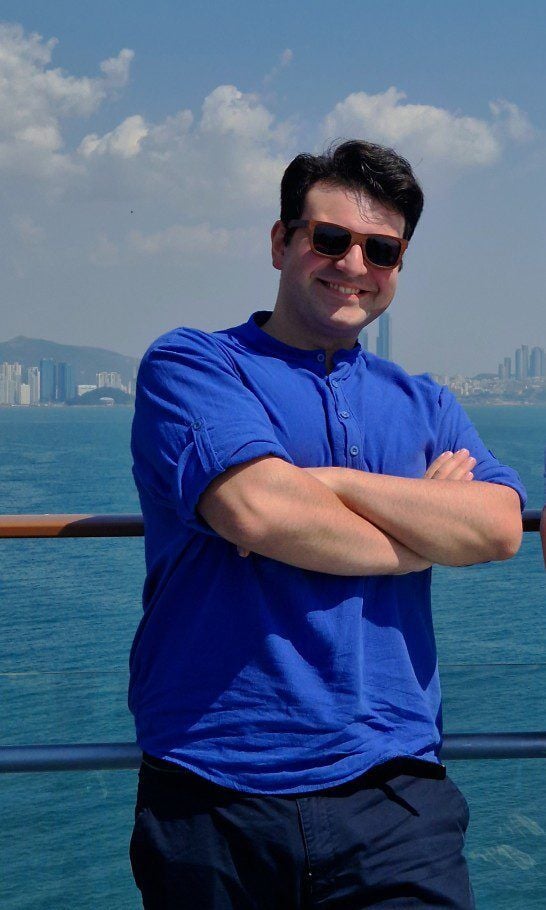
The Journey
My name is Levan Ratiani, and I am from Georgia. I completed my Master’s degree in Inorganic Chemistry with a specialization in Nanochemistry at Korea University in South Korea. During my studies, my research focused on perovskite nanocrystals for optoelectronic applications, particularly materials relevant to next-generation display and semiconductor technologies.
I decided to pursue graduate studies in this field because I was fascinated by how chemistry and nanotechnology can directly contribute to advanced technologies such as displays, semiconductors, and energy materials. South Korea is one of the global leaders in these industries, so studying there gave me the opportunity to conduct research in a very strong scientific and technological environment.
Global Korea Scholarship Details
I received the Global Korea Scholarship (GKS) funded by the Government of the Republic of Korea and administered by the National Institute for International Education (NIIED). The scholarship covers tuition fees, provides a monthly stipend, health insurance, and other forms of support during the study period.
In addition to GKS, during my graduate studies, I also received support from the BK21 Fellowship at Korea University, which supports graduate students engaged in advanced research.
These scholarships allowed me to fully focus on my research and academic development without financial pressure.
Were You Offered Any Other Scholarships?
No, the Global Korea Scholarship (GKS) was the main scholarship I applied for and received before coming to Korea.
Educational Background
Before coming to Korea, I completed my Bachelor’s degree in Chemistry in Georgia, where I developed a strong foundation in inorganic chemistry, materials science, and analytical techniques.
During my undergraduate studies, I actively participated in research projects and academic conferences, which helped me gain early experience in scientific research and presenting results. This background motivated me to continue my studies in advanced materials and nanochemistry and prepared me well for applying to graduate programs abroad.
How Did You Prepare to Apply to Korea University?
When I was preparing my application, it was during the COVID‑19 pandemic, so almost the entire preparation process had to be done online.
Since it was my first time applying for an international scholarship abroad, the process initially felt confusing and overwhelming. There were many requirements, documents, and procedures that I had never dealt with before.
One of the most helpful resources for me was online communities. I joined several Facebook and Instagram groups dedicated to the Global Korea Scholarship (GKS), where previous applicants and current scholars shared their experiences, advice, and information about the application process. These communities became one of my most valuable sources of information.
I also spent a lot of time researching universities, laboratories, and professors through university websites and academic publications. Understanding the research direction of different laboratories helped me determine where my interests would fit best.
One very important thing I learned is that applicants should carefully research the university, the department, and especially the professor whose laboratory they want to join. If you do not do this research beforehand, sometimes departments may assign you to a professor randomly, which can lead to difficulties if your research interests or working style do not match well.
Did You Take Any Standardized Tests?
Yes. Even though the GKS scholarship does not always require an English language certificate, I decided to take the IELTS exam before applying.
I believed having a language certificate would strengthen my application and demonstrate that I was prepared to study in an international academic environment.
How Did You Prepare to Apply to the GKS Scholarship?
Preparation for the scholarship involved several important steps.
First, I carefully prepared all the required documents, including my study plan, personal statement, and research goals.
Second, I spent time preparing for the interview stage, which is extremely important in scholarship selection. I searched for previous interview questions from past GKS applicants and practiced answering them. I also practiced answering questions in Korean, since interview panels sometimes evaluate applicants’ communication ability in Korean.
Finally, I researched the academic structure of Korean universities, particularly the requirements in my field. For example, in the Chemistry Department at Korea University, graduate students must pass additional qualifying exams before the semester begins, so I prepared for those academic expectations as well.
How Was Your Experience at Korea University?
My experience at Korea University was academically very rewarding, although it was also quite demanding.
Because my major is chemistry and involves experimental research, I spent most of my time working in the laboratory conducting experiments and generating research data. Compared to many other majors, laboratory research often requires continuous work throughout the year.
For example, while students in some other fields may have long summer or winter vacations, laboratory research usually continues without long breaks. During my Master’s program, I had very limited vacation time, only about five days away from the laboratory, which sometimes made it difficult to visit my family in Georgia and get proper rest.
Another challenge I experienced was related to the structure of laboratory‑based departments. Most students spent nearly all their time inside their own laboratories, which meant there were fewer opportunities to interact with students from other labs.
However, despite these challenges, the university provided excellent academic resources and research opportunities. During my Master’s program, I presented my work at several academic conferences and contributed to research that led to a publication in the journal Advanced Science.
How Does Korea University Support International Students?
Korea University offers several programs to support international students, including mentoring programs, international student events, and academic support services.
I also participated in a mentoring program where I helped foreign undergraduate students adapt academically and adjust to life in Korea.
Are Your Classes Conducted in English or Korean?
My program was officially advertised as being English‑based, but in practice, many courses were conducted in Korean because I was the only international student in the program.
Studying advanced chemistry in Korea was challenging at first, but it also helped me improve my language skills and adapt to the academic environment.
What Did You Pursue After the Scholarship?
After completing my Master’s degree, I continued working in research related to nanomaterials and semiconductor materials, particularly focusing on perovskite nanocrystals for optoelectronic applications.
My long‑term goal is to contribute to research and development in advanced materials and nanotechnology, especially in areas connected to semiconductor and display technologies.
Would Students Have Problems Academically Without Knowing Korean?
It depends on the program and department.
Some programs are fully conducted in English, but in many cases, daily communication, administrative tasks, and sometimes lectures may still be conducted in Korean. Because of this, having at least basic Korean language skills can make academic and daily life much easier for international students.
What Made Your Application Stand Out?
I believe several factors helped strengthen my application.
First, I had strong academic preparation and research experience in chemistry, which helped demonstrate that I was ready for graduate‑level research.
Another important factor was my personal statement. I wrote it in a very honest and personal way. I did not rely on ready‑made templates or examples from the internet. Instead, I expressed my motivations, goals, and experiences genuinely and wrote from my own perspective. I believe this sincerity helped make my application more authentic.
What Would You Have Done Differently If You Were Going Through the Process Again?
If I were going through the process again, I would try to connect with more people and build a stronger network during my studies.
During my Master’s degree, I spent most of my time in the laboratory working on experiments and research. While this helped me grow academically, it also meant that I did not have many opportunities to enjoy university life as much as I had hoped.
Looking back, I think it would have been beneficial to step out of the laboratory more often, attend more academic events, meet researchers from other laboratories, and expand my professional and social network.
What Advice Would You Give to Future Scholarship Applicants?
My main advice is to prepare early and do thorough research.
Learn about the scholarship, the university, the department, and the laboratory you want to join. These factors can significantly influence your academic experience.
I would also recommend joining online communities such as GKS Facebook or social media groups, since they can be extremely helpful sources of practical information during the application process.
With preparation, persistence, and clear goals, studying in Korea through scholarship programs like GKS can be a very rewarding experience.
Closing Reflection
Looking back, receiving the Global Korea Scholarship was a life‑changing opportunity. It allowed me not only to pursue advanced research but also to experience a new academic culture and challenge myself in ways I had never imagined. I hope that by sharing my experience, future applicants will feel more confident in pursuing their own academic journeys abroad.
Want to submit your
scholarship journey?
Submit Your Story Here!
More Scholarship Recipients
I am Edgar Abaho from Uganda, currently pursuing a Joint Master’s Degree in Mathematical Modelling and Optimization at the .... Read more
Hello, I am Virda from Indonesia. I come from a small city and was fortunate to have the opportunity to pursue my bachelor� .... Read more
Tessia Boateng, affectionately known as AmaTess among family and close friends, is a young Ghanaian professional with a grow .... Read more
Leave A Comment