
Master’s Comparative Local Development Graduate Kumlachew from Ethiopia Shares His Journey of Studying in Multiple European Countries, Europe
University: Corvinus University of Budapest / University of Ljubljana / University of Trento / University of Regensburg
Degree: Erasmus Mundus Joint Master’s in Comparative Local Development (CoDE)
Previous Education: MSc in Local Development Studies, Addis Ababa University | BA in Political Science and International Relations
Scholarship: Erasmus Mundus Scholarship – Fully Funded (~€43,000)
Social Media
LinkedIn: linkedin.com/in/kumlachew-getu/
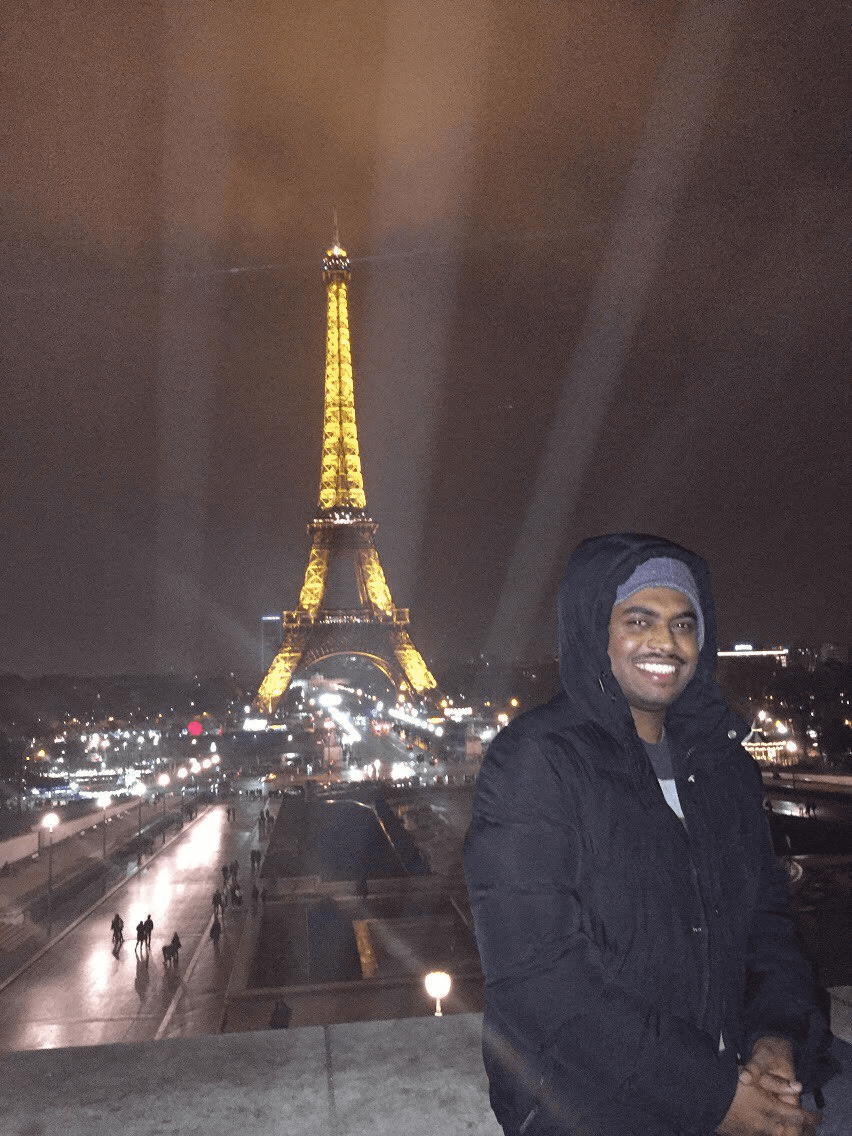
The Journey
I am Kumlachew. I am from Ethiopia, a local development expert and currently working as a management consultant and managing partner of two start-ups in Ethiopia. I studied Political Science for my undergrad and also did my first Master's in Local Development Studies from the esteemed Addis Ababa University.
I was part of the Master CoDE 2016/2018 edition, a Joint European Master's in Comparative Local Development (CoDE). It was offered by Corvinus University of Budapest, University of Ljubljana, University of Regensburg, and University of Trento, in collaboration with University of Belgrade, University of North Carolina at Chapel Hill, and Tshwane University of Technology, supported by the Erasmus+: Erasmus Mundus Programme.
The home university was the University of Budapest (Hungary) and we attended the other two semesters in Ljubljana (Slovenia, University of Ljubljana) and Trento (University of Trento, Italy). In the 2016 batch, the 3rd destination was Trento, although the professors were coming from the University of Regensburg (Germany), and in our educational certificates, the name of the University of Regensburg appeared.
Educational Background
My background is in Political Science and Local Development Studies, and I was a university lecturer before joining the Master CoDE program. I will say my background and experience supported me a great deal. Having directly relevant studies as well as a Master's degree already improves the odds of getting the opportunity to pursue another Master's degree in a closely related area. Moreover, the specific project dissertation I submitted for admission was in line with my background, capabilities, and the ongoing engagements at my university, which enhanced the credibility of my submission to the selection committee.
Pursuing a Bachelor's degree in Political Science and International Relations exposed me, among other things, to basic theoretical insights backed by empirical cases, including meta-level analysis of public policies, the complex dynamics of power relations, decision-making processes, and the constant interrelations of the agent and the structure. The orientation of that degree is well aligned with the nature of the Master CoDE program.
Building on that, my first Master's in Regional and Local Development Studies was a further asset, particularly in investigating the effect of space on my study subjects and locating their place in the function of local development.
Beyond academics, my teaching work and experience conducting several qualitative and quantitative research projects also contributed meaningfully to the strength of my application.
How Did You Prepare to Apply to the Institutions?
My preparation started well before. It began something like 4 to 5 months ahead of the opening of the scholarship window. I learned about the scholarship from a close colleague who had benefited from the same program. He guided me and shared crucial information about the program, the universities involved, the professors, and the overall experience. Building on this, I deeply researched the nature of the program. I paid special attention to the project dissertation, getting my recommendation letters in order from the required sources, my supervisors, and my employer at the time, and authenticating my academic credentials.
How Did You Prepare to Apply for the Erasmus Mundus Scholarship?
I followed a more focused approach rather than casting the net wide. I applied for Master CoDE and the Mandela Washington Fellowship. For both opportunities, I applied a focused and intentional approach, put everything in order, and put maximum effort into responding to the requirements of the institutions. While I was shortlisted and reached the interview stage as a semifinalist for the Mandela Washington 2016 Fellowship, I was awarded the Erasmus Mundus Scholarship (43K Euro).
The Master CoDE program was among the most competitive and prestigious in the Erasmus Program, where students from both the global south and global north compete to enroll, due to the interdisciplinary nature of the program and the exposure to various cultures.
I believe the quality of my application, the motivation letter, credentials, and project proposal align with the nature of the program, along with the relevance of my education and experience, as well as the fulfillment of all the follow-up documents required by the organizers, made me stand out.
Could You Briefly Discuss the Erasmus Mundus Program You Pursued and the Specific Field of Study It Focused On?
The Joint European Master in Comparative Local Development is a multidisciplinary program drawing from sociology, geography, area studies, political science, economics and more. It basically tries to understand the spatial dimension of economic growth and aims to answer why some places are developed while others are not, and how we can replicate the same processes.
We took mandatory courses such as Economic Foundations of Local Development, Legal Analysis of Local Development, Social and Political Foundations of Local Development, Data Analysis and Territorial Statistics, The Management of Diversity in Societies, Economic and Social Analysis of Institutions, Local Sustainable Development, and Research Methodology, Project Evaluation and Impact Assessment. We also took a couple of elective courses and a preferred language course. Additionally, we enrolled for a 6-month, 350-hour internship in already identified institutions that have linkages with the programme, or any other institutions meeting our research objectives, upon authorization by the programme coordinators.
What Did You Pursue After the Scholarship? (Work, Further Study, Research or Something Else?)
I stayed for a year at my home university in Budapest, supporting my internship supervisor in his book project. Following that, I returned home and worked in research institutions and later in a private consulting company in different capacities.
How Did the Cost of Living Vary Across the Countries You Studied in? Which Country Was the Most Affordable or Expensive, and How Did You Manage Financially?
Budapest, Hungary, was by far the most affordable, while Trento was the most expensive. Ljubljana, Slovenia, was somewhere in the middle. Their special offers on transportation fares and food at restaurants made the overall cost of living feel less expensive.
In Budapest, we stayed in student dormitories where we paid affordable rates. Although it was the same in Trento, the cost was roughly three times higher. In Slovenia, we stayed in private apartments that we found ourselves. As for food, transportation, student materials, communication costs, and so on, Budapest was by far the most affordable. We were able to save some money and also travel to other European cities and experience various cultures.
Did You Face Any Language Barriers, and if So, How Did You Overcome Them? Did the Language of Instruction Change from One Country to Another?
Since Budapest was the first destination, and due to the relatively few people who spoke decent English, we faced some issues when going out for groceries and navigating other public spaces. We used language translation tools, and the younger population usually spoke good enough English. I also talked with senior students on campus about how they handled this. The first couple of months it was a real issue. The same could be said about Trento, Italy, though it was relatively better than Budapest. The young in Trento speak good English and were also somewhat more open to engaging with students from other countries. We did not face that much of an issue in Ljubljana since you can find things written in English alongside the local language, and people there generally speak a decent amount of English.
After Budapest, the language barrier was not much of an issue, even if it is always present in some form. You just learn how to navigate it as you go.
Would You Recommend the Erasmus Mundus Program to Others? What Advice Would You Give to Someone Considering This Scholarship?
The Erasmus Plus programme is genuinely prestigious, particularly in terms of exposure and cultural experience, apart from the real professional growth and career advancement it provides.
For someone from the global south, it offers the opportunity to witness the immense cultural heritage that Europe carries, the historical memories it has collected and properly preserved. You learn a lot from the various colleagues and classmates who come from different academic backgrounds and different parts of the world. You also begin to better understand the gaps in the curriculum back home. The cultural exposure and experiencing various cultural horizons make you a better and more complete person.
Professionally, it opens doors for further studies. And if you decide to join the industry, it helps you land higher-paying positions.
I highly recommend the Erasmus Mundus program for anyone interested in growing in their respective field.
Looking Back, Would You Have Done Anything Differently During Your Time in the Program?
Not much. I enjoyed the entire program. I visited dozens of countries, learned new skills, and met amazing people from all over the world. But if there is one thing I would change, I would have been more intentional about the choice of internship and started searching for it much earlier. Finding the right institution could really help in gaining real experience, securing a more extended contract, and getting genuine work exposure in Europe or the developed world.
Want to submit your
scholarship journey?
Submit Your Story Here!
More Scholarship Recipients
My name is Mona Perlingeiro, and I am from São Paulo, Brazil. São Paulo is the Brazilian city with the largest number of m .... Read more
I am Ludmille Lyvert, and I am from Haiti. I hold a master’s degree in Women’s Studies, and I am currently a Ph.D. stude .... Read more
My name is Leisha Ravindra Babu, and I am from India. I am currently a Global Korea Scholarship (GKS) scholar completing my .... Read more
Leave A Comment