
Marie Skłodowska-Curie Doctoral Candidate, Khent Ivan Duerme from the Philippines, Shares His Journey of Pursuing a PhD at the Institute of Low Temperature and Structure Research, Polish Academy of Sciences, Poland
University: Institute of Low Temperature and Structure Research (INTiBS), Polish Academy of Sciences, Poland
Degree: PhD in Chemistry (Functiglass Project – MSCA Doctoral Network)
Previous Education: MSc in Chemical Nanoengineering – Erasmus Mundus Joint Master’s Degree (Aix-Marseille Université, Politechnika Wrocławska, Università degli Studi di Roma Tor Vergata)
Scholarship: Marie Skłodowska-Curie Actions (MSCA) Doctoral Network – Fully Funded (Living allowance, mobility allowance, and research/training budget)
Other Offered Scholarships: TIGER Master’s Excellence Scholarship – €10,000/year (Erasmus Mundus MSc in Chemical Nanoengineering)
Social Media
The Journey
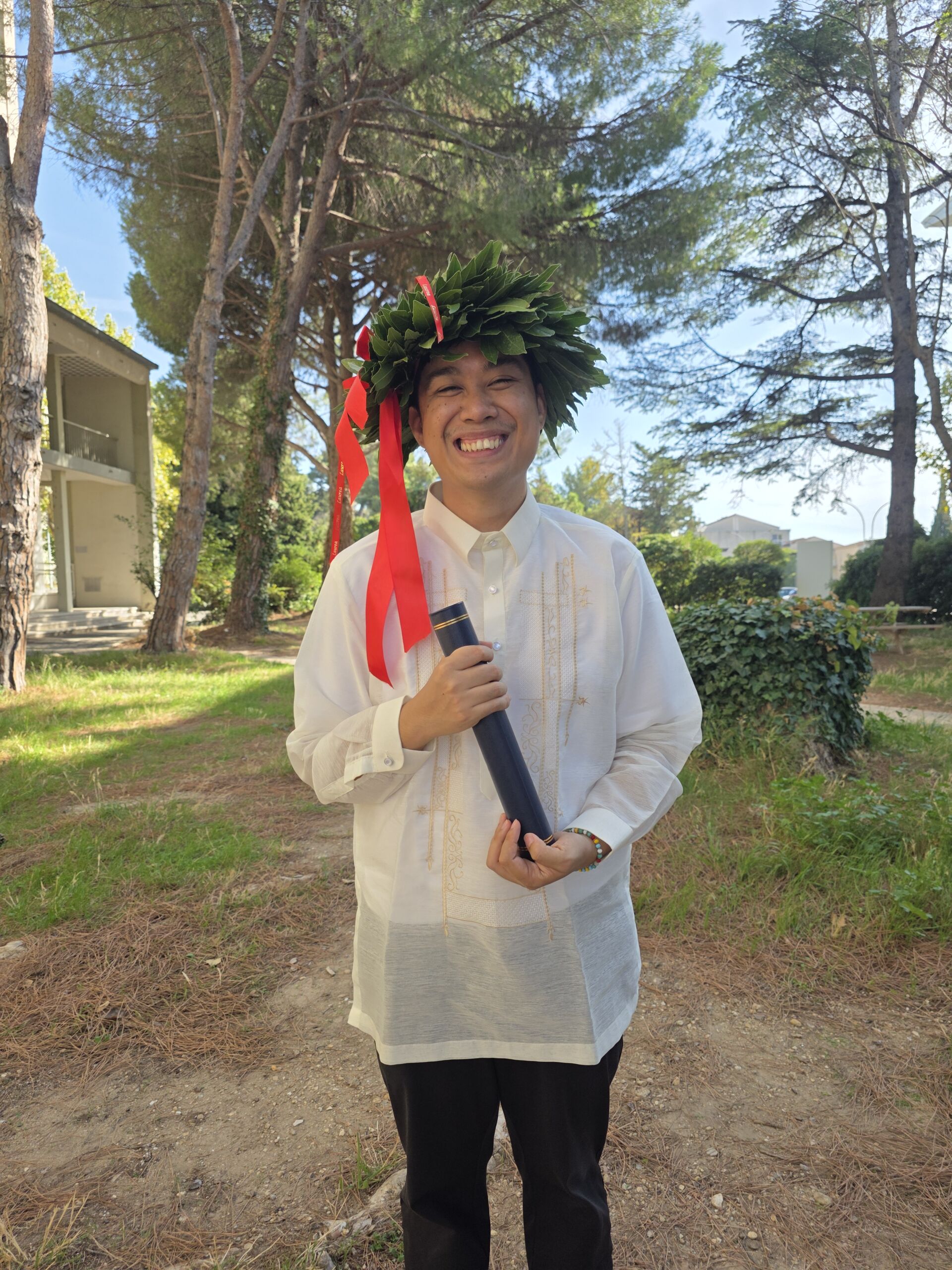
Mabuhay! I am Khent Ivan Duerme, and I come from the small town of Padada, Davao del Sur, Philippines. I have recently started my PhD studies as a Marie Sklodowska-Curie Doctoral Candidate under the Functiglass project, and I am based at the Institute of Low Temperature and Structure Research (INTiBS), Polish Academy of Sciences in Wroclaw, Poland. My research focuses on the fabrication of optical sensors for the detection of pathogens in food.
Even before becoming a licensed chemist in my country, I have always been fascinated by nanoscience and its multifaceted applications, particularly in addressing pressing environmental, health, and food safety and security issues. In retrospect, this interest motivated me to apply for the Erasmus Mundus Joint Master’s Degree in Chemical Nanoengineering, which I recently completed. With my master’s degree and PhD studies, I hope to leverage the unique properties of nanomaterials and glasses to develop reliable and accessible sensors for the food industry.
Erasmus Mundus and Marie Skłodowska-Curie Actions (MSCA) Doctoral Scholarship Details
My MSc in Chemical Nanoengineering was awarded through an Erasmus Mundus Joint Master’s Degree program offered by a consortium of three universities: Aix-Marseille Université (France), Politechnika Wrocławska (Poland), and Università degli Studi di Roma Tor Vergata (Italy). To support my study, I received the TIGER Master’s Excellence Scholarships from Aix Marseille Université, amounting to €10,000 per year to cover the tuition, travel costs, and living expenses. While in the program, I also had the opportunity to apply for Erasmus+ student mobility (study and traineeship) scholarships, which indeed helped me financially.
I am currently pursuing my PhD as a Marie Skłodowska-Curie Actions (MSCA) Doctoral Candidate under the Functiglass project. The project provides generous support through a living allowance, a mobility allowance, and a research and training budget, covering my doctoral research, professional development, and international collaborations throughout the program.
Educational Background
I hold a bachelor’s degree in chemistry from the University of the Immaculate Conception, Davao City, Philippines, where I graduated Magna Cum Laude. After passing the national examination, I became a licensed chemist and chemical technician. I served as an instructor in the Department of Food Science and Chemistry at the University of the Philippines Mindanao, where I also built my research portfolio, focusing on the green synthesis of nanoparticles and their applications. I believe that my educational background and professional experience demonstrate my fit and readiness for the programs I applied to.
How Did You Prepare to Apply to Institutions?
- Knowing the objectives and goals of the project. I did thorough research on the program, the laboratories/research groups, and the professors/supervisors involved.
- Writing a motivation letter that is truthful yet impactful. I did not just express my interest, but I elaborated on my skills that will help achieve the project goals.
- It was also helpful for me to reach out to the alumni of the program and to current graduate students to ask for advice (and their experiences) regarding the application process.
- Ask for recommendations from referees who really know you and who can vouch for your work ethic.
How Did You Find Information About Scholarships and Institutions?
For the Erasmus Mundus scholarships, I initially learned about them through word of mouth, and then did my own research to identify specific EMJMD programs that aligned well with my research experience and career goals. For searching PhD programs, I used the EURAXESS website, which I highly recommend.
Did You Take Any Standardized Tests? If So, How Did You Prepare for Them?
No. The Erasmus Mundus program and INTiBS both did not require any English proficiency score, so I submitted a certificate of English as a medium of Instruction provided by my university.
How Did You Prepare to Apply to the Erasmus Mundus and Marie Skłodowska-Curie Actions (MSCA) Doctoral Scholarship?
For both my master’s and PhD degrees, applying to the program means you are already applying for the scholarship as well.
What Do You Think Made Your Application Stand Out?
I believe that my academic performance and research experience, together with my genuine interest in the field and my commitment to making a positive impact both in my country and globally, contributed positively to my application. I would also like to highlight here the importance of the recommendations from my referees.
What Would You Have Done Differently if You Were Going Through the Process Again?
I believe I wouldn’t change much, as where I am today is the result of the decisions I made. If I’m nitpicking, I might have applied to more positions that genuinely interested me earlier, especially when pursuing master’s programs. I hesitated at the time, feeling my experience wasn’t enough, but I’ve learned that the ‘what ifs’ often bother you in silence more than actual rejections.
What Advice Would You Give Those Looking to Apply for a Similar Scholarship?
Looking back, as cliché as it may sound, my scholarships were attained through second chances. I applied for the EMJMD in Chemical Nanoengineering in 2020 and was rejected. Although I was waitlisted during my second attempt in 2023, I was offered a different scholarship that allowed me to join the program. Fast forward to my PhD applications: I applied for this MSCA DC position and was not selected on the first try. A few months later, I applied for the same position again—more motivated than ever—went through a series of interviews, and was finally accepted.
Despite my academic performance and research experience, there were no guarantees that I would receive the scholarship. The competition for these prestigious programs is intense. Thus, the first step in preparing any application is cultivating the mental fortitude to accept rejection. Secondly, to fully come to terms with rejection (or acceptance!), you need to give your absolute best in your application, leaving no “what ifs” about what could have been done better. You do not need to be the best among the applicants; you just need to do your very best to succeed.
Want to submit your
scholarship journey?
Submit Your Story Here!
More Scholarship Recipients
My name is Nick Peoples, and I am currently an Emergency Medicine resident physician in Boston. I was born and raised in .... Read more
My name is Hajiyev Sarkhan, and I am from Shemkir, Azerbaijan. My academic journey has been shaped by a strong belief that e .... Read more
My name is Nainsi Chauhan, and I am from Mumbai, India. I was born into an economically weak family and raised in an orthodo .... Read more
Leave A Comment