
Master’s Civil Engineering Graduate Kevin Mikhail Revilloza from Philippines Shares His Journey of Studying in South Korea, South Korea
University: Kongju National University / Daegu University
Degree: MSc in Civil and Environmental Engineering
Previous Education: BSc in Civil Engineering, University of Santo Tomas
Scholarship: Global Korea Scholarship (GKS) – Fully Funded (tuition, stipend, airfare, language year)
Social Media
LinkedIn: linkedin.com/in/kevinrevilloza/
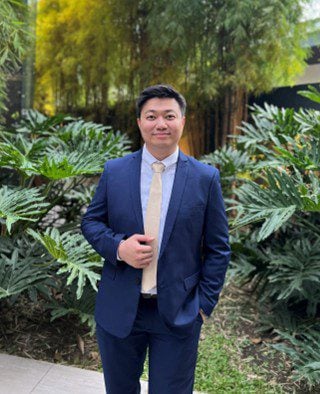
The Journey
안녕하세요~! My name is Kevin Mikhail Revilloza, and I’m originally from Manila, Philippines. I’m now based in Sydney, Australia, after previously living in Seoul, South Korea. I’m a civil engineer by background, and I completed my Master’s degree in Civil and Environmental Engineering in South Korea under the Global Korea Scholarship (GKS).
I chose this field because I’ve always been interested in infrastructure development and how it directly impacts people’s lives. At the time, I was working in the Philippine government, contributing to national road network planning, and I wanted to further develop my technical knowledge and gain international exposure to improve my ability to contribute to large-scale infrastructure projects.
Global Korea Scholarship Details
I received the Global Korea Scholarship (GKS) back in 2016, which is a fully funded scholarship offered by the National Institute for International Education (NIIED).
The scholarship covers:
- Full tuition fees
- Monthly stipend
- Round-trip airfare
- One year of Korean language program (at a different university from your degree program)
- Settlement and research allowances
What I really appreciated about GKS is that it allows you to fully focus on your studies without financial stress.
However, one important requirement is that you must achieve at least TOPIK Level 3 during the one-year Korean language program before proceeding to your degree.
Were You Offered Any Other Scholarships?
There are additional scholarships available in Korea, but I was not eligible for them since I had already received the GKS. During my master’s degree, I also received a small supplementary stipend from my laboratory.
Educational Background
I completed my Bachelor of Science in Civil Engineering at the University of Santo Tomas in the Philippines.
After graduation and prior to applying for the scholarship, I was also working in the Philippine government, contributing to infrastructure planning for the national road network. I think that this became a strong base for me when I applied for the scholarship, giving me a clearer direction in pursuing further studies.
After receiving the scholarship, I attended Daegu University for my one-year Korean language program. I began with no knowledge of Korean but luckily was able to achieve TOPIK Level 3 (which is the required level to proceed to the degree program) within 6 months.
I then continued my Master’s degree at Kongju National University in Civil and Environmental Engineering. During my studies, I was part of the Non-Point Source Pollution Laboratory, where our research focused on stormwater runoff and nature-based solutions. I graduated with A+ grades in all courses.
How Did You Prepare to Apply to Kongju National University / Daegu University?
I found out about the scholarship through my university in the Philippines. There were previous students who had successfully gone to Korea, which made me more aware of the opportunity.
I also used official scholarship websites and university resources, but honestly, hearing from actual people who went through the process helped a lot.
Since the medium of instruction during my Bachelor’s degree was in English, I was not required to take any standardized test during my scholarship application.
However, I was required to take the TOPIK during the scholarship period, which later proved important both academically and professionally.
How Did You Prepare to Apply to the Global Korea Scholarship?
I was under the University Track for GKS, which means the university first selected and recommended me for the scholarship.
My preparation mainly focused on:
- Writing a clear and compelling personal statement
- Explaining my career goals and motivations
- Aligning my experience with what I wanted to achieve
At that time, I was working in the Philippine government on infrastructure planning, and that became the foundation of my story.
To be honest, the process itself was not overly complicated. I think staying genuine and clear about my goals played a big role.
How Is (was) Your Experience at Kongju National University / Daegu University?
My overall experience was very rewarding academically, but also quite challenging culturally at the beginning.
During my one-year Korean language training at Daegu University, I had a very positive experience. The university provided strong support for international students, helping us not only prepare for the TOPIK requirement but also immerse ourselves in Korean culture. It was honestly one of the best experiences I had in Korea.
For my Master’s at Kongju National University, the academic environment was rigorous, and graduate school culture in Korea can be quite demanding, especially in terms of expectations and communication styles.
However, with the support of my professor and my international peers, I was able to adapt well. In the end, I graduated top of my class, which made the experience very fulfilling.
How Do You Rate Kongju National University / Daegu University Academically and Why?
I would describe Daegu University as a very strong institution, especially for its Korean language program. The university provides excellent support for international students, not only in helping them achieve the required TOPIK level, but also in allowing them to fully immerse themselves in Korean culture. The teaching system is well-structured, and the environment makes it easier for students to adapt and improve quickly.
For Kongju National University, I would consider it a good institution academically, particularly in engineering, where many professors have extensive industry backgrounds. Their expertise and professional involvement create valuable opportunities and exposure for students.
However, the program is quite research-focused, sometimes more than classroom-based learning. This can feel a bit ironic, since graduation is based on coursework grades, while research itself isn’t formally graded aside from the thesis defense.
That said, the research experience was incredibly valuable. It allowed me to develop deeper expertise and gave me opportunities to present my work at both international and domestic conferences, which I consider a significant advantage.
How Does Kongju National University / Daegu University Support International Students?
Support can vary depending on the university, but one thing I really appreciated was the GKS buddy system, where international students are paired with Korean students.
This helped not only with adjusting to daily life but also in building friendships and cultural understanding.
Overall, the support is there, but you also need to be proactive in adapting.
Are Your Classes Conducted in English or Korean?
Most of my classes were conducted in English, but some professors taught in Korean. However, most materials were in English, so it was still manageable. That said, having Korean language skills definitely helped a lot.
What Did You Pursue After Global Korea Scholarship?
After completing my Master’s, I was able to work at DOHWA Engineering, the number one engineering consultancy firm in Korea, where I became the first foreigner ever hired through their public recruitment (공채) system.
I worked there for about five years, handling international infrastructure consulting projects funded by organizations such as the World Bank, Asian Development Bank, other Multilateral Development Banks, etc., and had the opportunity to work across multiple countries.
Eventually, I moved to Sydney, Australia, where I am currently working at an Australian construction company, continuing my career in infrastructure and pre-contract related roles.
Because of GKS, I was also able to fast-track my residency in Korea, eventually obtaining permanent residency.
Would Potential Students Have Any Problems Academically Not Knowing Korean?
Yes, I believe so. While it is possible to manage academically without strong Korean skills, you won’t be able to fully immerse yourself in the culture, society, and professional environment. Even basic Korean makes a huge difference in daily life, networking, and career opportunities.
What Do You Think Made Your Application Stand Out?
I think a combination of factors helped:
- My academic background,
- My professional experience in the Philippine government, working on national infrastructure projects,
- And most importantly, being genuine in my application
I clearly communicated my goals and why the scholarship mattered to me, rather than just listing achievements.
What Would You Have Done Differently if You Were Going Through the Process Again?
If I were to do it again, I would have started learning Korean earlier, as it would have strengthened both my application and my preparation for life in Korea.
What Advice Would You Give Those Looking to Apply for a Similar Scholarship?
My advice would be:
- Having strong academic and professional experience helps, but it’s not everything
- Be clear about your “why”, your purpose matters more than perfection
- Stay honest and genuine in your application
And most importantly, don’t just aim to get the scholarship , aim to make the most out of the experience once you get there.
Want to submit your
scholarship journey?
Submit Your Story Here!
More Scholarship Recipients
My name is Mona Perlingeiro, and I am from São Paulo, Brazil. São Paulo is the Brazilian city with the largest number of m .... Read more
I am Ludmille Lyvert, and I am from Haiti. I hold a master’s degree in Women’s Studies, and I am currently a Ph.D. stude .... Read more
My name is Leisha Ravindra Babu, and I am from India. I am currently a Global Korea Scholarship (GKS) scholar completing my .... Read more
Leave A Comment