
European Master’s in Clinical Linguistics (EMCL++) Graduate Ivena Nathania Victor from Indonesia Shares Her Journey of Studying in the Netherlands, Belgium, and Finland through Erasmus Mundus
University: University of Groningen (Netherlands), Ghent University (Belgium), and University of Eastern Finland (Finland) – European Master’s in Clinical Linguistics (EMCL++) Consortium
Degree: MSc & MA in Clinical Linguistics (Erasmus Mundus Joint Master’s Programme – EMCL++)
Previous Education: Bachelor’s in Psychology – University of Surabaya, Indonesia (Summa Cum Laude, Top 3%)
Scholarship: Erasmus Mundus Joint Master’s Scholarship – Fully Funded (Tuition, Monthly Stipend, Travel & Insurance Support)
Social Media
LinkedIn: linkedin.com/in/ivena-nathania-victor/
The Journey
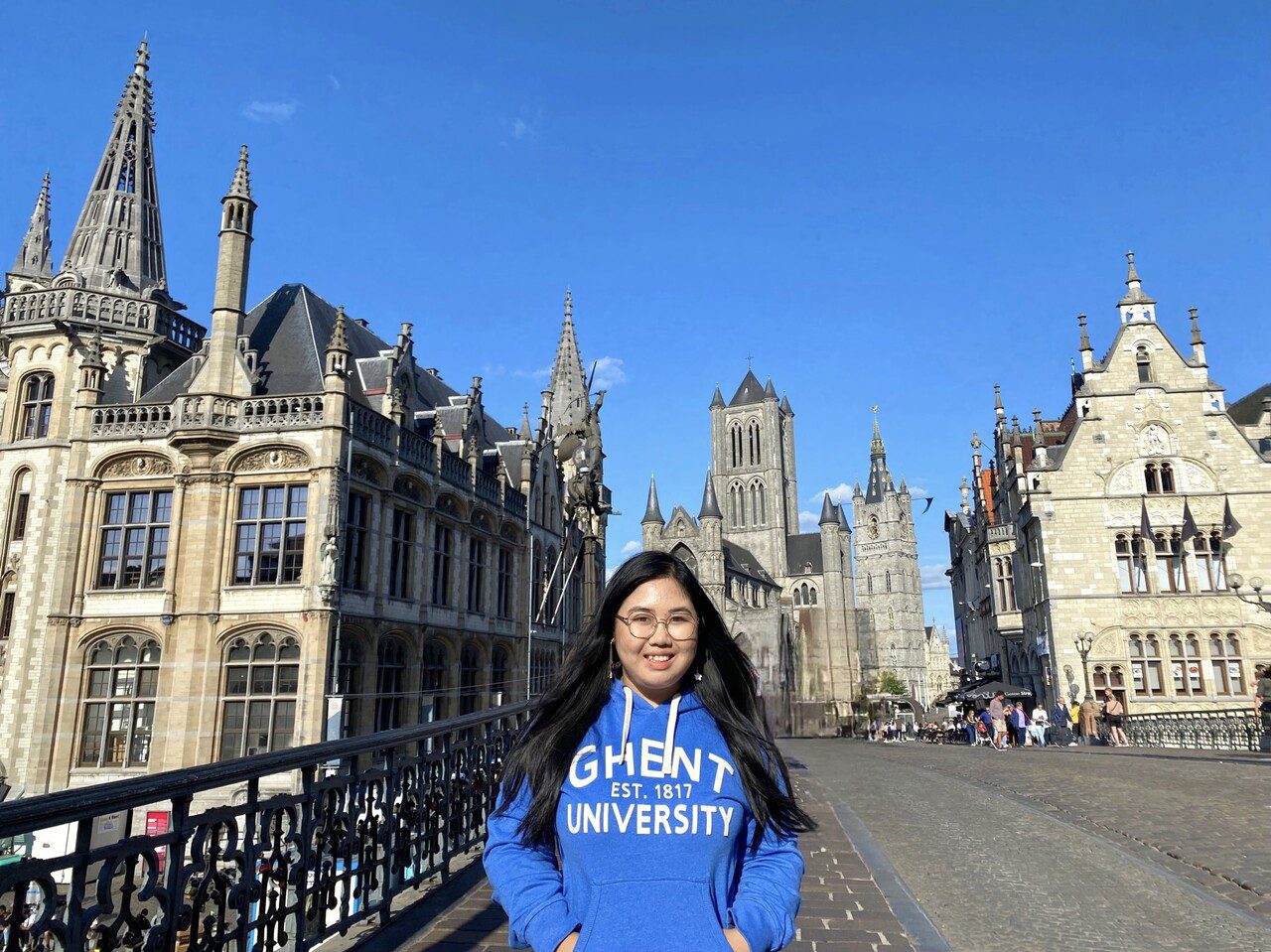
My name is Ivena Nathania Victor; you can call me Ivena. I have a Master’s of Science and Master’s of Arts degree in Clinical Linguistics, as well as a Bachelor’s of Psychology. I obtained my master’s from the European Master’s in Clinical Linguistics (EMCL++ - website: emcl.eu) program. The study was held in the University of Groningen (the Netherlands), Ghent University (Belgium), and the University of Eastern Finland (UEF). The bachelor’s study was conducted in University of Surabaya, Indonesia. I obtained an excellence academic scholarship upon entering university and was then selected to be an awardee of the prestigious Djarum Beasiswa Plus, another academic scholarship with 3% acceptance rate in Indonesia. I graduated from my bachelor’s study with a summa cum laude and was in the top 3% graduate.
Educational Background
I was actively involved in the organisation inside and outside of my university. I was part of a research exchange program, and my group won the runner-up, which helped me to have more experience in doing intercultural research. I was also a board supervisor and head of a children’s learning center. Other than that, I was a teaching assistant for a course on students with special needs. All of these experiences helped me to dig deeper into research on children with disabilities, language disorders, etc. I also worked as a child therapist before I went to Europe to start my studies. All of it prepared me to have a comprehensive perspective of the real-life application and challenges of language disorders and how research can help them.
How Did You Prepare to Apply for the Erasmus Scholarship?
I prepared by searching for scholarship and university information, as well as the subjects, and I contacted alumni as well.
Could You Briefly Discuss the Erasmus Mundus Program You Pursued and the Specific Field of Study It Focused On?
Based on the website:
EMCL++ is a 24-month, 120 ECTS, full-time research master’s programme that provides students with training in clinical linguistics, neurolinguistics, and psycholinguistics. We fund and prepare very talented and motivated students to carry out original research and to be widely employable in academia (PhD) and/or industry (e.g. neurotechnology, clinical sector). EMCL++ is organized as a consortium of three academic partners: University of Eastern Finland (UEF), Ghent University (UGENT), and University of Groningen (RUG). At UEF, the main focus is on speech technology and programming with Python, including both fundamental theory and methods, as well as their application to the assessment of, and adaptive solutions for, speech impairments. At UGENT, students are familiarized with advanced topics in statistics and psycholinguistics, including bilingualism, dyslexia, and eye tracking. Finally, at the RUG, the emphasis is on crosslinguistic studies of language-impaired children and adults, language testing in neurosurgical settings, and the usage of neurotechnology and IT for the diagnosis and treatment of language impairments. In every cohort, we welcome circa twenty students from all over the world. These students hold a degree in Linguistics, Psychology, Cognitive/Biomedical Sciences, Special Education, Speech and Language Therapy or related disciplines. Over two years, our students receive training at each of the academic partners, do a compulsory internship at one of the associated partners, and write an original master’s thesis. Thereafter, 70% of our students continue to do research in PhD programmes. Furthermore, since 2017, we have been seeing an increase in alumni who pursue R&D and clinical work, making our programme competitive in the international market.
What Did You Pursue After the Scholarship? (Work, Further Study, Research, or Something Else?)
I am now working as a Clinical Linguist. I am a Founder of KUBICARA (which translates to I TALK in Indonesian). I developed and designed a communication, language, and speech assessment and intervention program in collaboration with a psychological clinic in Indonesia. @kubicara on Instagram
How Did the Cost of Living Vary Across the Countries You Studied In? Which Country Was the Most Affordable or Expensive, and How Did You Manage Financially?
I received the same amount of money for all countries. The Netherlands was the most expensive, and Finland was the most affordable, as there was a subsidy from the government for the housing.
Did You Face Any Language Barriers, and if So, How Did You Overcome Them? Did the Language of Instruction Change from One Country to Another?
The language of instruction was the same, and everything was in English. didn’t really experience a language barrier since everyone speaks English.
Would You Recommend the Erasmus Mundus Program to Others? What Advice Would You Give to Someone Considering This Scholarship?
Yes, definitely! Research a lot about your program before you apply, and about the countries and the culture. Get to know the alumni, reach out! and believe in yourself, but also ask for people’s opinions on your motivation letters (from people who have already got the scholarship)
Looking Back, Would You Have Done Anything Differently During Your Time in the Program?
I would probably study more before I start the program because I came from psychology to linguistics. But other than that, I really enjoyed the program; it was life-changing! I met so many friends from all over the world, enjoyed lots of good food, and learned lots of new cultures! I would do it again and again!
Want to submit your
scholarship journey?
Submit Your Story Here!
More Scholarship Recipients

My name is Zuzana Benešová, most people know me as Suzy, and I come from the Czech Republic. I am a person with a long lis .... Read more
My name is Aimann Khan, and I am from Swat, Pakistan. I am currently pursuing a Master’s degree in Social Policy in the Un .... Read more
- Chevening Scholarship
- DAAD Helmut-Schmidt-Programme
- Exchange Scholarships
- Fully Funded Scholarships
- Germany
- Global Undergraduate Exchange Program (Global UGRAD)
- Loughborough University
- Master's Scholarships
- Pakistani Nationality
- Political Science
- Public Policy
- Texas A&M University
- United Kingdom
- United States
- University of Duisburg-Essen
My name is Krishna Sharma, and I am a public health professional and SRHR activist from Dailekh, a rural district in western .... Read more
Leave A Comment