
Global Korea Scholarship PhD Graduate Dr. Said Salad from Somalia Shares His Journey of Studying Veterinary Preventive Medicine at Gyeongsang National University, South Korea
University: Gyeongsang National University, South Korea
Degree: PhD in Veterinary Preventive Medicine
Previous Education:
– MSc in Veterinary Pathology, Hajee Mohammad Danesh Science and Technology University, Bangladesh – CGPA 3.27/4.0
– Bachelor of Veterinary Medicine, Plasma University, Mogadishu, Somalia – CGPA 3.80/4.0
Scholarship: Global Korea Scholarship (GKS-G) – Fully Funded (tuition, monthly stipend, round-trip airfare, settlement allowance, research support, Korean language training, health insurance)
Other Offered Scholarships: Government of Bangladesh Scholarship for International Students (Somalia Quota) – MSc at Hajee Mohammad Danesh Science and Technology University, partially funded
Social Media
LinkedIn: linkedin.com/in/said-abduolrahman-salad-phd-52284b177/
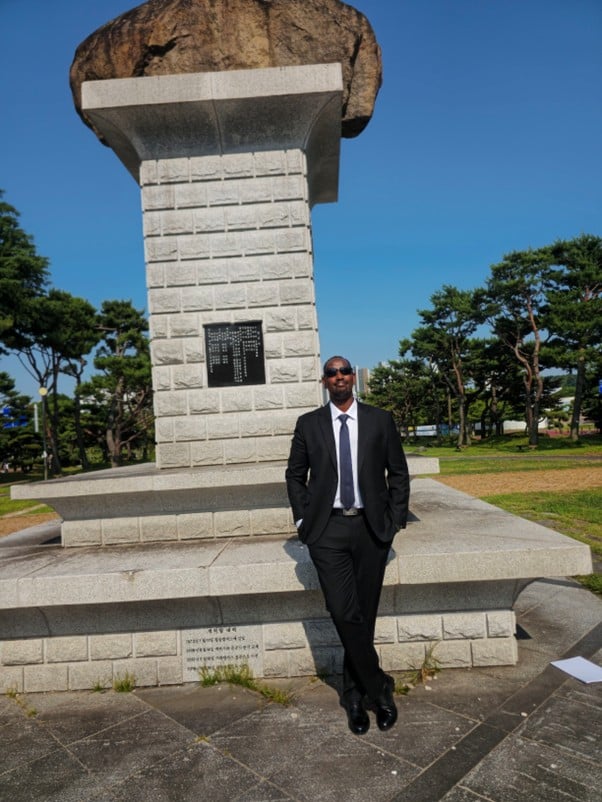
The Journey
I am Dr. Said Salad, originally from Somalia. Growing up in a country where livestock plays a fundamental role in livelihoods, food security, and the national economy, I developed a strong interest in animal health and disease prevention from an early age.
I come from a pastoralist livestock-herding family, where animal production is not only a source of income but also a way of life. In many rural pastoral areas, including my own community, we have long faced serious challenges, such as unknown animal diseases, prolonged droughts, and limited access to veterinary services. Pastoral production systems in Somalia are primarily nomadic or semi-nomadic, relying on vast arid and semi-arid lands to rear goats, sheep, and camels. These systems depend heavily on natural resources, climate variability, and traditional knowledge and are typically characterized by high animal mobility and relatively low labor inputs per animal.
Witnessing these persistent hardships in my community deeply shaped my understanding that veterinary medicine is not only about treating individual animals but also about protecting public health, controlling infectious diseases, and strengthening resilient food systems.
Over time, I have become increasingly interested in carefully planned transitions. Where appropriate, more structured and improved livestock production systems, including semi-intensive and intensive management approaches, could help reduce the devastating impacts of drought, limit disease spread, and improve overall productivity when applied in a context-appropriate and sustainable manner.
In my professional opinion, there is an urgent need to gradually establish modern livestock production systems in Somalia and other developing countries. Today, pastoral communities face mounting pressures from climate change, recurrent droughts, and increasingly severe flooding events. These overlapping crises continue to threaten livestock survival, pastoral livelihood, and national food security.
By thoughtfully integrating modern veterinary services, strengthening disease surveillance, and implementing climate-resilient management practices and context-sensitive livestock intensification, pastoral systems can become more productive, resilient, and better prepared for future shocks while respecting and building upon the valuable traditional knowledge of pastoral communities.
These lived experiences and reflections ultimately shaped my academic and professional vision and strongly motivated me to pursue advanced studies in Veterinary Preventive Medicine, with a particular focus on infectious disease control and public health systems in developing countries.
Global Korea Scholarship Details
I was honored to receive the Global Korea Scholarship (GKS-G), a fully funded program supported by the Government of the Republic of Korea. Through this prestigious opportunity, I became one of the first Somali scholars to earn a doctoral degree under the Global Korea Scholarship program in South Korea.
- Institution: Gyeongsang National University, South Korea.
- Degree: Ph.D. in Veterinary Preventive Medicine
- Scholarship: Global Korea Scholarship (GKS-G)
Funding Coverage:
- Full tuition fee.
- Monthly living stipend.
- Round-trip airfare.
- Settlement allowance.
- Research support.
- One-year Korean language training.
- Medical insurance.
The GKS program provided comprehensive financial and academic support throughout my doctoral journey.
Were You Offered Any Other Scholarships?
Yes.
Government of Bangladesh Scholarship for International Students – Somalia Quota
- Institution: Hajee Mohammad Danesh Science and Technology University.
- Degree: M.Sc. in Veterinary Pathology.
- Coverage: Full tuition and financial support.
Educational Background
Ph.D. in Veterinary Preventive Medicine
Gyeongsang National University, South Korea
CGPA: 4.17 / 4.50
M.Sc. in Veterinary Pathology
Hajee Mohammad Danesh Science and Technology University, Bangladesh
CGPA: 3.27 / 4.00
Bachelor of Veterinary Medicine
Plasma University, Mogadishu, Somalia
CGPA: 3.80 / 4.00
How Did You Prepare to Apply to Gyeongsang National University?
I prepared early by thoroughly researching target universities and aligning my academic profiles with their requirements. I carefully reviewed the eligibility criteria, organized all required documents, and strictly followed the application timelines. This strategic preparation enabled me to submit a competitive application.
How Did You Find Information About Scholarships?
I regularly monitored reliable sources, including official university websites, Korean Embassy announcements, the Global Korea Scholarship (GKS) website, academic networks, and reputable social media platforms. I also contacted current and former GKS scholars to learn from their experiences and advice on the program.
Consistent searching, proactive networking, and early preparation were the keys to my success.
Standardized Tests
- IELTS Academic (2019): Band 5.5
- TOPIK II: Level 3
Preparation Strategy:
- Practiced using past exam papers.
- Studied academic English vocabulary daily.
- Attended structured Korean language classes in Korea.
How Did You Prepare to Apply to the Scholarship?
My preparation strategy included:
- Writing a clear and focused study plan aligned with Korea’s research strengths.
- Developing a strong personal statement explaining my academic vision.
- Contacting potential supervisors and aligning research interests.
- Carefully preparing required documents (recommendation letters, transcripts, certificates).
- Demonstrating a clear long-term goal of contributing to the veterinary and public health systems of Somalia.
Additionally, I gained one year of practical field experience in Somalia after my master’s degree, which significantly strengthened my application by demonstrating real-world impact.
How Was Your Experience at Gyeongsang National University?
My experience at Gyeongsang National University was academically enriching and professionally transformative. The university offers excellent research facilities, advanced laboratory infrastructure, and strong interdisciplinary collaboration opportunities to its students. I have access to modern diagnostic technologies and have received supportive mentorship throughout my doctoral training.
The academic environment strongly encourages independent thinking, international collaboration, and high research standards.
How Do You Rate Gyeongsang National University Academically and Why?
I rate the institution very highly because of the following reasons:
- Strong research infrastructure.
- Supportive supervisors.
- International academic exposure.
- Opportunities to publish and attend conferences.
The structured research system and funding opportunities significantly enhanced my academic growth.
How Does Gyeongsang National University Support International Students?
The university provides:
- Korean language training programs.
- International student office services.
- Cultural adaptation programs.
- Academic mentoring.
- Health insurance support.
These systems make the transition smoother for international students.
Are Your Classes Conducted in English or Korean?
My doctoral coursework and research activities were primarily conducted in the English language. Most of my laboratory colleagues were international, and English was the main language of communication in our research environment, including with my professors. However, learning Korean is highly beneficial for daily life, effective communication, and social integration.
Would Students Face Academic Challenges Without Knowledge of Korean?
Most Ph.D. programs are conducted in English. However, not knowing Korean may limit:
- Daily life convenience.
- Social integration.
- Administrative communication.
Therefore, learning at least basic Korean is strongly recommended for international students.
What Did You Pursue After Receiving the Scholarship?
After completing my Ph.D., my goal is to continue working in research and academia, focusing on infectious disease control, epidemiology, and strengthening veterinary preventive systems in Somalia and other developing countries.
What Makes Your Application Stand Out?
I believe that the following factors significantly strengthen my application:
- A clear and purposeful long-term academic vision.
- Strong alignment between my academic background and the proposed research
- Broad international academic exposure (Somalia → Bangladesh → Korea)
- Meaningful practical field experience in Somalia.
- A deep personal commitment to giving back to my home country.
Beyond grades, scholarship committees seek candidates driven by purpose, resilience, and a genuine desire to create an impact. I applied not only with academic preparation but also with a mission rooted in service to my community and country.
What Would You Do Differently?
If I were to go through the process again, I would take several steps earlier and more strategically.
- Begin English test preparation sooner to achieve a higher IELTS score.
- Reach out to potential supervisors at an earlier stage to build stronger academic connections.
- Seek detailed feedback on my personal statement from multiple experienced mentors.
These reflections stem from growth and experience. Each step of the journey taught me that success in competitive scholarships is not only about hard work but also about timing, guidance, and continuous self-improvement.
What Advice Would You Give to Future Applicants?
- Start preparing at least one year in advance.
- Be clear about your long-term goals.
- Align your research proposal with the host country’s strengths.
- Prepare documents carefully and double-check everything.
- Do not be discouraged by the initial rejection. Persistence is key.
Most importantly, apply even if your profile is not perfect. Scholarships are awarded not only based on grades but also on potential, vision, and commitment.
Want to submit your
scholarship journey?
Submit Your Story Here!
More Scholarship Recipients

Hi! My name is Banu, and I come from Kazakhstan. I was born and raised there, and upon high school graduation, I decided to .... Read more
Hello! My name is Yumna Arif, and I am from Pakistan. I hold a PhD in Business and Management from Warwick Business School, .... Read more
I am Vishnu Vardhan. I hail from the Telangana state of India. I hold a bachelor’s degree in electrical and electronics en .... Read more
Leave A Comment