
Gyeongsang National University Scholarships for International Students 2027
If you are planning your budget for Gyeongsang National University, these scholarships are a practical place to start. The list is prioritized by typical funding strength.
If you are focusing on university provided awards tied to Gyeongsang National University, the following scholarships are commonly among the most impactful options. Research Scholarship is full tuition, and coverage often includes 100% tuition fee for the first semester and 70% from the second semester onwards. TOPIK Scholarship is full tuition and typically covers 100% tuition fee for TOPIK 4 holders and 100% tuition fee and one time allowance of KRW 500,000 for TOPIK 5-6 holders. Future Global Leaders Project Scholarship is commonly categorized as partially funded support, and coverage that often includes 12,000,000 KRW per year (around $8,200 USD) towards tuition fees.
External and government scholarships can complement university funding for Gyeongsang National University students. The following options are often reviewed alongside campus awards. With Global Korea Scholarship (GKS), students may receive fully funded support, and coverage frequently includes tuition fees, airplane tickets, and living stipend.
More scholarships connected to this institution are listed further down. Scroll to explore the full set of opportunities.
Gyeongsang National University Scholarships for International Students
The scholarships at Gyeongsang National University can help fund your study expenses. There are currently 5 scholarships being offered to international students at the Gyeongsang National University, all with varying requirements, benefits, and application processes. We have compiled them in this list to help you find the scholarship that best fits you.
Undergraduate Scholarships
Graduate Scholarships
External Scholarships
There are many degrees that are open to international students right now — find yours.
Gyeongsang National University Admissions
Here are the official admission pages for Gyeongsang National University:
| Degree | Admissions Pages |
|---|---|
| Bachelor's | International Students Admissions Page |
| Master's | International Students Admissions Page |
Tuition Fees at Gyeongsang National University for International Students
Indicative annual tuition fee ranges for international students at Gyeongsang National University. Exact fees vary by program, so always confirm the current cost on the university's official tuition fee pages.
| Degree Level | Typical Annual Range |
|---|---|
| Bachelor's Tuition | 3,558,000 – 4,768,000 KRW |
| Master's Tuition | 5,816,000 – 6,388,000 KRW |
Please note that tuition fees can vary based on the specific program you choose. For the most accurate and current fee information, consult the official tuition fee pages linked above.
Gyeongsang National University Scholarship Recipients
International students who received scholarships to study at Gyeongsang National University, documented by Global Scholarships.






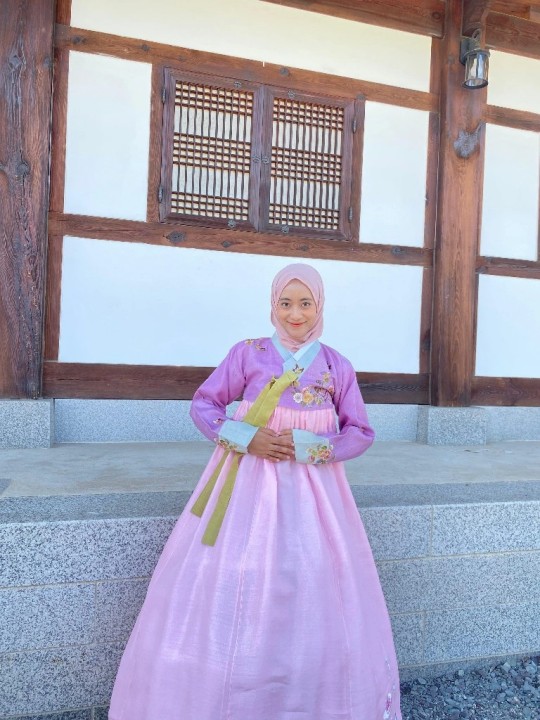
What Scholarship Recipients Say
Advice and insights from international students who successfully secured funding to study at Gyeongsang National University.
"It covers full tuition fees, round-trip airfare, a monthly living allowance (1,000,000–1,500,000 KRW), and a one-year Korean language course if needed."
"First, I conducted extensive research on this scholarship to gather as much information as possible."
"This passion motivated me to pursue an undergraduate degree in Pharmaceutical Engineering at Gyeongsang National University."
"My experience at Gyeongsang National University was academically enriching and professionally transformative."
"I decided to pursue my Master’s degree in Korea because of its excellent education system, global learning environment, and strong support for international students."
"I have access to modern diagnostic technologies and have received supportive mentorship throughout my doctoral training."
Frequently asked questions
Common questions about scholarships, admissions, and studying at Gyeongsang National University.
GNU’s main scholarships for international students are generally written for degree-seeking students enrolled at GNU (e.g., scholarships tied to completed credits, GPA, and TOPIK), and GNU does not typically promote a separate “online-course-only” scholarship category.
Many GNU courses are taught in Korean, and this is especially true in a lot of standard (non-English-track) classes. Nabila Azzahra said her courses were “taught 100% in Korean.”
That said, GNU also runs some English-track offerings in specific departments/programs (for example, GNU’s FGLP notice explicitly mentions English scores “only applicable to the departments which offer English Track”).
So, expect Korean for many majors, but check whether your target department is an English-track option (and whether it’s fully or partially English-taught).
GNU’s internal scholarships (like some tuition-deduction/TOPIK-based scholarships) usually focus on enrollment status, credits, GPA, and TOPIK rather than age.
However, major external scholarships you might use at GNU can have age rules. For example, the Global Korea Scholarship (GKS) graduate track commonly states applicants must be under 40 (with specific “born after” dates that vary by year/cycle).
Many GNU scholarships for international students are not restricted to a single subject; instead they are often based on academic performance and/or Korean language proficiency (TOPIK). That means students in STEM, humanities, business, etc., can be eligible if they meet the criteria.
Examples from recipients show this range: Nabila Azzahra pursued Pharmaceutical Engineering (STEM/health) and wrote about her passion for “science and health,” while Almala Nur Fitriana pursued Educational Technology and Evaluation and described her long-time goal of becoming “a teacher.”
Medicine note: GNU has a College of Medicine and other health fields (e.g., Nursing, Pharmacy, Veterinary Medicine). Usually, international students aren’t eligible for medical schools.
GNU scholarship pages commonly describe eligibility for “international students,” and external scholarships (like GKS) use a country list that can change by year/cycle.
It depends on your program/scholarship. For GNU undergraduate scholarships, TOPIK is central: tuition-deduction and TOPIK scholarships list TOPIK levels (often 4+) plus GPA/credits for continuing awards.
For certain scholarship programs, both Korean and English scores can matter. For example, GNU’s FGLP scholarship notice lists TOPIK Level 3+ (Korean) and also TOEFL/IELTS thresholds for English-track departments.
Even when not strictly required, scores can still help your profile: Almala Nur Fitriana said, “While not required, submitting these documents could earn additional points,” referring to including Korean/English proficiency scores alongside the required documents.
GNU admissions decisions can be department-based (screening + possible interview), so a single universal minimum grade is not always stated in short notices. In practice, competitiveness varies by major and intake.
For scholarships, minimum academic thresholds are clearer. For example, GNU undergraduate scholarship criteria for enrolled students include completing credits and maintaining at least a 3.0 GPA (plus TOPIK conditions for certain awards).
Recipient snapshots can help you gauge what “successful” has looked like: Nabila Azzahra reported a prior GPA of 89/100, and Almala Nur Fitriana reported a CGPA of 3.66/4.00 (Cum Laude).
Strong grades and a coherent story for “why this major at GNU” is a common pattern, especially for competitive scholarships (like GKS) and for department-based graduate support.
In recipients’ words, strong essays matter: Nabila Azzahra said, “my personal statement and study plan were the strongest parts of my application,” and she described aligning her goals and narrative clearly.
Also consider relevant experience and service: Almala Nur Fitriana highlighted teaching experience and noted she submitted “other social activities related to my major” alongside language scores to strengthen her application.
GNU’s international undergraduate notices typically instruct applicants to apply online (via Study in Korea), upload required documents, and also ship the required documents by the deadline—so you should expect both an online upload set and a mailed set.
Exact document lists vary by program (undergraduate vs. graduate; department; scholarship track), but commonly requested items include: application form, passport/ID, proof of nationality, graduation certificate/diploma, transcripts, and program-specific forms like study plan/personal statement and recommendation letters (especially for scholarships).
Recipient experiences show how document-heavy scholarship routes can be: Nabila Azzahra wrote that she “made detailed checklists” and “started preparing documents several months before the official announcement,” and Almala Nur Fitriana warned that preparing documents took time because “many needed to be apostilled.”
GNU offers a wide set of disciplines across major colleges, including Humanities, Social Sciences, Natural Sciences, Business Administration, Engineering, IT Engineering, Space and Aeronautics, Agriculture and Life Sciences, Law, Education, Veterinary Medicine, Medicine, Nursing, Marine Sciences, Pharmacy, and Civil & Environmental Engineering.
Yes, GNU admissions notices indicate an application fee must be paid during the document submission stage for undergraduate admissions (the exact amount is usually specified in the detailed admission guide for that intake).
For graduate admissions, GNU’s admission-guide materials commonly list an application fee of KRW 70,000 (but always verify the latest guide for your exact intake/track because fees and banking instructions can change).
There are many degrees that are open to international students right now — find yours.
About the Author: Hyun Lee


I would like details on undergraduates.
Hello, you can find more information on undergraduate admissions of Gyeongsang National University in the admissions section.