
Commonwealth Shared Scholarship Scholar Charles Agyei from Ghana Shares His Journey of Securing a Fully Funded Master's at the London School of Economics and Political Science, United Kingdom
University: London School of Economics and Political Science (LSE)
Degree: MSc in Environment and Development
Previous Education: Undergraduate in Land Economy, Kwame Nkrumah University of Science and Technology; Advanced Diploma in Occupational Health and Safety Management, Imperial College of Mines and Safety
Scholarship: Commonwealth Shared Scholarship – Full Funding (Tuition, Monthly Stipend, Visa Fee, Health Insurance, Warm Clothing Allowance)
Other Offered Scholarships: African Real Estate Scholarship (AfRES), University of Reading – Partial Funding (£29,500)
Social Media
LinkedIn: linkedin.com/in/charles-agyei-33b382213/
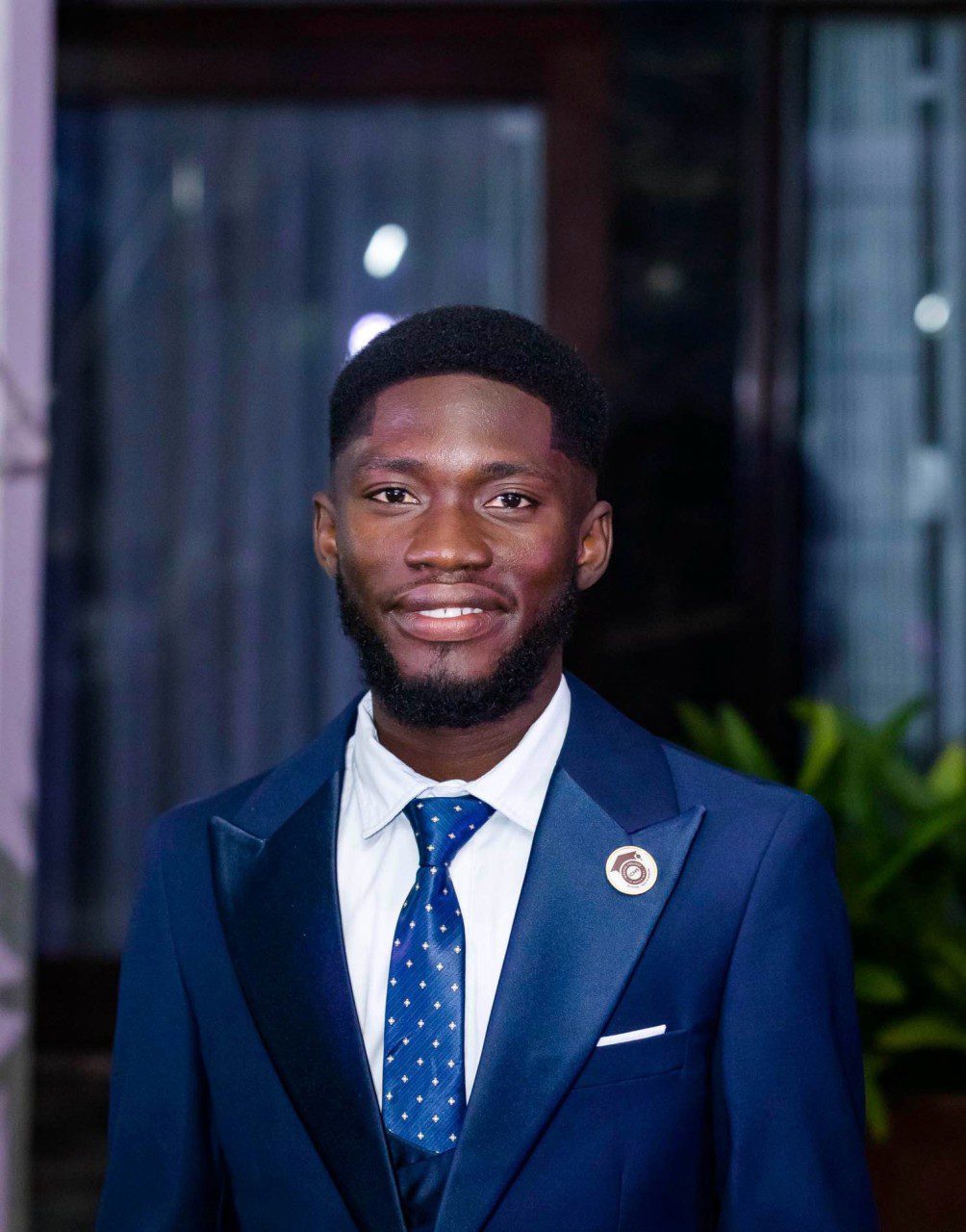
The Journey
Hello, I am Charles Agyei from Ghana. I did my undergraduate degree in Land Economy at Kwame Nkrumah University of Science and Technology, Ghana. After graduating, I worked with the Lands Commission for a year. During that period, I was involved in land valuation and property assessment. I also hold an Advanced Diploma in Occupational Health and Safety Management from Imperial College of Mines and Safety, Ghana, which has strengthened my understanding of safety and risk in professional environments.
Currently, I am pursuing an MSc in Environment and Development at the London School of Economics through the Commonwealth Shared Scholarship. I aim to build on my academic and professional experience to contribute my knowledge to the land sector in Ghana and help address global climate challenges.
Commonwealth Shared Scholarship Details
Institution: London School of Economics and Political Science (LSE)
Degree: MSc Environment and Development
Scholarship: Commonwealth Shared Scholarship- Fully Funded (Tuition, Monthly Stipend, Visa Fee, Health Insurance, and Warm Clothing Allowance)
Were You Offered Any Other Scholarships?
I was also awarded the African Real Estate Scholarship (AfRES) at the University of Reading, worth £29,500.
Educational Background
Undergraduate degree in Land Economy, Kwame Nkrumah University of Science and Technology (2024)- Ghana
Advanced Diploma in Occupational Health and Safety Management, Imperial College of Mines and Safety- Ghana
This background prepared me for further study in environment and development, particularly in areas related to land management and sustainability.
How Did You Find Information About Commonwealth Shared Scholarship and the London School of Economics and Political Science (LSE)?
I explored official university websites to identify professors whose work aligned with my academic background and interests. I also actively searched online for scholarship opportunities.
Did You Take Any Standardized Tests? If So, How Did You Prepare for Them?
I took the TOEFL. I prepared using past questions, online resources, and mock tests to improve my skills and become familiar with the exam format.
How Did You Prepare to Apply for the Commonwealth Shared Scholarship?
To be honest, I did not have a long preparation period. I found out about the Commonwealth Shared Scholarship just a day before the deadline, so I had to work within a very short time.
In that short time, watching Victor Agboga’s YouTube video on the scholarship made a big difference. It gave me clarity on how to approach the application and a clear understanding of what the scholarship was looking for, especially its focus on development impact. It also helped me structure my ideas quickly.
That said, even though I had limited time to write the essays, I had already built a strong academic background, taken on leadership roles, and gained relevant professional experience. So I was not starting from scratch. I was simply bringing together what I had already developed over time.
However, with the AfRES scholarship, my approach was different. I started early, spoke with mentors, and connected with past scholars to better understand the process.
From these experiences, I realised the importance of preparation. One practical thing I would recommend is creating a simple database or tracker of the scholarships you plan to apply for, including deadlines and requirements. This helps you stay organised and avoid last-minute pressure.
What Do You Think Made Your Application Stand Out?
When I started, everything felt complicated and overwhelming. I did not know where to begin or how to structure a strong application. At first, I thought I needed to come up with a perfect plan or an impressive story, but that only made it more difficult.
So I changed my approach. Instead of trying to force a narrative, I focused on writing my story as it is. I went back to the problem I had experienced growing up in a mining-affected community and how it had shaped my perspective. I wrote about what I had seen, what I had studied, and the kind of change I wanted to be part of, including the steps I had already taken through my research on illegal mining and my professional experience, and the impact I had already made.
As I continued writing, I began to realise that everything was already connected. My academic background, my dissertation on illegal mining, and my work experience were all pointing in the same direction. I was not trying to create alignment; it was already there.
I also made sure that my story was supported by evidence. I did not rely only on personal experience but also included insights from my research and what I had observed in my community. This clarity, together with a clear link to the scholarship theme and relevant SDGs, made my application more grounded and credible.
In the end, what made my application stand out was that it was genuine. It reflected who I am, what I have done, and what I truly want to solve. It was not forced or exaggerated, and I think that clarity and honesty made a difference.
What Would You Have Done Differently if You Were Going Through the Process Again?
If I were to go through the process again, I would definitely start earlier. Because I had limited time, I had to write and submit everything without proper review. I later realised there were some grammatical errors, and parts of my application could have been refined if I had more time or someone to proofread my work.
Because of this experience, I would advise future applicants to start early and give themselves enough time to reflect, write, and revise their application properly. Seek feedback from mentors or others who have gone through the process, and do not underestimate the importance of proofreading.
At the same time, I would also say do not let limited time discourage you. Even within a short period, a clear, genuine, and well-thought-out story can still stand out.
What Advice Would You Give Those Looking to Apply for a Similar Scholarship?
- Choose a programme or course that better matches your trajectory and the problem you hope to solve in your field.
- Be specific about the problem you want to solve
- Show evidence (data, research, or experience)
- Present a clear, realistic plan with measurable impact
- Align your goals with the scholarship theme and SDGs
- Make your story personal but purposeful
Want to submit your
scholarship journey?
Submit Your Story Here!
More Scholarship Recipients
I am Zujaja Baig, originally from Gilgit-Baltistan, Pakistan. During my undergrad, I had multiple opportunities, through int .... Read more

My name is Zhansaya Kanagatova, and I am from Astana, Kazakhstan. I hold a Bachelor of Science in Mathematics from Nazarbaye .... Read more
My name is Tahira Shehzadi, and I'm originally from Toba Tek Singh, Pakistan. I recently submitted my PhD thesis in Computer .... Read more
Leave A Comment