
Marie Curie Actions PhD Scholar Camila from Brazil Shares Her Journey of Studying Chemistry at the University of Strasbourg, France
University: University of Strasbourg, France (PhD hosted at Elvesys, Paris)
Degree: PhD in Chemistry (Microfluidics Instrumentation)
Previous Education:
– MSc in Bioscience Enterprise, University of Cambridge, UK
– BSc in Biotechnological Engineering, Brazil – Top 10 in class
Scholarship: Marie Curie Actions Scholarship (European Commission) – Fully Funded (market-level stipend, part of an 8-institution European consortium)
Other Offered Scholarships: Gates Foundation scholarship (Cambridge MSc) – Department Scholarship, University of Cambridge (MSc) – Science Without Borders Scholarship, Brazilian Government (BSc exchange, Boston University) – Erasmus Mundus Scholarship (BSc exchange, University of Groningen) – Santander Top China Scholarship (cultural exchange) – Harvard Summer Internship Scholarship
Social Media
LinkedIn: linkedin.com/in/camilabetterelli/
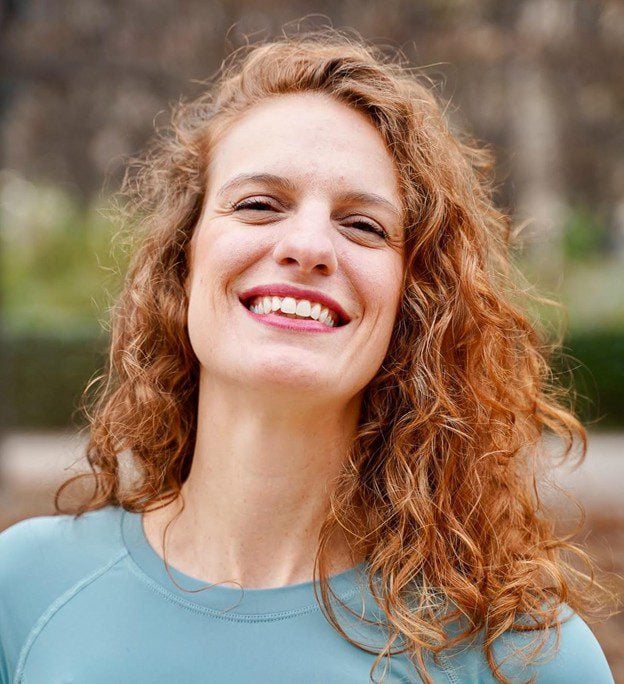
The Journey
My name is Camila. I'm originally from Brazil, but I currently live in Paris. I was a scholar from the Marie Curie Actions in France after finishing my Master's degree at the University of Cambridge. My scholarship was to pursue a PhD in Chemistry at the University of Strasbourg. I decided to pursue this program because it gave me the opportunity to do a PhD within a small company in Paris, and I've always been drawn to applied sciences.
Marie Curie Actions Scholarship Details
I received a Marie Curie Actions scholarship from the European Commission. It was part of a larger consortium with 8 institutions across Europe. I was enrolled as a PhD student at the University of Strasbourg, but I actually did my PhD inside a small company in Paris called Elvesys, which was also part of the consortium. The work was focused on microfluidics instrumentation.
In terms of funding, I received a stipend equivalent to an early-stage engineering salary, which was really meaningful to me, because I hadn't been a student for a while, and the idea of being paid at market levels made a big difference.
Were You Offered Any Other Scholarships?
For my PhD, that was the only scholarship I applied for, so no others there. For my Master's at the University of Cambridge, however, I applied to several and was awarded two, one from Santander Bank and another from my department.
It's worth knowing that some banks and larger companies sponsor scholarships for students at renowned universities, and departments themselves often have their own funding available too. So it's always a good idea to check both avenues.
Educational Background
I'm a Biotechnological Engineer by training, and I've been fortunate to receive scholarships throughout most of my academic journey.
It started with the Science Without Borders scholarship from the Brazilian government, which allowed me to study at Boston University for a year during my bachelor's degree. Being close to Harvard sparked something in me. I applied and was awarded a scholarship to do a summer internship there, which ended up extending through the end of the second semester of 2012.
In 2013, I received a scholarship from Santander Bank called Top China, a one-month cultural exchange program in China where Brazilian students came together to discuss climate topics alongside Chinese students.
Shortly after, I received the Erasmus Mundus scholarship, which took me to the University of Groningen in the Netherlands for six months. That was a turning point; it was where I began shifting from purely scientific work toward innovation and business.
I then returned to Brazil to finish my degree and worked for a period before deciding to pursue my Master's in Bioscience Enterprise at the University of Cambridge, essentially an MBA focused on science-based companies. For that, I was awarded two scholarships and crowdfunded the remaining amount, raising €10,000 from around 200 people.
Finally, I received the Marie Curie Actions scholarship from the European Commission to do my PhD in Chemistry, fully funded.
In terms of academic performance, my GPAs were consistently high throughout. During my year in the US, I achieved a GPA close to 4.0, and across my engineering bachelor's, I ranked among the top students. In every program I enrolled in, I consistently placed within the top 10.
How Did You Prepare to Apply to the University of Strasbourg?
For finding information about scholarships and institutions, my main sources were official websites, either the university I was applying to or my home university during my bachelor's degree, which was a great hub for that kind of information. I always prioritized official sources over third-party ones. But I also searched for current students online to talk to so I could understand how they got there.
As for standardized tests, I took both the TOEFL and IELTS as English proficiency tests. For both, I prepared using the official test materials, either purchasing them or borrowing them from someone.
How Did You Prepare to Apply to These Scholarships?
The preparation really depended on the scholarship and what each one required.
For the Gates Foundation scholarship, the application process was very extensive, and I followed it thoroughly; unfortunately, it didn't work out in the end, but it was a valuable experience.
For the Santander scholarship during my Master's, I applied through my university's website. Since they already had my application on file, the process was fairly straightforward and didn't require much additional effort.
For the department scholarship, I put together a presentation explaining why I needed the funding and what steps I was already taking to secure it. It was more of a financial aid request than a traditional scholarship application, but they could see I was motivated and committed, and they decided to support me.
For the Marie Curie Actions scholarship, the funding had already been granted to the company hosting the PhD. So rather than a formal academic application, I went through a standard hiring process, it was essentially a job interview. In that sense, it felt less like a traditional scholarship application and more like entering the workforce.
INSTITUTION EXPERIENCE
How Was Your Experience at the University of Strasbourg and the University of Cambridge?
Overall, my experiences were really positive. I don't have much to complain about.
The University of Strasbourg was surprisingly easy to navigate, especially by French administrative standards. And the company that hosted my PhD was an excellent environment to work in, so much so that I stayed on with them for three years after finishing my PhD. I'm very grateful for that experience.
At the University of Cambridge, the department itself was wonderful. The college, on the other hand, was harder to deal with. There were some financial discussions that got a bit tense, but everything worked out in the end, so no lasting issues there.
How Do You Rate the University of Strasbourg and the University of Cambridge Academically and Why?
I was fortunate to be part of only the top-tier institutions. The University of Cambridge is simply one of the best universities in the world, and the University of Strasbourg is very well regarded within France. Both were academically challenging, but that's exactly the point when you're pursuing excellence.
On the cultural side, living in the UK was an adjustment, as British culture is quite different from Brazilian culture. France felt a little more familiar. That said, both environments were highly multicultural, which made the transition easier and enriched the overall experience.
How Did the University of Strasbourg and the University of Cambridge Support International Students?
I never faced any significant problems in that regard. My situation was also somewhat unique with the Marie Curie scholarship, since I was technically working for a company rather than being a traditional student, and they handled everything needed to support international hires, including visas where applicable. In my case, visas weren't an issue since I hold European nationality, but I saw them go out of their way to help other internationals get what they needed.
The University of Cambridge was also supportive to a good extent, though I found the college, as opposed to the department, to be somewhat less welcoming of international students. It was a noticeable difference in attitude compared to the rest of my experiences.
Were Your Classes Conducted in English or French?
At the University of Cambridge, everything was in English. At the University of Strasbourg, I didn't have many classes; most of my time was spent working inside the company, where we worked in English. The few classes I did attend at Strasbourg were mostly extracurricular and were conducted in French.
Would Potential Students Have Any Problems Not Knowing French?
Not necessarily. Even in France, the academic environment is quite well adapted to English-speaking students. The country itself is a different story; knowing French definitely helps you feel more integrated into the culture and day-to-day life. But within academic and research settings, English is very much the dominant language, so it shouldn't be a barrier.
STANDING OUT & ADVICE
What Do You Think Made Your Applications Stand Out?
I built my credentials early and consistently, which meant that by the time I was applying for more competitive scholarships, my profile spoke for itself.
It started when I received the Science Without Borders scholarship, which was highly competitive: the first round selected 600 students from across Brazil, and I was among them. That alone was a strong credential. Then, once I was in the United States, I got into Harvard, which added another significant milestone to my profile.
I was selected for Science Without Borders in the first place because of my strong academic performance and a high level of English at the time the scholarship opened. And that pattern carried through my entire journey, even earlier, back in Brazil, where getting into the best public universities requires an extremely competitive national exam, and I ranked very well.
So in a way, I was always finding ways to demonstrate that I could excel under pressure and in highly competitive environments. Over time, credentials built on credentials, and eventually, my application became a natural fit for the opportunities I was pursuing.
What Would You Have Done Differently if You Were Going Through the Process Again?
Honestly, I'm not sure I would have done anything differently. Looking back at each of the scholarships I received, I don't think I would change my approach in any of them.
What Advice Would You Give to Those Looking to Apply for a Similar Scholarship?
One thing that I think made a real difference for me, particularly for the Marie Curie Actions scholarship, was the maturity I brought to the process. I applied relatively late by typical standards: I started my Master's at age 28. I had chosen to work and explore other paths before returning to academia. Most people apply for scholarships much earlier in their careers.
Of course, you can't fake maturity, but what it gave me was the ability to see opportunities as a two-way street. Rather than approaching applications from a position of disadvantage, or feeling like you're asking for a favour, shift your mindset: think about what you are bringing to the table and how they will benefit from having you.
It's not just about what you gain from the scholarship; it's about the value you offer in return. Making that consciousness explicit in your application can really set you apart, because many candidates are too shy or too modest to put their own value forward confidently. Don't be. Know what you bring, and make sure they know it too.
Want to submit your
scholarship journey?
Submit Your Story Here!
More Scholarship Recipients
Hi! My name is Banu, and I come from Kazakhstan. I was born and raised there, and upon high school graduation, I decided to .... Read more
Hello! My name is Yumna Arif, and I am from Pakistan. I hold a PhD in Business and Management from Warwick Business School, .... Read more
I am Vishnu Vardhan. I hail from the Telangana state of India. I hold a bachelor’s degree in electrical and electronics en .... Read more
Leave A Comment