
Erasmus Mundus Joint MSc Sustainable Agriculture Student Alhaji Alusine Kebe Shares His Journey of Studying Across Hungary and Croatia through the Danube Agrifood Master (DAFM)
University: Hungarian University of Agriculture and Life Sciences (Hungary), University of Zagreb (Croatia), Slovak University of Agriculture
Degree: Erasmus Mundus Joint MSc in Sustainable Agriculture, Food Production & Food Technology (DAFM)
Previous Education: BSc (Hons) in Agriculture (Agronomy) – Pakistan (OIC Scholarship for Least Developed Countries, CGPA: 3.90/4.00)
Scholarship: Erasmus Mundus Joint Master’s Scholarship – Fully Funded (Tuition, Monthly Stipend, Travel, Insurance, Installation Support)
Social Media
The Journey
My name is Alhaji Alusine Kebe. I am an agronomist specializing in soil–plant–climate interactions, sustainable agri-food systems, and climate-resilient agriculture. I completed my BSc (Hons) in Agriculture, Agronomy with distinction in Pakistan, under the OIC Scholarship for Least Developed Countries, and I am currently completing the Erasmus Mundus Joint MSc in Sustainable Agriculture, Food Production & Food Technology (DAFM).
Through the Erasmus Mundus program, I studied at the Hungarian University of Agriculture and Life Sciences in Hungary and the University of Zagreb in Croatia. During my MSc mobility, I also participated in a summer school at the Slovak University of Agriculture. Additionally, I undertook a professional internship in Germany with Hazera Seeds, gaining exposure to European agricultural innovation systems, and I have had the opportunity to present at several international conferences.
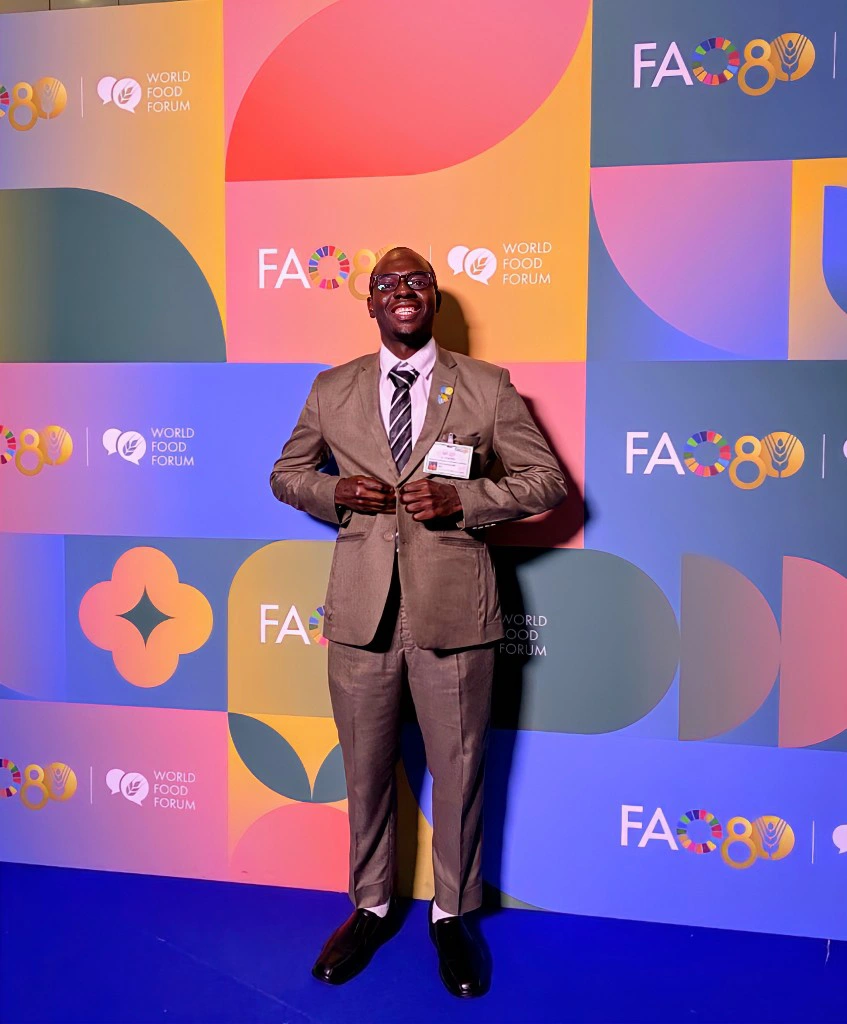
My academic journey spans Africa, South Asia, and Europe, shaping a strong interdisciplinary and cross-cultural research perspective. Beyond academia, I have engaged in global food policy dialogue through the World Food Forum and delivered several international presentations.
Educational Background
Before Erasmus Mundus, I completed my BSc (Hons) in Agriculture (Agronomy), graduating with a CGPA of 3.90/4.00. My undergraduate research focused on geospatial and farmer-perception assessments of climate change impacts on shifting cultivation systems.
During my BSc, I undertook several internships in soil laboratories, crop production systems, climate impact assessment, and drought stress experiments. These practical experiences strengthened my technical foundation in soil fertility analysis, experimental design, and climate data interpretation.
Equally important was maintaining strong professional relationships with my supervisors and program coordinators. Their mentorship and detailed recommendation letters played a key role in strengthening my scholarship applications. This combination of academic excellence, practical experience, and mentorship prepared me well for a multi-country MSc structure.
How Did You Prepare to Apply to the Institutions?
My preparation was long-term rather than last-minute. I focused on:
- Sustaining strong academic performance
- Engaging in measurable research activities
- Participating in internships and international exposure
- Building professional visibility through publications and LinkedIn engagement
I aligned my motivation letter clearly with the program’s sustainability and systems-based focus. Rather than presenting general interest, I demonstrated a consistent research trajectory in climate–agriculture systems and soil processes.
How Did You Prepare to Apply for the Erasmus Mundus Scholarship?
Erasmus Mundus is highly competitive, so I approached it strategically. I documented:
- Academic excellence (CGPA 3.90/4.00)
- Research experience and publications
- Multiple undergraduate internships
- International conference presentations
- Industry exposure in Germany (Hazera Seeds)
- Engagement with global agricultural policy networks (World Food Forum)
I was also offered multiple international admissions across Europe and Asia before choosing Erasmus Mundus. However, I selected Erasmus Mundus because of its structured mobility, consortium-based training, interdisciplinary systems approach, and full financial support.
I believe my application stood out due to consistency, not only strong grades, but a clear research direction, leadership involvement, international engagement, and credible academic recommendations.
Were You Offered Any Other Scholarships?
Yes. I was previously awarded:
- OIC Scholarship for Least Developed Countries (2019–2023)
- Vice Chancellor Talent Award (three consecutive academic years)
In addition, I received multiple international admission offers across Europe and Asia prior to Erasmus Mundus. These reflect sustained academic competitiveness.
Could You Briefly Discuss the Erasmus Mundus Program?
The Erasmus Mundus Joint MSc in Sustainable Agriculture ( Danube Agrifood Master DAFM) integrates sustainability in Agriculture, food production, and food technology for food systems, environmental resilience under the rapidly changing climate
The program emphasizes systems thinking, linking soil science, food science, food technology, crop physiology, agroecology, and sustainability modelling. My MSc research (currently ongoing) evaluates soil respiration sensitivity to soil temperature and moisture across maize varieties, contributing to understanding carbon flux dynamics under environmental stress conditions.
The program combines theoretical depth with applied research and international mobility, fostering scientific independence.
What Did You Pursue After the Scholarship?
I am currently completing my MSc research. Alongside my thesis work, I remain engaged in international academic collaboration, global youth food systems dialogue (World Food Forum), and preparation for doctoral research in soil–plant–climate systems.
Cost of Living Variation
Hungary was generally more affordable than Croatia, particularly in housing and daily expenses. Croatia had slightly higher accommodation and food costs in major cities.
Effective budgeting, early accommodation planning, and disciplined expense management ensured the Erasmus Mundus stipend was sufficient.
Language Barriers
The language of instruction was English in both Hungary and Croatia, so academic activities were not affected.
However, adapting to local daily life required learning basic Hungarian and Croatian phrases. Cultural integration improved significantly through community engagement.
Would You Recommend Erasmus Mundus?
Yes. The program offers far more than financial support; it provides academic mobility, interdisciplinary training, cultural exposure, and strong professional networks across Europe.
My advice:
- Start preparation early
- Build strong relationships with supervisors
- Develop a research profile (publications, conferences)
- Make your work professionally visible
- Align your academic story clearly with the program
Looking Back, Would You Do Anything Differently?
If I were to adjust anything, I would engage even earlier in cross-institutional collaborative research projects within the consortium to maximize joint publications and research networking.
Overall, the Erasmus Mundus experience significantly strengthened my academic maturity, research independence, and global scientific perspective.
Want to submit your
scholarship journey?
Submit Your Story Here!
More Scholarship Recipients

I am Aleezay Anjum Ahmed from Pakistan, and I hold a bachelor’s degree in chemistry with a minor in mathematics. I was awa .... Read more

My name is Sarbinaz Nagyzkhan, and I am originally from Kazakhstan. I am currently a Marie Skłodowska-Curie Doctoral Fellow .... Read more

My name is Alvin from Indonesia, and I was one of the awardees of the Taiwan ICDF scholarship at National Cheng Kung Univers .... Read more
Leave A Comment