
University of Westminster Scholarships for International Students 2027
University of Westminster is linked to scholarships that can reduce costs in meaningful ways. Here are a few strong options prioritized by funding level.
On the institution side, University of Westminster is connected to scholarships that can reduce tuition and sometimes extend to other study costs. These are practical starting points. With Studentships, students may receive fully funded support, and coverage frequently includes annual stipend valued at £18,062 and tuition fee waiver. International Postgraduate Excellence Scholarship is a partially funded award, and the listed benefits often include £3,000 for the first semester tuition fees.
Beyond campus funding, University of Westminster applicants often explore outside opportunities including government backed and independent programs. These are common starting points. A strong option is Commonwealth Master’s Scholarships which is fully funded and often covers full tuition fees, living allowance of up to £1,378 per month and £1,690, and clothing allowance. Commonwealth PhD Scholarships is fully funded, and coverage often includes full tuition fees, roundtrip airfare ticket, and paid airfare ticket for mid-term visit to home country. Chevening Scholarships is fully funded and typically covers 100% of tuition fees, A monthly stipend covering accommodation fees and living expenses, and economy flight from and to your country of residence.
For the complete set of linked scholarships including additional options and details, continue below on this page.
University of Westminster Scholarships for International Students
The scholarships at University of Westminster can help fund your study expenses. There are currently 7 scholarships being offered to international students at the University of Westminster, all with varying requirements, benefits, and application processes. We have compiled them in this list to help you find the scholarship that best fits you.
Graduate Scholarships
External Scholarships
There are many degrees that are open to international students right now — find yours.
University of Westminster Admissions
Here are the official admission pages for University of Westminster:
| Degree | Admissions Pages |
|---|---|
| Bachelor's | International Students Admissions Page |
| Master's | International Students Admissions Page |
University of Westminster Application Deadlines
| Degree | Admission Deadline |
|---|---|
| Bachelor's (September Intake) | January 13, 2027 |
| Master's (September Semester) | July 14, 2026 Different Master's programs have different deadlines |
Tuition Fees at University of Westminster for International Students
Indicative annual tuition fee ranges for international students at University of Westminster. Exact fees vary by program, so always confirm the current cost on the university's official tuition fee pages.
| Degree Level | Typical Annual Range |
|---|---|
| Bachelor's Tuition | 17,600 GBP |
| Master's Tuition | 14,000 – 20,000 GBP |
Please note that tuition fees can vary based on the specific program you choose. For the most accurate and current fee information, consult the official tuition fee pages linked above.
University of Westminster Scholarship Recipients
International students who received scholarships to study at University of Westminster, documented by Global Scholarships.

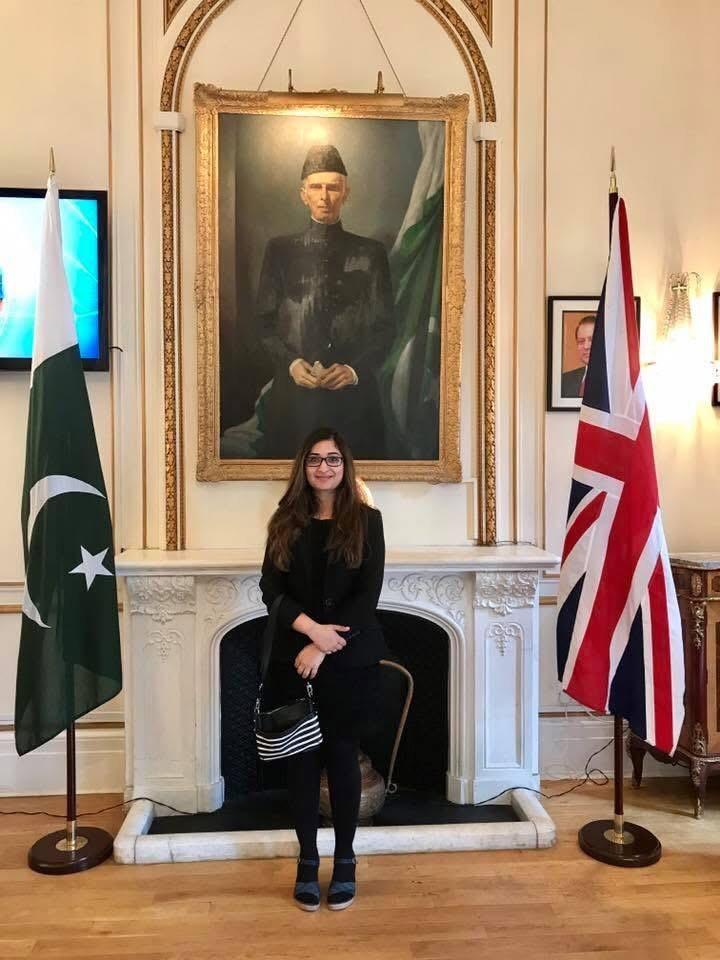
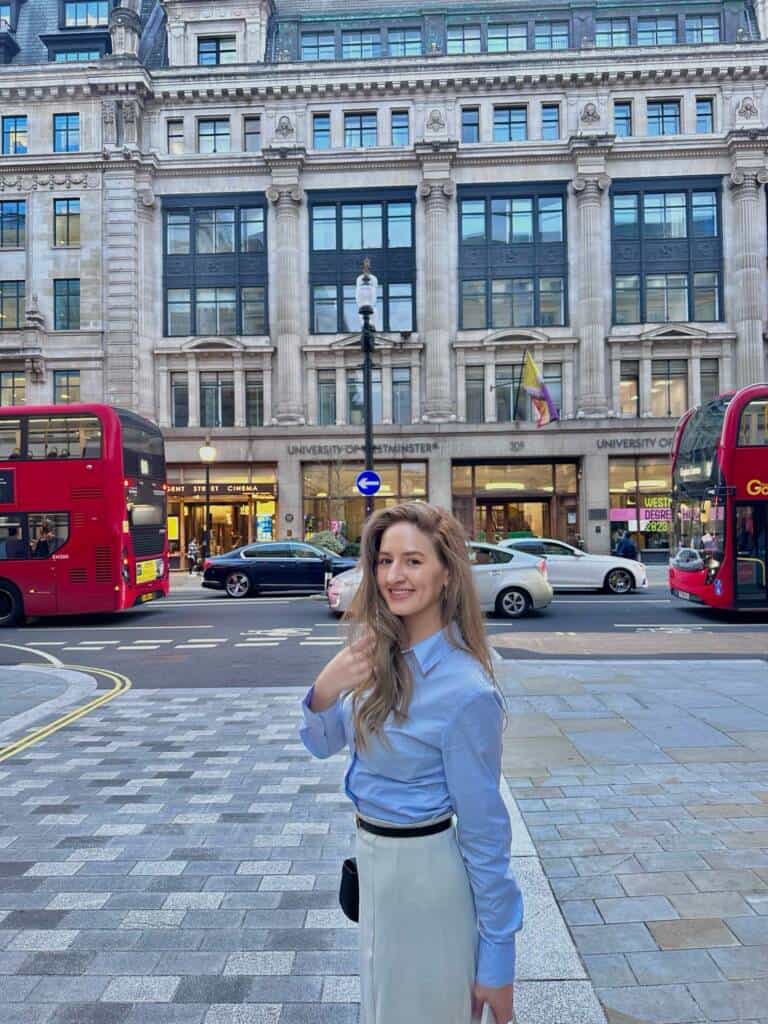
What Scholarship Recipients Say
Advice and insights from international students who successfully secured funding to study at University of Westminster.
"I applied for Chevening and was awarded a full scholarship, which covered my tuition fees and provided a monthly stipend for living expenses."
"I took the time to carefully research the specific requirements of each university to ensure that my statements of purpose were well-targeted and compelling."
"The International Relations and Democratic Politics MA offered me a critical and comprehensive understanding of the forces shaping inter-state relations and global politics."
"Studying in a vibrant, multicultural environment helped me connect global ideas to local challenges in Pakistan. It also gave me the opportunity to reflect on my professional journey with fresh theoretical insights and renewed purpose."
"Together, we shared stories, aspirations, and ideas about reshaping the world; whether through diplomacy, development, entrepreneurship, or governance. Most importantly, we did all that with loads of laughter, companionship, and each other's support."
"As it turned out, I graduated from the University of Westminster with distinction, too, earning a distinction for my dissertation as well."
Frequently asked questions
Common questions about scholarships, admissions, and studying at University of Westminster.
Most University of Westminster scholarships are designed for on-campus degree study rather than fully online programmes.
Many Westminster scholarships are tied to eligible programmes rather than restricted to a single subject. GlobalScholarships recipients at Westminster span creative arts and media (Laura Uribe Cruz in Film/Television), humanities/social sciences (Nariman Bisma in International Relations and Democratic Politics), and law (Mijerita Khachatryan in International Law).
More broadly, the University offers programmes across business, engineering, STEM fields (like computing and life sciences), and humanities/social sciences (like media, languages, politics, and law), and scholarships may be available in any of these areas as long as your programme is eligible and you meet the criteria.
It depends on the scholarship: Westminster offers awards aimed at international students. The GlobalScholarships stories show the range of nationalities who’ve studied at Westminster: Laura says she’s “originally from Veracruz, Mexico”; Nariman introduces herself as “a proud Chevening Scholar from Pakistan”; and Mijerita writes, “I am Mijerita Khachatryan from Armenia.”
Always check nationality and fee-status rules on the exact scholarship page (and for external awards like Chevening, on the funder’s eligibility rules).
Often yes, if you don’t already meet an approved exemption. Westminster accepts major English tests (including IELTS and TOEFL iBT in-person) and notes that it no longer accepts the TOEFL at Home Edition (online) for entry to degree programmes.
Recipients describe preparing specifically for these tests: Laura says, “Yes, I took the TOEFL IBT Test”; Nariman notes she “took the IELTS exam”; and Mijerita shares, “For my university applications, I only needed to submit an English test score. I selected TOEFL because I was already familiar with its format.”
Because required scores vary by course, confirm the exact requirement on your course page and Westminster’s English-language requirements page.
Yes, but it varies by programme. Westminster states that most postgraduate courses have minimum standards such as “a good honours degree” (or equivalent) and a baseline English level (often around IELTS 6.5 overall as a minimum), while many individual course pages specify a minimum like a UK 2:2 (lower second class) in a related discipline.
For undergraduate entry, requirements are usually shown as UCAS Tariff points and can differ significantly by course.
From the scholarship stories, strong grades clearly help: Nariman lists “GPA 3.7/4.0” (BBA) and “GPA 3.9/4.0” (MBA) and says she “graduated with distinction” at Westminster; Mijerita reports she graduated with honors (BA “18.6 out of 20” and MA “19.7 out of 20”) and later “graduated from the University of Westminster with distinction, too.”
A common pattern is “strong academics + a clear, evidence-based story.” For major external awards like Chevening, recipients describe a long selection process with writing and interviews: Laura says the first stage was “to write four essays,” and for the final stage “the interview, I did many mock interviews”; Nariman says she wrote essays to show “clear impact and a future vision”; and Mijerita notes that “both the institutions and the scholarship program have certain criteria related to GPA.”
A practical benchmark is to (1) meet your course entry requirements comfortably, then (2) strengthen your case with leadership/impact, relevant experience, and a focused personal statement/essays aligned to your goals.
Requirements vary by course, but Westminster’s taught postgraduate guidance commonly asks for qualifications (certificates/transcripts), proof of English (if needed), a passport copy for Student visa applicants, a personal statement, and referee details.
Mijerita describes a similar real-world checklist when she applied: “degree documents with diplomas and transcripts for GPA, reference letters from academic institutions, a personal statement, an English test certificate, and other documents, depending on the specific university.”
- Academic certificates and transcripts (and certified translations if needed)
- English-language test results (IELTS/TOEFL/etc) if required
- Passport ID page (especially if you need a Student visa)
- Personal statement / statement of purpose (Laura says she ensured her “statements of purpose were well-targeted and compelling.”)
- Referee details / recommendation letters
- Any course-specific items (portfolio, writing sample, extra essays, interview tasks)
If you’re also applying for a scholarship like Chevening, plan extra materials: Laura notes the “first stage… to write four essays,” and Nariman describes revising essays to show impact.
It depends on the route. For most UK undergraduate applications you apply via UCAS, which charges its own application fee (set by UCAS, not Westminster). For postgraduate taught courses, Westminster’s current “How to apply” guidance focuses on documents and deadlines and does not list a standard application fee for direct applications. However, confirm any fee on the exact portal you’ll use (UCAS, Westminster’s postgraduate application service) before submitting.
There are many degrees that are open to international students right now — find yours.
About the Author: Hyun Lee


Leave A Comment