
PhD Electronics Student Vishnu Vardhan from India Shares His Journey of Studying Through a Marie Skłodowska-Curie Fellowship in Portugal
University: CeNTI – Centre for Nanotechnology and Advanced Materials
Degree: PhD in Electronics
Previous Education: Bachelor’s in Electrical and Electronics Engineering; Master’s in Nanoscience and Technology (Amrita Vishwa Vidyapeetham)
Scholarship: Marie Skłodowska-Curie Doctoral Fellowship – Fully Funded
Social Media
LinkedIn: linkedin.com/in/vishnu-vardhana-chary/
The Journey
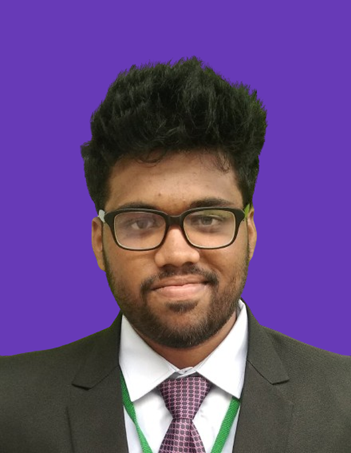
I am Vishnu Vardhan. I hail from the Telangana state of India. I hold a bachelor’s degree in electrical and electronics engineering and a master's in Nanoscience and Technology. Right now, I am a Marie Sklodowska Curie Doctoral fellow pursuing my PhD in Electronics. My work has always been revolving around solar cells from my bachelor’s where I worked on reducing the reflective losses on a commercial silicon cell, in my master’s I enhanced the electron transport pathway in the anode part of a third-generation solar cell, namely, a dye sensitized solar cell. Although these third-generation cells have just begun giving tough competition to traditional silicon cells, stability has always been a concern and an area largely untouched. So, in my PhD, I am trying to establish sustainable encapsulation technologies for these third-generation solar cells, which are aimed at functioning for indoor applications.
Marie Skłodowska-Curie Doctoral Fellowship Details
This is a Marie Curie Doctoral Fellowship granted by the Marie Sklodowska Curie Actions under the European Union within the consortium called MENTOR (https://cordis.europa.eu/project/id/101169056). Funding notes are also mentioned on the website of the MSCA actions.
Educational Background
My formal education does not fancy historic numbers, yet what I truly possessed all these years is practical knowledge and the curiosity to know everything. I think that is what got me to where I am now. But to answer your question, I hold a bachelor’s degree in electrical and electronics engineering, from a private local engineering college in Telangana where I scored a meagre CGPA of 6.4 on 10 while winning several conferences and publishing an article in a small journal with the limited resources I had back then. I pursued a master’s degree from Amrita Vishwa Vidyapeetham, a premier private institution in the country. I studied Nanoscience and Technology there and worked on a 1-year thesis-based project. Before I began my bachelors, I had one aim, to provide electricity for all’. I began working on a ‘Thermoacoustic engine’ in my freshman year which ultimately did not work but with every project I ventured into, got me increasingly curious to solve this worldly problem. After several failures, I realized that solar energy is the only way out. Which is why I studied nanotechnology in a rudimentary way and applied that knowledge to the project. To keep the pursuit continued, I decided to pursue formal education in nanotech and then applied the knowledge to newer solar technologies.
How Did You Find Information About Marie Skłodowska-Curie Doctoral Fellowship and CeNTI - Centre for Nanotechnology and Advanced Materials?
LinkedIn and references.
Did You Take Any Standardized Tests? If So, How Did You Prepare for Them?
No, I did not have to. But a test named PGECEThelped me enter my Master’s course
How Did You Prepare to Apply for the Marie Skłodowska-Curie Doctoral Fellowship?
For me, this was just another PhD application as I was applying for hundreds of positions already. I had to attend few rounds of interviews and I was ultimately selected. On a funny note, I found out this was a prestigious fellowship after I cracked it.
Are Your Classes Conducted in English or Portuguese?
My entire education until my master’s was pursued in English. Now my PhD is also in English, although I am pursuing it in a non-English country.
Would Potential Students Have Any Problems Not Knowing Portuguese?
No, not at all
What Do You Think Made Your Application Stand Out?
As I said, it was my curiosity. This curiosity has gotten me into places like Qualcomm and Texas Instruments when I worked for a while in Singapore’s semicon industry as a Research Engineer. And more than anything, I possessed the right skills at the right time at the right place for this fellowship.
What Would You Have Done Differently if You Were Going Through the Process Again?
Yes, I wouldn’t waste my time on perfecting a skill that I did not know rather show casing that skill in a future tense as an application to a problem. And most of all, I would be more patient while these applications are being scrutinized, because once you click the submit button, that is all you need.
What Advice Would You Give Those Looking to Apply for a Similar Scholarship?
Yes.
To the candidates, I am unsure of to which year you are in your master’s now, if you just begun, I suggest you play strong with your basics and plan your second year ahead in the context of what kind of applied knowledge you would like to put into. Research should always communicate progress. If you are already in your second year, I suggest you work on your project as clearly as possible. By clear I mean, you should be in all confidence to explain your project in 3 lines to a 10-year-old kid, successfully. Because when you appear for any international positions, you will be heard for 7 to 8 minutes max, and you need to convince them that you are the right candidate.
Keeping the technicalities aside, securing fellowships like MSCA is a rare occurrence and not very common, yet not impossible. It is like appearing in the lot with the right tools that your employer is looking for. Here it is not talent alone, but relevance to your background, your potential and the job advertised. If the panel is convinced, or rather, if you convince the panel that you are the one, the position will be yours, infact any international lab will do the same.
Before beginning your application to any potential positions, I also suggest you do the following:
1) Build a scientific CV, not a resume. Your CV speaks to the panel of scientists on your behalf.
2) In the interview which will be conducted by a bunch of scientists, communicate with them like a scientist, I mean be specific in your answer, and to achieve this, you really need to master the art of scientific communication (Start doing this right from your masters like participating in conferences, presenting any scientific relic that interests you, or the least, participate in seminars in your own classroom). My practice apart from all the above was to have a healthy scientific debate/argument with my PhD mentors and supervisors whenever I got time. This reflects how much you actually absorb science.
3) Always look out for new positions, on all job advertising portal like euraxess and not just LinkedIn alone. Prepare a excel workbook where you can track each and every position that you find and apply and make sure to send timely reminders on the applied positions.
4) Lastly, the basics that you learn in your 1st year will define how strong you will perform in your PhD and the Master's project that you will do is the scientific key to unlock the doors of your PhD journey, so, if you are really interested in a research career, consider your master's thesis as important as a futuristic project that can transform lives. And stay optimistic.
So, in the end, it is all about patience and the courage to face rejections. I myself was rejected for so many hundreds of positions, some uncracked, some serious disappointments when I lost few positions even after securing them at the announcement stage. So, luck also plays a role.
Now by luck I mean simple statistics. If you are present for a position at the right time, with the right skills, with the exact requirements aided with your confident communication, that is a 100% probability.
At the end of the day, a PhD is still a PhD if you do it in India or outside India like a Marie Curie fellowship that you are looking for, it doesn't really matter. What should actually matter is if you are really contributing to the community of science. In my view, all PhDs are the same and are equally prestigious in their own ways.
All the best, you are tougher than you actually think you are!
Want to submit your
scholarship journey?
Submit Your Story Here!
More Scholarship Recipients
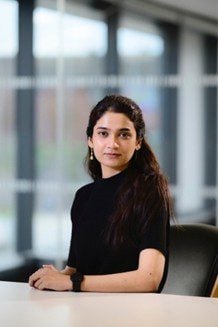
Hello! My name is Yumna Arif, and I am from Pakistan. I hold a PhD in Business and Management from Warwick Business School, .... Read more
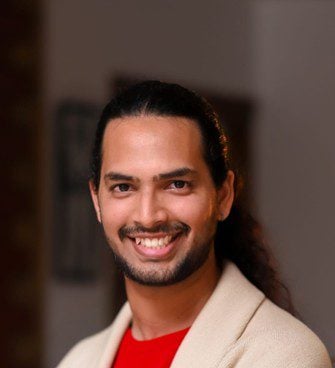
My name is Vamsi Muttevi, and I’m from India. As an international student, I have studied at the Technical University of M .... Read more
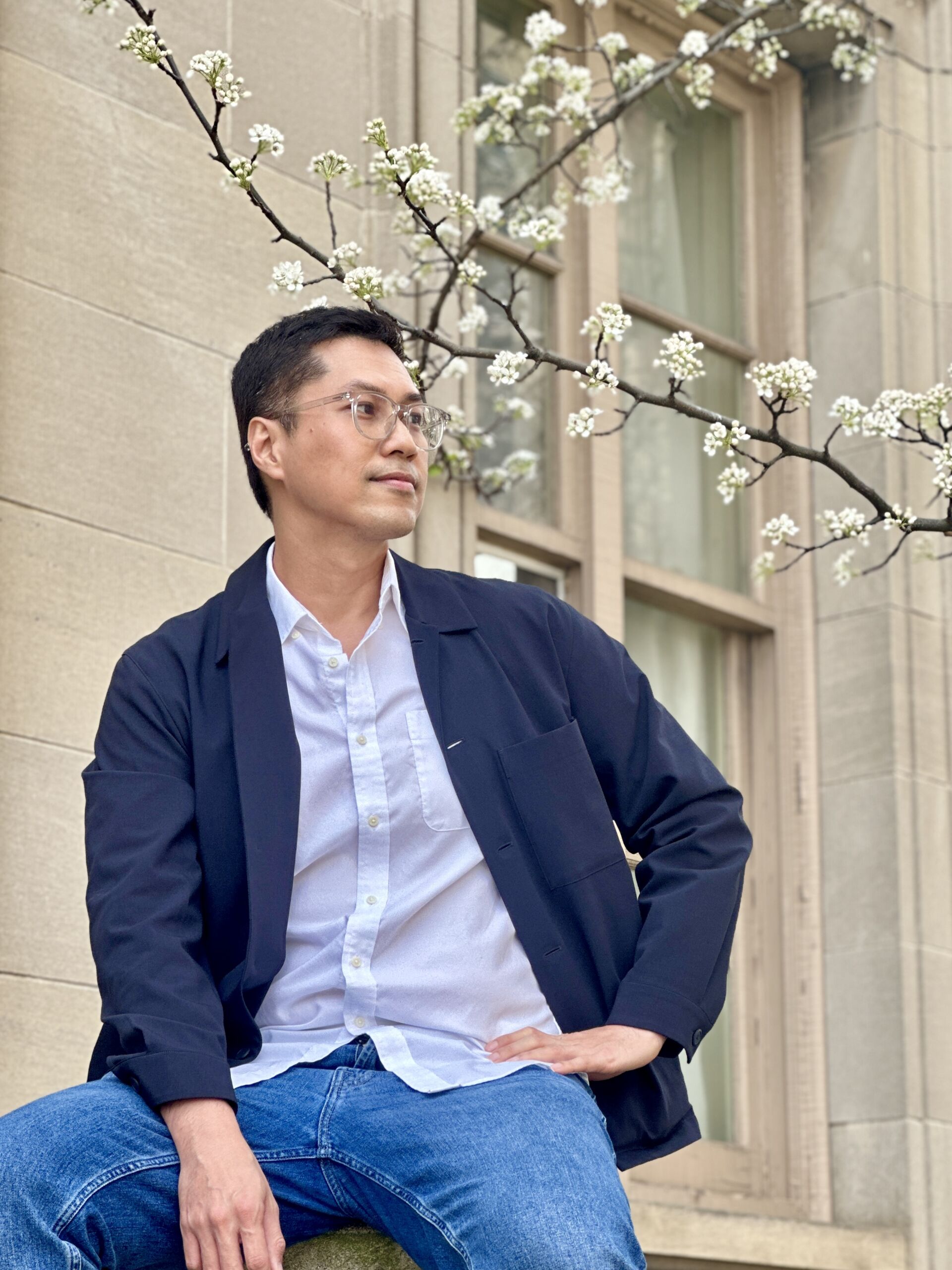
My name is Trung Nguyen, and I am a Fulbright Scholar from Vietnam. I’m currently finishing my Master of Arts in Media Art .... Read more
Leave A Comment