
Marie Skłodowska-Curie PhD Fellow from Lithuania Shares Her Journey of Pursuing Doctoral Research in Energy Resilience at Chalmers University of Technology, Sweden
University: Chalmers University of Technology, Sweden
Degree: Doctoral Research in Energy Resilience (Marie Skłodowska-Curie PhD Position)
Previous Education: MSc in International Business and Politics – Copenhagen Business School (GPA: 10.8/12); BSc in Business Administration and Sociology – Copenhagen Business School (GPA: 9.6/12)
Scholarship: Marie Skłodowska-Curie PhD Fellowship – Fully Funded (salaried position including monthly salary, social security coverage, and research/travel funding through the Marie Skłodowska-Curie Actions grant)
Social Media
LinkedIn: linkedin.com/in/veronika-%C5%A1lakaityt%C4%97-2390b9136/
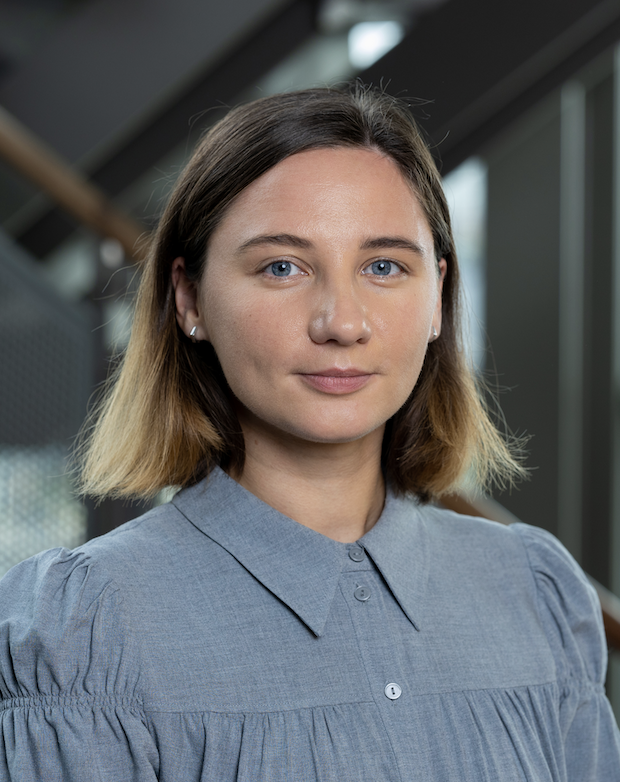
The Journey
I am originally from Lithuania and moved to Denmark for my Bachelor’s and Master’s degrees, spending nearly ten years in Copenhagen. As I approached the end of my Master’s degree, completed during the COVID-19 pandemic, I became increasingly certain that I wanted to pursue a PhD, while also questioning whether academia was the right environment for me.
With limited contact with faculty and while working full time, finding a research assistant position proved difficult. I eventually came across a research project at the Danish Institute for International Studies that closely matched my interests and contacted the principal investigator (PI), expressing my strong motivation and willingness to contribute in any capacity, including unpaid. At the time, the project was recruiting only a postdoctoral researcher, and my inquiry was kindly declined. When the selected candidate later withdrew, I was invited to interview.
As I was underqualified for the role, my candidacy required approval from the funding body, a process that took over six months. During this period, I declined a permanent job offer from a company where I had previously worked, choosing instead to wait for the outcome and pursue my goal of working in research.
What was initially planned as a one-year position developed into a four-year research trajectory, during which I progressed from research assistant to analyst and contributed to numerous academic and policy outputs. Despite strong academic results from Copenhagen Business School and extensive research experience, securing PhD funding required persistence. After three years and 44 applications, I began my PhD in Gothenburg, Sweden, in October 2025.
PhD Funding
In the early stages, I applied exclusively for individual grants through Independent Fund Denmark (DFF), a highly competitive scheme requiring a fully developed research proposal and detailed budget. Despite strong evaluations, I was unsuccessful (in both 2022 and 2024 rounds with two different proposals), which prompted me to broaden my strategy and apply to advertised PhD positions across Denmark, Sweden, and Switzerland, with a few additional applications in Luxembourg and Germany.
I was selective in my applications, prioritising intellectual fit and supervisory alignment. In several cases, interviews confirmed that the match was not right. In May 2025, I received my first PhD offer, followed by three more within the same week. While all offers came from strong institutions, I chose the position that I believed would offer the greatest opportunity for intellectual growth.
I accepted a Marie Skłodowska-Curie–funded PhD position at Chalmers University of Technology. Coming from a political science background and having worked on the politics of energy for several years, I was keen to deepen my technical understanding of energy systems. The combination of changing countries and disciplinary focus offered both challenge and growth, and the opportunity to undertake doctoral training within the Marie Skłodowska-Curie framework was one I did not want to pass up.
Regarding the specifics of the position, it is fully salaried, and I am employed as a university staff member. This includes a monthly salary that increases following the successful defence of the licentiate degree, as well as coverage under standard social security provisions. In addition, research-related activities such as conference participation, publishing fees, workshops, and training are covered through my Marie Skłodowska-Curie Actions grant. For activities beyond the scope of the grant—such as the fieldwork I am planning to conduct—I am applying for external funding to further strengthen the quality and scope of my research.
Educational background
BSc in Business Administration and Sociology
Copenhagen Business School, 2016–2019
GPA: 9.6/12
Award: Most Innovative Bachelor Project in Business Administration and Sociology (2019)
MSc in International Business and Politics (specialisation in Business Economics)
Copenhagen Business School, 2019–2021
GPA: 10.8/12
Application Preparation
Having previously applied for research funding and evaluated multiple PhD applications, I was already familiar with the structure and expectations of doctoral recruitment, particularly in systems where PhD positions are treated as salaried employment. As a result, I did not need to invest significant time in learning about proposal writing and academic standards and instead focused on continuously monitoring my professional network and advertised positions, primarily through LinkedIn and ResearchGate.
That said, recruitment procedures vary considerably across countries and universities. For the position I ultimately accepted, the process consisted of an initial application with supporting documents, including diplomas and a motivation statement, followed by a first interview with the PI and secondary supervisor about my background, perception of research, etc. I was then asked to complete a written assignment, which I submitted to the PI. This was followed by a second interview with the PI, secondary supervisor, and a PhD examiner, during which I discussed my work ethic and defended key choices in my study design. Based on my overall performance, I subsequently received a formal offer.
Although I am not a native English speaker, I completed all of my higher education in English, which meant that formal language testing was generally not required. In a small number of cases, primarily for applications in Germany, I was asked to submit an IELTS certificate from 2015, originally obtained when applying for my Bachelor’s degree.
What Made Your Application Stand Out?
I do not believe that my application stood out because of any extraordinary ability, but rather because of consistency and experience. I had the opportunity to work in well-established companies and academic institutions early in my career, which allowed me to develop practical research skills and domain expertise well beyond what is typically expected immediately after a Master’s degree. I believe that the combination of sustained research and work experience, together with a strong publication record, strengthened my application.
At the same time, this non-linear path was occasionally questioned during interviews, with some institutions asking why I had “wasted time” instead of starting a PhD. While this was demotivating, it also clarified what I was looking for in a doctoral environment. When interviewing at Chalmers, my previous experience was viewed as an asset rather than a liability, and I felt that my background was recognised as a resource for the project. This alignment played an important role in my decision to accept the position.
If I were to apply for a PhD position again, I would not change my approach. Remaining authentic made the process longer and more challenging, but it ensured that I did not compromise on fit. My advice to prospective PhD applicants is therefore to prioritise alignment and not settle for less. If this is a path you want to pursue, persistence matters.
I was offered multiple other scholarships, but I do not want to name the institutions, as it will be clear that the people who got the jobs were not first choices. As many are a part of my network, this would not be ethical.
Want to submit your
scholarship journey?
Submit Your Story Here!
More Scholarship Recipients
I am Edgar Abaho from Uganda, currently pursuing a Joint Master’s Degree in Mathematical Modelling and Optimization at the .... Read more
Hello, I am Virda from Indonesia. I come from a small city and was fortunate to have the opportunity to pursue my bachelor� .... Read more
Tessia Boateng, affectionately known as AmaTess among family and close friends, is a young Ghanaian professional with a grow .... Read more
Leave A Comment