
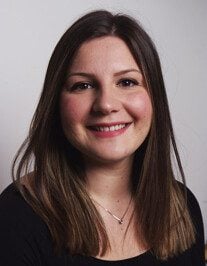
PhD Candidate in Machine Learning Teresa Ciavattini from Italy Shares Her Journey of Studying at the University of Technology of Compiègne, France
University: University of Technology of Compiègne (UTC), France
Degree: PhD in Machine Learning (SOUND.AI Doctoral Program)
Previous Education:
– MSc in Medical Biotechnology, University of Verona, Italy
– BSc in Bioinformatics, University of Verona, Italy
Scholarship: Marie Skłodowska-Curie Actions COFUND Doctoral Fellowship – Fully Funded (~€70,000 net salary + €24,000 research & mobility fund, 36 months)
Social Media
LinkedIn: linkedin.com/in/teresa-ciavattini-view/
The Journey
My name is Teresa Ciavattini, and I am currently a PhD candidate in Machine Learning at the University of Technology of Compiègne (UTC), France, within the SOUND.AI doctoral program co-funded by the Marie Skłodowska-Curie Actions and Sorbonne University. My doctoral research focuses on developing machine-learning methods for advanced diagnosis and patient-centered analysis of persistent microbial infections, with particular attention to interpretable models and clinical decision-support systems.
I come from Italy, from a small town called Montefano in central Italy. I completed both my Bachelor’s degree in Bioinformatics and my Master’s degree in Medical Biotechnology at the University of Verona. My academic path has consistently been positioned at the intersection of computational methods and biomedical research. I decided to pursue further education in this field because I wanted to develop robust computational tools capable of meaningfully impacting patient care, especially in complex infectious and chronic conditions where diagnosis and treatment response are highly heterogeneous.
Marie Skłodowska-Curie Actions COFUND Doctoral Fellowship Details
Share the details about the scholarship you received, including the institution name, scholarship name, and the amount. I was awarded a Marie Skłodowska-Curie Actions COFUND Doctoral Fellowship (SOUND.AI program) for the period 2024–2027 at the University of Technology of Compiègne, France.
This fellowship supports my doctoral research in machine learning applied to biomedical and clinical data. The program provides structured doctoral training, international mobility opportunities, interdisciplinary supervision, and funding aligned with European research excellence standards.
The scholarship amounts to approximately €70,000 (net) in salary support, in addition to a personal research, training, and mobility fund of €24,000 dedicated to conferences, courses, international stays, and research-related activities, for 36 months.
Were You Offered Any Other Scholarships?
Yes. Although the Marie Skłodowska-Curie fellowship is my doctoral scholarship, I previously received several competitive research scholarships during my academic career:
- Research scholarship at the Biotechnology Department, University of Verona (Italy): €13,000 (net), 12 months
- Research scholarship at IRCCS Foundation “Carlo Besta” Neurological Institute, Milan (Italy): €15,000 (net), 12 months
- Erasmus+ Traineeship Scholarship for my Master’s thesis at Leipzig University Hospital (Germany): €7,000, 10 months
- Scholarship from the “Scuola di Studi Superiori Carlo Urbani” (School of Excellence), Italy: €10,000, 12 months
These opportunities allowed me to conduct research in Italy and Germany, strengthening both my scientific profile and my international experience.
Educational Background
- Master’s Degree in Medical Biotechnology, University of Verona (Italy), 2021–2023
GPA equivalent: approximately 3.6–3.75 - Bachelor’s Degree in Bioinformatics, University of Verona (Italy), 2017–2021
During my Bachelor’s degree, I worked on transcriptomic analyses of pancreatic cancer samples, comparing cell lines, organoids, and patient tissue samples. This experience introduced me to RNA-seq data analysis, batch effect correction, and statistical modeling in high-dimensional biological data.
During my Master’s degree, I developed an automated pipeline for structural variant detection in whole-genome sequencing data as part of an Erasmus+ traineeship in Germany. This significantly strengthened my expertise in genomics pipelines, reproducible workflows (Nextflow, Bash, Python), and variant interpretation.
Additionally, the two years of research experience I gained after my degree were fundamental in shaping my scientific maturity. These experiences helped me transition from simply analyzing data to thinking critically as a researcher: designing pipelines, validating results, and understanding the broader clinical and biological context of the data.
Together, this background provided a strong foundation in computational biology, genomics, statistics, and data analysis, preparing me well for a PhD in machine learning applied to biomedical problems.
How Did You Prepare to Apply to the University of Technology of Compiègne?
I prepared by building a strong and coherent academic profile. I carefully structured my curriculum, ensured that my research experiences were clearly presented, and deepened my knowledge in the specific subjects related to the PhD program. I also made sure that my previous work demonstrated both technical competence and research independence.
How Did You Find Information About the Marie Skłodowska-Curie COFUND Scholarship and the University of Technology of Compiègne?
I found the Marie Skłodowska-Curie COFUND scholarship through official Marie Curie channels and institutional announcements. It is a well-known and prestigious European scholarship, so I was already aware of its importance.
I regularly monitored European research funding calls and doctoral program announcements, particularly those emphasizing international mobility and interdisciplinary research. Sorbonne University and its associated institutions are internationally recognized, which further motivated me to apply.
Did You Take Any Standardized Tests? If So, How Did You Prepare for Them?
No. Since my previous academic training and research activities were conducted in English, this was considered sufficient proof of language proficiency for admission.
How Did You Prepare to Apply to the Marie Skłodowska-Curie COFUND Scholarship?
Preparation involved:
- Demonstrating prior research productivity and scientific rigor
- Securing strong recommendation letters from supervisors
- Clearly articulating my long-term academic and research vision
- Showing alignment with the mobility and excellence criteria of the MSCA program
Because MSCA programs are highly competitive, I ensured that my application reflected scientific maturity, international experience, and autonomy in research. I focused on presenting a coherent academic trajectory and a well-defined research direction.
Are Your Classes Conducted in English or the Country’s Native Language?
Most of the classes and administrative activities are conducted in the country’s native language (French), although research activities are often conducted in English, especially within international research environments.
Would Potential Students Have Any Problems Academically Not Knowing French?
It is not an insurmountable obstacle, but knowing the local language is a significant advantage. It makes daily life, administrative procedures, and integration into the academic environment much easier. While research discussions may take place in English, understanding the native language greatly improves overall experience and independence.
What Do You Think Made Your Application Stand Out?
Several elements likely strengthened my application:
- A strong interdisciplinary profile combining bioinformatics, machine learning, and biomedical research
- International research experience across Italy and Germany
- Demonstrated pipeline development and commitment to reproducibility
- Publications and conference presentations
- A clear research direction focused on clinically relevant AI applications
- Consistency and progression across my academic trajectory
- Previous research experience showing autonomy and responsibility
The coherence of my academic path, from transcriptomics to genomics pipelines to clinical machine learning modeling, demonstrated structured growth rather than isolated experiences.
What Would You Have Done Differently if You Were Going Through the Process Again?
If I were to go through the process again, I would:
- Start preparing and refining my research narrative earlier
- Invest more time in explicitly framing my work in terms of societal and clinical impact
- Seek feedback on my proposal from multiple mentors before submission
- Ensure I have an even deeper understanding of the full scope of the project before applying
What Advice Would You Give Those Looking to Apply for a Similar Scholarship?
- Focus on building depth, not only grades. Research experience is essential.
- Seek international exposure early in your academic path.
- Develop technical autonomy, especially in coding, data analysis, and reproducible research.
- Align your proposal clearly with the institution’s expertise and strengths.
- Present a coherent academic story because your experiences should show progression.
- Apply even if the program seems highly competitive.
- Understand from the beginning that a PhD is your project. You are ultimately responsible for its direction and success, and you must be prepared to take ownership of it.
Want to submit your
scholarship journey?
Submit Your Story Here!
More Scholarship Recipients
My name is Moses Besa. I was born and raised in a disadvantaged community called Chibolya in Mufulira, a small mining town i .... Read more
My name is Faiza Waseem Khan, and I was born and raised in Pakistan. My passion for education goes all the way back to the u .... Read more
I still remember the moment I left home for the first time. A suitcase in one hand, uncertainty in the other. I didn� .... Read more
- Bachelor's Scholarships
- Bangladeshi Nationality
- Biological Sciences
- Biomedical Science
- Fully Funded Scholarships
- India
- Indian Council for Cultural Relations (ICCR) Scholarships
- Japan
- Master's Scholarships
- MEXT Scholarship
- Osaka University
- Ph.D. Scholarships
- Pharmaceutical Sciences
- Shimane University
- University of Delhi
Leave A Comment