
DAAD Scholarship Scholar Tahira Shehzadi from Pakistan Shares Her Journey of Securing a Fully Funded PhD at RPTU Kaiserslautern-Landau, Germany
University: RPTU Kaiserslautern-Landau & DFKI, Germany
Degree: PhD in Computer Science
Previous Education: MS in Computer Science, PIEAS Islamabad (Full Merit Scholarship), BSc in Electrical Engineering, UET Lahore
Scholarship: DAAD Fellowship (2021–2026) Fully Funded
Social Media
LinkedIn: linkedin.com/in/tahira45/
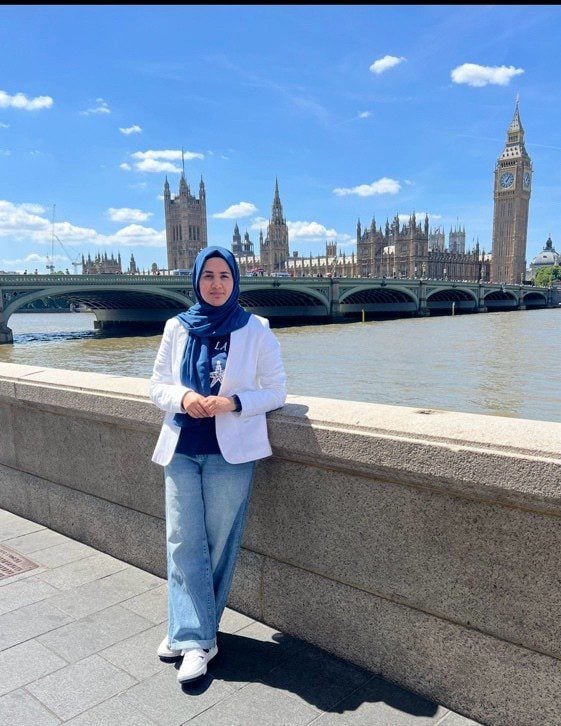
The Journey
My name is Tahira Shehzadi, and I'm originally from Toba Tek Singh, Pakistan. I recently submitted my PhD thesis in Computer Science at RPTU Kaiserslautern-Landau and the German Research Center for Artificial Intelligence (DFKI) in Kaiserslautern, Germany, and have since started a new role as a Researcher at CeMOS. My academic journey began with a Bachelor's in Electrical Engineering from UET Lahore, where a deep curiosity in intelligent systems first took root. That curiosity led me to pursue a Master's in Computer Science at PIEAS Islamabad, and eventually a fully funded PhD in Germany. My decision to continue in this field was driven by a desire to develop AI solutions that work with minimal labeled data, a challenge with enormous real-world impact in fields like medical imaging, document analysis, and autonomous driving.
I am a DAAD-funded scholar, and my research focuses on semi-supervised learning and 2D object detection. I have published 18 research papers, including works at top-tier venues such as CVPR 2024 and ICCV 2025.
DAAD PhD Scholarship Details
I was awarded the prestigious DAAD Fellowship (Deutscher Akademischer Austauschdienst – German Academic Exchange Service), which fully funded my PhD at RPTU Kaiserslautern-Landau and DFKI, Germany. The scholarship covered tuition, health insurance, and a monthly stipend, running from 2021 to 2026.
Were You Offered Any Other Scholarships?
Yes. During my Master's at PIEAS Islamabad, I was awarded the PIEAS Fellowship, a merit-based full scholarship covering the entire duration of my Master's degree. I was also awarded an NSF Travel Grant to attend the Women in Machine Learning (WiML) Workshop at NeurIPS 2024.
Educational Background
I hold a Bachelor of Science in Electrical Engineering from the University of Engineering and Technology (UET) Lahore (2014–2018). I then completed a Master's in Computer Science at the Pakistan Institute of Engineering & Applied Sciences (PIEAS), Islamabad (2019–2020), on a full merit scholarship.
My engineering foundation gave me a strong grounding in mathematics, signal processing, and systems thinking. Transitioning to computer science for my Master's allowed me to specialize in machine learning and AI. Together, these degrees prepared me to tackle cutting-edge research in computer vision, where rigorous engineering and mathematical depth are equally essential.
How Did You Prepare to Apply to RPTU and DFKI?
I began by researching professors in Germany whose work aligned with my interests in computer vision and machine learning. I reached out to potential supervisors directly and secured an acceptance letter before applying through the DAAD portal. I made sure my research proposal clearly reflected my academic background and my vision for advancing semi-supervised learning, ensuring every part of my application told a coherent and compelling story.
Standardized Test Scores and Preparation
I took the IELTS exam, which is a compulsory requirement for the DAAD scholarship application. Fortunately, I had prepared for it during my Master's studies, so by the time I needed it for my PhD application, I was already well-equipped and confident in my language proficiency.
How Did You Prepare to Apply for the DAAD Scholarship?
I reviewed the DAAD selection criteria carefully and tailored my application accordingly. I focused on crafting a strong research proposal that highlighted both my academic achievements and the real-world relevance of my proposed work. I also ensured my recommendation letters came from professors who could speak directly to my research potential and commitment to the field.
How Was Your Experience at RPTU and DFKI?
My experience at RPTU Kaiserslautern and DFKI has been academically rigorous and professionally transformative. I was embedded in the Augmented Vision research group and contributed to several nationally funded projects, including BMBF, LUMINOUS, and AIRISE. Alongside my PhD, I also gained valuable industry experience as an Applied AI Scientist at Tensorlake, a US-based startup, working remotely on document intelligence and computer vision.
How Do You Rate the Institution Academically and Why?
I rate RPTU and DFKI very highly, 10/10. The research environment is world-class, with access to cutting-edge facilities, internationally renowned faculty, and a strong culture of interdisciplinary collaboration. The exposure to nationally and internationally funded projects gave my PhD a depth and real-world relevance that I deeply valued.
How Do RPTU and DFKI Support International Students?
RPTU and DFKI provide solid support for international students, from orientation sessions and visa guidance to language courses and cultural integration programs. The international community within the research group also made the transition much smoother, as there were always colleagues who had navigated the same journey.
Are Your Classes Conducted in English or German?
All research activities, seminars, and academic coursework during my PhD were conducted in English, which made the academic environment very accessible for international students.
Would Potential Students Have Problems Not Knowing German?
German is not compulsory for academic research during a PhD. You can manage perfectly well in English within the university and research environment. However, learning at least B1 German makes a significant difference for day-to-day life, navigating local administration, and especially for social integration and job opportunities after completing your PhD. Most institutions offer free language classes, and I would strongly recommend taking advantage of them early on.
What Did You Pursue After the Scholarship?
After submitting my PhD thesis, I transitioned into applied research by taking up a position as a Researcher at CeMOS (Center for Mass Spectrometry and Optical Spectroscopy) in Germany. With 18 published papers, including works at CVPR 2024 and ICCV 2025, I continue to contribute actively to the AI research community while applying my expertise in an exciting new research setting.
What Do You Think Made Your Application Stand Out?
My consistent academic performance, graduating near the top of my class at both UET and PIEAS, combined with a clear and focused research vision, set my application apart. I had already demonstrated strong research potential through my Master's work and was able to present a compelling proposal targeting a meaningful open problem in AI: how to build powerful detection systems when labeled data is scarce. My background as a woman in STEM from Pakistan, bringing a global perspective to a challenging research domain, also added a unique and authentic dimension to my application.
What Would You Have Done Differently?
I would have applied to more scholarships earlier and diversified my applications across multiple funding sources. I also wish I had gained more structured research experience before applying for a PhD scholarship, as it would have strengthened both my proposal and my confidence going into the process.
What Advice Would You Give Those Looking to Apply for a Similar Scholarship?
Start early, research deeply, and be genuine. Reach out to professors whose work excites you and build those connections before you apply. Tailor every part of your application, your research proposal, personal statement, and recommendation letters to tell a consistent and compelling story about who you are and where you are headed. Don't hesitate to seek feedback from past scholars and remember that your background is your strength. Use it to craft a narrative that is uniquely yours.
Want to submit your
scholarship journey?
Submit Your Story Here!
More Scholarship Recipients
Hello, I am Charles Agyei from Ghana. I did my undergraduate degree in Land Economy at Kwame Nkrumah University of Science a .... Read more
I am Zujaja Baig, originally from Gilgit-Baltistan, Pakistan. During my undergrad, I had multiple opportunities, through int .... Read more

My name is Zhansaya Kanagatova, and I am from Astana, Kazakhstan. I hold a Bachelor of Science in Mathematics from Nazarbaye .... Read more
Leave A Comment