
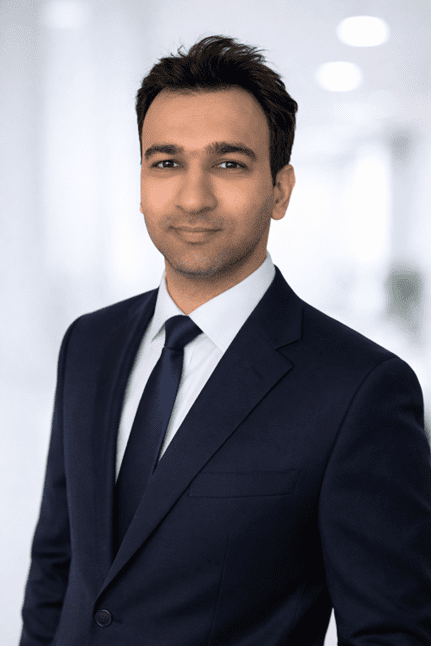
Marie Skłodowska-Curie Actions PhD Graduate Taha Al Muhammadee Janjua from Pakistan Shares His Journey of Studying Neuroscience at Aalborg University, Denmark
University: Aalborg University – Center for Neuroplasticity and Pain (CNAP), Denmark
Degree: PhD in Neuroscience (Translational Neuroscience & Preclinical Pain Research)
Previous Education: MSc in Biomedical Engineering, National University of Sciences and Technology (NUST), Pakistan | BSc in Mechatronics Engineering, National University of Sciences and Technology (NUST), Pakistan
Scholarship: Marie Skłodowska-Curie Actions (MSCA) – Horizon 2020 – Fully Funded (salary, research costs, mobility support)
Social Media
LinkedIn: https://www.linkedin.com/in/tahajanjua/
The Journey
My name is Taha Al Muhammadee Janjua. I was born in the United Kingdom and raised primarily in Pakistan. My academic journey has always been guided by curiosity; a desire to understand how systems work, especially the most complex system of all: the human brain.
I completed my Bachelor’s in Mechatronics Engineering, followed by a Master’s in Biomedical Engineering at the National University of Sciences and Technology (NUST), Pakistan. During my master’s degree, I became deeply interested in neuroscience and translational research, particularly how engineering principles can be used to better understand and treat neurological disorders. That curiosity ultimately led me to pursue a PhD in neuroscience.
But beyond academic ambition, my PhD was also personal. I undertook it as a promise to my father; a commitment to push myself to the highest level of education. Completing it was not just a professional milestone but a deeply meaningful personal achievement.
Marie Skłodowska-Curie Actions (MSCA) Program Details
I was awarded a Horizon 2020 scholarship under the Marie Skłodowska-Curie Actions (MSCA) program to pursue my PhD at Aalborg University, Denmark, within the Center for Neuroplasticity and Pain (CNAP).
The Horizon 2020 program is one of the European Union’s most prestigious research funding frameworks, designed to support innovation, scientific excellence, and international collaboration. The scholarship covered my salary, research costs, and mobility support for the duration of my doctoral studies.
The support was comprehensive and allowed me to focus entirely on research without financial stress. It also provided exposure to international collaboration and interdisciplinary training, which became one of the most valuable aspects of my PhD.
Educational Background
I completed my Bachelor’s degree in Mechatronics Engineering, where I developed a strong foundation in control systems, electronics, robotics, and mechanical design. I later pursued a Master’s in Biomedical Engineering, where I transitioned into biosignal processing, medical device development, and neuroengineering applications.
My academic background allowed me to bridge engineering and medicine, a skill that proved essential during my PhD. I was comfortable working with hardware, programming, signal analysis, experimental models, and interdisciplinary teams. This hybrid profile helped me adapt quickly to the demands of translational neuroscience research.
How I Prepared to Apply to Aalborg University
I researched European doctoral programs extensively, focusing on funded PhD positions rather than traditional self-funded routes. The Horizon 2020 and Marie Curie programs stood out because they emphasized innovation, mobility, and research excellence.
I carefully studied the research focus of Aalborg University’s Center for Neuroplasticity and Pain and ensured my application clearly aligned my engineering background with their neuroscience objectives. Rather than applying broadly without direction, I targeted programs where my interdisciplinary skill set would genuinely add value.
Standardized Tests
As my prior education was conducted in English, I did not need additional language testing for my PhD application.
How I Prepared to Apply for the Marie Skłodowska-Curie Actions (MSCA) Program
Preparation focused heavily on three things:
- Demonstrating technical competence
- Showing interdisciplinary potential
- Communicating a clear long-term vision
I worked on refining my CV to emphasize measurable achievements and research output. I also spent significant time on my motivation letter, ensuring it told a coherent story, from engineering foundations to neuroscience applications.
Most importantly, I tried to show not only what I had done, but what I was capable of building in the future.
My Experience During the PhD
My PhD focused on translational neuroscience and preclinical pain research. I worked on developing and validating experimental models to better understand neural responses in the cortex. The work required technical precision, surgical collaboration, signal processing expertise, and constant problem-solving.
The experience was intense and humbling. Research has a way of dismantling overconfidence. The more I learned, the more I realized how little I truly understood about the brain, and about the world.
Completing the PhD left me feeling wiser, not because I knew more answers, but because I had become comfortable with uncertainty. That perspective has shaped how I approach both science and life.
Current Role – Research Engineer at Lundbeck
Today, I work as a Research Engineer at Lundbeck, a global neuroscience pharmaceutical company dedicated to developing treatments for brain disorders such as depression, schizophrenia, Parkinson’s disease, and Alzheimer’s disease.
My role sits at the intersection of engineering and preclinical neuroscience. I focus on:
- Realizing conceptual research ideas into tangible experimental solutions
- Designing and implementing innovative preclinical systems
- Leading initiatives in AI-driven data analysis, workflow automation, and digital innovation
- Driving 3D printing applications for rapid prototyping and experimental customization
- Supporting cross-functional research teams in advancing neuroscience discovery
In many ways, my current work reflects the same interdisciplinary mindset that shaped my PhD, combining engineering creativity with biological inquiry to accelerate innovation.
What Made My Application Stand Out
I believe my application stood out because of its interdisciplinary clarity. I wasn’t purely an engineer, nor purely a neuroscientist; I was positioned at the intersection.
Additionally:
- My technical skill set was practical and applicable
- My research direction aligned closely with the host lab
- I presented a cohesive story of growth rather than disconnected achievements
Most importantly, my motivation was genuine.
What Would I Have Done Differently?
If I could redo the process, I would start earlier and seek more external feedback on my application materials. Strong writing benefits greatly from critique.
I would also invest more time in understanding the long-term strategic goals of funding bodies to align my application even more precisely.
Advice to Future Applicants
- Do not underestimate the power of clarity. Know why you are applying.
- Tailor your application to the institution — generic submissions rarely succeed.
- Interdisciplinary skills are powerful — highlight what makes you unique.
- Be patient. Rejection is common; persistence matters.
- Pursue education for growth, not just prestige.
A PhD will not make you feel like you know everything. If anything, it will teach you humility, and that may be its greatest gift.
Want to submit your
scholarship journey?
Submit Your Story Here!
More Scholarship Recipients

I am Aleezay Anjum Ahmed from Pakistan, and I hold a bachelor’s degree in chemistry with a minor in mathematics. I was awa .... Read more
My name is Alhaji Alusine Kebe. I am an agronomist specializing in soil–plant–climate interactions, sustainable agri-foo .... Read more

My name is Sarbinaz Nagyzkhan, and I am originally from Kazakhstan. I am currently a Marie Skłodowska-Curie Doctoral Fellow .... Read more
Leave A Comment