
Ph.D. Membrane Biophysics Student Sakshi Barhai from India Shares Her Journey of Studying at the Max Planck Institute of Colloids and Interfaces, Germany
University: Max Planck Institute of Colloids and Interfaces, Germany (ComeInCell MSCA Doctoral Network)
Degree: Ph.D. in Membrane Biophysics
Previous Education: M.Sc. in Biochemistry – Pt. Ravishankar Shukla University, Raipur, India (Gold Medalist); B.Sc. in Biochemistry – Government Nagarjuna Post Graduate College of Science, Raipur, India
Scholarship: Marie Skłodowska-Curie Actions (MSCA) Doctoral Network – ComeInCell Consortium – Fully Funded (Approx. €39,000/year salary + Travel & Research Funding)
Social Media
LinkedIn: linkedin.com/in/sakshi-barhai-09755430b/
The Journey
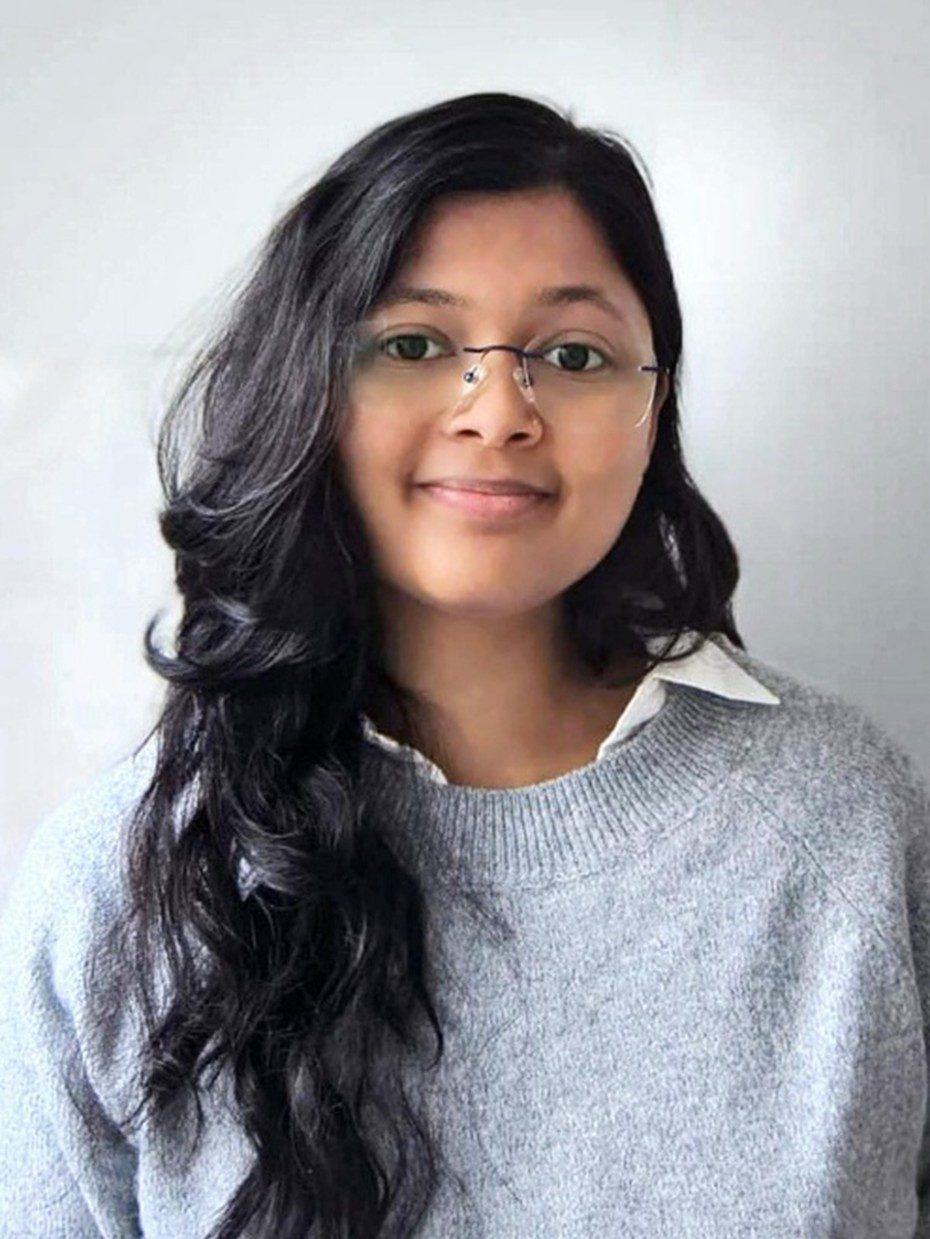
Hello! My name is Sakshi Barhai, and I am from Pithora, a small town in the state of Chhattisgarh, India. After clearing the national-level JNVST entrance exam, I joined Jawahar Navodaya Vidyalaya (JNV), Saraipali, India, as a boarding student at the age of 10. Living away from home at such a young age was challenging, but it laid the foundation for me and taught me independence and resilience. I remember, even back then, I was deeply fascinated by biology. The simplest experiments, like watching cobalt chloride paper turn from blue to pink during a transpiration test, felt nothing short of magical to me. That curiosity slowly grew into a passion for exploring life sciences in an interdisciplinary way.
I earned my Bachelor’s degree in Biochemistry from Government Nagarjuna Post Graduate College of Science, Raipur, India, and subsequently pursued a Master’s degree in Biochemistry at Pt. Ravishankar Shukla University, Raipur. I graduated with distinction, receiving the gold medal for academic excellence in Biochemistry during my M.Sc. During my bachelor’s and master’s studies, I focused on building a strong foundation in biochemistry, molecular biology, and biophysics. For my master’s thesis, I had the opportunity to work at the Tata Institute of Fundamental Research (TIFR), Hyderabad, India. There, I investigated the biophysical characterization of tau protein aggregation, which plays a critical role in Alzheimer’s disease and other tauopathies. This experience opened my eyes to how biology and physics can beautifully intersect. Driven by this curiosity, I decided to take the leap into a PhD.
Currently, I am pursuing my PhD in membrane biophysics at the Max Planck Institute of Colloids and Interfaces in Germany. My PhD is a part ofthe ComeInCell consortium. It is fully funded through a Marie Skłodowska-Curie Actions doctoral network, which covers my salary, which is around € 39,000 per annum, travel expenses, and research-related expenses. For me, this funding is not just financial aid; it’s a recognition of potential and a responsibility that allows me to focus entirely on my research and training without financial stress.
Immediately after completing my Master’s degree, I joined the TIFR-Hyderabad as a visiting student. During this period, I actively engaged in research while simultaneously preparing for national-level competitive examinations. I qualified for the Indian Council of Medical Research – Biomedical Research Eligibility Test (ICMR BRET)- 2024, cleared the Tata Institute of Fundamental Research – Graduate School (TIFR-GS)-2024 exam, and secured an All-India Rank of 151 in the Graduate Aptitude Test in Engineering – Life Sciences (GATE-XL)-2025. These milestones reassured me and opened doors for the next stage of my academic journey.
My hands-on exposure to advanced techniques and independent research thinking not only strengthened my academic profile but also laid a solid foundation for future scientific endeavors. In preparing for PhD applications, I carefully researched institutes and laboratories that aligned with my scientific interests rather than applying broadly. I looked for research institutes in Europe, particularly those renowned for strong basic research and interdisciplinary science. To find information about institutions and funding opportunities, I relied on institute websites, lab webpages, publications, and direct communication with potential supervisors. I did not take standardized tests such as the GRE or GMAT, as they were not required for most European PhD programs. However, I did prepare carefully for interviews by revisiting my research projects, reading relevant literature, and clearly articulating my motivation for the field of research. For funded PhD positions, the key components were my CV, research statement, and interviews. I invested significant time in refining my CV, clearly describing my research experience and technical skills. I also practiced explaining my work in a clear and confident way, especially to interdisciplinary audiences.
How is (was) Your Experience at the Max Planck Institute of Colloids and Interfaces?
My experience at the Max Planck Institute of Colloids and Interfaces in Germany has been very positive so far. The research environment is highly international, collaborative, and intellectually stimulating. I have access to excellent infrastructure, training opportunities, and scientific mentorship. All research activities, meetings, and courses are conducted in English. Not knowing German did not pose any academic difficulty, although learning the local language is helpful for daily life.
What Made My Application Stand Out
I believe my application stood out because of my genuine interest, past research experience, association with a renowned research institute, and strong motivation to pursue a PhD. Equally important was my ability to connect my formal education, technical expertise, and research experience with my future research goals.
What I Would Do Differently
If I were to go through the process again, I would begin contacting potential supervisors much earlier and seek feedback on my application materials sooner. Early communication can make a significant difference, and constructive feedback has the potential to steer the application process in the right direction.
Advice for Future Applicants
My main advice is to prioritize research fit over institutional rankings, gain hands-on research experience as early as possible, and never be discouraged by rejections. Persistence, clarity of purpose, and genuine passion for the field matter far more than a perfect academic record. Opportunities arise for those who are prepared to embrace them.
Want to submit your
scholarship journey?
Submit Your Story Here!
More Scholarship Recipients
Hi! My name is Banu, and I come from Kazakhstan. I was born and raised there, and upon high school graduation, I decided to .... Read more
Hello! My name is Yumna Arif, and I am from Pakistan. I hold a PhD in Business and Management from Warwick Business School, .... Read more
I am Vishnu Vardhan. I hail from the Telangana state of India. I hold a bachelor’s degree in electrical and electronics en .... Read more
Leave A Comment