
Graduate School Opportunity Award Scholar Pooja Sharma from India Shares Her Journey of Securing a Fully Funded PhD at the University of Florida, USA
University: University of Florida
Degree: PhD in Health Services Research, Management, and Policy
Previous Education: Master of Public Health (Social Epidemiology), Tata Institute of Social Sciences; Bachelor of Homeopathic Medicine and Surgery, Guru Gobind Singh Indraprastha University
Scholarship: Full Departmental PhD Funding Package – Full Funding (Graduate Assistantship with tuition waiver and stipend)
Other Offered Scholarships (if any): PhD in Public Health at the University of Utah – Partial Funding (One-year Graduate Assistantship with tuition waiver and stipend, funding beyond first year not guaranteed)
Social Media
The Journey
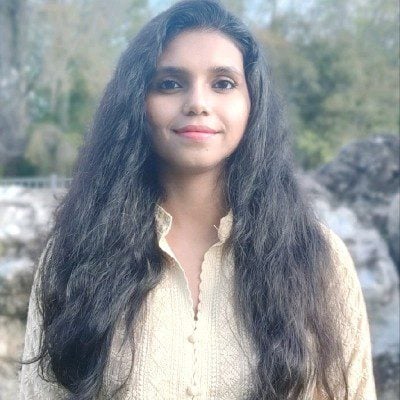
My name is Pooja Sharma, and I'm originally from Delhi, India — though my roots go back to a small village called Uchhaal in Madhubani district, Bihar. I'm currently a PhD candidate in Health Services Research, Management, and Policy at the University of Florida's College of Public Health and Health Professions. I also hold a Master of Public Health (Social Epidemiology) from the Tata Institute of Social Sciences in Mumbai, and a Bachelor of Homeopathic Medicine and Surgery from Guru Gobind Singh Indraprastha University in Delhi.
Why did I pursue further education? Honestly, the seeds were planted long before I knew what “public health” meant.
Growing up, I used to visit my ancestral village, and what I saw stayed with me. People walking barefoot for miles to reach a health center. Families are spending more than 24 hours on trains to get to a hospital in the city, sometimes arriving too late. Mothers and newborns are dying from conditions that were entirely preventable. Bihar has historically had some of the worst health indicators in India, and as a child, I didn't have the language for it yet, but I knew something was deeply unfair.
That feeling never left me. When I pursued my BHMS degree, a line from the very first text we studied—the Organon of Medicine—gave me words for it: “The physician’s high and only mission is to restore the sick to health, to cure, as it is termed.” But as I went deeper into Community Medicine and Social Epidemiology, I realized that restoring health isn’t just about treating one patient at a time. It’s about understanding why people get sick in the first place and changing those conditions. That realization is what pulled me toward public health, and eventually toward a PhD.
Full Departmental PhD Funding Package Details
Institution: University of Florida, Gainesville, Florida, US
College: College of Public Health and Health Professions (PHHP)
Program: PhD in Health Services Research, Management, and Policy
Funding: Full Departmental PhD Funding Package
I received a Graduate Assistantship (0.50 FTE) covering a full tuition waiver and a stipend for four years. I started with $25,000 per year, and this has since increased to $31,000 annually (approximately $1,200 bi-weekly).
I was also awarded the Graduate School Opportunity Award (GSOA) at the University of Florida — one of the most prestigious awards the university offers. It recognizes students with exceptional academic credentials, and being selected for it was genuinely one of the proudest moments of my PhD journey so far.
One important thing I want to clarify for anyone reading this: I did not apply separately for this funding. It was offered as part of the PhD admissions package from the department. Many PhD programs in the United States, particularly in public health and health sciences, bundle funding directly into their offer. You don’t always have to hunt for scholarships separately; sometimes the admission itself is the scholarship.
Beyond my initial funding package, I have been fortunate to receive additional recognition during my time at UF. In 2024, I received the Outstanding Student Award in PhD of Public Health (Health Services Research) from the University of Florida. I was also awarded the Grinter Scholarship from the UF Graduate School, given in support of doctoral training and academic excellence. I received the Perri Family Fellowship from the College of Public Health and Health Professions, an award given to first-generation college students with good academic standing. What made this particularly meaningful was that I was only the second person to receive this fellowship in ten years, and the first student from my department ever to be selected. As someone who is the first in my family to pursue graduate education, being recognized in this way meant more than I can easily put into words. And in 2025, I received the UF CTSI Dissemination and Implementation Science Research Voucher Award from the UF Clinical and Translational Science Institute, which supported access to UF’s Integrated Data Repository for my dissertation research. None of these were things I anticipated when I arrived; they were reminders that the work was being seen.
One of the most unexpected and humbling experiences of my PhD has been seeing our research reach people far beyond academia. I had the opportunity to contribute to a study published in the Annals of Family Medicine examining body mass index versus body fat percentage as a predictor of mortality — and it went on to achieve the #2 all-time Altmetric score in the journal’s entire history. The study was featured by CNN, Fox News, and NPR. I remember thinking about that child in Bihar who once watched people walk miles for care—and finding it extraordinary that work I contributed to as a doctoral student was now part of a national and international conversation about health. A PhD is not just a degree. It is a platform.
Were You Offered Any Other Scholarships?
Yes. I was also admitted—with funding—to the PhD program (in Public Health) at the University of Utah. They offered a one-year Graduate Assistantship that included a tuition waiver and a stipend for the first year, tied to a specific research project. Funding beyond the first year was not guaranteed and would depend on continued project availability.
I ultimately chose UF because I was specifically looking for a Health Services Research program, and UF’s department was a stronger fit for my research interests. The full four-year funding commitment also gave me more stability to focus on my work without uncertainty about whether I’d be supported the following year.
I’m sharing this because I want future applicants to know: even if you don’t get into your first-choice program, there may be other funded opportunities. Cast a wide net.
Educational Background
I completed my BHMS with a GPA of 3.34, and my MPH in Social Epidemiology with a GPA of 3.23, both above the 3.0 minimum required by most US PhD programs.
But honestly, what prepared me more than any GPA was my ‘work experience.’
During my MPH at TISS, I investigated malaria outbreaks in the field and studied barriers to care for patients with sickle cell anemia in tribal communities. These weren’t classroom exercises; they were real situations where the findings actually mattered to real people. At one point, one of my recommendations from the field study was adopted at the state level. That moment, seeing research actually change something, made me understand what I wanted to do with my life.
After my MPH, I worked for over five years across India: with Jan Swasthya Sahyog in Chhattisgarh, with POSHAN Abhiyan and Tata Trusts in Madhya Pradesh, with UNICEF on child nutrition programs (CSAM), and with the National Health Systems Resource Centre (NHSRC) under the Ministry of Health and Family Welfare in Delhi. I drafted national operational guidelines, trained frontline healthcare workers, evaluated government programs, and led mixed-methods research across states, including UP, Bihar, and Jharkhand.
By the time (late 2021) I started applying for a PhD, and I didn’t have publications, but I had something else: I had been in the field. And I think that mattered.
How Did I Prepare to Apply?
I’ll be honest — I had no guidance. No seniors from my circle had done a PhD abroad, and no mentor walked me through the process. Everything I learned, I figured out on my own.
I started by deciding on the country: the United States, because of the strength of its health services research programs and the research culture. I used U.S. News & World Report rankings to create an initial list of universities with strong public health programs, then visited each department’s website to see if their faculty research matched what I wanted to do.
I eventually shortlisted seven universities: University of Utah, Washington University in St. Louis, University of Iowa, University of South Carolina, Johns Hopkins University, University of Florida, and University of North Carolina. I also contacted a few Indian PhD students already studying in the US—not for guidance exactly, but just to understand how different programs worked, since requirements varied so much between institutions.
One thing I discovered: some programs expect you to secure a faculty supervisor before applying; others use a departmental review. I learned to read each program carefully and tailor my approach.
For UF and USC specifically, I reached out directly to professors whose research aligned with mine. At UF, I emailed a faculty member whose work on primary care and chronic disease resonated with me. He forwarded my CV and Statement of Purpose to the department administration, and I genuinely believe that step helped get me noticed. That said, I still had to complete the formal application through the institutional portal as well.
For all the applications, I used SOPHAS (the centralized application system for public health programs), which made submitting to multiple programs much more manageable. For the University of Washington, I also had to use their separate university portal.
For standardized tests, I took both the GRE and IELTS. The GRE was required by only two universities (the University of Utah and USC). I prepared using free YouTube resources, online practice tests, and publicly available study materials, along with a Jamboree preparation course. For IELTS, I focused on practice tests and timed writing exercises — mostly through YouTube, without additional paid courses.
How Did I Prepare My Application Specifically?
My Statement of Purpose was the part I invested most of my time in. I wanted it to tell a story, not just list my qualifications, because I knew my profile was unusual and I needed the committee to understand why someone with a clinical homeopathic medicine degree was applying for a health services research PhD.
I connected my childhood observations in Bihar, my clinical training, my MPH research, and my fieldwork in India into a single coherent narrative about why I care about health equity and why a PhD was the natural next step. I didn’t try to hide that my GPA was moderate or that I didn’t have publications—instead, I let my experience speak.
For references, I was deliberate. I chose people who had actually seen me work: my MPH dissertation supervisor, the Dean of the School of Health Systems Studies at TISS, and senior supervisors from my professional roles. I didn’t just ask them to write a reference; I briefed them on what I was applying for and why, so their letters were specific, not generic.
I reached out to faculty directly at two universities. This felt uncomfortable at first, but it turned out to be one of the most important things I did. Being proactive showed initiative, and it meant a faculty member at UF was already familiar with my profile before my application arrived.
My Experience at the Institution
UF has been a genuinely enriching experience, though not without its challenges.
Academically, the program has pushed me in ways I didn’t anticipate. I came in with strong qualitative skills and field research experience, but the doctoral program required me to develop deep statistical and quantitative competencies, such as SAS, STATA, R, and working with large EHR datasets. That learning curve was steep, but worth it.
The department has been supportive. I’ve been given real teaching responsibilities, I’ve served as a Teaching Assistant across six courses, also delivered four independent guest lectures, and been appointed as Primary Instructor for two courses at the undergraduate and graduate levels. I’ve mentored more than 35 students in research. These opportunities aren’t available everywhere, and I’m grateful for them.
One of the things I find most encouraging about this academic environment is seeing what’s possible when you stay the course. My dissertation co-chair, Dr. Ara Jo, completed her own doctoral journey at UF and is now a Clinical Associate Professor and PhD Program Director in the same department where I’m training. Watching someone who was once exactly where I am grow into a scholar of her calibre—rigorous in her methodology, thoughtful in her teaching, genuinely invested in her students—is a quiet but powerful reminder that this path leads somewhere real. It matters deeply to have people like that around you.
Living in Gainesville as an international student from India took some adjustment. The place is quieter than Delhi or Mumbai, and the cultural shift is real. But the university has a large and vibrant international student community, and I found my footing relatively quickly.
One thing I didn’t expect: how isolating a PhD can feel at times, especially when you’re far from family and working through complex research problems alone. If you’re considering this path, build your community early with peers, with faculty, with the international student office. It makes a difference.
How Do I Rate the Institution Academically?
I would rate UF very highly — 4.5 out of 5.
It is a flagship R1 research university with extensive resources: access to large datasets, high-performance computing, interdisciplinary collaborations, and faculty who are genuinely leaders in their fields. My dissertation chair and advisor, Dr. Arch G. Mainous III, is one of the most renowned researchers in primary care and health services research in the United States and internationally, and working closely with him has shaped how I think about research and what it means to do it well.
The reason I don’t give it a perfect 5 is simply that, like any large public university, navigating administrative systems can sometimes be slow or complex for international students. But academically? It has exceeded my expectations.
How Does UF Support International Students?
UF has a dedicated office—the International Center—that supports international students with visa guidance, cultural programming, and community events. There are also graduate student associations, student wellness resources, and academic writing support services available through the Graduate School.
Within my department, I’ve found faculty to be accessible and genuinely invested in student success. The graduate assistantship structure means you’re embedded in the department from day one, you’re not just a student; you’re also a colleague.
That said, I’d encourage any incoming international student to proactively seek out community rather than waiting for it to come to you. Join student organizations, attend departmental seminars, and connect with other PhD students. The support is there — but you have to reach for it.
Are Classes Conducted in English?
Yes, entirely. All coursework, teaching, research, and communication at UF is in English. There is no language barrier for students who are proficient in English, and the IELTS/TOEFL requirement for admission ensures a baseline level of proficiency. In my experience, the academic writing and presentation expectations are high, but manageable with practice and feedback.
What Made My Application Stand Out?
Looking back, I think it was the combination of things that don’t usually appear together in one application.
Most applicants to health services research PhD programs come from public health or health policy backgrounds. Fewer have clinical training. Even fewer have spent years implementing national-level health programs in underserved communities—and fewer still come in as first-generation university students from a village in Bihar.
My profile was genuinely unusual: a homeopathic doctor with an MPH, who had trained frontline health workers and doctors in rural Chhattisgarh and Madhya Pradesh, drafted national guidelines for the Government of India, and evaluated UNICEF nutrition programs. When I wrote my Statement of Purpose, I didn’t try to make myself sound like a conventional applicant. I leaned into what made me different.
Direct outreach to faculty also mattered. It showed I had done my homework and that I was serious.
And I think my references were strong, not because of who wrote them, but because those people had actually seen me work in difficult settings and could speak to it specifically.
I was accepted without an interview. I still don’t take that for granted.
What Would I Do Differently?
A few things.
I would start earlier. I began preparing later than I should have, which added unnecessary stress and limited how many programs I could carefully research.
I would seek out more guidance from PhD students already in the US, from university application forums, and from people who had been through the process. I figured most of it out alone, and while that built resilience, it also cost me time and caused avoidable confusion.
I would also apply to more programs. Seven felt like a lot at the time, but in hindsight, the PhD application process in the US is unpredictable. A wider net gives you more options and more leverage.
And finally, I would trust myself sooner. I spent a lot of time wondering whether someone with my background really belonged in a research PhD program. The answer, it turns out, was yes. If you have a compelling story and genuine motivation, don’t disqualify yourself before the committee has a chance to.
A Note of Gratitude
No journey like this happens alone, and I want to acknowledge the people who shaped mine long before I ever applied to a PhD program.
Dr. Anantha Kumar Srinivasaiyer has been one of the most inspiring mentors in my life—someone who consistently believed in my potential, encouraged me to think bigger, and taught me that becoming a good public health professional and becoming a good human being are not separate goals. His influence runs quietly through everything I do.
At TISS, I was fortunate to learn under Dr. Thiagarajan Sundararaman and Dr. Anil Kumar—both of whom served as Dean of the School of Health Systems Studies at different points, and both of whom gave me far more than a degree. Dr. Sundararaman’s intellectual rigor and commitment to health equity set a standard I continue to aspire toward. Dr. Anil Kumar taught me how to learn—truly learn—and his warmth and mentorship during my Master’s years stayed with me long after I left Mumbai. He passed away two years ago, and I carry his memory with me in this work.
Dr. Prabir Chatterjee, during my internship in rural Chhattisgarh, showed me what it looks like to live your public health values, not just study them. That experience was formative in ways I’m still discovering.
And then there is my family, my greatest constant. My parents, who always believed in education and supported every step of my journey without hesitation, even when that journey took me far from home. And my siblings, particularly my elder brother (Mr. Sahil Sharma), who pushed me to dream bigger than I dared to on my own. When I told him I was considering applying for a PhD abroad but worried about the odds— “there are only two seats in this program”—he didn’t flinch. He looked at me and said: “How many do you want? Just one, right? That’s more than what you need, I believe.”
Guess what? I applied, and I got through in my very first attempt.
I am grateful to all of them.
A Final Note
I am the first person in my family to pursue graduate education. Earning a PhD in the United States—funded, on my own terms—is something I couldn’t have imagined when I was a child watching people in my village walk hours to reach a doctor.
But it happened. And if sharing this story helps even one person believe that their unconventional path is not a weakness—that it might actually be the thing that gets them in—then it was worth telling.
Feel free to reach out to me on LinkedIn/email. I’m always happy to talk.
—
Pooja Sharma (She/Her/Hers)
PhD Candidate, MPH, BHMS
Department of Health Services Research, Management and Policy
College of Public Health and Health Professions, University of Florida
LinkedIn: www.linkedin.com/in/pooja-sharma-she-her-8930b7142
Email: [email protected] | [email protected]
Want to submit your
scholarship journey?
Submit Your Story Here!
More Scholarship Recipients
I am a South-Asian Kenyan, blessed to have been born and raised in wonderful Kenya. At university, I double majored in Envir .... Read more
Hi, my name is Patrick, and I'm originally from Indonesia. I moved to Singapore six years ago and am currently pursuing a de .... Read more
My name is Baibrus Khan, and I am from Pakistan, originally from Quetta. Growing up in Quetta, I witnessed firsthand the cha .... Read more
Leave A Comment