
Global Korea Scholarship (GKS) Scholar Oumaima Latrech from Morocco Shares Her Journey of Securing a Fully Funded Master's Degree at the Ewha Womans University, South Korea
University: Ewha Womans University
Degree: Master’s in Media and Communication
Previous Education: Bachelor’s in Journalism and Communication, Higher Institute of Information and Communication (ISIC), Morocco
Scholarship: Global Korea Scholarship (GKS) – Full Funding (Tuition, Monthly Stipend, Airfare, Health Insurance, Language Training)
Social Media
The Journey
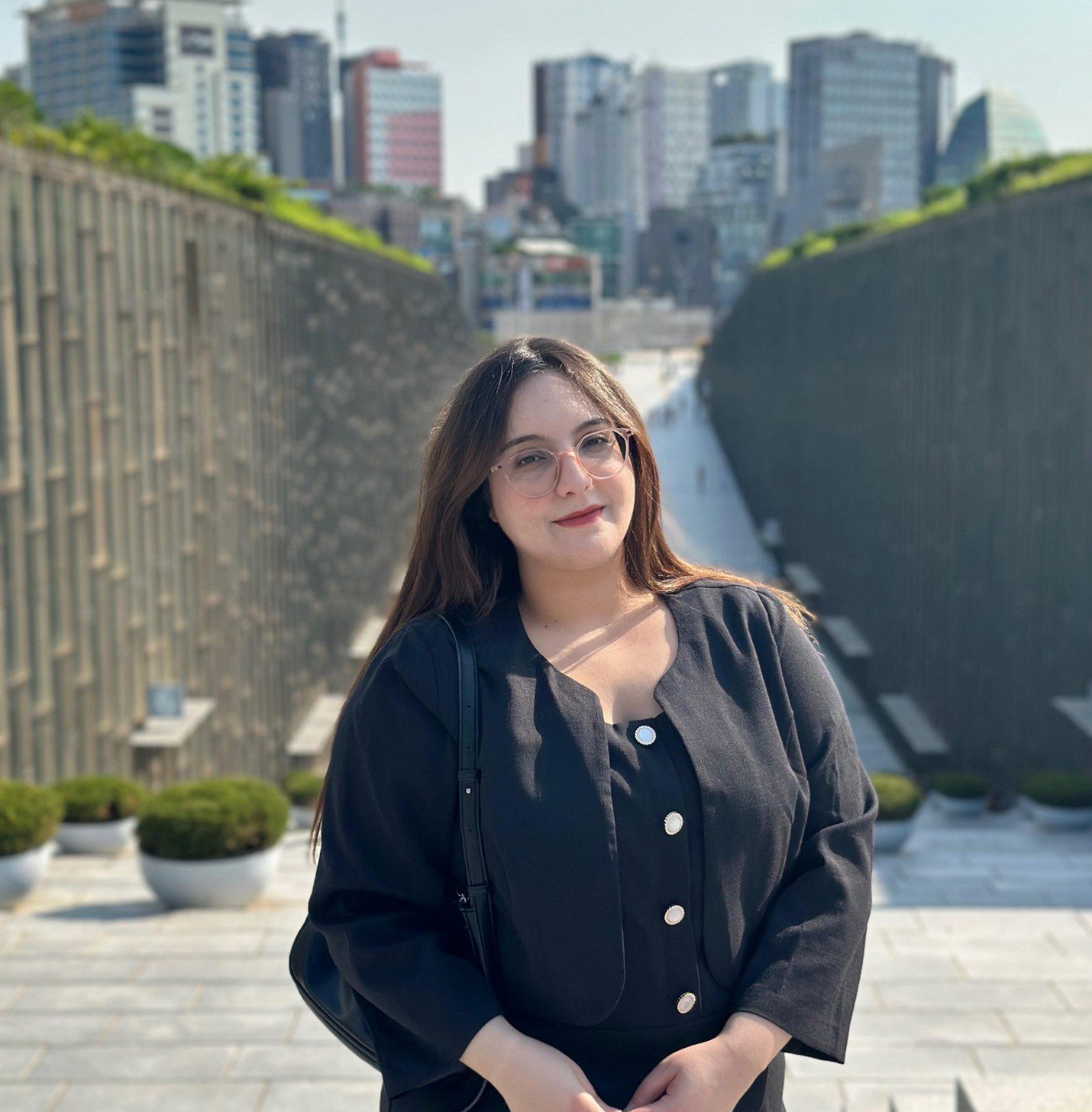
Hi! My name is Oumaima Latrech, a Moroccan currently residing in South Korea. I am a recent alumna of the Global Korea Scholarship (GKS) and hold a Master’s degree in Media and Communication from Ewha Womans University.
Although I initially pursued an economics track in high school, I later chose to redirect my academic and professional path toward the media industry. I completed a Bachelor’s degree in Journalism and Communication at the Higher Institute of Information and Communication (ISIC) in Morocco, and subsequently worked as an English-language journalist before deciding to further my studies in Korea.
I have always been drawn to creative and people-oriented environments. Being in front of the camera, collaborating with others, and organizing events are aspects of work that I genuinely enjoy. My outgoing personality has consistently motivated me to seek new experiences and challenges.
Korea has been a dream destination for me since a young age. I set my sights on the Global Korea Scholarship when I was 14 years old. At the time, the program was not available to undergraduate applicants from Morocco, so I remained patient while actively preparing. I connected with current and former scholars, sought advice about life in Korea, and continuously worked on strengthening my profile. Although I was not selected on my first attempt, I applied again with improved qualifications, including additional certifications and stronger Korean language proficiency, and was ultimately successful.
I am deeply grateful for this opportunity, which has allowed me to grow not only academically, but also personally and professionally.
Global Korea Scholarship Details
I was awarded the Global Korea Scholarship by the National Institute for International Education. I first applied in 2021 and was not selected, but I reapplied in 2022 after significantly strengthening my application. I placed particular emphasis on my personal statement and study plan, as these components offer valuable insight into an applicant’s character, motivation, and long-term goals. I also obtained an official Korean language proficiency score to further support my application.
While the quota varies by country, the Global Korea Scholarship is available for undergraduate, graduate, and postgraduate students. It is offered through two main tracks, the University Track and the Embassy Track. I applied through the more competitive Embassy Track, which involves an initial document screening followed by an interview at the embassy. At the time of my application in Morocco, the quota for the Embassy Track was six candidates, compared to one candidate for the University Track.
The scholarship provides comprehensive support, including round-trip airfare, a monthly stipend, health insurance, and additional benefits for recipients with high Korean language proficiency scores or notable research achievements. The monthly allowance was approximately 1 million KRW at the time, and has since increased.
Although the primary focus of the scholarship is academic, students are encouraged to take initiative beyond their studies. Depending on university policies, scholars may pursue on campus part times like a TA or participate in off-campus volunteer activities. These experiences can be highly valuable for building networks, developing new skills, and engaging with diverse communities.
How Did You Find Information About Global Korea Scholarship and Ewha Womans University?
I first learned about the scholarship through YouTube videos shared by Moroccan alumni, which sparked my interest and encouraged me to conduct further research into its requirements and application process. As I explored more, I was able to connect with Moroccan students who were already in Korea under the scholarship. Speaking with them gave me valuable insights into the type of profiles typically selected and helped me better understand how to position my own application effectively.
Did You Take Any Standardized Tests? If So, How Did You Prepare for Them?
I took both the IELTS and the TOPIK exams as part of my application process. For the English test, I did not require extensive preparation, as I was already fluent in the language. For Korean, my familiarity initially came from exposure to media such as variety shows. However, preparing for the TOPIK required a more structured approach. I studied using textbooks and online resources, particularly YouTube, to better understand the exam format and question types. At the time, I achieved TOPIK Level 3. While this is considered an intermediate level, I recognized it as a meaningful advantage, especially since relatively few applicants from my country take the exam, with many opting instead for English track programs. As my degree program was conducted entirely in Korean, I wanted to demonstrate both my existing language proficiency and my commitment to continuous improvement. Achieving this level allowed me to show that I had a solid foundation and the determination to further develop my language skills in preparation for academic life in Korea.
How Did You Prepare to Apply for the Global Korea Scholarship?
I began by consulting the official guidelines available on the Study in Korea website. I reviewed the guidelines from the previous year to understand the overall requirements and structure of the application. Although certain details may change from year to year, these changes are typically minor, which allowed me to start preparing my documents well in advance.
One of the more challenging aspects of the process was handling document authentication, such as obtaining apostilles. As this was my first time going through such procedures, I made a conscious effort to fully understand each step at least six to seven months ahead of the application deadline. I also regularly contacted the embassy to confirm specific requirements and ensure that I was following the correct procedures. For the Embassy Track, the application process can vary depending on the country. In Morocco, the initial document screening was conducted through an online submission system.
Another difficulty I encountered was related to the grading system. Coming from a country that does not use the GPA system, I had to convert my academic results into a 4.0 scale. This conversion resulted in a relatively modest GPA of around 3.35. Additionally, obtaining official validation for this conversion from my university proved challenging, as it was not a system they typically used. It took approximately one month to secure the necessary signature.
This experience showed me the importance of preparing all required documents well in advance, as unexpected administrative challenges can arise at any stage of the process.
How is Your Experience at Ewha Womans University?
Upon arriving in Korea, I spent one year at Chonnam National University studying Korean at its language center, which remains one of the most memorable experiences of my journey. Being surrounded by international students who were all navigating life abroad created a supportive environment. Language programs can differ across universities. While some institutions offer separate classes exclusively for GKS students, my program integrated both scholarship recipients and other international learners based on proficiency levels. Before the start of the semester, students take a placement test, and the program is structured across six levels. I was placed in Level 4 and successfully completed up to Level 6.
With a flexible schedule and an outgoing personality, I actively sought opportunities beyond the classroom. I volunteered alongside my instructor at a local orphanage, which was both meaningful and enriching. I also joined the Chonnam International Club (CIC), where I was part of the planning team responsible for organizing events and activities for both international and Korean students. This experience allowed me to build lasting friendships and a strong sense of community. I remain in close contact with many of the members, and we continue to visit each other whenever possible.
I later pursued my Master’s degree at Ewha Womans University. The university offers a highly supportive environment for international students. Although I initially had concerns about completing a degree entirely in Korean, particularly in a research-intensive field and in what is my fifth language, my experience was very positive. My professors were fluent in English and had international academic backgrounds, which made them understand the challenges faced by international students. While class discussions, presentations, and debates were conducted in Korean, professors allowed flexibility during exams and final assessments by permitting responses in English if needed. This accommodation, along with the availability of English language research materials, significantly facilitated my academic experience. Throughout the program, I maintained a high academic performance, achieving a GPA of 4.2 out of 4.3 and graduating with honors.
How Does Ewha Womans University Support International Students?
At Ewha Womans University, Global Korea Scholarship students benefit from several forms of institutional support that significantly enhance student life. For instance, GKS recipients are offered discounted dormitory rates, which is particularly helpful given the high cost of living in Seoul. The university also organizes welcoming and farewell ceremonies for GKS students at the beginning and end of each semester, fostering a strong sense of community. In addition, there is a GKS gathering program that allows small groups of scholars to meet and spend time together, with a provided allowance to support these social activities. These initiatives play an important role in maintaining an active and balanced social life.
Students also have access to affordable healthcare services through the university health center, which adds to the overall sense of security and well-being. More broadly, the university maintains open communication with international students and is responsive to their needs and concerns. Overall, my experience at Ewha as an international student was both comfortable and highly supportive!
Are Your Classes Conducted in English or Korean?
Classes are all conducted in Korean
What Did You Pursue After the Global Korea Scholarship?
During my final semester, I received an internship offer for a B2B marketing role, which I accepted after completing my thesis. This opportunity allowed me to apply my academic knowledge in a practical setting and gain hands-on industry experience. Following the internship, I was offered a full-time position within the same field. I have since transitioned to a new role and am currently working as an Overseas Marketing Manager, where I continue to develop my expertise in international marketing and business strategy.
Would Potential Students Have Any Problems Not Knowing Korean?
In Korea, students enrolled in Graduate Schools of International Studies (GSIS) typically follow programs conducted in English. As a result, communication with professors and administrative staff is generally smooth, and language barriers are minimal. However, for degree programs conducted entirely in Korean, a strong command of the language is essential. Not only are classes, discussions, and interactions with peers and professors carried out in Korean, but important academic notices are also primarily communicated in Korean. Missing key information, such as announcements related to graduation requirements or comprehensive exam applications, can lead to delays and may even impact a student’s ability to graduate on time.
What Do You Think Made Your Application Stand Out?
The strongest part of my application was undoubtedly my study plan and statement of purpose. I made a conscious effort to ensure that these documents genuinely reflected who I am, so that anyone reading them could clearly understand my passion, values, motivations, and long-term aspirations, even without meeting me in person. I have always been someone with clear goals and a strong sense of direction. I knew exactly what I wanted to achieve and why the Global Korea Scholarship was essential in helping me reach those objectives. I focused on communicating this clarity and purpose throughout my application. If I were to offer one piece of advice to future applicants, it would be to dream ambitiously while keeping those ambitions realistic and measurable. The goals you present in your application should be achievable within a defined timeframe, whether in the coming months or over the next few years, and should reflect a clear plan of action.
What Would You Have Done Differently if You Were Going Through the Process Again?
In hindsight, I would have approached my university selection with greater confidence, particularly when choosing my second and third options. While I would still have chosen Ewha Womans University as my top choice (given the enormous positive feedback I heard from previous students), I wish I had also applied to more competitive institutions. At the time, converting my grades into a different grading scale made me feel somewhat insecure. I often came across stories of applicants with perfect GPAs who were not accepted, which added to my doubts. However, through both the application process and my experience in Korea, I came to realize that GPA is not the sole determining factor. Meeting fellow GKS students from diverse backgrounds showed me that each applicant brings a unique story, set of experiences, and strengths beyond grades. As long as you meet the minimum GPA requirements and have a strong overall profile, it is important to trust your abilities. I would encourage future applicants to be confident and ambitious, and not hesitate to apply to highly competitive universities.
Want to submit your
scholarship journey?
Submit Your Story Here!
More Scholarship Recipients
My name is Odion Judith Uzamere, and I am from Nigeria. I have a background in public health and a strong passion for improv .... Read more
My name is Naik Muhammad, and I was born and raised as an Afghan refugee in Khyber Pakhtunkhwa, Pakistan. Growing up as a re .... Read more
My name is Muhammad Aiesh Ghayoor, and I am originally from Islamabad, Pakistan. I am currently in my thesis semester of the .... Read more
Leave A Comment