
SNU President Fellowship (SPF) Recipient, Nirmana from Indonesia, Shares Her Journey of Pursuing a PhD in Energy Resources Engineering at Seoul National University, South Korea
University: Seoul National University (SNU), South Korea
Degree: PhD in Energy Resources Engineering
Previous Education: Bachelor’s Degree in Mining Engineering – Institut Teknologi Bandung (ITB), Indonesia || Master’s Degree in Mining Engineering – Institut Teknologi Bandung (ITB), Indonesia
Scholarship: SNU President Fellowship (SPF) – Fully Funded (Covers tuition, living stipend, language training, and health insurance for 3–4 years)
Social Media
The Journey
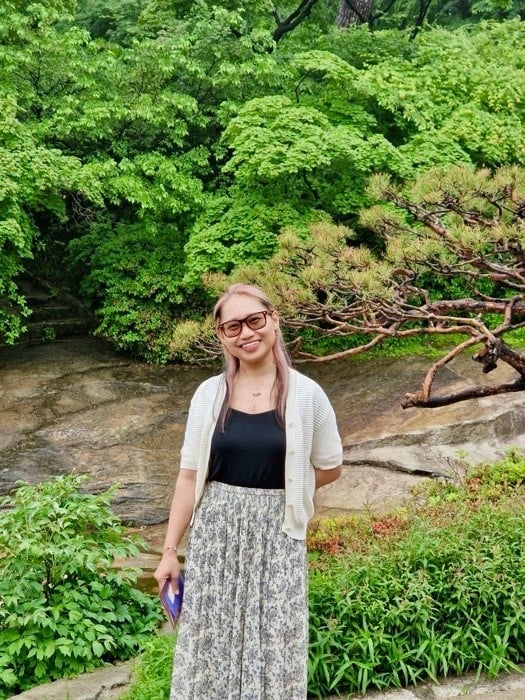
My name is Nirmana, and I am a PhD student in Energy Resources Engineering at Seoul National University (SNU). My academic background is in mining engineering, with a specialisation in rock engineering. My research focuses on applying data-driven and digital technologies to support engineering decision-making.
I decided to pursue further education to develop strong technical expertise and to contribute to research with practical relevance to energy resources and engineering industries. Graduate study has allowed me to deepen my understanding of my field while gaining exposure to interdisciplinary approaches and an international research environment.
SNU President Fellowship (SPF) Details
I received the SNU President Fellowship (SPF), a competitive doctoral scholarship awarded by SNU to international candidates pursuing doctoral studies. The programme provides comprehensive support, including tuition coverage, a living stipend, language training, and health insurance for a period of three to four years.
Educational Background
I completed my Bachelor’s and Master’s degrees in Mining Engineering at Institut Teknologi Bandung (ITB), where I developed a strong foundation in mining engineering, rock mechanics, and geotechnical engineering. Throughout my studies, I maintained a solid academic record, which prepared me well for advanced coursework and research.
This educational background provided me with the technical fundamentals necessary to pursue doctoral studies in energy resources engineering. My prior exposure to rock engineering, field-based problem solving, and research activities enabled a smooth transition into doctoral-level research, particularly in areas that integrate traditional engineering principles with data-driven and digital approaches.
How Did You Prepare to Apply to Seoul National University (SNU)?
I prepared my applications by reviewing the official university website, the graduate programme page, and publicly available scholarship information. I also sought guidance from academic mentors and reviewed application requirements carefully to ensure alignment with my academic background and research interests.
How Did You Find Information About SNU President Fellowship (SPF) and Seoul National University (SNU)?
Information about scholarships and institutions was primarily obtained through the university website, faculty pages, and official scholarship announcements. These sources helped me gain a clear understanding of eligibility criteria, application timelines, and programme expectations.
Did You Take Any Standardized Tests? If So, How Did You Prepare for Them?
As part of the application process, I took the IELTS English proficiency test. I prepared by familiarising myself with the test format and practising regularly using official preparation materials, with a particular focus on improving academic reading, writing, listening, and speaking skills.
How Did You Prepare to Apply to the SNU President Fellowship?
I prepared my scholarship application by carefully reviewing the eligibility criteria and required documents provided by the university. I focused on ensuring that my academic background, research interests, and proposed study plan were presented clearly and consistently across all application materials.
I also sought feedback from academic mentors and allowed sufficient time to revise my documents. This approach helped me submit a well-organised application that aligned closely with the objectives of both the scholarship and the doctoral programme.
How is (was) Your Experience at SNU?
My experience at SNU has been academically enriching and intellectually challenging. The research environment fosters independent thinking while providing access to strong academic guidance and well-established research infrastructure.
I have benefited from opportunities to engage in interdisciplinary research, which has supported the development of both my technical and analytical skills. Overall, this experience has contributed positively to my academic development and growth as a researcher.
How Does SNU Support International Students?
SNU provides structured support for international students through dedicated administrative offices. At the university level, the SNU Office of International Affairs (SNU OIA) assists international students with matters such as immigration, enrolment procedures, and general academic administration.
In addition, the College of Engineering International Office (CoEIO) offers more specialised support within the College of Engineering, including academic coordination, guidance on college-specific requirements, and communication support. The office also organises a variety of extracurricular activities, such as orientations, cultural events, and Korean language classes, which are well attended by international students and provide additional opportunities for engagement.
Together, these offices help facilitate a smoother academic and administrative experience for international students.
Are Your Classes Conducted in English or Korean?
In my case, most courses offered by professors in the Rock Engineering Laboratory are conducted in English, particularly research-oriented and graduate-level courses.
To fulfil credit requirements and support my research, I also took courses from other departments. Although English-taught options are fewer compared to Korean-taught courses outside the primary field of specialisation, I intentionally selected courses delivered in English that were still relevant to my research. Overall, English-language courses are widely offered within my department, with more limited but still available options in other departments.
What Do You Think Made Your Application Stand Out?
I believe my application stood out because it presented a clear alignment between my academic background, research interests, and the doctoral programme. My prior experience in mining and rock engineering provided a solid foundation for the research direction I proposed.
In addition, I focused on clearly articulating my research interests and how they connected to ongoing work within the department. Presenting a well-structured and consistent application, supported by relevant academic preparation and research experience, helped demonstrate my readiness for doctoral-level study.
What Would You Have Done Differently if You Were Going Through the Process Again?
Looking back, I do not think I would fundamentally change my application approach; however, I would prepare more holistically. In addition to document preparation, I would place greater emphasis on being mentally prepared for the intensity and uncertainty of the doctoral journey.
I would also spend more time reflecting on long-term research fit, particularly considering the rapidly evolving research landscape. Thinking more strategically about how a doctoral programme aligns with future research directions can be valuable.
From an administrative perspective, I found the application process to be well-structured and transparent. Paying close attention to guidelines and instructions is essential, as careful and thorough review can help ensure a smooth application experience.
What Advice Would You Give Those Looking to Apply for a Similar Scholarship?
My advice to future applicants is to approach the process with both careful preparation and a long-term perspective. Beyond meeting formal requirements, it is important to reflect on research fit and how a programme aligns with academic interests and future goals.
Paying close attention to application guidelines and instructions is essential, as the administrative process is often well-structured but requires careful review. At the same time, being mentally prepared for the intensity and uncertainty of doctoral study can help applicants navigate the process with greater confidence.
Finally, I would encourage applicants to remain open-minded and patient throughout the journey. Taking the time to prepare thoughtfully and to understand both the academic and practical aspects of a programme can make the application experience more meaningful and rewarding.
Want to submit your
scholarship journey?
Submit Your Story Here!
More Scholarship Recipients
My name is Hajiyev Sarkhan, and I am from Shemkir, Azerbaijan. My academic journey has been shaped by a strong belief that e .... Read more
My name is Nainsi Chauhan, and I am from Mumbai, India. I was born into an economically weak family and raised in an orthodo .... Read more
My name is Swaleha J. Khowaja, and I am from Karachi, Pakistan. I am currently pursuing the MSc in Global Mental Health, a j .... Read more
Leave A Comment