
Marie Skłodowska-Curie Actions Industrial Doctorate Fellow Nicolae Darii from Moldova Shares His Journey of Studying Offshore Wind Energy at DTU, Denmark
University: DTU Wind and Energy Systems, Denmark (in collaboration with Siemens Gamesa)
Degree: PhD – Electrical Compatibility in Converter-based Offshore Energy Systems (MSCA Industrial Doctorate)
Previous Education: MSc in Electrical Energy Engineering, University of Padova, Italy – 110/110 cum laude | BSc in Energy Engineering, University of Padova, Italy – 110/110 cum laude
Scholarship: Marie Skłodowska-Curie Actions (MSCA) Industrial Doctorate Fellowship – Fully Funded (stipend, conference & travel allowances, research costs; no tuition at DTU)
Social Media
LinkedIn: linkedin.com/in/nicolae-darii-7728b3190/
The Journey
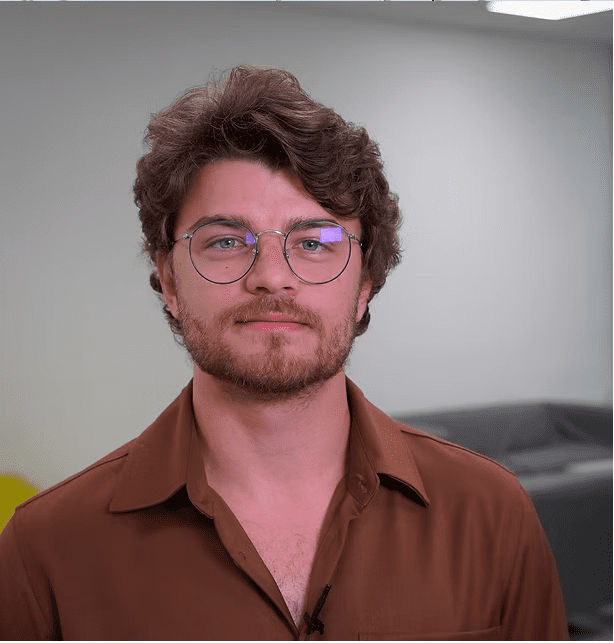
I'm Nicolae Darii, originally from Moldova but raised in Northeast Italy. I'm now wrapping up my Marie Skłodowska-Curie Actions (MSCA) Industrial Doctorate PhD at DTU Wind and Energy Systems in Denmark, in collaboration with Siemens Gamesa. My academic path started with a Bachelor's and Master's in Energy Engineering and Electrical Energy Engineering from the University of Padova, completed in five years with a perfect score of 110/110 cum laude. My thesis was already presented at a conference in Istanbul and extended into a journal publication by the time. Key experiences like a summer school at Tsinghua University, a semester at Venice International University, and an Erasmus thesis at TU Dublin shaped my multidisciplinary approach, while Padova's rigorous theoretical foundation equipped me to tackle non-standard problems in power systems.
Marie Skłodowska-Curie Actions (MSCA) Industrial Doctorate Fellowship Details
I secured the Marie Skłodowska-Curie Actions (MSCA) Industrial Doctorate Fellowship through the ADOreD project ("Accelerating the Deployment of Offshore Wind using DC Technology"), funded by the European Union’s Horizon Europe program. It covers all associated costs, including a fixed stipend (no tuition at DTU), plus allowances for conferences, courses, research materials, and travel, essential for non-EU applicants needing visa or relocation support.
Other Scholarships Offered
N/A – This was the primary competitive offer; an automatic option existed from my alma mater (University of Padova) for a standard or industrial PhD, but I pursued the Marie Curie path.
Research Focus and Motivation
My PhD centers on the dynamic stability of offshore wind turbines and HVDC connections, specifically "Electrical Compatibility in Converter-based Offshore Energy Systems." Curiosity, not rigid passion, drove my shift from electric vehicles to renewables; I value the freedom to research and refine skills over locking into one topic. Post-PhD, I'm leaning toward academia after experiencing both worlds.
Educational Preparation
Padova's blend of computational electrotechnics, advanced controls, and power systems sparked my interest in modeling complex physical systems with mathematical tools for creative, industry-relevant solutions. These built a solid base for analyzing unfamiliar challenges, amplified by international exposures fostering broad perspectives over niche expertise.
My Application Preparation: Finding Opportunities and Tests
I tracked DTU positions via their public page, linked to Padova through the TIME project (though bureaucracy blocked it earlier). I took the IELTS (6.5 score) with minimal prep using just a book, no other standardized tests like the GRE.
Scholarship Application Process
Preparation was light as I applied fresh from my Master's. The process involved four interviews, an introductory "fit" chat, a presentation on an unfamiliar topic (common for research labs), an industry-focused one, and a bureaucratic review, plus a psychological test from the company. Total timeline aligned with finishing my Master's.
My Experience at DTU
I've thrived with academic freedom and access to real industrial data/models, confirming my academic preference. DTU's technical focus means practical assignments over pure theory, but top-tier labs and industry ties (like Siemens Gamesa) make it R&D-rich.
Academically, it's solid for engineering but less theoretically rigorous than some peers, strong on projects and facilities. As an international student, I've had great HR support once settled, though housing requires some self-reliance (DTU residences are affordable).
Classes and activities are nearly all in English at the Master's/PhD level; Danish peers are a minority in offices. Not knowing Danish isn't a barrier academically or in research loops; life outside depends on it, but it's a tough language anyway.
What Made My Application Stand Out and Lessons Learned
From what I've gathered, the "chemistry" or personal fit mattered most beyond skills; supervisors prioritize quick learners who bridge gaps. First impressions count: clear, accent-free English is essential.
I'd do nothing differently, though a pure academic Marie Curie (with more university travel) tempts now, this hybrid clarified my path.
My advice for applicants: Nail the first impression and English fluency; the rest follows aptitude and timing. Luck plays a role, apply when projects match your skills. Monitor public calls early, even pre-graduation.
Want to submit your
scholarship journey?
Submit Your Story Here!
More Scholarship Recipients
My full name is Phung Lan Phuong Linh, but everyone often calls me Mina as a nickname. I am from Hanoi, Vietnam. I received .... Read more
My name is Nick Peoples, and I am currently an Emergency Medicine resident physician in Boston. I was born and raised in .... Read more
My name is Hajiyev Sarkhan, and I am from Shemkir, Azerbaijan. My academic journey has been shaped by a strong belief that e .... Read more
Leave A Comment