
How a Harvard doctor financed their education with national and international scholarships
Current Position: Clinical Fellow, Harvard Medical School; Resident Physician in Emergency Medicine, Massachusetts General Hospital
Hometown: Houston, Texas
Degrees and Scholarships:
- Doctor of Medicine (M.D.), Baylor College of Medicine (Full tuition merit scholarship)
- MSc Global Health, Duke University (Full tuition merit scholarship)
- Master of Management Science, Tsinghua University, China (Schwarzman Scholar, fully funded)
- Global Health Corps Fellowship, Baylor International Pediatric AIDS Initiative, Malawi (Fully funded 13-month fellowship)
- B.S. Biochemistry, SNU, (President’s Scholar, full tuition)
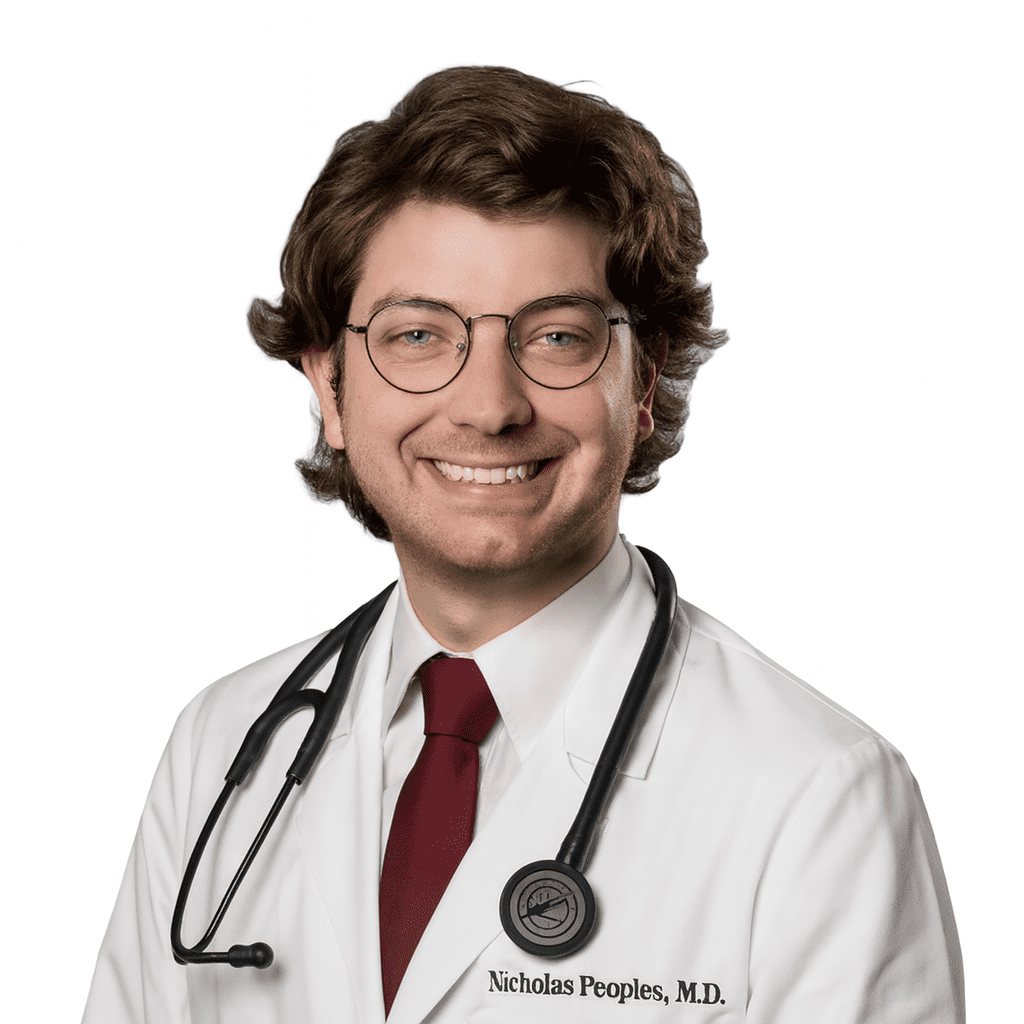
The Journey
My name is Nick Peoples, and I am currently an Emergency Medicine resident physician in Boston.
I was born and raised in Texas in a non-medical family: Dad was a police officer, and Mom was a grade-school teacher. How I fell into medicine is a long story. But recognizing that scholarships made that path possible is not.
Thanks to generous financial support, my life has taken on a trajectory I never could have imagined growing up. My journey has intersected with global health work in places such as China, Malawi, and Nepal. I have received a rich, multi-disciplinary education. And now, I have the daily opportunity to live my dream of being an ER physician and doing my best to care for “anyone, anything, anytime.”
None of this would have been possible without consistent scholarship support. I try to maintain a perspective of gratitude for the opportunities I have received, and grace and acceptance for the ones I did not. Most of all, though, I am always thrilled when I have a chance to encourage others who may be standing where I once stood.
Schwarzman and Global Health Corps Scholarship Details
- Baylor College of Medicine — Full Tuition Merit Scholarship, Doctor of Medicine (M.D.)
- Schwarzman Scholarship (Tsinghua University, Beijing, China) — Fully funded year of graduate study (tuition, housing, stipend, travel, and benefits) for a Master of Management Science at China’s top university.
- Global Health Corps Fellowship — Fully funded 13-month professional fellowship that supported work in Malawi focused on strengthening pediatric HIV/AIDS care systems.
- Duke University/Duke Kunshan University — Full Tuition Merit Scholarship, MSc in Global Health, with a Research Grant for Fieldwork in Nepal
Were You Offered any Other Scholarships?
I received the Huayu Enrichment Scholarship to study Mandarin in Taiwan for 6 months and several smaller research grants and merit awards throughout my training. Each opportunity, whether large or small, reduced financial barriers and expanded what was possible for my education.
Educational Background
I didn’t have an elite background. I started off at community college in Texas and later earned a Bachelor of Science in Biochemistry from a small university in Oklahoma. My undergraduate years were heavily focused on STEM coursework, as that is the traditional preparation path for medical school. After my freshman year, I completed a fully-funded summer research internship in biophysics at Vanderbilt University, assuming bench science would be the most meaningful way to complement that goal. Ironically, the experience taught me that I needed to look for my aptitudes elsewhere.
In retrospect, I was somewhat naïve in not recognizing the value of a broader liberal arts education. I did not fully appreciate how deeply subjects like history, ethics, philosophy, and political economy shape the practice of medicine. At the time, I mistakenly viewed those disciplines as peripheral rather than foundational.
When I was 19, I traveled abroad for the first time to volunteer in a mobile clinic in a low-resource setting in Central America. That experience changed my life, though not in any of the ways I would have expected. I encountered what I would later learn to call structural violence: the ways in which social, economic, and political forces shape who becomes sick and who is shielded from harm. It was also brutally humbling. Once there, I realized that as a young student from abroad, my good intentions had been naïve: I had little to offer this community I did not belong to, and in some ways my presence could even have been considered detrimental. But the injustices I saw also brought me up short. I left recognizing that if I wanted to engage meaningfully in health disparities work going forward, I would need to be far more intentional, better trained, and thoughtful about the role of an outsider in vulnerable settings.
That led me to pursue a Master’s degree in Global Health. Duke University had just opened a new campus in Kunshan, China, and this felt like the perfect opportunity: I could start to develop the new skill set I needed while also seeing if I could live and integrate successfully into a vastly different culture for two years.
While at Duke, I found supportive mentors who were first-class in their field. Having role models and mentors has, hands down, been the biggest key to my successes. I also learned about physicians like Paul Farmer, who combined medical training with a rigorous grounding in disciplines such as anthropology. I hadn’t realized before that physicians could also be economists, historians, or social scientists. Seeing that model helped me recognize that my path likely lay somewhere along those lines, bridging clinical medicine with a deeper study of the social forces that shape health.
What began accidentally has since become intentional. I’ve found a lot of value in combining my technical foundation in STEM with an interest in the broader systems, ethical, and philosophical questions that define medicine. That perspective ultimately informed my decision to study economics at Schwarzman College and continues to shape my scholarship in ethics and meta-science, published in journals such as The Lancet and The BMJ. Most recently, it drove my decision to train as an emergency medicine physician at Harvard, which has created one of the most vibrant ecosystems for interdisciplinary work in medicine.
To answer the question about “how my background prepared me to apply to certain fields,” I hope my example can show that one’s path does not need to be linear. When I entered college, there was no way I could have known or planned out for my life to take this kind of path. It was a journey that unfolded over time as I learned more about myself. And as I mentioned, being so focused on developing the right “pre-med” background for medical school gave me a bit of tunnel vision. So, I would focus less on trying to pick the “right” background and instead prioritize keeping an open mind and being responsive to your experiences, while still striving to succeed at whatever you take on.
How Did You Prepare to Apply to Institutions?
How Did You Find Information About the Schwarzman and Global Health Corps Scholarships and Institutions?
Preparing to apply for major scholarships is more difficult the earlier you are in your academic career, and I think that’s normal. Early on, it can feel like you’re trying to decode what a prestigious institution “wants.” Over time, though, it becomes easier as you develop a clearer sense of who you are and where you are trying to go.
The most important preparation, in my view, is doing the introspective work to understand yourself. What are your actual goals? What problems do you care about enough to work on for decades? Where do your aptitudes genuinely lie? Answering these questions takes time. But once you can, the rest begins to fall into place more naturally. At the very least, you can quickly identify which opportunities do not apply for, and that simplifies things immeasurably. On some level, this self-reflection should be an iterative process that never ends.
The next piece is research. You need to identify opportunities and study institutions and scholarships carefully, their mission statements, their past recipients, and the kinds of careers they cultivate. There is a wealth of information available online, and if you are not already in the know, it can feel like a full-time job just to digest it. I still recall how overwhelmed I felt as a freshman when I first began to learn there were internships, scholarships, fellowships, and so many other things I had never even imagined. The best way to overcome that feeling is to simply dive in and start learning the landscape of what’s out there.
After you have a sense of the lay of the land, you are ultimately looking for alignment. Academic merit is important, of course; it demonstrates you can succeed academically, but that is the baseline. In my view, what makes the difference when multiple applicants have strong academic records is the coherence of their trajectory. From the perspective of a donor or selection committee, a scholarship is not simply free money; it is an investment. They are investing in individuals they believe will go on to have a certain kind of impact on the world. That is why grade point averages, SAT scores, and other traditional markers of academic prowess do not, on their own, reliably translate into major scholarship opportunities as often as one might expect. Ideally, when admissions committees read your application, their opportunity should feel like the obvious next step for you, and a logical investment in a future you are already building.
The other piece that often gets overlooked is failure. The headline is always, “What scholarships did so-and-so get?” but never, “What scholarships rejected them?” I’m proud to say I have had far more rejections than successes. I’ve been rejected from the Fulbright Scholarship three times. Even though I ultimately received a full scholarship to a top medical school, I was rejected by the majority of medical schools to which I applied. It is important to recognize that rejection does not necessarily mean someone is not “good enough.” It is just a part of the path toward success.
I see rejections as a sign that you’re trying to do hard things. If you apply broadly, take that feedback seriously, and improve each time, eventually you refine away what doesn’t fit. What remains are the opportunities that truly align with who you are and where you’re going.
What Do You Think Made Your Application Stand Out?
My answer to this is just a riff on my answer before. Fundamentally, your application is not the words you write on the paper; it is the life you have lived. The essays, activity lists, and interviews are then simply tools to help others understand that life.
I think selection committees are looking at direction. The more your actions and choices align with your stated aspirations, the clearer your trajectory becomes. If they can see that your trajectory is moving toward the kind of impact their scholarship was designed to support, then that makes their opportunity appear like a natural next step. That is when your chances are strongest.
To give a specific example from my own experience, I received a full scholarship to Duke University for a master’s degree in global health, which was a huge leap coming out of a relatively unknown university in a small town in Oklahoma. My undergraduate study was in biochemistry and pre-medical coursework, but I was now applying to a graduate program that emphasized epidemiology, social science, and policy. And because I had applied to Duke’s new China campus, there was obviously a huge China emphasis, though I had no real ties to the region or much prior international experience. So those disparities would either work for or against me, depending on how I could explain my reasons for applying.
In my essays, I focused heavily on my brief volunteer experience in Central America. However, I did not try to paint it as a success story. I decided to be honest. In fact, I made it a point to emphasize the relative failure of my efforts and how that had recalibrated my perspective and goals. I had gone in with a naïve “hero” mindset, thinking I would show up and help people, and I had emerged with a much more visceral appreciation of my own limitations and the complexity of that kind of work. In sharing these missteps, though, I was able to tell a clear story that connected my existing background (pre-med) with where I now wanted to go (physician focused on global health disparities) and what I was missing to get there. In this context, it was clear why Duke’s program would provide me with exactly the right opportunities to progress on that path.
This was the major pivot point in my life, and I remain extremely grateful to whoever made the decision to give me a chance. Of course, that’s only half the story. The other half is that once people make those kinds of investments in you, you have to honor that gift and follow through on what you said you were going to do. With each opportunity, you have to ask yourself: “Have I given enough back?”
I don’t know if I’m ever going to feel like I’ve done anything quite like “enough.” But each day is another chance to keep trying.
What Would You Have Done Differently if You Were Going Through the Process Again?
I’ve made my share of mistakes and benefited from my share of luck. My best advice for others is to make their own mistakes and learn from them more quickly. In a sense, the more attempts you make and the more feedback you absorb, the faster you refine your path.
There’s a quote I once heard, though I can’t remember who said it: “You need luck to be successful. But there are things you can do to increase your chances of being lucky.” I’ve found that to be true. When you try and succeed - wonderful. When you try and fail, that is even more instructive. Each attempt sharpens your next effort. But the key is you have to keep making attempts. Over time, that process increases the likelihood that preparation and opportunity will intersect.
So, I wouldn’t change the detours. I would simply ask myself to embrace the process with a little less anxiety and a little more patience (easier said than done).
As a parting thought, I’ll share something a little silly that goes back to my biochem days: I keep a set of lab tubes in my room that I call my “Experiments of Failure.” Every time I get another rejection, I write it down on a colored sticky note and put it in a vial. The goal is to get to 100 vials in a year. When you reframe failure as a metric of success, it helps you take things in stride and stay focused on what really matters: trying again.
Want to submit your
scholarship journey?
Submit Your Story Here!
More Scholarship Recipients
My name is Hajiyev Sarkhan, and I am from Shemkir, Azerbaijan. My academic journey has been shaped by a strong belief that e .... Read more
My name is Nainsi Chauhan, and I am from Mumbai, India. I was born into an economically weak family and raised in an orthodo .... Read more
My name is Swaleha J. Khowaja, and I am from Karachi, Pakistan. I am currently pursuing the MSc in Global Mental Health, a j .... Read more
Leave A Comment