
TÜBİTAK Scholarship, Koç University Doctoral Scholarship, and NSERC-Funded PhD Scholarship Recipient Muhammad Furqan Zia from Pakistan Shares His Journey from Karachi to Pursuing a PhD in Electrical and Computer Engineering at the Université du Québec
University: Université du Québec (UQTR), Canada
Degree: PhD in Electrical and Computer Engineering
Previous Education: Master’s in Electrical and Computer Engineering – Antalya, Turkey (TÜBİTAK-Funded, CGPA: 3.5/4.0); Bachelor’s in Electrical Engineering – DHA Suffa University, Karachi, Pakistan
Scholarship: Fully Funded Doctoral Scholarship – NSERC and Government of Québec (includes full tuition waiver valued at over CAD 100,000, monthly stipend, performance-based bonuses, and health insurance)
Other Offered Scholarships: Fully Funded PhD Offers from institutions in Australia, China (CSC), South Korea, Europe, Germany, the United States, and Canada; TÜBİTAK-Funded Master’s Scholarship (Turkey); Industry-Funded Doctoral Scholarship at Koç University (Turkey)
Social Media
LinkedIn: linkedin.com/in/furqan-zia/
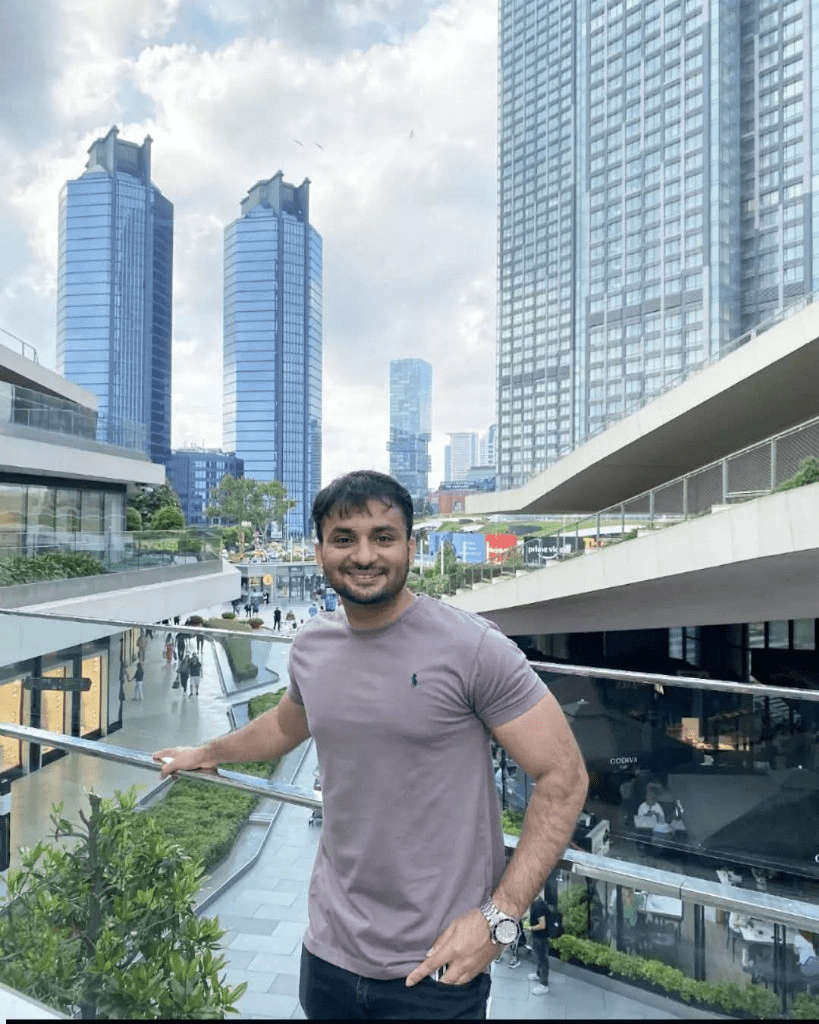
The Journey
My name is Muhammad Furqan Zia, and I was born on 14 November 1995 in Karachi, Pakistan, a city that taught me resilience, adaptability, and ambition from an early age. I completed my primary and secondary education in Karachi and later pursued a Bachelor’s degree in Electrical Engineering from DHA Suffa University. For much of my early academic life, I considered myself an average student, not because I lacked potential, but because I was still discovering my direction, confidence, and true academic purpose.
I completed my undergraduate degree in 2017, after which I entered one of the most uncertain phases of my life. For nearly a year, I struggled to find a job that aligned with my passion or allowed me to meaningfully demonstrate my abilities. That period of frustration became a moment of deep self-reflection. In search of clarity, I decided to prepare for an MBA and applied to a top-ranked institution in Karachi. With only 15 days of focused preparation, I successfully cleared the entrance examination and secured admission.
At the same time, an unexpected opportunity completely changed the trajectory of my life. A professor from Turkey noticed my undergraduate final-year project, a practical and innovative design, implementation, and fabrication of a parallel hybrid car, and reached out to me with an offer of a fully funded Master’s scholarship in Electrical and Computer Engineering in Antalya, Turkey.
This moment placed me at a critical crossroads.
Despite opposition from friends, peers, and even some family members, I chose to trust my instincts. Driven by a strong desire to step out of my comfort zone and grow beyond familiar boundaries, I accepted the offer and moved to Turkey. That decision became one of the most defining choices of my life.
My Master’s journey transformed not only my academic profile but also my mindset. Studying in an international environment exposed me to diverse perspectives and allowed me to collaborate with researchers from Europe and around the world. This experience significantly strengthened my analytical thinking and research capabilities. I completed my Master’s degree with distinction, published several research papers, and filed a patent application, achievements that once felt far beyond my reach.
A key figure in this transformation was Dr. Jehad M. Hamamreh, who gave me the opportunity to pursue my Master’s degree through a project funded by the Scientific and Technological Research Council of Turkey. As a young and energetic professor who had just completed his PhD, his motivation and mentorship played a vital role in shaping my research direction and sparked my deep interest in emerging wireless communication technologies.
Following my Master’s degree, despite the global disruption caused by the COVID-19 pandemic, my academic momentum continued. Based on the strength of my research work, I began receiving fully funded PhD scholarship offers from leading institutions across Australia, China (CSC Scholarship), South Korea, Europe, Germany, the United States, and Canada, destinations that once existed only as dreams.
Due to travel restrictions and visa uncertainties during the pandemic, I made a strategic decision to begin my PhD in Turkey under a prestigious industry-funded doctoral scholarship at Koç University, one of the most elite and internationally ranked universities in the country. There, I had the honor of working under Professor Ertuğrul Başar, an IEEE Fellow and one of the most prominent figures in the field of wireless communications. Although my time in his research lab lasted approximately 18 months, it instilled in me a strong research ethic, professionalism, and academic rigor that continue to guide me today.
Eventually, aligning my academic ambitions with long-term personal and professional goals, I accepted another fully funded PhD opportunity in Canada. I moved to Canada to continue my doctoral studies at the Université du Québec, where I am currently in the final stages of completing my PhD.
Looking ahead, my goal is to transition into high-impact industrial research and innovation. After completing my PhD, I aspire to contribute to global technology leaders such as Apple, NVIDIA, or Meta, where I hope to apply my research background to develop real-world, large-scale technological solutions.
Doctoral Scholarship – NSERC and Government of Québec Details
Throughout my academic journey, I have been fortunate to receive multiple highly competitive scholarships that supported my studies at different stages. Each scholarship not only provided financial support but also represented formal recognition of my academic performance, research potential, and long-term commitment to excellence.
During my Master’s degree in Turkey, I was supported through a TÜBİTAK-funded research project scholarship, which covered my research activities and living expenses. In addition, I received an institutional scholarship from the university, which fully covered my tuition fees for the entire duration of my Master’s program. This financial support allowed me to focus fully on research, learning, and innovation without economic constraints.
For my PhD studies at Koç University, I was awarded a fully funded, industry-supported doctoral scholarship. This scholarship included a full tuition waiver valued at over USD 100,000, a competitive monthly stipend, accommodation, and meal support. The scholarship was highly competitive and provided access to a world-class research environment, advanced infrastructure, and strong industry-academia collaboration.
Currently, at the University of Quebec (UQTR) in Canada, I am pursuing my PhD under a fully funded doctoral scholarship through a research project supported by the Natural Sciences and Engineering Research Council of Canada (NSERC) and the Government of Québec. This funding includes a full tuition waiver valued at over CAD 1,00,000, a competitive monthly stipend with performance-based bonuses, and comprehensive health insurance coverage. This funding structure enables me to conduct advanced doctoral research with financial security, stability, and academic independence.
In addition to these scholarships, I also received several other fully funded and highly competitive PhD scholarship offers from leading institutions across Australia, China, South Korea, Europe, Germany, the United States, and Canada. While I ultimately accepted the opportunities that best aligned with my academic, professional, and personal goals, these offers collectively reflect the global competitiveness of my academic profile.
Educational Background
What defines my academic journey is not only the outcomes I achieved, but the rigor, depth, and challenges I intentionally embraced along the way. During my Master’s degree, I deliberately selected highly demanding and mathematically intensive courses, taught by leading experts in their respective fields, rather than choosing safer or easier academic paths. These courses required deep theoretical understanding, advanced analytical skills, and sustained research-level commitment.
Within this challenging environment, I completed my Master’s degree with a CGPA of 3.5 out of 4.0, reflecting my ability to perform strongly while adapting to a competitive, international research culture.
This trajectory of growth reached its strongest expression during my PhD. At the doctoral level, I was no longer simply learning advanced material—I was expected to synthesize knowledge across disciplines, defend original ideas, and demonstrate independent research maturity. I successfully completed my PhD coursework and evaluations with a near-perfect GPA of 4.15 out of 4.3, demonstrating consistent excellence across all doctoral-level requirements.
A defining milestone of my PhD journey was the doctoral comprehensive (qualifying) examination, which evaluates a researcher’s depth of knowledge, analytical reasoning, and readiness for independent doctoral research. I successfully passed this comprehensive exam, further affirming my preparedness to conduct original, high-impact research at the highest academic standard.
Together, these achievements represent a clear and measurable transformation from an average undergraduate student into a highly capable and resilient doctoral researcher. More importantly, they reinforce a core lesson of my journey: when one actively seeks challenge, embraces discomfort, and commits fully to growth, excellence becomes not an exception, but an outcome.
How I Prepared to Apply to Université du Québec
My preparation for applying to international institutions was strategic, focused, and research-driven rather than exam-centric. Instead of following a traditional path based heavily on standardized testing, I concentrated on building a strong academic profile, identifying the right research environments, and aligning my expertise with institutional priorities.
Finding Information About Scholarships and Université du Québec
I continuously monitored university websites, funded research projects, faculty lab pages, and open PhD and Master’s positions across different countries. Rather than applying broadly without direction, I carefully shortlisted specific research laboratories and supervisors whose work aligned closely with my research interests. This targeted approach allowed me to tailor each application with clarity and purpose.
In many cases, I did not wait passively for opportunities to appear. I actively tracked emerging research areas, newly established labs, and funded projects, and applied at the right moment when scholarships or positions became available. At the same time, my research publications and academic profile often worked in my favor; on several occasions, recruiters and academic researchers reached out to me directly after reviewing my work, inviting me to apply or join their research groups.
Standardized Tests and Language Proficiency
I did not take standardized exams such as the SAT, ACT, TOEFL, IELTS, GRE, or GMAT. Instead, I demonstrated my English language proficiency through official university-issued medium-of-instruction and language proficiency letters, which were accepted by multiple international institutions. My academic training, research publications, and sustained engagement in English-speaking research environments further reinforced my proficiency.
This approach allowed me to focus my energy on what truly mattered: research depth, originality, and academic impact, rather than standardized test preparation. Ultimately, this strategy proved effective, as it opened doors to multiple fully funded scholarship opportunities across leading global institutions.
Would Potential Students Have Any Problems Academically Not Knowing French?
I have personally experienced studying and living in countries where the native language was completely new to me. When I moved to Turkey, I did not speak Turkish at all. Later, I moved to Québec, Canada, where French is the dominant language in daily life. In both cases, language initially appeared as a challenge, but over time, it became one of the most valuable aspects of my personal and academic growth.
Academically, my graduate programs were conducted in English, and faculty members were highly supportive and experienced in working with international students. As a result, the lack of initial proficiency in the local language did not hinder my academic or research progress. What mattered most was intellectual curiosity, consistency, and active engagement in the research environment.
Outside the classroom, however, language became an opportunity rather than an obstacle. In Turkey, I gradually learned Turkish by immersing myself in daily interactions, academic discussions, and social settings. This not only made everyday life easier but also helped me integrate more deeply into the local culture and academic community. Learning the language strengthened my confidence and allowed me to build meaningful professional and personal connections.
A similar experience is now shaping my life in Québec, where French plays a central role in society. Living in a French-speaking environment has once again pushed me to adapt, learn, and grow. Each new language has enhanced my ability to communicate across cultures, think more flexibly, and navigate diverse environments with ease.
These experiences taught me an important lesson: language is only a barrier if one allows it to be. When approached with openness and effort, it becomes a powerful tool for integration, growth, and global competence. For international students, learning the local language, whether partially or fluently, adds long-term value to both academic life and career prospects.
Ultimately, adapting to new linguistic environments has made me more resilient, culturally aware, and prepared for international research and industry roles. Rather than limiting my journey, these language experiences expanded it in ways I could not have imagined at the start.
What Do You Think Made Your Application Stand Out?
I believe my application stood out because it reflected substance, clarity of purpose, and consistency, rather than relying on a single metric or conventional checklist. Admissions committees and scholarship evaluators could clearly see not just what I had achieved, but why I pursued my path and how each step logically built upon the previous one.
First, my research-driven profile played a central role. I had already engaged deeply in hands-on research, produced academic publications, and worked on applied, real-world engineering problems. This demonstrated my ability to contribute immediately to ongoing research projects rather than requiring extensive initial training. My profile showed readiness for graduate-level research, not just academic potential.
Second, my journey itself told a compelling story of growth and transformation. I did not present myself as someone who was always exceptional from the beginning. Instead, my application showed how stepping out of my comfort zone, embracing international environments, and choosing challenging academic paths transformed me into a focused and resilient researcher. This progression made my profile authentic and relatable.
Third, my applications were highly targeted. I did not apply randomly or in large numbers. I carefully selected institutions, research labs, and projects that closely aligned with my expertise and long-term goals. Each statement of purpose clearly articulated how my background fit the lab’s direction and how I could add value to ongoing work. This alignment signaled seriousness and long-term commitment.
Fourth, my letters of recommendation reinforced this narrative by highlighting my research independence, problem-solving ability, and professional attitude. Rather than generic praise, they provided concrete examples of my contributions, adaptability, and work ethic in demanding research environments.
Finally, my profile benefited from organic academic visibility. In several cases, my published research and academic activities attracted the attention of recruiters and academics directly, leading to invitations and opportunities. This external validation further strengthened the credibility of my application.
In summary, what made my application stand out was not perfection, but coherence, a clear research identity, a proven ability to grow under challenge, and a demonstrated commitment to contributing meaningfully to the academic and research community.
What Would You Have Done Differently if You Were Going Through the Process Again?
If I were to go through the scholarship and application process again, I would not change the direction of my journey, but I would start earlier, plan more intentionally, and trust myself sooner.
One thing I would do differently is begin building my research profile and international exposure at an earlier stage. While everything eventually aligned, starting sooner would have allowed me to explore opportunities more strategically and with less pressure. Early awareness of how important research alignment and academic visibility are could have accelerated certain milestones.
I would also seek mentorship and feedback earlier in the process. While much of my journey was self-driven, guidance from experienced researchers at an earlier stage could have helped refine my decisions, avoid unnecessary uncertainty, and strengthen applications even further.
Another change would be learning to ignore unnecessary noise and external doubts sooner. At various stages, well-meaning opinions from others created hesitation. With experience, I learned that every academic journey is personal, and progress happens fastest when decisions are guided by long-term goals rather than external expectations.
Finally, I would remind myself earlier that growth takes time and discomfort is part of the process. Many moments of uncertainty were not signs of failure, but indicators that I was moving beyond familiar limits. Trusting that process earlier would have reduced anxiety and increased confidence.
Overall, I do not view my journey as something that needed correction, but as one that taught me invaluable lessons. If anything, I would approach it again with more patience, more confidence, and an even stronger belief in the value of persistence.
What Advice Would You Give Those Looking to Apply for a Similar Scholarship?
My strongest advice to anyone applying for competitive scholarships is to focus on becoming the right candidate, not just submitting applications. Scholarships are not awarded only on grades or rankings; they are awarded to individuals who show purpose, resilience, and the ability to grow under challenge.
First, invest early in building a strong academic and research identity. Understand what genuinely interests you and develop depth in that area through projects, research work, and independent learning. A clear focus is far more powerful than a scattered profile.
Second, step out of your comfort zone without fear. International education, new cultures, unfamiliar languages, and challenging environments are not obstacles; they are catalysts for transformation. Growth begins where familiarity ends. The willingness to take calculated risks often separates successful applicants from the rest.
Third, be strategic and intentional in your applications. Do not apply everywhere blindly. Identify institutions, research labs, and supervisors whose work aligns closely with your goals. Tailor each application to show how your skills and interests fit their ongoing work and how you can contribute meaningfully.
Fourth, remember that standardized tests are not everything. While they can be helpful, they are not the only path to success. Strong research experience, publications, recommendations, and a well-articulated vision can often outweigh test scores when presented effectively.
Fifth, develop strong communication skills. Your statement of purpose should tell a coherent story of who you are, what you have learned, and where you want to go. Authenticity and clarity matter more than perfection.
Finally, be patient and persistent. Rejections are not a reflection of your worth or potential. Every setback carries feedback, and every delay builds resilience. If you stay consistent, improve continuously, and believe in your journey, opportunities will eventually align.
Above all, trust that where you start does not define where you can go. With discipline, courage, and belief in your growth, exceptional outcomes are possible, even if they seem distant at the beginning.
Want to submit your
scholarship journey?
Submit Your Story Here!
More Scholarship Recipients
My name is Mona Perlingeiro, and I am from São Paulo, Brazil. São Paulo is the Brazilian city with the largest number of m .... Read more
I am Ludmille Lyvert, and I am from Haiti. I hold a master’s degree in Women’s Studies, and I am currently a Ph.D. stude .... Read more
My name is Leisha Ravindra Babu, and I am from India. I am currently a Global Korea Scholarship (GKS) scholar completing my .... Read more
Leave A Comment