
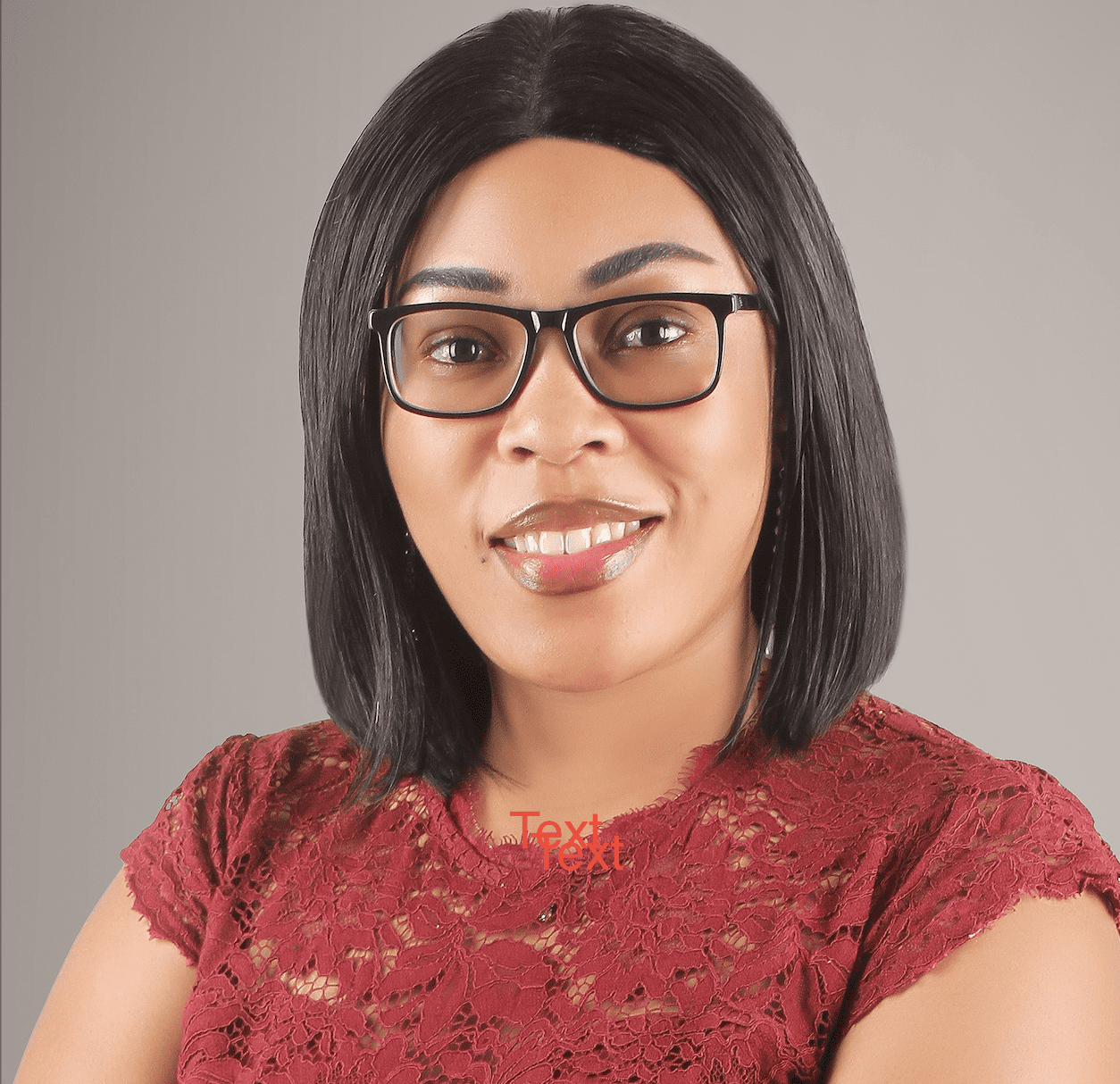
Marie Skłodowska-Curie Actions Doctoral Fellow Megang Nkamga Junile Staures from Cameroon Shares Her Journey of Studying Mathematics at Kaunas University of Technology, Lithuania
University: Kaunas University of Technology (KTU), Lithuania
Degree: PhD in Mathematics (Sustainable Finance & Systemic Risk)
Previous Education: MSc in Data Science for Business, University of Stirling, Scotland – Best MSc Project Award || MSc in Financial Mathematics, Jomo Kenyatta University of Agriculture and Technology (JKUAT), Kenya || BSc in Mathematics, University of Buea, Cameroon
Scholarship: Marie Skłodowska-Curie Actions (MSCA) Doctoral Fellowship – Fully Funded (doctoral salary, research mobility funding, secondment opportunities)
Other Offered Scholarships: Commonwealth Scholarship (UK Government) – MSc at University of Stirling, fully funded / Pan African University (PAU) Scholarship (African Union) – MSc at JKUAT, Kenya, fully funded
Social Media
LinkedIn: linkedin.com/in/megangjunile/
The Journey
My name is Megang Nkamga Junile Staures. Most people call me Megang. I am a Cameroonian. From an early age, I was drawn to mathematics, not just the equations, but the way it could explain how the world works. That passion eventually led me to pursue a career at the intersection of mathematics, finance, and data science.
I am currently a second-year PhD candidate in Mathematics at Kaunas University of Technology (KTU), Lithuania, funded by a Marie Skłodowska-Curie Actions (MSCA) doctoral fellowship. I chose this field because I believe mathematics has a critical role to play in building more stable financial systems, and I wanted to be part of that conversation.
I also want to be honest: the path here has never been linear. There were many moments of doubt, rejection, and starting over. But through prayers, hard work, perseverance, and a clear vision of who I wanted to become and what legacy I wanted to leave behind, I kept going. I hope my story encourages others to do the same.
Marie Skłodowska-Curie Actions Details
I am currently a recipient of the Marie Skłodowska-Curie Actions (MSCA) Doctoral Fellowship, funded under the European Union's Horizon Europe programme. This fellowship is hosted at Kaunas University of Technology (KTU) in Lithuania and supports my three-year PhD research (May 2025 – May 2028) in applied mathematics with a focus on sustainable finance and systemic risk. The fellowship covers a competitive doctoral salary, research mobility funding, and secondment opportunities, including my current placement at Swedbank Baltics.
Were You Offered Any Other Scholarships?
Yes. Over the course of my academic journey, I have been fortunate to receive three major scholarships:
- Pan African University (PAU) Scholarship: This fully-funded scholarship from the African Union supported my MSc in Financial Mathematics at Jomo Kenyatta University of Agriculture and Technology (JKUAT) in Kenya. It covered tuition, accommodation, a monthly stipend, and research support.
- Commonwealth Scholarship: This prestigious UK government scholarship funded my MSc in Data Science for Business at the University of Stirling, Scotland. It covered tuition, living allowance, return airfare, and other allowances. I graduated as the Best MSc Project awardee in my cohort.
- MSCA Doctoral Fellowship (current); As described above, hosted at KTU, Lithuania.
Each of these scholarships represents not just financial support, but recognition that has shaped who I am as a researcher. I strongly encourage aspiring students to apply widely and not be discouraged by rejections: I received many before each of these successes.
Educational Background
I completed my BSc in Mathematics at the University of Buea, Cameroon. This gave me a strong foundation in pure and applied mathematics, which became the bedrock for everything that followed.
During my BSc, I did an internship at Ecobank-Cameroon, which gave me early exposure to financial systems and sparked my interest in how mathematics and technology intersect in the real world.
I then pursued an MSc in Financial Mathematics (Pan African University / JKUAT, Kenya), which introduced me to stochastic calculus, financial modelling, and quantitative methods. This was followed by an MSc in Data Science for Business (University of Stirling, Scotland, Commonwealth Scholar), where I deepened my expertise in machine learning, data analytics, and applying computational tools to business problems. I graduated with the Best MSc Project award.
Each degree built on the last. My mathematical training gave me analytical rigor, my financial mathematics degree gave me domain depth, and my data science degree gave me the computational tools to bridge theory and real-world impact. Together, they positioned me perfectly for a PhD combining agent-based modelling, machine learning, and sustainable finance.
How Did You Prepare to Apply to Kaunas University of Technology?
I spent considerable time researching institutions whose research strengths aligned with my interests. I read faculty profiles, recent publications, and research group pages. I also reached out to potential supervisors by email to gauge interest and alignment before applying formally. This personalised approach helped me target institutions where I had a genuine fit rather than applying blindly.
I also invested time in crafting tailored personal statements and research proposals for each application. I did not use a generic template. I made sure to clearly articulate why my background made me uniquely suited for that specific programme, and what original contribution I intended to make.
How Did You Find Information About Marie Skłodowska-Curie Actions Doctoral Fellowship and the Kaunas University of Technology?
I used a combination of sources: official scholarship websites (Commonwealth Scholarship Commission, African Union / PAU, EURAXESS for MSCA), university websites, academic networks, and social media platforms like LinkedIn and academic Facebook groups.
I also leaned on mentors and professors who had gone through similar processes. Word of mouth from seniors and peers who had received scholarships was one of the most valuable resources; they shared tips on what selection committees look for and common pitfalls to avoid.
Did You Take Any Standardised Tests?
Yes. For the Commonwealth Scholarship and university applications in the UK, I prepared for and took the IELTS English proficiency test. I prepared by practising past papers, focusing especially on the writing and speaking components, and by reading widely in English to build vocabulary and fluency.
For other applications, the equivalent language or academic tests were required, depending on the institution. I always prepare in advance rather than leaving it to the last minute.
How Did You Prepare to Apply to the Marie Skłodowska-Curie Actions Doctoral Fellowship?
Each scholarship required a different kind of preparation, but a few things were constant:
- First, I started early. Scholarship applications require time to gather documents, request recommendation letters, draft and refine personal statements, and prepare research proposals. Starting months in advance made a significant difference.
- Second, I invested heavily in my research proposal. For the MSCA fellowship and PhD applications, the research proposal had to demonstrate scientific merit, originality, and societal relevance. I read extensively in my target field, identified gaps in existing literature, and articulated a clear, feasible research agenda.
- Third, I sought feedback. I had my MSc supervisor, colleagues, and mentors review my applications before submission. Honest external feedback helped me identify weaknesses I had missed.
- Finally, I prayed. I know that might sound simple, but it grounded me. In moments of uncertainty and anxiety, faith gave me the clarity and peace to keep going regardless of outcomes.
Are Your Classes Conducted in English or Lithuanian?
Although I am studying in Lithuania, where Lithuanian is the national language, all of my classes, supervision meetings, and academic activities at Kaunas University of Technology are conducted entirely in English. KTU actively welcomes international doctoral students and has structured its PhD programmes to be accessible to non-Lithuanian speakers. This made the transition significantly smoother for me as an international student.
Would Potential Students Have Any Problems Academically Not Knowing Lithuanian?
For PhD students, I can honestly say that not knowing Lithuanian is not an academic barrier at KTU. The research environment, lectures, and communication with supervisors are all in English. Official administrative processes sometimes require Lithuanian, but the university has support systems in place to assist international students, and colleagues are generally very helpful.
That said, learning even a few basic phrases in Lithuanian goes a long way in daily life, for navigating shops, public transport, and building rapport with local colleagues. It shows respect for the culture and makes your everyday life more comfortable. But academically, you will not be disadvantaged.
What Do You Think Made Your Application Stand Out?
I believe a few things made a difference. First, my interdisciplinary profile, combining mathematics, financial modelling, and data science, is relatively rare, and it made me a strong candidate for research at the intersection of these fields. Second, and perhaps most importantly, I was specific and honest about what I wanted to do and why. I did not write what I thought they wanted to hear; I wrote what I genuinely believed and cared about. I think that authenticity came through.
I also had strong recommendation letters from supervisors and mentors who knew my work and could speak credibly to my potential.
What Would You Have Done Differently?
I would have applied even earlier and to more programmes. Fear of rejection held me back from applying to some prestigious opportunities, and I now regret that. Rejection is part of the process; it does not define you. Every application is a learning experience.
What Advice Would You Give to Future Applicants?
- First: do not give up. Rejection is not the end; it is redirection. I was rejected from programmes and scholarships many times before I succeeded. Every no brought me closer to a yes. Stay persistent.
- Second: be intentional. Know why you are applying, what you want to achieve, and who you want to become. A clear sense of purpose shows in your writing and in interviews.
- Third: build genuine relationships with your supervisors and mentors early. Their support, intellectually and through recommendation letters, is invaluable.
- Fourth: do not compare your journey to others. Some people's paths are faster, some slower. What matters is that you keep moving. Focus on your own growth.
- And finally: think about your legacy. Ask yourself: when I am no longer here, what will I have left behind? That question has guided every major decision in my academic career. It pushes me to pursue meaningful work, not just credentials. Let it guide you too.
Want to submit your
scholarship journey?
Submit Your Story Here!
More Scholarship Recipients
Hi! My name is Davi Augusto Mattoso, and I am originally from Brazil. I have a Bachelor's in Chemistry from the Federal Univ .... Read more
Hello, my name is Manasi, and I am from India. I completed my Bachelor’s degree in Civil Engineering from Dr. Babasaheb Am .... Read more
Hi, I am Malik Nauman Rauf, currently a Master's in Aerospace Engineering student and a Fulbright Scholar at Georgia Institu .... Read more
Leave A Comment