
Marie Skłodowska-Curie (MSCA) Joint Doctoral Network Researcher, Ioanna from Greece, Shares Her Journey of Pursuing a PhD in Disease Modelling Between the University of Lisbon and Utrecht University
University: University of Lisbon and Utrecht University (Double PhD Program)
Degree: PhD in Disease Modelling – MSCA Joint Doctoral Network (ORGESTRA)
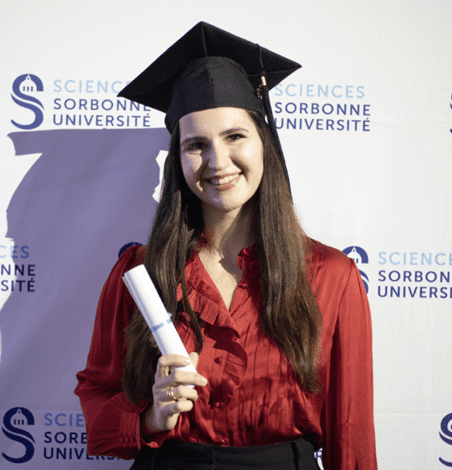
Previous Education: Master’s in “From Fundamental Molecular Biosciences to Biotherapies” – Sorbonne University (in partnership with DKFZ Heidelberg and Heidelberg University); Bachelor’s in Biological Sciences – University of Patras, Greece
Scholarship: MSCA Joint Doctoral Network (ORGESTRA) – Fully Funded Employment Contract (includes salary, social security, and healthcare benefits, adjusted for cost of living)
Social Media
LinkedIn: linkedin.com/in/ipmichou/
The Journey
Hello everyone! My name is Ioanna, I am 26 years old, and I come from Athens, Greece. I started my academic journey at the University of Patras, Greece, where I obtained a Bachelor’s degree in Biological Sciences. I quickly developed a strong interest in cellular and molecular biology and, therefore, decided to move to Spain for an Erasmus+ internship at CIC-CSIC Salamanca, in the field of cancer genomics. During my Master’s degree, “From Fundamental Molecular Biosciences to Biotherapies,” at Sorbonne University in partnership with DKFZ Heidelberg and Heidelberg University, I was exposed to the complexity of basic science and trained to develop invaluable technical and soft skills. This postgraduate experience inspired me to remain in academia and pursue a doctoral degree in the field of disease modelling.
MSCA Joint Doctoral Network Details
I am currently pursuing a double PhD degree at the University of Lisbon and Utrecht University. My research focuses on developing a cellular toolset for drug discovery and image-based screening in Cystic Fibrosis (CF), supported by the EU-funded MSCA Joint Doctoral Network ORGESTRA (www.orgestra.eu/). I am employed by FCiências.ID – Associação para a Investigação e Desenvolvimento de Ciências under a fixed-term employment contract (not a scholarship), which includes social security and healthcare contributions and allows for a decent standard of living in both Lisbon and Utrecht (with compensation adjusted according to the cost of living during secondments). Each doctoral candidate funded by the ORGESTRA MSCA Doctoral Network receives a competitive salary based on the country-specific cost-of-living coefficient of their host institution.
Were You Offered any Other Scholarships?
During my search for a fully funded doctoral project with interesting training and networking opportunities, I applied and interviewed for other MSCA PhD programs in Austria (eRaDicate) and Italy, but decided to proceed with my current project in the field of organoid disease modelling, mainly due to the topic of research and the extensive training opportunities.
Educational Background
→see introduction for background.
Even though maintaining a competitive GPA is very important during your early career steps in academia, I would strongly advise focusing on obtaining work experience and strong transferable skills through multiple internships to figure out what truly suits your competencies while igniting the spark to explore new scientific avenues.
How Did You Prepare to Apply to Institutions?
How Did You Find Information About Scholarships and Institutions?
Regarding Erasmus+ funded internships, start by checking out the collaborations of your university’s international affairs office, and if the options don’t match your interests, don’t hesitate to take initiative and branch out independently to other labs that suit you the best.
Another great tool for EU-funded projects is the Euraxess website (euraxess.ec.europa.eu), where you can find multiple funded research projects and scholarships in various scientific fields.
Did You Take Any Standardized Tests? If So, How Did You Prepare for Them?
→No. Regarding proof of knowledge of English, I had a certificate attesting that I completed my 2-year Master’s program in English and a Certificate of Proficiency in English (CPE-ESOL, C2 level) issued by the University of Cambridge.
How Did You Prepare to Apply to the MSCA Joint Doctoral Network?
Being proactive is key during a graduate degree and/or scholarship application process. I started browsing offers and applying at the beginning of the second year of my master’s degree. Even though it sounds like an extensive time investment, allowing yourself to explore your funding options at least one year before starting your research job/ degree is important to ensure a successful application. Additionally, don’t neglect having a copy of all the necessary documents translated into English, and don’t be afraid to reach out to other scientists, students, or alumni who have in the past benefited from the scholarship you are interested in.
What Do You Think Made Your Application Stand Out?
If you are aiming for a unique, out-of-the-box application, don’t hesitate to highlight your most valuable skills and strengths, and explain how they align with the goals of the project. Additionally, be sure to mention any extracurricular activities that may enhance your profile, such as volunteering or mentoring younger students. Above all, keep your application authentic so that you attract employers and collaborators who share your values and aspirations.
What Would You Have Done Differently if You Were Going Through the Process Again?
I think I may have taken a step back after graduating in order to carefully assess the available opportunities, as searching for PhD positions and preparing for interviews can be quite demanding while simultaneously working full-time on a Master’s thesis. Additionally, I shifted my focus from primarily wet-lab positions to also exploring bioinformatics opportunities, even though I initially lacked expertise in that field.
What Advice Would You Give Those Looking to Apply for a Similar Scholarship?
If possible, visit the laboratories you are applying to in person so you can assess the quality of research, the work environment, and determine whether the overall culture suits your working style (including group dynamics, supervision style, team spirit, and group meeting structure). Being proactive is extremely important, but sometimes the best option may be to take a short break after your studies before moving on to the next academic step, if circumstances allow. This can give you time to reflect on your interests and evaluate emerging opportunities with a clearer and broader perspective.
Want to submit your
scholarship journey?
Submit Your Story Here!
More Scholarship Recipients

My name is Muhammad Aiesh Ghayoor, and I am originally from Islamabad, Pakistan. I am currently in my thesis semester of the .... Read more

My name is Min Htet Myint, and I am from Myanmar. I am currently pursuing a Ph.D. in Global Smart City at Sungkyunkwan Unive .... Read more
My name is Min Gyu, and I am a 1st year PhD student at the University of Cambridge, pursuing Stem Cell Biology. My research .... Read more
Leave A Comment