
Master’s Management Science Student Hiroki Oshio from Japan Shares His Journey of Studying at Goethe University Frankfurt, Germany
University: Goethe University Frankfurt
Degree: MSc in Management Science
Previous Education: BSc in Management Science, Tokyo University of Science
Social Media
LinkedIn: linkedin.com/in/hiroki-oshio-b19517284/
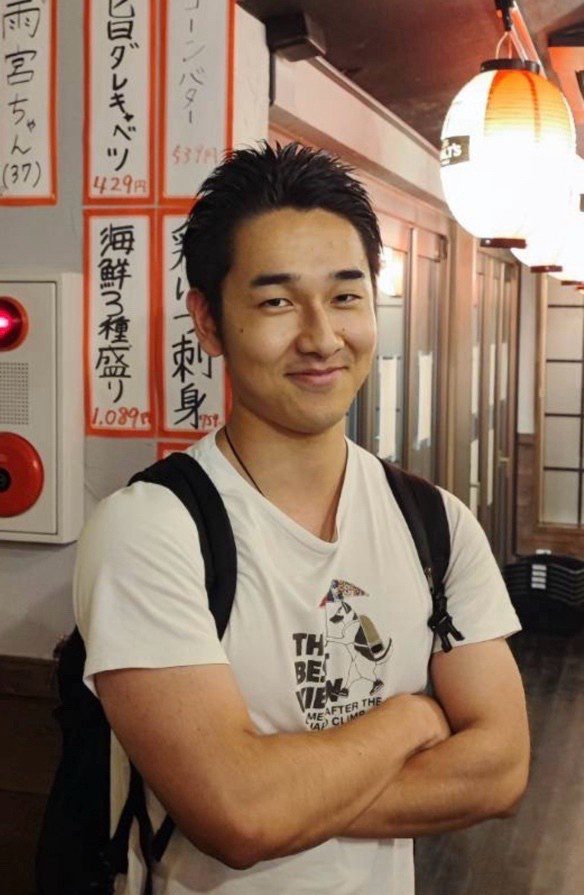
The Journey
My name is Hiroki Oshio, and I am from Japan. I was born in 2002. I lived in Japan until last year (2025) and moved to Germany as a full-time master's student in October 2025 (Note: I had lived in Germany in 2023 as an exchange student. This will be explained in the next question).
I am studying at Goethe University in Frankfurt, Faculty of Economics and Business, and my program is called M.Sc. Management Science. This is a master's program that offers courses across Finance, Accounting, Marketing, and Information Management. Also, we need to take at least one course in the Management field and one in the Ethics field.
I decided to continue studying this field because I believed there were still many things to learn in academia before I joined the industry. Through writing my bachelor theses and attending an academic conference after that, I realised my perspective was still narrow and my knowledge was not deep enough. In Addition, my way of thinking was less logical to play an important role in society. Thus, I became to think I wanted to learn more and make my knowledge more sophisticated. Moreover, as a person who has a strong curiosity, I was willing to study more about business and economics if I had a chance.
Website of my program (management science):
https://www.uni-frankfurt.de/en/studium/studiengaenge/management-science-master
Educational Background
My previous degree was a Bachelor of Management with a GPA of 3.62 (equivalent to 1.3 in the German grading system). I studied at Tokyo University of Science, Tokyo, Japan, from April. 2021 to March. 2025 (please note that schools in Japan start in April).
My bachelor's program is called Management Science in English. I learned the basics of management, including management strategy, organizational structure, leadership, and quantitative and qualitative research methods, as well as machine learning. In the third year (junior), I was selected as an exchange student at Leibniz University Hannover in Germany and spent one year there. It was one of the greatest years in my life, and I started to consider continuing my studies in Germany.
These backgrounds definitely helped me to be accepted by my current program. However, I need to mention a problem I faced. My bachelor's is focused on management, not economics, but in Germany, these are often mixed and called “economics and business” (in German, Wirtschaftswissenschaften). Since I didn’t take many economics courses in my bachelor's, I had fewer options to apply.
Website of my bachelor's program, Tokyo University of Science, Department of Management:
https://www.tus.ac.jp/en/fac/keiei/man.html
Website of a program of Leibniz University, economics and business:
https://www.wiwi.uni-hannover.de/en/
How Did You Prepare to Apply to Goethe University Frankfurt?
Many programs don’t have exams for the application. Therefore, my main preparation was reviewing documents and studying for the TOEFL. I took the GMAT because some programs required an application, but I did not use it. The application periods vary, so I started collecting or making documents in January 2025 and finished the application in July 2025.
The most important thing you need to be careful about application is “time.” It sometimes takes a long time to finish preparing the document to submit. For example, some programs require an official document about your grade in the German grading system because in Germany, the grading system is not GPA. For that document, you may need to use an external service to convert your grade to one in Germany. It normally takes 3-4 weeks, and you need to complete the process before the application deadline for the program. Moreover, as most of you already know, it takes a few days to receive the results of an English language test, such as the TOEFL or IELTS. As a Japanese, it also took time to issue documents such as certificates in English. If you are thinking of studying in Germany, I strongly recommend that you read the requirements and application procedures and prepare what you need as soon as possible.
Were You Offered Any Other Scholarships?
I don’t have a scholarship. I applied for DAAD (a famous scholarship by a German institution), one by JASSO (Japan Student Service Organization), and one by a Japanese private fund, but I was rejected.
Students who are accepted by DAAD can obtain 992 Euros for living costs for the last year, as well as many supports such as a German language course before your program starts and a huge DAAD community to share information.
Currently, I am using student loan by JASSO.
Website of DAAD: https://www.daad.de/en/
What Drew You to Choose Germany to Pursue Your Degree?
I decided to study here for two reasons:
- One is because of my academic interest. I was interested in Academia-Industry collaborations, which are relationships between companies and research institutes, including universities. In Japan, these bonds are relatively weak, so I wanted to study and experience them in Germany, where the ecosystem for collaboration is stronger. Moreover, I am keen to learn about topics where Europe has strong leadership, such as standardization strategies and sustainability.
- The second reason is that the tuition fee for the public university in Germany is free. Even though we need to pay the “Semester contribution” to the university before each semester starts, the school tuition fee is free at public universities in Germany, including graduate school (The amount of the semester fee varies, but for next semester I paid around 400 Euros). This is a huge advantage for many students to study in Germany. However, depending on the state, international students need to pay an additional fee. Also, for a private university, you need to pay the tuition fee. You can check the information at the universities’ website.
What Were Some of the Challenges You Faced as an International Student, Particularly Regarding Living Costs or Part-time Work Opportunities?
Finding accommodation is also one of the biggest problems before studying. There are companies in each city to support students’ life (mostly named “Studentenwerk”), and they have student accommodations or flats. However, in some places, it is very competitive to get your room, and waiting lists are long. For instance, I have heard that a waiting list in Frankfurt was 1 – 1.5 years. There are several services to find place to stay such as “WG gesucht” or “Immoscout 24,” but it is not very easy to find one because some landowners ask you to do interviews in person and sometimes, they only seek someone who speaks German. There are other organizations which offers students room. I got an offer by one of them after a half year. I have no friend who needs to live in a hotel or Hostel for some months: they find ways to stay eventually. Therefore, you don’t have to be scared too much, but you need to hustle to find where to live.
Regarding living cost, it won’t be a huge problem if you have enough mean to get a student visa. However, the living cost is more expensive in big cities, in particular, rent. In my case, almost half of living cost is the rent. For food, it won’t be expensive if you cook by yourself, but eating outside can be expensive. Additionally, you need to pay around 130 Euros per month for your health insurance because you need to have German insurance to get a student visa.
Language can be a challenge in Germany, especially at work. Even though many people in Germany can speak English, many jobs require German skills. I am currently looking for a job which potentially related to my future career, but I have less options for application since my German doesn’t meet their requirements. For a mini job, there are many opportunities without knowing good German. Some of my friends work almost only with English.
Looking Back, Would You Recommend Studying Here for International Students Seeking Affordable Higher Education? Why or Why Not?
Yes, I recommend to study here, Goethe university. I cannot compare education-wise since this is my first master's program, but I found some professors are very enthusiastic about educating students. Especially if you are interested in finance, we have many good courses and an environment to focus on it. Making connections to international students is also easy because in my program, almost all students are NOT from Germany. In other programs, they also have students who are from outside of Germany. This also means we can help each other when someone has a problem about living/studying in Germany. Moreover, Frankfurt has more opportunities for international students since many international companies are based on Frankfurt, and relatively more English-Speaking positions here. Even though I have only spent one semester here so far, I can already recommend seeking your place here.
How Is (was) Your Experience at Goethe University Frankfurt?
It is great so far. I wrote my opinion from an educational perspective in the previous question. Regarding support, I wrote a question
How Do You Rate Goethe University Frankfurt Academically and Why?
I don’t think I have enough experience or knowledge to answer this question at this moment. Our university publishes some news, and it may help.
How Does Goethe University Frankfurt Support International Students?
Our university offers enough information to live and study in Germany. For example, in the online meeting after we received acceptance letters, our tutor explained not only university’s procedure to start studying but also how to get accommodation, how to get student visa and so on. Moreover, there is an office that is responsible for international students, and my friends often contacted them to get support. We also have a buddy program and if you joined them, one of the “local” students will be allocated to you and you can ask them regarding campus life. For example, I asked my buddy to accompany when I went to a city office for a registration because I didn’t have confidence on my German. He is now one of my best friends in Germany. Overall, my university is kind to international students.
However, there are a lot of things you need to do by yourself. The university gave explanation, but you need to: find accommodation, apply for insurance, go to a city office for some registration etc.
Are Your Classes Conducted in English or German?
Classes are in English or German. In some programs at my university, a significant number of students complete their degrees in English. However, we sometimes find that a course sounds interesting but is in German, so we cannot take it because our German is not enough to take the exam.
What Did You Pursue After Your Studies in Germany?
After I complete my master's, I would like to work in Germany for several years. As a business student, I believe it is crucial to gain industry experience, not only from academia. This experience makes my knowledge wider and more interesting, and eventually, I believe, I will find something that is my true strength and my own way to contribute to society most effectively. I might keep working in Germany, or I might go back to Japan. Potentially, I will pursue a PhD, but I am not sure when.
Would Potential Students Have Any Problems Academically Not Knowing German?
I am sure that students with no German skills can “survive” in Germany if their programs are in English. However, I strongly recommend studying the basics at least to make your life here easier. Of course, your daily life will be surrounded by the German language. Just knowing some greetings and basic words, such as “entrance” and “station”, would help you a lot. Additionally, you will have situations where you need to talk to people in German in university or cities, especially if your program or university doesn’t have many international students or a strong community. Speaking German makes your life in Germany much more joyful and fun.
Want to submit your
scholarship journey?
Submit Your Story Here!
More Scholarship Recipients
My name is Mona Perlingeiro, and I am from São Paulo, Brazil. São Paulo is the Brazilian city with the largest number of m .... Read more
I am Ludmille Lyvert, and I am from Haiti. I hold a master’s degree in Women’s Studies, and I am currently a Ph.D. stude .... Read more
My name is Leisha Ravindra Babu, and I am from India. I am currently a Global Korea Scholarship (GKS) scholar completing my .... Read more
Leave A Comment