
PhD Marine Biology Student Gabriel Rivas-Mena from Spain Shares His Journey of Securing a Fully Funded PhD at the University of Montenegro, Montenegro
University: University of Montenegro (Institute of Marine Biology)
Degree: PhD in Marine Biology (Marie Skłodowska-Curie Doctoral Network)
Previous Education: Bachelor’s in General Biology; Erasmus Mundus Master’s in Marine Biological Resources (IMBRSea)
Scholarship: Marie Skłodowska-Curie Doctoral Network (MSCA) – Full Funding (Living Allowance, Mobility Allowance, Research Budget, Training and Secondment Support)
Social Media
The Journey
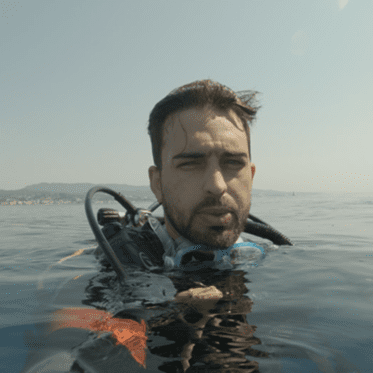
Hello everyone! I am Gabriel Rivas-Mena, a PhD candidate within a Marie Skłodowska-Curie Doctoral Network at the Institute of Marine Biology, University of Montenegro (IBMK).
Originally from Sevilla, Spain, I completed my Bachelor's degree in General Biology there before following my passion to the underwater world by enrolling in the International Erasmus Mundus Master’s of Science in Marine Biological Resources (IMBRSea). During my Master’s, I travelled across Europe, specializing in benthic (ecosystems dwelling in the seabed) ecology and conservation. These studies provided invaluable networking opportunities and professional experience at a European level. That exposure, combined with a deep curiosity about the world around me, paved the way for my decision to pursue a PhD.
How Did You Find Information About the Marie Skłodowska-Curie Doctoral Network and the University of Montenegro?
A few months before finishing my Master’s, I began scouting for PhD positions. While browsing the EURAXESS platform (https://euraxess.ec.europa.eu/jobs), I discovered a vacancy that immediately caught my eye: the MEDiverSEAty Doctoral Network (https://mediverseaty.eu/).
This Marie Skłodowska-Curie Doctoral Network explores the “Human Dimensions of Mediterranean Marine Biodiversity”. These networks are Horizon Europe projects within the Marie Skłodowska-Curie Actions (MSCA) that provide funding to train PhD candidates while addressing critical and interdisciplinary research questions. Thus, there are often several PhD positions with different PhD research topics within the same Doctoral Network. When applying to it, you apply for a specific topic at a partner institution. In my case, I applied to the topic “Using artificial reefs to preserve biodiversity: potential implications on Marine Literacy and Education” at the IBMK… and here I am!
Marie Skłodowska-Curie Doctoral Network Details
Marie Skłodowska-Curie Doctoral Network positions are highly competitive and provide researchers with both a living allowance and a dedicated research budget.
Monthly allowances (Gross Figures):
- Living Allowance: the base rate is approximately 3,400€/month, adjusted by a country correction factor based on the cost of living in the host nation. In my case, this results in a gross living allowance of 2,092€/month.
- Mobility Allowance: a flat rate of 600€/month to support the costs of relocating.
- Family Allowance: 600€/month (applicable only if you have a spouse/partner or dependent children).
- Research and Training Budget:
- The host institution receives roughly 57,000€ to cover your research expenses, including materials, conferences, travel, accommodation for fieldwork, and publication fees.
Additionally, in order to be eligible, you need to comply with the following MSCA criteria:
- Mobility Rule: you must not have resided or carried out your main activity (work or studies) in the host country for more than 12 months in the 3 years immediately prior to recruitment.
- ESR Criteria: You must be in the first four years of your research career and not yet hold a doctoral degree.
A unique aspect of this scholarship is the 6-month secondment at a partner institution, which encourages networking and getting to know other Institutions. In the MEDiverSEAty network, fellows come from diverse backgrounds ranging from marine ecology to philosophy and geography. You are encouraged to get out of your field of knowledge, supporting your training as an interdisciplinary researcher.
How Did You Prepare Your Application?
Applying for this position felt like the natural next step. My Master’s thesis focused on the restoration of cold-water corals in the Mediterranean, so I already possessed foundational knowledge of the ecosystems involved. Additionally, the structure of a Doctoral Network is quite similar to the Erasmus Mundus format I was already familiar with.
What Is the Application Procedure?
The process required several documents:
- A personal statement and a detailed CV.
- Academic transcript from both Bachelor’s and Master’s degrees.
- A statement of research interests explaining why I was the best fit.
- Contact details for two referees.
- A research proposal outlining my intended approach, study design, and key questions.
- Proof of English proficiency (since my Master’s was taught in English, my diploma served as sufficient proof. Anyway, any official test is legit).
After submitting these, I was invited to an interview. This is the most challenging stage. You must clearly articulate your strengths and remain sincere. Also, this is a way to demonstrate who you are, as well as some soft skills, which are often a deciding factor in the selection process.
What Do You Think Made Your Application Stand Out?
I was fortunate that the position aligned perfectly with my previous experience. My current supervisor later shared that the deciding factor between the other final candidate and me was my specific experience working in the Mediterranean Sea, while the other candidate had focused on tropical regions. Beyond technical skills, it is vital to demonstrate a high capacity for learning, being interested in the hosting Institution, capacity to adapt to new cultural contexts, and the initiative to conduct research independently.
Looking Back, Would You Have Done Anything Differently During Your Time in the Program?
Honestly, in terms of the application, I do not know. However, if I could go back, at the interview stage, I would have asked more detailed questions about the institution’s specific resources and conducted deeper research into the local facilities during the interview phase.
What Advice Would You Give Those Looking to Apply for a Similar Scholarship?
If you are still a Bachelor’s or Master’s student, take every opportunity to study abroad, in a different field of knowledge, or join new environments, in summary, get out of your comfort zone! This provides you with vital experiences that build up your soft skills, and also provides you with new experiences and contacts.
Also, gaining early experience is crucial. I participated in several research projects as a volunteer. While it depends on your personal circumstances, gaining early-stage experience is often the best way to make your CV competitive for prestigious scholarships.
Want to submit your
scholarship journey?
Submit Your Story Here!
More Scholarship Recipients

My name is Iqra Ali, and I am from Pakistan. I am currently a PhD student in Computer Science at Queen Mary University of Lo .... Read more
My name is Hemish Ahuja, and I am originally from India. I am currently pursuing an Honours Bachelor of Science in Physics w .... Read more
My name is Tan Xuan Yin, and I am an international student currently studying Architecture at Semyung University in South Ko .... Read more
Leave A Comment