
Marie Skłodowska-Curie Predoctoral Fellow Francisca Matias from Portugal Shares Her Journey of Studying Metacognition in Childhood at the BCBL, Spain
University: Basque Center on Cognition, Brain and Language, San Sebastián (BCBL), Spain (secondment: École Normale Supérieure, Paris, France)
Degree: PhD – Metacognition in Childhood
Previous Education:
– MSc in Molecular and Translational Neuroscience, University of Coimbra, Portugal; CGPA 18/20 (Thesis: 19/20)
– Post-graduation in Clinical and Health Psychology, University of Coimbra, Portugal; CGPA 16/20 (Thesis: 19/20)
– BSc in Psychology, University of Coimbra, Portugal – CGPA 17/20
Scholarship: Marie Skłodowska-Curie Predoctoral Fellowship – Fully Funded (competitive monthly stipend, international mobility, co-supervision across two institutions)
Social Media
LinkedIn: linkedin.com/in/francisca-matias/
The Journey
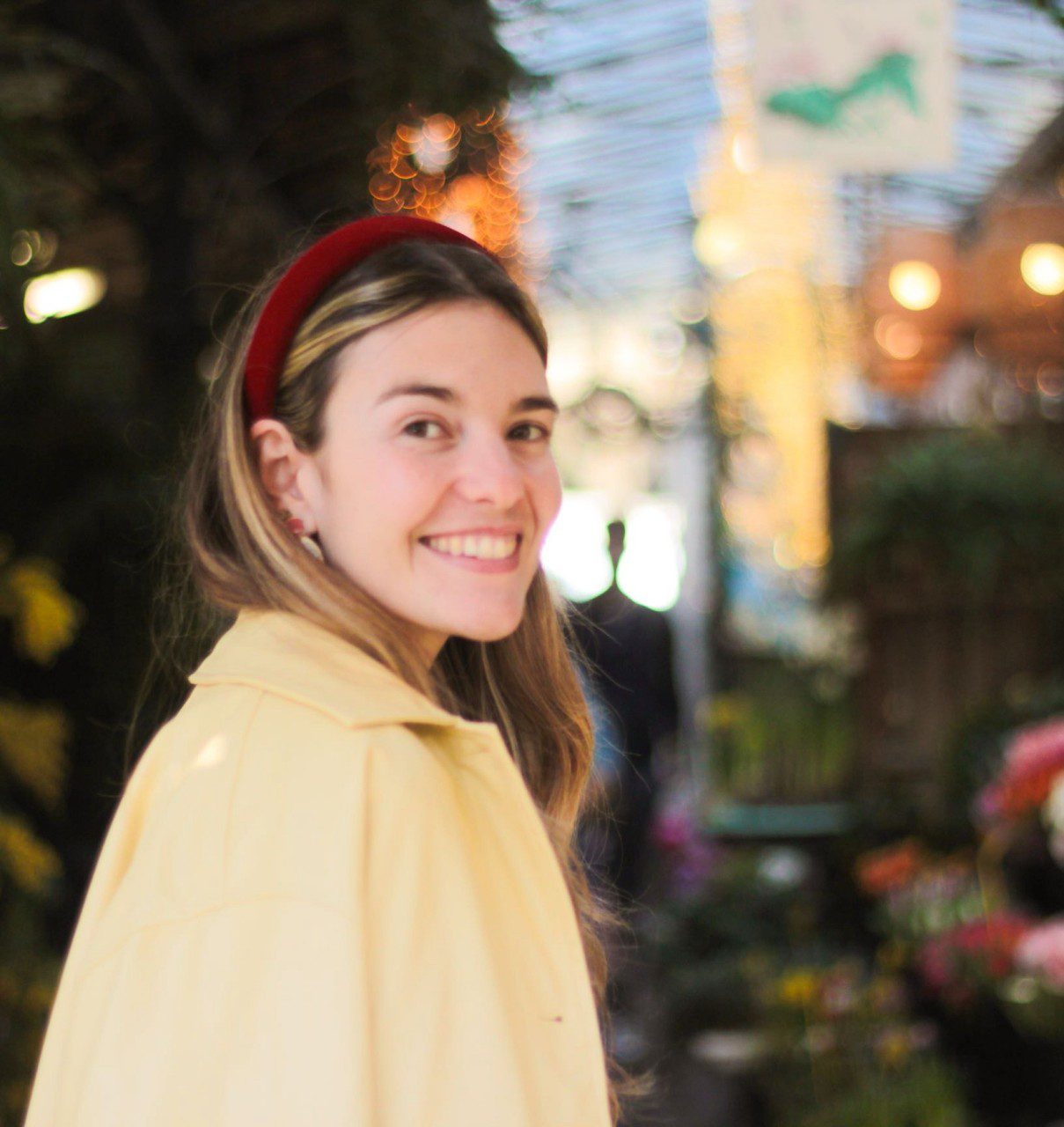
My name is Francisca Matias, and I am from Coimbra, Portugal. I have always been driven by a fascination with how the human brain perceives and constructs reality. For several years, I studied decision-making in both neurotypical individuals and people on the autism spectrum, and that work sparked a curiosity that kept expanding. I became increasingly convinced that early development is where the greatest room for discovery and impact lies, and that conviction is what ultimately shaped the direction of my PhD. On a personal note, I love travelling and meeting new people!
Marie Skłodowska-Curie Predoctoral Fellowship Details
I was awarded a Marie Skłodowska-Curie Predoctoral Fellowship and am currently working on "Metacognition in Childhood" at the BCBL, Basque Center on Cognition, Brain and Language in San Sebastián, Spain, within the Consciousness group supervised by David Soto. My secondment will take place at the Laboratoire des Systèmes Perceptifs at the École Normale Supérieure in Paris, under the supervision of Pascal Mamassian. I chose this fellowship because of the research theme, the exceptional center environment, the funding conditions, and the exciting international dimension. This fellowship is part of a consortium that includes workshops across all partner laboratories, interactions with leading experts throughout Europe, and co-supervision by two principal investigators across two institutions. The monthly stipend varies by country and year but is generally competitive and designed to support researchers fully throughout their doctoral training.
Were You Offered Any Other Scholarships?
Yes. I was also offered an FCT (Fundação para a Ciência e a Tecnologia) PhD Scholarship, which is the main national funding of doctoral programs in Portugal.
Educational Background
My academic journey has been deliberately interdisciplinary: Bachelor's in Psychology, University of Coimbra: CGPA: 17/20; Master's in Molecular and Translational Neuroscience, University of Coimbra: CGPA: 18/20 (Thesis grade: 19/20), and Post-graduation in Clinical and Health Psychology, University of Coimbra: CGPA: 16/20 (Thesis grade: 19/20).
How Did You Prepare to Apply to Basque Center on Cognition, Brain and Language, San Sebastián (BCBL)?
I actively monitored the FCT website for open PhD scholarship calls, followed academic networks and research group newsletters, and kept an eye on the websites of institutions and research groups whose work aligned with my interests. I also used LinkedIn regularly to track opportunities and stay connected with the academic community, which is, in fact, where I found the Marie Curie fellowship opening. Building relationships through conferences is equally invaluable; those conversations often surface opportunities we would never otherwise come across.
Regarding language certification, I did the Duolingo English Test for one specific application where time constraints made other options impractical. Beyond that, my English proficiency was demonstrated through my academic record, publications, and the interviews, per se. That said, I would genuinely recommend obtaining a recognized English certification early on, as some applications require it, and last-minute scheduling can be stressful or simply unavailable.
How Did You Prepare to Apply to the Marie Skłodowska-Curie Predoctoral Fellowship?
Preparation was ongoing in the sense that years of research experience gave me real insight into how to think about projects; what was feasible, what I could contribute, and how to position myself as a strong fit. For the Marie Curie fellowship specifically, I worked to convey genuine enthusiasm for both the research theme and the broader opportunity. I prepared thoroughly for the interviews, developed a research proposal, and even studied Spanish; since working with children in Spain would inevitably mean the selection panel would want to assess my language skills, which they did. I also secured letters of recommendation from supervisors and colleagues who could speak directly to my technical abilities, my capacity for teamwork, and my independence as a researcher. For the FCT scholarship, I focused on writing a clear, well-motivated research proposal that demonstrated both scientific rigor and societal relevance, and having my own prior studies to build on was a significant advantage.
How is (was) Your Experience at the Basque Center on Cognition, Brain and Language, San Sebastián (BCBL)?
So far, my experience has been truly wonderful. The research center is well organized and genuinely values its researchers. There is always room for improvement, of course, but what stands out is how much the institution cares about the well-being of everyone working there, whether short or long term, and how actively it works to keep improving.
How Do You Rate the Basque Center on Cognition, Brain and Language, San Sebastián (BCBL) Academically and Why?
I believe this institution produces rigorous and impactful work. It does so by building in feedback at multiple stages of every project, fostering a culture of openness and collaboration, and maintaining the standard of only pursuing a project when there is a genuine belief it can be done excellently.
How Does the Basque Center on Cognition, Brain and Language, San Sebastián (BCBL) Support International Students?
When I arrived, a member of the administration accompanied me personally to handle all the bureaucracy involved in relocating to a new country. The team was consistently available for questions and helped with everything they could; it made the transition feel much less daunting.
Are Your Classes Conducted in English or Spanish?
My classes are conducted in English, though there are also optional courses offered by the university in Spanish for those who wish to engage with them. The center also offers Spanish, Spanish Sign Language, and Basque lessons for us to learn the languages.
Would Potential Students Have Any Problems Academically Not Knowing Spanish?
I don't think so. All courses held within the institution, as well as the center meetings (group and lab meetings and external speakers), are conducted in English, so not speaking Spanish is not an academic barrier.
What Do You Think Made Your Application Stand Out?
I believe what stood out most was my genuine excitement about learning and working on something I truly care about; that kind of enthusiasm is hard to fake, and reviewers notice it. My hands-on technical experience with psychophysics, eye-tracking, and fMRI analysis was certainly a strong asset. But I also think that my years of experience working directly with people demonstrated that I am equally comfortable with human interaction as I am with data analysis, and that balance, I believe, showed I could handle both the data collection and the analytical phases of research with confidence.
What Would You Have Done Differently?
I would have started networking with international research groups earlier, perhaps during my Bachelor's or at the very beginning of my Master's. Building meaningful international connections takes time, and the sooner you attend conferences, reach out to principal investigators, and make your work visible, the more doors open. I would also have obtained an internationally recognized English language certification earlier, and ideally one accepted across a wider range of applications, to avoid any last-minute complications.
What Advice Would You Give to Those Looking to Apply for a Similar Scholarship?
I firmly believe there are many paths to the same goal, and that sometimes we need to explore different directions before knowing which one to truly commit to. So, I would say, be genuinely curious and let your research interests guide you; reviewers can tell the difference between an authentic proposal and one constructed simply to fit a call. Don't be afraid to ask questions: talk to colleagues, conference speakers, and potential supervisors about both the science and the working environment you are looking for. Reach out to prospective supervisors early and have frank conversations about fit; it matters as much as the research itself. And never underestimate the value of interdisciplinary thinking; in neuroscience today, the most exciting questions live at the boundaries between fields.
Want to submit your
scholarship journey?
Submit Your Story Here!
More Scholarship Recipients
My name is Calvin Rock. I’m a passionate writer of poetry, flash fiction, and, occasionally, commentaries. Professionally, .... Read more
Hi! My name is Oumaima Latrech, a Moroccan currently residing in South Korea. I am a recent alumna of the Global Korea Schol .... Read more
My name is Odion Judith Uzamere, and I am from Nigeria. I have a background in public health and a strong passion for improv .... Read more
Leave A Comment