
Ph.D. Food Science and Human Nutrition Student Faiza Khalid from Pakistan Shares Her Journey of Studying at Jeonbuk National University, South Korea
University: Jeonbuk National University, South Korea
Degree: PhD in Food Science and Human Nutrition (Functional Food & Molecular Biology Lab)
Previous Education: M.Phil. in Human Nutrition and Dietetics – National Institute of Food Science and Technology (NIFSAT), University of Agriculture, Faisalabad, Pakistan (GPA 3.81/4.00); BSc (Hons.) in Human Nutrition and Dietetics – University of Agriculture, Faisalabad, Pakistan (GPA 3.61/4.00)
Scholarship: Global Korea Scholarship (GKS) – Fully Funded (Full Tuition, 1,300,000 KRW Monthly Stipend, Round-Trip Airfare, National Health Insurance, Settlement Allowance, One-Year Korean Language Training)
Social Media
LinkedIn: linkedin.com/in/faizakhalid-ra/
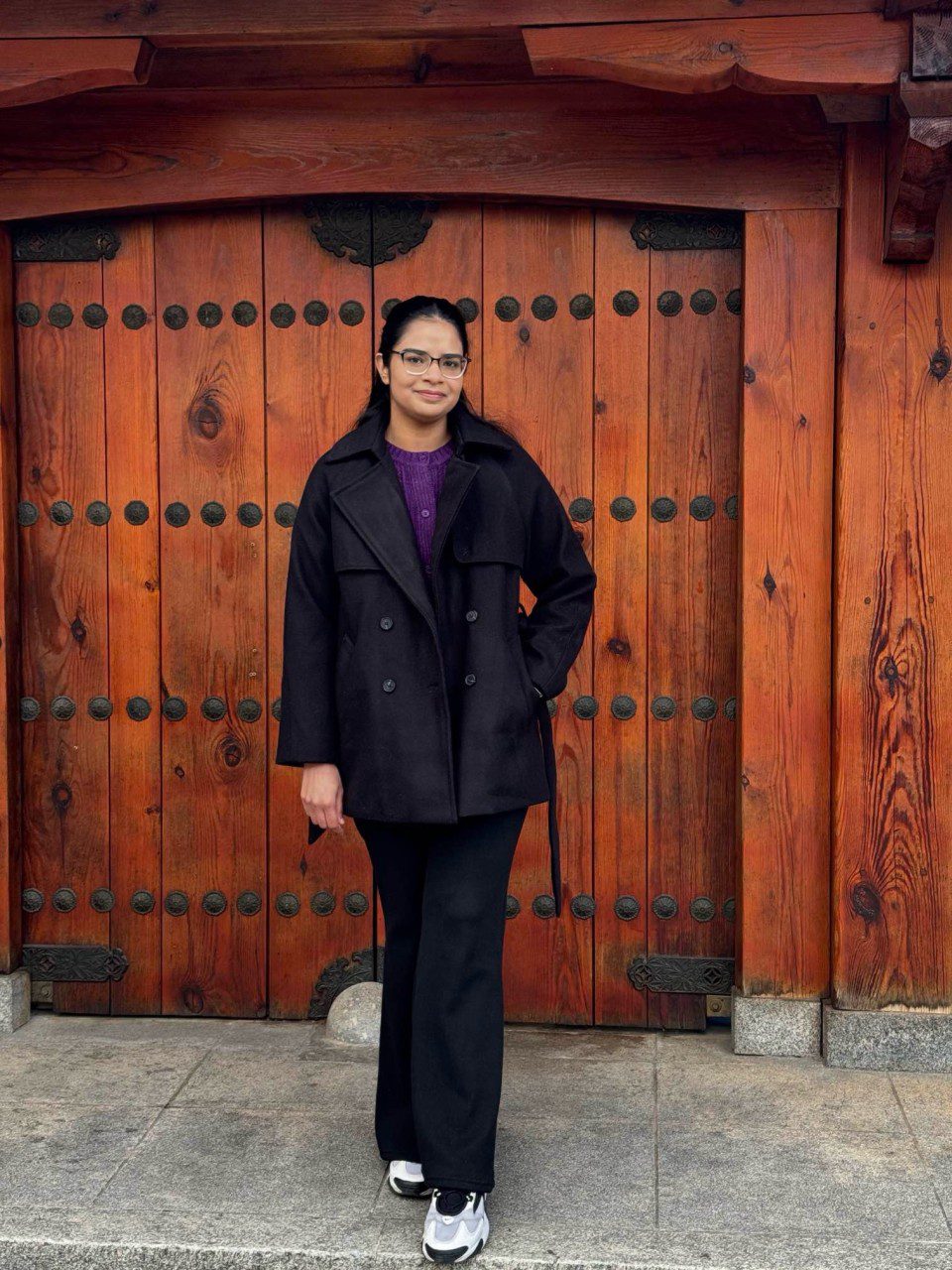
The Journey
Hello! My name is Faiza Khalid, from Pakistan. I completed my M.Phil. in Human Nutrition and Dietetics from the National Institute of Food Science and Technology (NIFSAT), University of Agriculture, Faisalabad. Currently, I am pursuing my Ph.D. in the Functional Food and Molecular Biology Lab in the Department of Food Science and Human Nutrition at Jeonbuk National University, South Korea, under the prestigious Global Korea Scholarship (GKS).
During my postgraduate studies, I developed a strong research foundation in nutrition and food processing, which gradually led me toward food microbiology and functional foods. Being a GKS scholar is a life-changing opportunity that allows me to grow as a researcher, gain international exposure, and move closer to my long-term goal of working in public health nutrition and global food security.
Global Korea Scholarship (GKS) Details
Global Korea Scholarship (GKS) is a prestigious and fully funded program administered by the National Institute for International Education (NIIED) under the Government of the Republic of Korea. The scholarship covers full tuition fees, a monthly living stipend of 1,300,000 KRW, round-trip airfare, national health insurance, and a settlement allowance. It also provides one year of fully funded Korean language training to support academic and cultural integration in Korea. For detailed information about the program and application guidelines, prospective students can visit the official Study in Korea website.
Educational Background
I completed my Bachelor of Science (Hons.) in Human Nutrition and Dietetics from the University of Agriculture, Faisalabad, Pakistan, graduating with a GPA of 3.61/4.00. During this period, I also gained clinical internship experience in major hospitals, applying medical nutrition therapy for patients with chronic diseases and maternal health conditions.
I then pursued my M.Phil. in Human Nutrition and Dietetics at the National Institute of Food Science and Technology (NIFSAT), University of Agriculture, Faisalabad, where I graduated with distinction (GPA 3.81/4.00). My research on the development and nutritional evaluation of spirulina-supplemented guava leather enhanced my expertise in functional food development, laboratory research, and data analysis.
These experiences marked my shift from clinical nutrition to research-driven functional food science, where I began exploring food as a tool for health at the molecular level. They laid the foundation for my current work in probiotics and fermentation aimed at improving public health outcomes.
How Did You Prepare to Apply to Jeonbuk National University?
I applied through the GKS University Track, and my preparation began with an in-depth review of the official application guidelines and the list of participating universities. I carefully shortlisted institutions and departments that offered my field of study in English and aligned with my research interests in functional foods and food microbiology.
The next and most critical step was contacting potential supervisors. After thoroughly reviewing their research profiles, I sent personalized emails including my CV, research plan, and a formal request for supervision. I was honored to receive an acceptance letter from a professor at Jeonbuk National University, which became a defining milestone in my application journey.
Completing the application required careful planning and resilience. The degree verification and apostille process in Pakistan, along with preparing and dispatching the documents internationally within a limited timeframe, was particularly challenging.
How Did I Prepare to Apply for the GKS Scholarship?
I followed the official guidelines available on the Study in Korea website and referred to the experiences of previous GKS scholars to understand the application process. My main focus was on preparing a strong study plan and research proposal that clearly connected my academic background with my future research in functional foods and food microbiology. I carefully organized and reviewed all required documents, including transcripts, recommendation letters, and degree verification, to ensure accuracy and timely submission. As an admission requirement of my department, I also took the IELTS examination in the GKS application, which is not compulsory, and achieved an overall Band 7.
What Do You Think Made Your Application Stand Out?
I believe my application stood out because of my clear research vision and the strong alignment between my academic background and my future goals in functional foods. Securing an acceptance letter from my prospective supervisor and having a language score also added strength to my application. In addition, I presented a well-rounded profile through consistent academic performance, research experience, conference presentations, and clinical exposure. A well-balanced profile, combining academic excellence with active extracurricular engagement, further strengthened my candidacy.
What Would You Have Done Differently if You Were Going Through the Process Again?
If I were to go through the process again, I would start my application earlier and actively network with people in my field to gain better insight into the laboratory environment, the professor’s supervision style, and the research culture in Korea. Starting early would have reduced the time pressure I faced during document preparation and made the overall process more manageable.
What Advice Would You Give Those Looking to Apply for a Similar Scholarship?
I would advise future applicants to start early and give their best to the process, but not limit themselves to only one scholarship; there are many opportunities, and persistence is key. Build a clear and original research plan, and try to contact professors whose research aligns with your interests.
Networking plays a very important role. Connect with current GKS scholars and alumni through platforms like LinkedIn, Facebook groups, or university communities to gain real insights and guidance. Most importantly, believe in yourself, consistent effort, a clear vision, and patience can turn this goal into reality.
I would be happy to support and guide future applicants through my experience.
You are always welcome if you need any kind of assistance regarding GKS at: www.linkedin.com/in/faiza-khalid-dietitian
GOOD LUCK.
Want to submit your
scholarship journey?
Submit Your Story Here!
More Scholarship Recipients
My name is Hajiyev Sarkhan, and I am from Shemkir, Azerbaijan. My academic journey has been shaped by a strong belief that e .... Read more
My name is Nainsi Chauhan, and I am from Mumbai, India. I was born into an economically weak family and raised in an orthodo .... Read more
My name is Swaleha J. Khowaja, and I am from Karachi, Pakistan. I am currently pursuing the MSc in Global Mental Health, a j .... Read more
Leave A Comment