
M.Sc. Computational Biology and Bioinformatics Student Emma Craig from South Africa Shares Her Journey of Studying at ETH Zürich, Switzerland
University: ETH Zürich, Switzerland (Department of Biosystems Science and Engineering – D-BSSE)
Degree: Master’s in Computational Biology and Bioinformatics
Previous Education: BSc in Chemical Engineering (First-Class Honours) – University of Cape Town, South Africa
Scholarship: Excellence Scholarship & Opportunity Programme (ESOP) – CHF 24,000 per year + Tuition Waiver
Social Media
LinkedIn: linkedin.com/in/emma-craig-650963224/
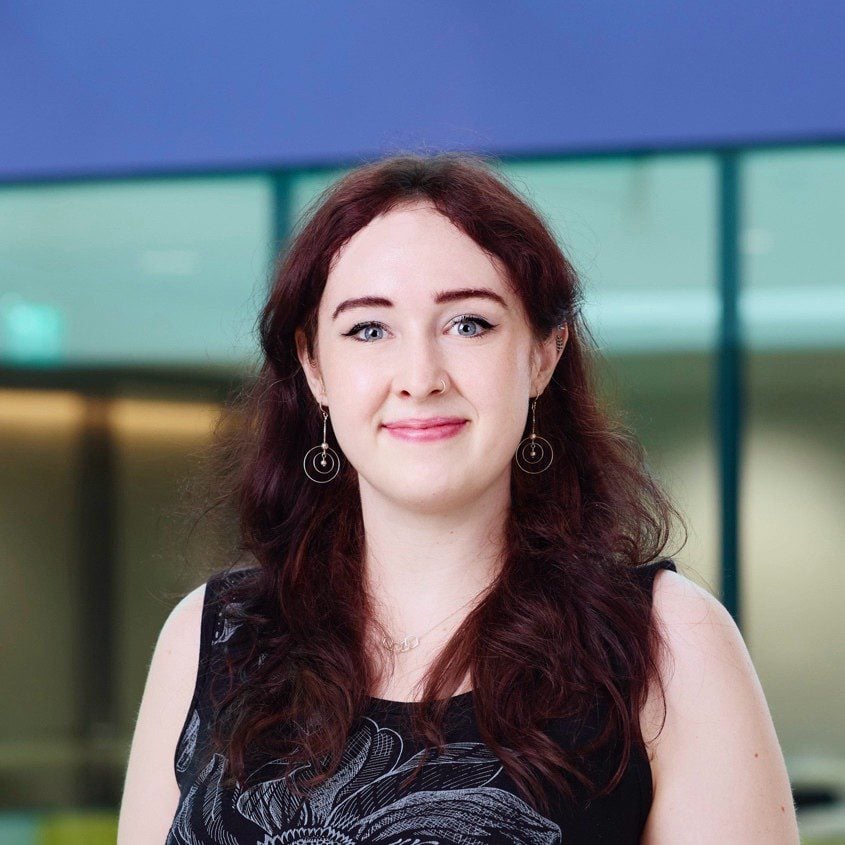
The Journey
My name is Emma Craig, and I am originally from South Africa. I am currently Master’s degree in Computational Biology and Bioinformatics at ETH Zürich, within the Department of Biosystems Science and Engineering (D-BSSE).
I hold a BSc in Chemical Engineering with a focus on biology, which led me to bioinformatics as a way to apply quantitative and computational methods to biological systems. ETH’s program stood out for its strong theoretical training, research focus, and relevance to real-world challenges in healthcare and sustainability.
The ESOP fellowship has made it financially possible for me to study in Switzerland and has given me the freedom to focus fully on my academic and research development. I view this opportunity as both a privilege and a responsibility to pursue impactful research and, ultimately, give back through innovation.
Outside of my studies, I run a small creative business designing digital tattoo artwork, which provides a valuable creative balance to my academic work.
Excellence Scholarship & Opportunity Programme (ESOP) Details
I received my scholarship from the Excellence Scholarship & Opportunity Programme (ESOP) offered by ETH Zürich. This scholarship is given to students pursuing their Master’s degree and amounts to 24 000 CHF per year, together with a tuition waiver, which is more than sufficient to cover all living and study-related costs.
Educational Background
Before beginning my studies at ETH Zürich, I completed a BSc in Chemical Engineering with first-class honours at the University of Cape Town. My undergraduate training focused on bioprocess engineering, which provided me with a strong foundation in biological systems, quantitative analysis, and computational methods, which allowed for a smooth transition into bioinformatics for my Master’s studies.
While the South African grading system does not map directly onto standard GPA scales, my final average was more than 10 percentage points above the threshold for a first-class pass under the UK grading framework. In addition, the scholarship for which I applied requires candidates to be within the top 10% of their academic programme; a criterion I met, as confirmed by one of my lecturers in my letter of recommendation.
How Did You Prepare to Apply to ETH Zürich?
How Did You Find Information About Scholarships and ETH Zürich?
I mainly found information on scholarships and institutions by using university rankings such as the QS and Times Higher Education to identify highly rated institutions for my particular field. I then checked whether these institutions had Master’s programmes in my chosen area of interest and used their webpages to find information on the types of scholarships offered directly by the university. To ensure I had not omitted any potential funding sources, I also consulted online pages like Mastersportal and Scholars4Dev to find scholarship opportunities for international students.
Did You Take Any Standardized Tests? If So, How Did You Prepare for Them?
I tried to avoid programmes that required an English competency test, and so I did not complete the TOEFL or IELTS, but I did complete the GRE (Graduate Record Examinations) as part of my application. The GRE includes three sections: analytical writing, verbal reasoning, and quantitative reasoning. As the timing of writing these tests aligned with a fairly busy period during my studies around submission of my Bachelor’s thesis, I did not have ample time to prepare, but using freely available online practice papers, and 1.5 weeks of preparation, I obtained 170/170 for quantitative reasoning, 164/170 for verbal reasoning and 5.0/6.0 for analytical writing which exceeded the programme requirements.
How Did You Prepare to Apply to the Excellence Scholarship & Opportunity Programme (ESOP)?
For this scholarship, the main application components included my undergraduate transcript, GRE scores, two recommendation letters, and a Master’s thesis pre-proposal. While I ensured that all materials were carefully prepared, I devoted the majority of my time to developing and refining the thesis pre-proposal, as it represents the most substantive and distinguishing part of the application.
My preparation involved identifying research areas that aligned with my academic background and long-term interests, and then narrowing these down to questions that could realistically be addressed within the scope of a semester-long Master’s thesis. I spent considerable time reviewing and synthesizing existing literature to understand the current research landscape, identify meaningful gaps, and determine appropriate methodologies to address my proposed research question. Throughout this process, I focused on balancing scientific ambition with feasibility, ensuring that the proposal was both original and practical.
In parallel, I was intentional about selecting referees who could provide detailed and personalized recommendations, and I shared my academic goals and research interests with them to support strong, tailored letters. Overall, my preparation was guided by the aim of presenting a coherent application in which my academic record, references, and research proposal reinforced one another.
How Does ETH Zürich Support International Students?
Before starting the semester, the university hosted a Zoom session for international students covering relevant topics such as key cultural differences in Switzerland and administrative advice about things such as finding health insurance, public transport, and ETH’s academic culture. This session also gave the opportunity to communicate with previous international students who gave insight into their own experiences. Additionally, ETH has various student organisations and student-run WhatsApp groups for people from various parts of the world as well as a language centre which provides courses on German, Swiss-German, and other languages to help students learn to communicate with locals.
Are Your Classes Conducted in English or German?
My classes are all conducted in English, with some courses having the exam provide both English and German translations for each question.
Would Potential Students Have Any Problems Academically Not Knowing German?
While the most commonly spoken language in Zürich is German, specifically Swiss-German, I have managed to navigate my first semester smoothly with basic German competency (A1). Everyone I have encountered has been able to speak English, and this also applies to most institutions you may contact for any administrative issues. The only potential problem I have experienced is not fully understanding communications on public transport, but I have not yet been negatively impacted by this.
What Do You Think Made Your Application Stand Out?
I had some insight into why my application stood out, as my interviewer noted that my prior scholarships and recommendation letters made my submission particularly noticeable. These awards reflected consistent academic excellence across different stages of my education, including an Entrance Scholarship for engineering, the Vice Chancellor’s Scholarship for performance in an academic Olympiad in my final year of high school, and the Klaus-Jürgen Bathe Scholarship for being among the top performers in the Faculty of Engineering during my undergraduate studies.
In addition, my recommendation letter played a significant role. My undergraduate thesis supervisor provided a highly personal and detailed reference that addressed both my suitability for the scholarship and my fit for the specific degree programme. Because many aspects of an application are inherently impersonal, I believe a strong, tailored recommendation letter can be a key differentiator. Importantly, this does not require a long-term relationship with the referee—I worked with my supervisor for only ten weeks during my thesis, yet they were able to write a compelling and specific endorsement.
What Would You Have Done Differently if You Were Going Through the Process Again?
The ESOP scholarship application window is relatively short and coincides with the submission period for my Bachelor’s thesis. If I were going through the process again, I would start preparing earlier and manage my time more proactively, particularly by completing key components—such as outlining my thesis pre-proposal and identifying referees well in advance of the application window. This would have reduced time pressure and allowed for more focused refinement during the submission period.
What Advice Would You Give Those Looking to Apply for a Similar Scholarship?
For those applying to the ESOP scholarship, the thesis pre-proposal is a critical component, and I would strongly recommend striking a careful balance between ambition and practicality. A strong proposal should identify a clear and meaningful gap in existing research while also outlining a realistic timeline and achievable objectives.
It is also important to align your research topic with ETH Zürich’s mission and strategic focus on societal impact, particularly within its key thematic areas: environment and resources, health and well-being, and responsible digital transformation. Grounding your work in a topic that contributes to addressing real-world challenges can significantly strengthen your application.
In my case, my proposal explored the relationship between gut dysbiosis and HIV pathogenesis in Sub-Saharan Africa, with the aim of developing cost-effective tools to track disease progression through gut-related biomarkers. This allowed me to demonstrate both scientific ambition and clear societal relevance within a feasible research framework.
Want to submit your
scholarship journey?
Submit Your Story Here!
More Scholarship Recipients

Hi! My name is Banu, and I come from Kazakhstan. I was born and raised there, and upon high school graduation, I decided to .... Read more
Hello! My name is Yumna Arif, and I am from Pakistan. I hold a PhD in Business and Management from Warwick Business School, .... Read more

I am Vishnu Vardhan. I hail from the Telangana state of India. I hold a bachelor’s degree in electrical and electronics en .... Read more
Leave A Comment