
Fulbright Scholar, Elishba from Pakistan, Shares Her Journey of Pursuing an MBA at the University of California, Berkeley (Haas School of Business), USA
University: University of California, Berkeley (Haas School of Business), United States
Degree: Master of Business Administration (MBA)
Previous Education: Bachelor’s in Accounting & Finance – Institute of Business Administration (IBA), Pakistan (Top 10% of class)
Scholarship: Fulbright Scholarship – Fully Funded (Covers tuition, living expenses, health insurance, and travel; partial support from UC Berkeley)
Other Offered Scholarships: Partial UC Berkeley Scholarship
Social Media
LinkedIn: linkedin.com/in/elishba-imtiaz/
The Journey
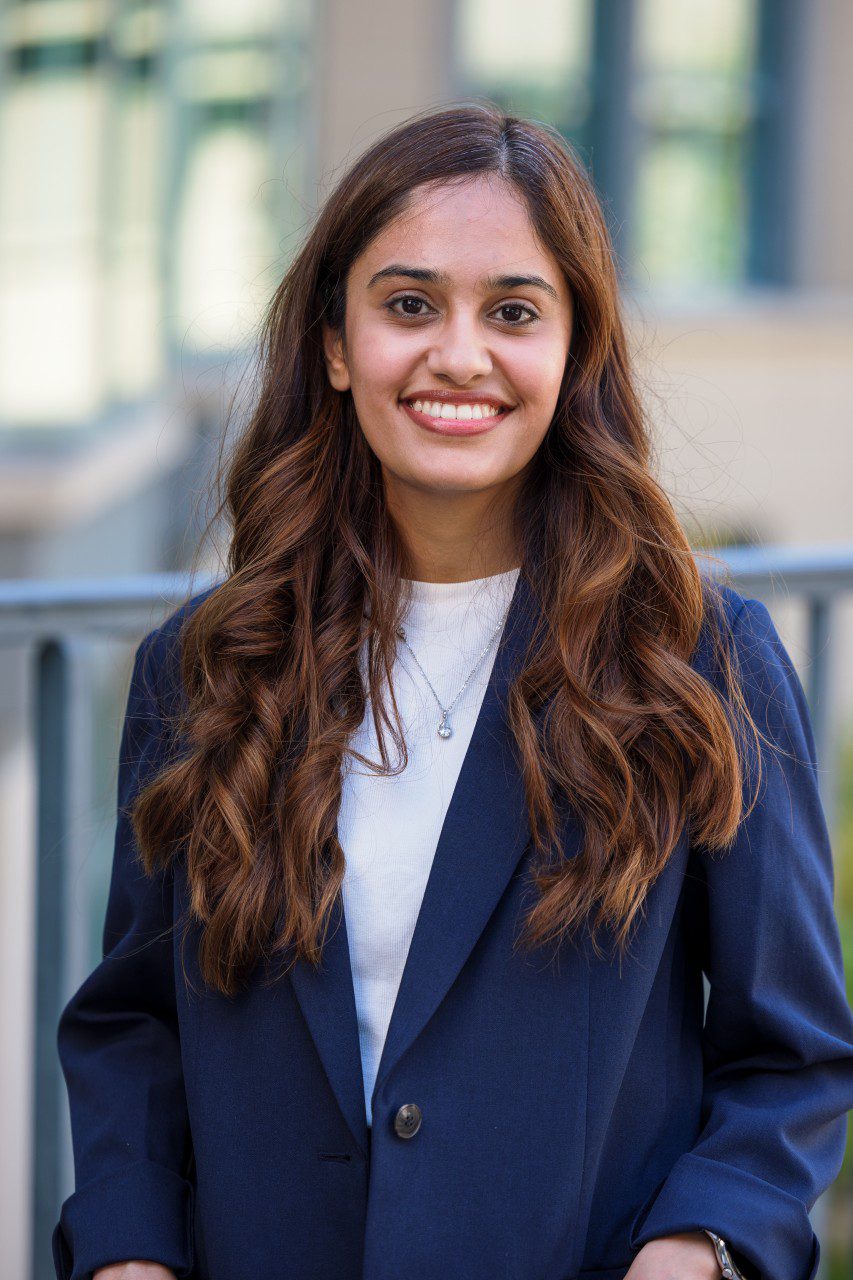
Hi! My name is Elishba, and I’m a Fulbright Scholar from Pakistan currently pursuing my MBA at the University of California, Berkeley (Haas School of Business).
I completed my undergraduate degree in Accounting & Finance at the Institute of Business Administration (IBA), Pakistan. While my academic training was in finance, I was always drawn to technology and spent several years working closely with Pakistan’s startup ecosystem before business school. As I thought about returning to school, I knew I wanted exposure to a more mature tech ecosystem and to mentors who had actually built and scaled products and companies. An MBA at UC Berkeley, right in the heart of Silicon Valley, felt like a very natural next step.
Fulbright Scholarship Details
I was awarded the Fulbright Scholarship, which covers the full cost of attendance, including tuition, living expenses, health insurance, and travel. I also received partial scholarship support from UC Berkeley, but the majority of my funding comes through Fulbright.
Educational Background
I’ve consistently done well academically from O and A Levels through my undergraduate studies, where I graduated in the top 10% of my class at IBA. That said, the MBA application process felt very different from other academic programs I’d applied to before.
Most MBA candidates bring several years of professional experience, which means elements like test scores, letters of recommendation, essays (especially personal narrative and career goals), and overall fit with the school brand play a much larger role alongside academics.
How Did You Find Information About Scholarships and UC Berkeley?
For MBA admissions, I followed the common reach–target–safety framework. Once I had my test scores, I spent a lot of time studying class profiles to understand how my background compared in terms of work experience, undergraduate GPA, and test scores.
Beyond rankings, it is important to pay close attention to employment reports, especially functional placement and geographic placement. For me, it was important to choose schools that consistently place graduates into the kinds of roles and regions I was targeting post-MBA. Rankings matter, but I think many candidates over-optimize for them. In most cases, recruitment outcomes and geography matter more than the school rank alone (with a few obvious exceptions).
Standardized Tests (GRE/GMAT)
I chose to take the GRE instead of the GMAT. Personally, I found the GRE more approachable, even with a quantitative background.
For prep, GregMat was by far the most helpful resource I used. It gave me structure and kept me focused. Manhattan Prep can be useful for brushing up on specific quant gaps, but one thing I learned is that solving extremely difficult problems doesn’t necessarily translate to a higher score. The GRE is really about accuracy and efficiency under time pressure.
I’d also strongly recommend using official ETS practice tests toward the end of your prep; they’re the closest to the real experience. One common mistake I see candidates make is over-studying. I think setting a firm prep window of about two months and booking your test date early helps create strong accountability. If your test day score is lower than your practice scores, it's usually due to nerves, and retaking the test usually results in a higher score once you are more familiar with the test day logistics.
How Did You Prepare to Apply for the Fulbright Scholarship?
I spoke extensively with former Fulbright Scholars from Pakistan who had pursued an MBA in the U.S. Those conversations were incredibly helpful in understanding what the experience actually looks like and helped me ground my essays in reality.
Just as importantly, I spent time understanding Fulbright’s mission, particularly its emphasis on cultural exchange and expanding access to opportunity. I was intentional about showing how I would contribute to that mission during my time in the U.S., both inside and outside the classroom.
What Do You Think Made Your Application Stand Out?
I treated the Fulbright application as fundamentally different from my business school applications. Fulbright places a lot of weight on representation, access, and cultural exchange, whereas MBA programs are focused on building a diverse, high-performing class aligned with their values and school brand.
Being clear about this distinction allowed me to tailor my story thoughtfully instead of trying to reuse the same narrative everywhere.
What Would You Have Done Differently?
If I were to go through the process again, I would start earlier and give myself more time to reflect instead of trying to optimize everything at the last minute. I would also trust my own voice sooner, rather than overthinking what committees might want to hear. One of the biggest lessons for me was realizing that perfection isn’t the goal; clarity and authenticity are. Once I leaned into telling my story honestly, the process felt lighter and far more manageable.
I also wish I had started networking earlier with current students and recent alumni, especially those with similar backgrounds and career paths. Those conversations helped me articulate why certain schools were the right fit, and that level of specificity made a real difference.
Advice for Future Applicants
Many candidates hesitate to apply for Fulbright because of the two-year home residency requirement or the limited control over school placement. It’s important to really understand Fulbright’s mission and make sure it aligns with your long-term goals.
I strongly recommend applying to U.S. schools independently at least six months before applying for Fulbright. Doing so gives you clarity on how your profile is being received, what funding you might secure on your own, and whether Fulbright is the right path. In my case, having prior admits strengthened my placement plan and gave program officers greater confidence in my application.
Finally, applicants from Pakistan and South Asia more broadly often over-index on academics. While academics matter, both Fulbright and U.S. institutions care deeply about personal narrative, clarity of purpose, and impact beyond the classroom.
Want to submit your
scholarship journey?
Submit Your Story Here!
More Scholarship Recipients

My name is Mirza Fareedh Akbar Ali, and I am from Tamil Nadu, India. I am currently pursuing my M.Sc. in Intelligent Manufac .... Read more
Hi, my name is Daris Fajar Ramadan, and I’m from Bogor, Indonesia. I have a background in mechanical engineering, where I .... Read more

I’m Benjamin from Ghana. I have completed a bachelor's in Biological Sciences at Kwame Nkrumah University of Science and T .... Read more
Leave A Comment