
DAAD and BMBF Scholar, Dr. Oluwafemi E. Adeyeri from Nigeria, Shares His Journey of Advancing Climate Research from Africa to Australia
University: Australian National University (Fenner School of Environment and Society), City University of Hong Kong, and University of Abomey-Calavi, Benin
Degree: PhD in Climate Change and Water Resources (University of Abomey-Calavi); PhD in Atmospheric and Environmental Science (City University of Hong Kong)
Previous Education: Bachelor’s in Meteorology – Federal University of Technology, Akure, Nigeria
Scholarship: DAAD Fellowship – Fully Funded (2020–2022); Netherlands Fellowship Programme (NFP) – Fully Funded (2017); BMBF-linked Fellowship – Fully Funded (2016–2019)
Other Offered Scholarships (if any): City University of Hong Kong Postgraduate Studentship (2021–2025); Karlsruhe Institute of Technology Scholarship (Germany); Committee on Space Research Fellowship (Spain); multiple institutional research and state merit awards
Social Media
LinkedIn: linkedin.com/in/adeyeri/
Google Scholar: scholar.google.com/citations?user=agqZGuYAAAAJ&hl=en
The Journey
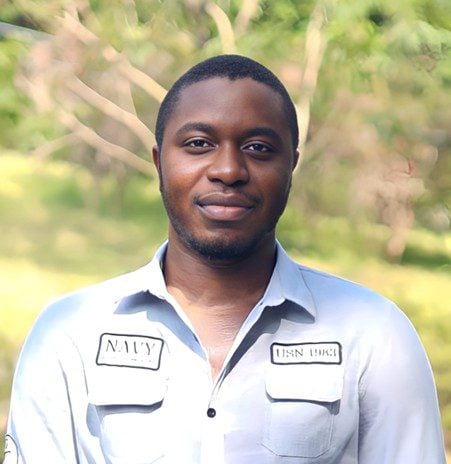
My name is Oluwafemi E. Adeyeri, a Research Fellow in the Centre of Excellence for 21st Century Weather, based at the Fenner School of Environment and Society at the Australian National University. My academic journey began in Nigeria, where I trained in meteorology at the Federal University of Technology, Akure. Curiosity about weather systems, rainfall variability, and climate patterns shaped my early fascination, as it does for many students entering the atmospheric sciences. But quite early on, my interest moved beyond equations and forecasts. I wanted to understand the consequences. What happens when rainfall shifts by just a few weeks? What does a heatwave mean for people who live without stable electricity or a reliable water supply? How does climate variability translate into lived experience?
Those questions stayed with me, and over time, they became the foundation of a research direction that would guide every major decision I made afterward. I became increasingly committed to understanding climate extremes and, just as importantly, to translating that understanding into knowledge that can inform real decisions, particularly in vulnerable regions. The goal was never research for its own sake. It was research that travels, research that reaches policymakers, planners, and communities, and research that helps protect lives and livelihoods.
That commitment led me to pursue my first PhD in Climate Change and Water Resources at the University of Abomey-Calavi in Benin. My work there focused on how climate change and extreme events affect hydrological systems and water availability. This phase of my training anchored my understanding of climate risk in water systems, showing how rainfall extremes, droughts, and changing temperature patterns cascade through rivers, reservoirs, agriculture, and household access. It also taught me something less technical but equally important: doing high-quality research in resource-constrained environments requires discipline, creativity, and collaboration. Later, I pursued a second PhD in Atmospheric and Environmental Science at the City University of Hong Kong. This stage of my journey allowed me to expand my research into heatwaves and compound climate extremes, particularly their effects on thermal comfort, energy demand, and integrated water–energy systems. Across both doctoral experiences, the unifying thread remained the same. Climate science must be useful. It must be legible to decision-making spaces, not only to academic journals. Looking back, it is clear that scholarships did not simply support this journey; they shaped it. If I had to summarize my experience in one sentence, it would be this: each major fellowship arrived at a turning point, and each one pushed my work from solid research toward research with reach.
Scholarships Details
The first major shift came through support from the German Federal Ministry of Education and Research, via a BMBF-linked fellowship that I held from 2016 to 2019. At that stage of my career, funding constraints were not abstract challenges; they were daily limitations. I had the drive and the research questions, but access to computational resources, field support, and sustained funding was limited. The BMBF support changed that entirely. It allowed me to complete my first PhD in a fully funded environment and to deepen my skills in hydroclimate analysis without the constant pressure of financial uncertainty. Beyond the funding itself, the fellowship connected me to a broader ecosystem of German-supported climate and land water research in Africa, including networks such as WASCAL and KIT in Germany. That exposure mattered deeply. It introduced me to shared research standards, cross-country collaboration, and a long-term vision of capacity building. Through this ecosystem, I learned that scholarships are never just financial instruments. They are entry points into communities of practice. They expose you to mentors, collaborators, and expectations that shape how you work long after the funding period ends.
In 2017, I received the Netherlands Fellowship Programme, now known as the Orange Knowledge Programme. This fellowship supported my Diploma in Integrated Water Resources Assessments at the University of Twente. What stood out to me immediately about this program was its philosophy. NFP is explicitly designed around capacity building rather than individual achievement. Funded by the Dutch Ministry of Foreign Affairs, it positions education as a tool for strengthening organizations and professional practice, especially in low and middle-income contexts. That framing influenced how I approached the training. I did not treat the diploma as a certificate to collect but as a set of tools to sharpen. The program strengthened my systems-level thinking, particularly around basin-scale water assessments, stakeholder integration, and decision support frameworks. In practical terms, the support was comprehensive, covering tuition, accommodation, travel, insurance, and a monthly stipend. Intellectually, it reaffirmed a lesson that consistently steers my work: the power of learning lies in its clear connection to practical application.
Were You Offered any Other Scholarships?
The most publicly visible chapter of my scholarship journey came through the DAAD, between 2020 and 2022, including a DAAD Fellowship, a Short Term Research Grant, and digital equipment support. This phase was transformative because it expanded my role from researcher to facilitator. Within the DAAD climapAfrica program, I served not only as a research fellow but also as a group coordinator and resource fellow. In that capacity, I coordinated the Climate Change and Meteorology Working Group, bringing together more than twenty-five scientists across eight African countries. That role fundamentally reshaped how I think about impact. climapAfrica is deliberate in its emphasis on bridging research and real-world use, and its title is not a slogan. In practice, it meant translating climate information into forms that policymakers and practitioners can engage with, building collaboration across institutions, and maintaining relevance to sectors such as health, agriculture, disaster risk reduction, energy, and water resources. Leading the working group required scientific credibility, but also coordination, communication, and empathy. It required listening across disciplines and contexts and finding common ground between research outputs and policy needs.
This period felt like a complete cycle in many ways. Early scholarships helped me become a stronger researcher under guidance and support. Later scholarships gave me a platform to strengthen others through mentorship, networks, and shared outputs. That progression remains one of the most meaningful outcomes of my scholarship experience. Alongside these major fellowships, I also received several additional competitive awards, including a City University of Hong Kong Postgraduate Studentship from 2021 to 2025, as well as multiple institutional research tuition scholarships like the Karlsruhe Institute of Technology Scholarship (Germany) and project-specific research funding like the Committee on Space on Research Fellowship (Spain). These layers of support helped sustain my work across transitions and allowed me to remain focused during critical stages of training and early career development.
Early academic recognition also mattered more than I realized at the time. Receiving state scholarships for outstanding undergraduate performance and being consistently ranked among the top students in my department reinforced the value of sustained effort. It taught me that excellence compounds, especially when competing for global opportunities from contexts where access is limited.
How Did You Prepare to Apply to Institutions?
When applying to institutions, I approached the process the same way I approach research. I started with the question, then looked for the best environment to answer it. I paid close attention to program fit, supervisory expertise, and methodological alignment, particularly in areas such as hydrological and climate modeling, remote sensing, big data analysis, and emerging AI applications. Rather than relying on informal advice alone, I studied official program materials carefully. Funding schemes are explicit about what they value, and reading closely helped me align my goals with their intent. The same approach guided my scholarship applications. I treated each one as a distinct process, not a recycled template. While the core narrative remained consistent, the emphasis changed. For BMBF-linked opportunities, I focused on scientific rigor and long-term capacity building. For NFP, I aligned strongly with the program’s focus on professional and organizational impact. For DAAD climapAfrica, I highlighted leadership, coordination, and the ability to move knowledge across disciplines and borders.
What Do You Think Made Your Application Stand Out?
If I had to identify what made my applications stand out, it would be clarity and coherence. I had a clear research identity focused on hydroclimate extremes and compound risks. I had evidence of execution through publications and collaborative work. And I demonstrated engagement beyond my research, particularly through leadership roles that connected science to users.
What Would You Have Done Differently if You Were Going Through the Process Again?
If I were starting again, I would begin even earlier with a structured scholarship calendar and a well-organized document system. Many strong applications fail for simple reasons: missed deadlines, delayed referees, or rushed writing. I would also spend more time upfront identifying each program’s hidden criteria, the values they reward beyond grades, such as capacity building, policy relevance, and long-term community impact.
What Advice Would You Give Those Looking to Apply for a Similar Scholarship?
For anyone aiming for DAAD, NFP, or BMBF-supported pathways, my advice is straightforward. Take program goals seriously. Write in a way that shows your work travels beyond you. Demonstrate how your research connects to people, institutions, and decisions. And do not wait until you feel perfectly ready. Read, draft, ask questions, reach out to mentors, and refine your narrative until it sounds like you. Your story is not just what you have done. It is the logic that connects it all.
Want to submit your
scholarship journey?
Submit Your Story Here!
More Scholarship Recipients
Hi! My name is Davi Augusto Mattoso, and I am originally from Brazil. I have a Bachelor's in Chemistry from the Federal Univ .... Read more
Hello, my name is Manasi, and I am from India. I completed my Bachelor’s degree in Civil Engineering from Dr. Babasaheb Am .... Read more
Hi, I am Malik Nauman Rauf, currently a Master's in Aerospace Engineering student and a Fulbright Scholar at Georgia Institu .... Read more
Leave A Comment