
Melbourne Research Scholarship Recipient, Dr. Maxine Chan from the Philippines, Shares Her Journey of Pursuing a PhD in Engineering and IT at the University of Melbourne, Australia
University: University of Melbourne, Australia
Degree: PhD in Engineering and Information Technology
Previous Education: Master’s in Energy Engineering – University of the Philippines || Bachelor’s in Industrial Engineering (Cum Laude) – University of the Philippines (GPA equivalent: 3.2/4.0)
Scholarship: Melbourne Research Scholarship – Fully Funded (Full tuition for 4 years, annual stipend of ~AUD 35,000 for 3.5 years, adjusted for inflation)
Social Media
LinkedIn: linkedin.com/in/maxineychan/
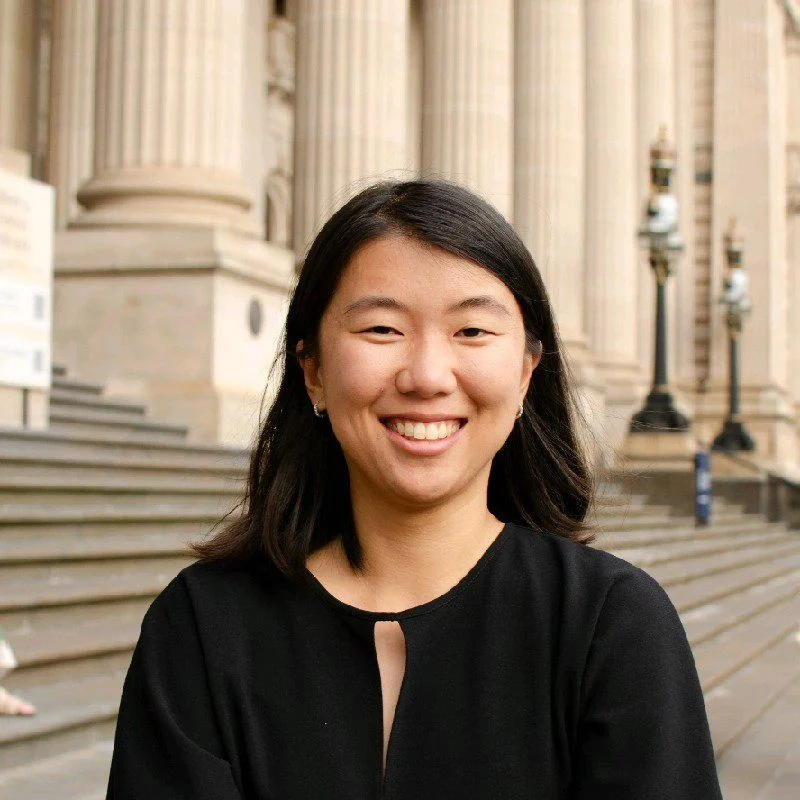
The Journey
I am Maxine Chan, Ph.D, a climate modelling consultant currently based in Melbourne, Australia. My research focus is on climate policy modelling, building decarbonisation, and energy and low-carbon strategies. I am originally from the Philippines, with a background in Energy Engineering, and after 2.5 years of working in green building consulting in Manila, I was keen on expanding my knowledge in the field. I chose to then pursue a doctoral degree in Engineering and IT at the University of Melbourne (UniMelb) because I had a good experience doing research with my supervisor there when he supported my master's work in the Philippines. Knowing that it was a good opportunity to expand my horizons and learn from a prestigious university with a well-rounded international cohort, I then decided to do a PhD.
Melbourne Research Scholarship Details
The scholarship that I was able to receive was the Melbourne Research Scholarship, which provided me with full tuition for 4 years and an accompanying stipend for 3.5 years (roughly around AUD$35,000 per year, and would increase yearly based on inflation). This scholarship is provided by the University of Melbourne, from which around 600 of these are issued yearly.
Educational Background
I have a Master's degree in Energy Engineering and a Bachelor's degree from Industrial Engineering, both from the University of the Philippines (UP). I was able to get a cum laude standing during my bachelor's, with roughly a 3.2 GPA (converted since we use a different grading system in UP). My background in Industrial Engineering has helped me develop technical problem-solving skills through a big picture thinking lens, while Energy Engineering has helped me hone such skills towards the energy industry, as well as energy efficiency and emissions reduction strategies.
How Did You Prepare to Apply to the University of Melbourne?
How Did You Find Information About the Melbourne Research Scholarship and the University of Melbourne?
Personally, I was already familiar with the UniMelb scholarship because of my supervisor, and I just looked for scholarships around Victoria, Australia, considering universities such as RMIT and Monash. For a more integrated database, I would suggest the GradMAP Philippines scholarship database, which compiles graduate research scholarship opportunities from around the world.
Did You Take Any Standardized Tests? If So, How Did You Prepare for Them?
I actually only took the Pearson Test of English (PTE), and I prepared for that using YouTube tutorials.
How Did You Prepare to Apply to the Melbourne Research Scholarship?
Every university in Australia requires different things. For Unimelb, I just needed a 600-word abstract for a research proposal apart from standard documents such as previous diplomas and transcripts, but for other universities, the proposal development was more formal, requiring a 4-5 page draft with a timeline.
What Do You Think Made Your Application Stand Out?
I believe that aside from a good proposal, I have already established a good working relationship with my supervisor during my master's days, which helped make my application more attractive to the decision body. Aside from this, I have had some publications from my master's work, even though not in Q1 journals, which I think gave my application an extra edge.
What Would You Have Done Differently if You Were Going Through the Process Again?
I don’t think that I would do anything in the process differently; however, I would have tried to apply for scholarships overseas earlier, especially with more and more opportunities and databases available now as compared to before.
What Advice Would You Give Those Looking to Apply for a Similar Scholarship?
I would say if you want to pursue a PhD, talk to professors first before applying. Get a feel of potential supervisors first, since you will be working with them a lot during the program.
Want to submit your
scholarship journey?
Submit Your Story Here!
More Scholarship Recipients

My name is Nick Peoples, and I am currently an Emergency Medicine resident physician in Boston. I was born and raised in .... Read more

My name is Hajiyev Sarkhan, and I am from Shemkir, Azerbaijan. My academic journey has been shaped by a strong belief that e .... Read more
My name is Nainsi Chauhan, and I am from Mumbai, India. I was born into an economically weak family and raised in an orthodo .... Read more
Leave A Comment