
Master's Thesis Researcher Derin Wilson from India Shares His Journey of Studying Astroparticle Physics at the Erlangen Centre for Astroparticle Physics, Germany
University: Erlangen Centre for Astroparticle Physics (ECAP), Germany
Degree: Master’s Thesis in Astroparticle Physics (as part of BS-MS dual degree)
Previous Education: BS-MS (Dual Degree) in Physics, Indian Institute of Science Education and Research (IISER), Bhopal, India
Scholarship: Research Scholarship at ECAP – Funded
Social Media
LinkedIn: linkedin.com/in/derin-wilson-7b99ab1b3/
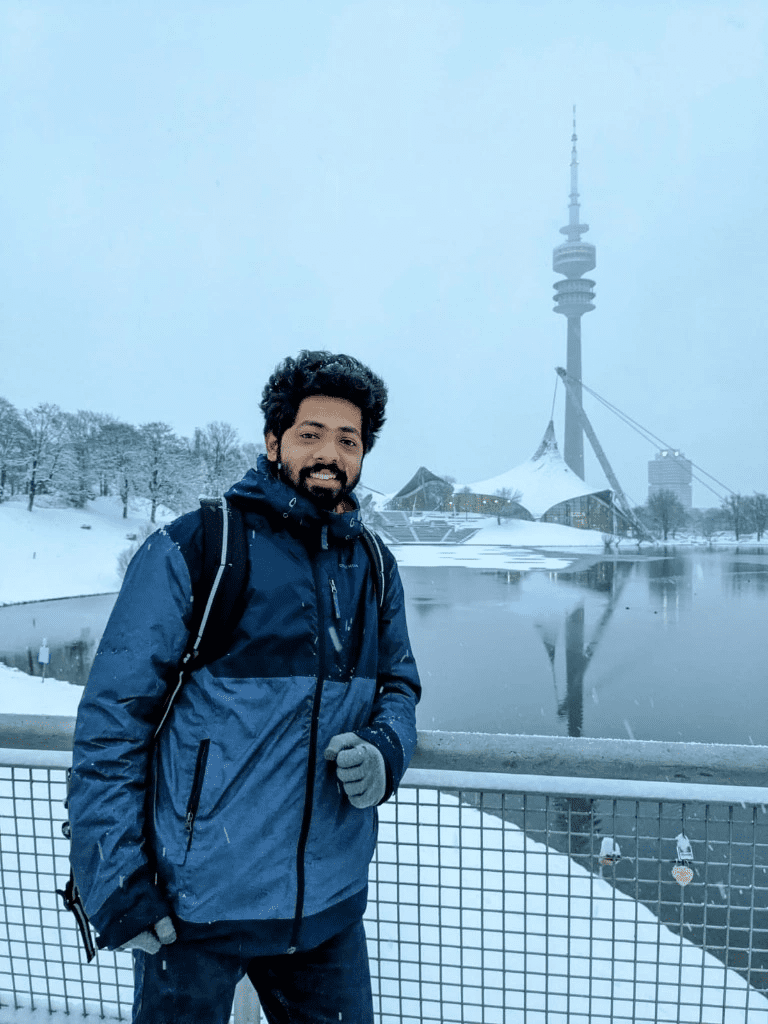
The Journey
My name is Derin Wilson, and I am from Calicut, Kerala, India. I completed a five–year BS–MS dual degree in Physics from the Indian Institute of Science Education and Research, Bhopal, where I developed a strong foundation in theoretical and experimental physics. Throughout the program, I was particularly drawn to areas of physics that combine mathematical reasoning with real-world scientific exploration.
As part of the final year of the BS–MS program, students are required to complete a Master’s thesis, which provides an opportunity to conduct independent research. Interested in gaining international research exposure and working in a specialized area of astrophysics, I chose to pursue my thesis at the Erlangen Centre for
Astroparticle Physics (ECAP) in Germany. I was fortunate to receive a scholarship that supported my research there.
Working at ECAP allowed me to experience an international research environment, collaborate with researchers, and engage with advanced topics in astroparticle physics. The experience was both academically enriching and personally transformative, as it exposed me to new perspectives in scientific research and strengthened my analytical and problem-solving skills.
Educational Background
I was pursuing a five-year BS–MS dual degree in Physics at the Indian Institute of Science Education and Research, Bhopal. During the first four years of the program, I had the opportunity to participate in several internships, research projects, and summer schools related to astronomy and data science. These experiences allowed me to develop a strong foundation in scientific research, computational methods, and data analysis. Working on different projects also helped me gain exposure to real research problems and strengthened my interest in astrophysics and data-driven scientific inquiry. This academic and research background helped prepare me to become a suitable candidate for undertaking my Master’s thesis project at the Erlangen Centre for Astroparticle Physics
How Did You Prepare to Apply to the Institution?
During one of the summer schools I attended, I met a researcher who was pursuing her PhD at the Erlangen Centre for Astroparticle Physics. Through our conversations, she informed me about potential opportunities for international students to carry out their Master’s thesis at the institute. This motivated me to explore the possibility further.
I began by carefully going through the institute’s website to understand the different research groups and the areas they were working on. I identified a research group whose work aligned with my interests in astrophysics and data analysis. I also reviewed the various thesis projects that were being offered to understand the scope of the research and the required background.
After identifying a suitable project, I prepared a concise email introducing myself, describing my academic background at the Indian Institute of Science Education and Research, Bhopal, and expressing my interest in the research work being carried out by the group. I also attached my CV and academic transcript. This outreach eventually led to further discussions with the supervisor and the opportunity to pursue my Master’s thesis at ECAP.
What Drew You to Choose This Country to Pursue Your Degree?
One of the main reasons I chose Germany to pursue my thesis was the strong reputation of the research group I was interested in at the Erlangen Centre for Astroparticle Physics. The group is well known for its contributions to astroparticle physics and for working on cutting-edge scientific problems.
Another important factor was the collaborative research environment. Institutes in Germany often work closely with international research collaborations, which provide students with the opportunity to interact with researchers from different institutions and countries. This kind of exposure is extremely valuable for someone interested in pursuing research.
Additionally, the availability of advanced research infrastructure and strong funding support make Germany an attractive destination for scientific research. Access to high-quality computational resources, laboratories, and funding opportunities enables students to work on ambitious projects and focus fully on their research. These factors together made Germany an ideal place for me to pursue my Master’s thesis.
What Were Some of the Challenges You Faced as an International Student, Particularly Regarding Living Costs or Part-time Work Opportunities?
I had funding, no issues. The research group was also friendly
Looking Back, Would You Recommend Studying Here for International Students Seeking Affordable Higher Education? Why or Why Not?
Yes
Would Potential Students Have Any Problems Academically, Not Knowing German?
Not much. Everyone in my group spoke English. It’s good to have basic German for day-to-day activities like grocery shopping.
Want to submit your
scholarship journey?
Submit Your Story Here!
More Scholarship Recipients

My name is Moses Besa. I was born and raised in a disadvantaged community called Chibolya in Mufulira, a small mining town i .... Read more
My name is Faiza Waseem Khan, and I was born and raised in Pakistan. My passion for education goes all the way back to the u .... Read more
I still remember the moment I left home for the first time. A suitcase in one hand, uncertainty in the other. I didn� .... Read more
- Bachelor's Scholarships
- Bangladeshi Nationality
- Biological Sciences
- Biomedical Science
- Fully Funded Scholarships
- India
- Indian Council for Cultural Relations (ICCR) Scholarships
- Japan
- Master's Scholarships
- MEXT Scholarship
- Osaka University
- Ph.D. Scholarships
- Pharmaceutical Sciences
- Shimane University
- University of Delhi
Leave A Comment