
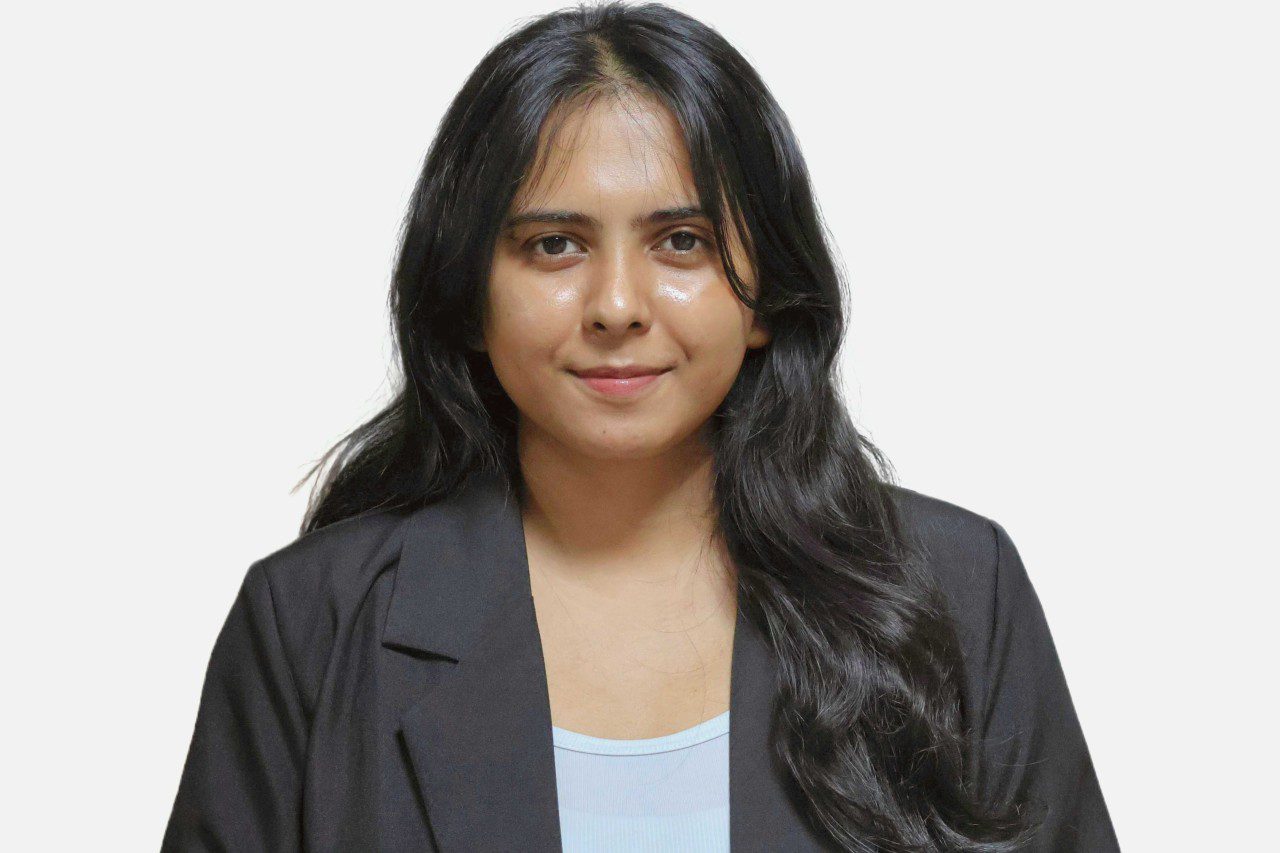
Global Korea Scholarship PhD Student Chaitali Bhattacharyya from India Shares Her Journey of Studying Electrical Engineering at POSTECH, South Korea
University: Yeungnam University, South Korea (MSc) / POSTECH, South Korea (PhD)
Degree: MSc (Yeungnam University) → PhD in Electrical Engineering – Large Language Models (POSTECH)
Previous Education:
– BTech in Electronics and Instrumentation Engineering, Narula Institute of Technology, Kolkata, India – GPA 8.50/10
Scholarship: Global Korea Scholarship (GKS) – Fully Funded (tuition, 1,000,000 KRW/month stipend, research funding, round-trip airfare)
Other Offered Scholarships: Government-funded institutional PhD Scholarship, DGIST – Full tuition waiver + monthly stipend
Social Media
LinkedIn: linkedin.com/in/chaitaliynu/
The Journey
My name is Chaitali Bhattacharyya, and I am from India. I am currently pursuing my Ph.D. in the Department of Electrical Engineering at POSTECH, South Korea, where my research focuses on Large Language Models (LLMs). Basically, I work on finding ways to train these huge language models efficiently with a much smaller dataset and in much less time. With the current rapid growth in AI, we already have good/smart enough models. The actual problems are power, memory, and time efficiency. So, we see these new, smaller but smarter models every now and then.
Global Korea Scholarship Details
I was awarded the Global Korea Scholarship (GKS) for my Master’s program at Yeungnam University in 2021. Under this scholarship, I received a monthly stipend of 1,000,000 KRW, research funding each semester, full tuition coverage, and a one-time round-trip airfare from my home country to South Korea. One of the important things to note is that after getting this scholarship, one needs to study the Korean Language for 1 year and get the required TOPIK level.
Were You Offered any Other Scholarships?
After completing my degree at Yeungnam University, I was awarded a government-funded scholarship for my Ph.D. program in the EECS Department at DGIST. At DGIST, all accepted Ph.D. students receive a full tuition waiver along with a monthly stipend as part of the institutional scholarship support.
Educational Background
I completed my B. Tech in Electronics and Instrumentation Engineering from Narula Institute of Technology, Kolkata, with a GPA of 8.50/10. During my undergraduate studies, I explored multiple research areas, including geoscience and robotics, before developing a strong interest in Artificial Intelligence. In my third year, coursework and faculty mentorship led me to focus on AI, where I found strong alignment with my interest in solving meaningful, real-world problems rather than pursuing research for publication alone. This foundation motivated me to pursue higher studies, and I am currently continuing my research in AI and its application domains.
How Did You Prepare to Apply to Yeungnam University?
How Did You Find Information About Global Korea Scholarship and Yeungnam University?
I got information about it in studyinkorea website while surfing the internet, searching for fully funded scholarships
Did You Take Any Standardized Tests? If So, How Did You Prepare for Them?
I did not really have any of those. My education was fully in English, and documents supporting that are enough for this. And these tests are not mandatory for the GKS scholarship in particular. However, one will need TOEFL/IELTS to apply for other scholarships/graduate admission in Korea.
How Did You Prepare to Apply to the Global Korea Scholarship?
The most important step was carefully reading the guidelines and fully understanding the eligibility criteria. Meeting the eligibility requirements is the minimum qualification, so I focused on strengthening my profile by publishing research papers, completing internships, participating in national-level project competitions, taking extra certified courses, and organizing hackathons to build a strong CV. For the written components, I prepared my Statement of Purpose and Personal Statement to clearly align with my current research interests and long-term academic goals.
I organized all required documents at least one month before the deadline, reviewed everything carefully, and submitted the application well in advance. For the interview, I thoroughly reviewed my essays and ensured I could confidently explain every point I had mentioned.
Are Your Classes Conducted in English or Korean?
It depends on the course. During course registration, students can choose between classes conducted in English or Korean.
What Did You Pursue After the Scholarship? (Work, Further Study, Research, or Something Else?)
I joined POSTECH for a Ph.D. program and am currently conducting research in Artificial Intelligence.
Would Potential Students Have Any Problems Academically Not Knowing Korean?
Yes, non-native speakers may initially face some challenges adjusting to the academic system and daily environment. They might miss certain details at first. However, with basic language skills and support programs such as those provided by GKS, students can adapt relatively well over time.
What Do You Think Made Your Application Stand Out?
It was not primarily my GPA, as GPA often serves as a cutoff criterion, and mine was not among the top. I believe my published research work and projects that were strongly aligned with my intended research area, combined with focused essays, made my application competitive.
What Would You Have Done Differently if You Were Going Through the Process Again?
Looking back, I would approach the process in largely the same way.
What Advice Would You Give Those Looking to Apply for a Similar Scholarship?
- Read the guidelines again and again to understand what this particular scholarship focuses on.
- Professors are very important in graduate programs in STEM, so choosing an advisor whose research really interests you is very important.
- Students in STEM should try to be active in research even as undergrads.
- Preparing documents at the last moment is not a good idea, no matter how well one is prepared. GKS like scholarship is very strict with documents.
- Grades do matter, but not more than the overall profile of the applicant.
- Try to be alert to the scholarship notifications/portals.
- For GKS, choosing a university is very important.
There are multiple scholarship paths. If someone is not selected for GKS, they can consider professor-funded scholarships or university-based scholarships such as those offered by institutions like DGIST. Contacting professors whose research aligns with your interests can strengthen your chances, but it is important to first verify whether the university allows prior contact. Additionally, avoid mass emailing. Personalized and well-prepared communication is essential.
Want to submit your
scholarship journey?
Submit Your Story Here!
More Scholarship Recipients

My name is Moses Besa. I was born and raised in a disadvantaged community called Chibolya in Mufulira, a small mining town i .... Read more
My name is Faiza Waseem Khan, and I was born and raised in Pakistan. My passion for education goes all the way back to the u .... Read more

I still remember the moment I left home for the first time. A suitcase in one hand, uncertainty in the other. I didn� .... Read more
- Bachelor's Scholarships
- Bangladeshi Nationality
- Biological Sciences
- Biomedical Science
- Fully Funded Scholarships
- India
- Indian Council for Cultural Relations (ICCR) Scholarships
- Japan
- Master's Scholarships
- MEXT Scholarship
- Osaka University
- Ph.D. Scholarships
- Pharmaceutical Sciences
- Shimane University
- University of Delhi
Leave A Comment