
Ph.D. Gene Therapy Student Ceren Sahin from Turkey Shares Her Journey of Studying at the University of Alicante, Spain
University: University of Alicante, Spain (MSCA RETORNA Doctoral Network)
Degree: PhD in Gene Therapy (CRISPR-based Therapy for Retinal Hereditary Dystrophy)
Previous Education: Master’s in Molecular Biotechnology and Bioinformatics – University of Milan Statale, Italy; Bachelor’s in Biology, Chemistry, and Science of Terrain (BCST) – Paris-Saclay University, France
Scholarship: Marie Skłodowska-Curie Actions (MSCA) Doctoral Fellowship – RETORNA Project (HORIZON-MSCA-2021-DN-01, Project No. 101073316) – Fully Funded (Salary, Mobility, Research & Training Budget)
Social Media
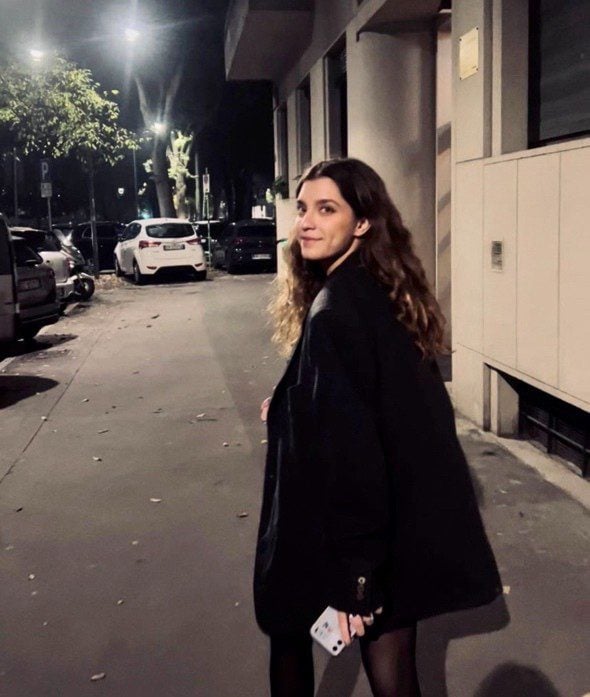
The Journey
My name is Ceren Sahin, and I am originally from Izmir, Turkey. I am currently a PhD Candidate at the University of Alicante in Spain, where I am part of the Marie Sklodowska-Curie Actions (MSCA) RETORNA doctoral network. My research focuses on developing CRISPR-based gene therapy for retinal hereditary dystrophy, using animal models.
My journey into gene therapy began during my very first internship in Turkey, at the Genetic Diagnosis Center in Izmir, where I worked with patient samples and genetic diagnostic tests. That early exposure to the power of genetics in medicine ignited a passion in me that only grew stronger over time. My master's thesis at San Raffaele Hospital in Milan, where I used CRISPR-Cas9 technology to tag and study a specific histone gene expressed in brain cells during embryonic development, confirmed that this was the field I wanted to dedicate my career to. Pursuing a PhD was the natural next step, an opportunity to contribute meaningfully to finding treatments for diseases that currently have no cure.
Marie Sklodowska-Curie Actions Doctoral Fellowship Details
I am the recipient of a Marie Sklodowska-Curie Actions (MSCA) doctoral fellowship through the RETORNA project (Project Number: 101073316, HORIZON-MSCA-2021-DN-01), funded by the European Research Executive Agency under the EU's Horizon Europe programme. The total EU contribution to the RETORNA network is EUR 2,568,425.56, supporting 10 doctoral candidates across institutions in Spain, Ireland, the Netherlands, Germany, Italy, and Turkey. My fellowship is hosted at the University of Alicante, Spain. The RETORNA project runs from February 2023 to January 2027 (48 months).
Educational Background
I completed my Bachelor's Degree in Biology, Chemistry, and Science of Terrain (BCST) at Paris-Saclay University in Paris, France (2016-2019). Studying in France gave me an internationally oriented scientific foundation and strengthened my ability to work and communicate across cultures, skills that proved essential throughout my career.
I then pursued a Master's Degree in Molecular Biotechnology and Bioinformatics at the University of Milan Statale in Milan, Italy (2021-2023). This program deepened my expertise in omics approaches, data analysis, and cutting-edge molecular techniques. My master's thesis at San Raffaele Hospital was a turning point: I worked with CRISPR-Cas9 to study a specific histone gene expressed in brain cells during embryonic development, research directly relevant to my PhD and to gene therapy more broadly.
Between my degrees, I also worked for two years as a Research Technician at the Biomedicine and Genome Center in Izmir, Turkey (2019-2021), where I explored the role of histone variants in epithelial-mesenchymal transition. This professional research experience set me apart from many other applicants.
How Did You Prepare to Apply to the University of Alicante?
How Did You Find Information About the Marie Sklodowska-Curie Actions Doctoral Fellowship and the University of Alicante?
I first heard about the MSCA program through word of mouth from colleagues and peers in the research community. I then turned to the EURAXESS website (euraxess.ec.europa.eu), which is the official European portal for researcher mobility. It is an excellent resource for finding funded doctoral and postdoctoral positions across Europe, and I would strongly recommend it to anyone seeking research-based scholarships in the EU.
Did You Take Any Standardized Tests?
Yes, I took the IELTS (International English Language Testing System) exam to demonstrate my English proficiency. To prepare, I worked with a private English teacher who specialized specifically in IELTS exam preparation. Having a teacher focused on the format and requirements of the exam was very effective, and I would recommend this approach to anyone planning to take a language proficiency test.
How Did You Prepare to Apply to the Marie Sklodowska-Curie Actions Doctoral Fellowship?
My application strategy was proactive and systematic. I regularly monitored available projects, and each time I found one that seemed like a strong match for my expertise and interests, I reached out directly by email. I kept a template email ready so that I could personalize and send applications efficiently. In addition to the initial outreach, I prepared a presentation about my past experiences and research projects to present myself to potential supervisors and selection committees. This combination of consistent monitoring, targeted applications, and a well-prepared personal presentation was key to my success.
How Does the University of Alicante Support International Students?
The University of Alicante is very welcoming to international students and researchers. There is a dedicated international students department that provides support and guidance. At the PhD level, courses and academic instruction are also available in English, which makes the transition much easier for researchers coming from non-Spanish-speaking countries.
Would Students Have Problems Not Knowing Spanish?
Spain is one of the most welcoming and friendly countries in Europe, and Alicante is no exception. While learning Spanish will certainly enrich your experience personally and socially, and I would encourage it as part of your journey, I do not think it would be an academic barrier at the PhD level. English is used sufficiently in academic and research settings to allow international students to thrive. That said, picking up some Spanish will make day-to-day life much more enjoyable and help you integrate into the local community.
What Do You Think Made Your Application Stand Out?
I believe several factors contributed to making my application competitive for a Marie Curie fellowship. First, my hands-on CRISPR-Cas9 experience from my master's thesis was directly relevant to the RETORNA project's focus on gene therapy and retinal disease. Second, my international research background, having studied and worked in Turkey, France, and Italy, demonstrates adaptability and a track record of thriving in diverse research environments, which is exactly what MSCA fellowships are designed to support. Finally, my multilingual profile (fluent in Turkish, French, and English, with intermediate Spanish and beginner Italian) showed both my capacity for international collaboration and my commitment to integrating into different academic cultures. The combination of relevant technical skills, international experience, and language abilities made for a strong overall application.
What Would You Have Done Differently?
If I were going through the process again, I would be more selective about which projects I applied to. In my eagerness to find a position, I sometimes applied to projects that were not the best match for my specific expertise and interests. Investing more time upfront to carefully evaluate the fit between a project's goals and my own background, rather than applying broadly, would have made the process more focused and efficient. Quality over quantity is a lesson I would pass on to anyone starting this journey.
What Advice Would You Give to Potential Applicants?
The most important thing is not to lose motivation. The search for the right fellowship can take time, and rejection is part of the process. Focus on finding the project that truly fits your expertise and your personal research interests; do not just apply to anything available. When you find the right project, your genuine enthusiasm will come through in your application and interviews. Be persistent, stay organized, and trust that if you keep looking, you will find the right opportunity. In the end, you will land on the best project for your own path.
Want to submit your
scholarship journey?
Submit Your Story Here!
More Scholarship Recipients
My name is Calvin Rock. I’m a passionate writer of poetry, flash fiction, and, occasionally, commentaries. Professionally, .... Read more
Hi! My name is Oumaima Latrech, a Moroccan currently residing in South Korea. I am a recent alumna of the Global Korea Schol .... Read more
My name is Odion Judith Uzamere, and I am from Nigeria. I have a background in public health and a strong passion for improv .... Read more
Leave A Comment