
Marie Skłodowska-Curie Actions (MSCA) Doctoral Network Fellow Arawa from Italy Shares Her Journey of Pursuing a PhD in AI-Based Neuroimaging Biomarkers for Parkinson’s Disease at the University of Pisa and GE Healthcare
University: University of Pisa, Italy
Degree: PhD in AI-based Neuroimaging Biomarkers for Parkinson’s Disease (Marie Skłodowska-Curie Doctoral Network)
Previous Education: BSc in Psychology and Neuroscience – Maastricht University; MSc in Artificial Intelligence (Research) – Radboud University / Donders Institute, cum laude; MSc in Cognitive Neuroscience (Research) – Radboud University / Donders Institute, cum laude
Scholarship: Marie Skłodowska-Curie Actions (MSCA) Doctoral Network Fellowship – Fully Funded (Horizon Europe). Includes a salary of approximately €3,500/month, mobility and family allowances, and a research budget of ~€1,600/month. The fellowship also includes an 18-month secondment at GE Healthcare, Germany.
Social Media
LinkedIn: inkedin.com/in/arawa-kolossa/
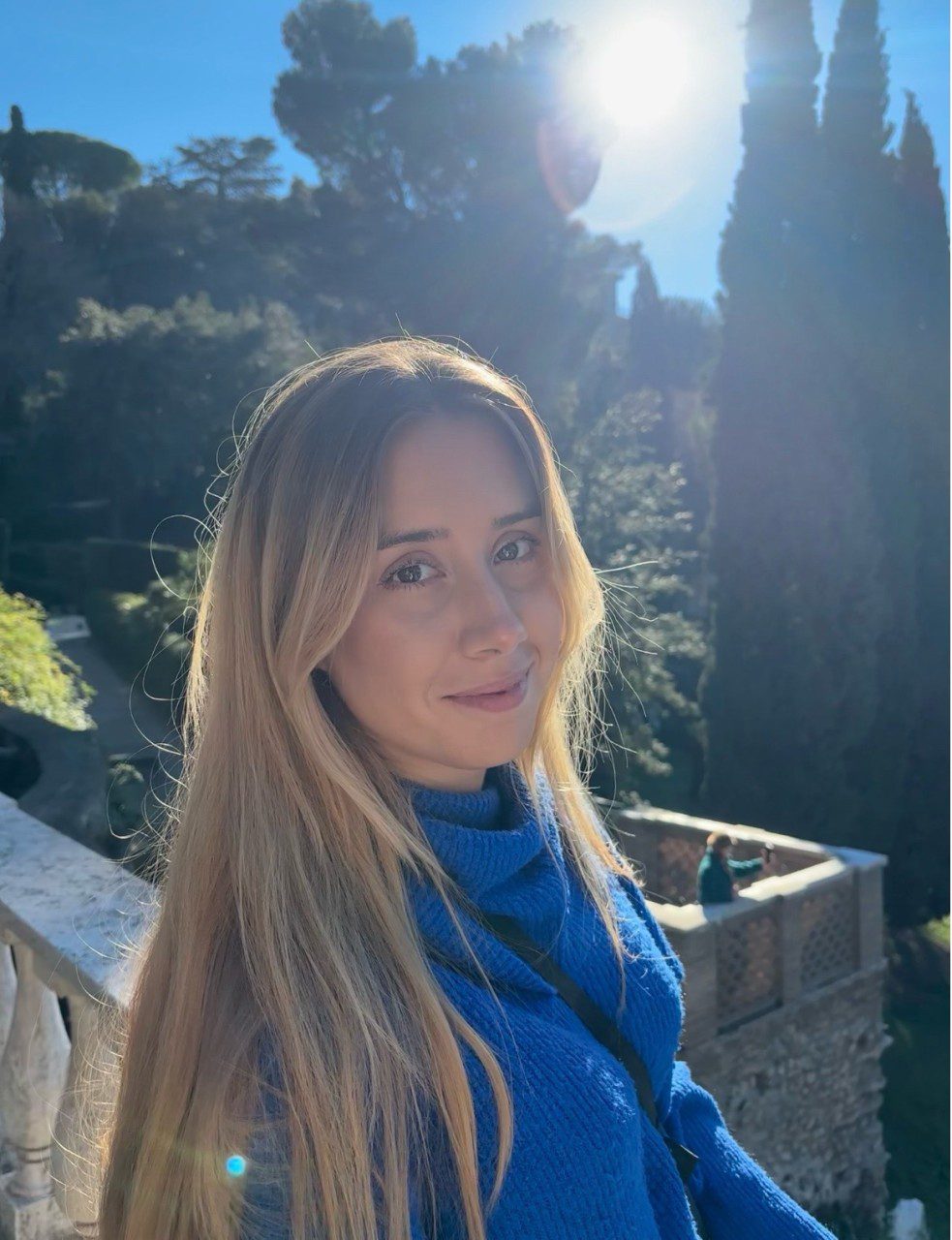
The Journey
Hi! My name is Arawa. I’m a Marie Skłodowska-Curie PhD researcher working on AI-based neuroimaging biomarkers for Parkinson’s disease and related synucleinopathies. My PhD is hosted at the University of Pisa (Italy) with an 18-month secondment at GE Healthcare (Germany). I’m originally from Rome, and I completed a bachelor’s degree in Psychology and Neuroscience at Maastricht University, followed by two research master’s degrees at Radboud University / Donders Institute in Artificial Intelligence and Cognitive Neuroscience. My academic trajectory sits at the intersection of neuroscience, neuroimaging, and machine learning, which made this project a strong conceptual fit.
Marie Skłodowska-Curie Actions (MSCA) Doctoral Network Fellowship Details
I received a Marie Skłodowska-Curie Actions (MSCA) Doctoral Network Fellowship funded under Horizon Europe.
- Host institution: University of Pisa, Italy
- PhD enrolment: University of Pisa
- Start date: October 2025
- Duration: 36 months
- Secondment: GE Healthcare, Germany (18 months)
- Salary: ~€3,500 gross/month (including mobility allowance; increases yearly)
- Family allowance: +€600/month (if applicable)
- Research budget: ~€1,600/month (laptops, conferences, training, travel, etc.)
Educational Background
- BSc in Psychology and Neuroscience, Maastricht University
- MSc in Artificial Intelligence (Research), Radboud University / Donders Institute — cum laude
- MSc in Cognitive Neuroscience (Research), Radboud University / Donders Institute — cum laude
My education combined experimental neuroscience, MRI methods, statistics, and machine learning. The research master’s programs in particular trained me in independent project design, reproducible research practices, and computational modeling, which directly prepared me for interdisciplinary clinical AI research.
How Did You Prepare to Apply to the University of Pisa?
I started looking over calls a year in advance, as the most competitive PhDs usually close applications 12/6 months in advance.
How Did You Find Information About Scholarships and Institutions?
I mainly used:
- EURAXESS job portal
- Research group and consortium websites
- LinkedIn and Twitter/X posts from supervisors
- Academic mailing lists
MSCA PhDs are advertised as research jobs rather than traditional doctoral admissions, so I approached them accordingly.
Did You Take Any Standardized Tests?
No. All my degrees were taught in English in the Netherlands, which satisfied language requirements. When I started my bachelor's, I had to prove a C1; I used IELTS.
How Did You Prepare to Apply to the Marie Skłodowska-Curie Actions (MSCA) Doctoral Network Fellowship?
My preparation focused on three dimensions:
1. Scientific fit: I studied the project design in detail, including the use of 7T and 3T MRI, the focus on prodromal and atypical Parkinsonism, and the integration of explainable AI. I aligned my technical skills in neuroimaging analysis and machine learning directly with these aims.
2. Research maturity: I emphasized thesis projects, coding pipelines, preregistration, and applied modeling experience rather than coursework alone.
3. Narrative coherence: I framed my background as a progression from experimental neuroscience → neuroimaging → AI/ML for clinical prediction, showing why this project was the logical next step.
I also contacted supervisors before applying with focused technical questions about datasets, modeling approaches, and clinical endpoints, which strengthened my application.
How Is (Was) Your Experience at the University of Pisa?
Very positive. The University of Pisa provides strong clinical neuroimaging expertise and access to ultra-high-field MRI, while GE Healthcare offers exposure to industrial-scale MRI pipelines, regulatory standards, and translational deployment constraints.
How Do You Rate the University of Pisa Academically and Why?
High. Pisa has internationally recognized expertise in movement disorders imaging, and GE Healthcare provides real-world infrastructure for validating and deploying clinical AI beyond proof-of-concept models.
How Does the University of Pisa Support International Students?
MSCA funds network-wide training schools, transferable-skills courses, and structured cohort interactions.
Are Your Classes Conducted in English or Italian?
All in English.
Would Students Have Academic Problems Without Knowing Italian?
I wouldn’t know in Italy because I speak Italian. As for German, while it helps with daily life, work is fully in English.
What Do You Think Made Your Application Stand Out?
1. Strong methodological alignment: My background in MRI analysis, neuroscience, and machine learning mapped directly onto the project’s imaging and modeling aims.
2. Research depth: I demonstrated independent research capacity through thesis work, reproducible pipelines, and applied ML projects.
3. Clear project-specific motivation: I showed why this exact project, especially combining ultra-high-field MRI with explainable AI — was the right next step, not just a PhD in general.
What Would You Have Done Differently If You Were Going Through the Process Again?
Not much!
What Advice Would You Give Those Looking to Apply for a Similar Scholarship?
- Treat MSCA PhDs as research jobs, not university admissions.
- Build methodological depth in both domain science and computation.
- Contact supervisors with project-specific technical questions.
- Learn how MSCA evaluation criteria work (mobility, interdisciplinarity, training quality, career development).
- Apply broadly and BE PERSISTENT; outcomes depend on more than academic strength alone.
Want to submit your
scholarship journey?
Submit Your Story Here!
More Scholarship Recipients

My name is Oisereme Abulu, a Nigerian student currently pursuing an MSc in Sustainable Aquaculture at the University of Stir .... Read more
My name is Mona Perlingeiro, and I am from São Paulo, Brazil. São Paulo is the Brazilian city with the largest number of m .... Read more
I am Ludmille Lyvert, and I am from Haiti. I hold a master’s degree in Women’s Studies, and I am currently a Ph.D. stude .... Read more
Leave A Comment