
UK Research and Innovation (UKRI)-Funded PhD Studentship Recipient, Ahsan Ali from Pakistan, Shares His Journey of Pursuing a PhD in Photonics at the University of Southampton, United Kingdom
University: University of Southampton, United Kingdom
Degree: PhD in Photonics (Focus on Point-of-Care Diagnostics) – Optoelectronics Research Centre (ORC)
Previous Education: M.Phil. in Biotechnology – Pakistan Institute of Engineering and Applied Sciences (PIEAS), Islamabad (CGPA: 3.88/4.00) – B.Sc. in Biotechnology – Quaid-i-Azam University, Islamabad (CGPA: 3.80/4.00)
Scholarship: UK Research and Innovation (UKRI)-Funded PhD Studentship – Fully Funded (International tuition, 3.5-year stipend, and Research & Training Support Grant)
Social Media
LinkedIn: linkedin.com/in/ahsan-ali-406400139/
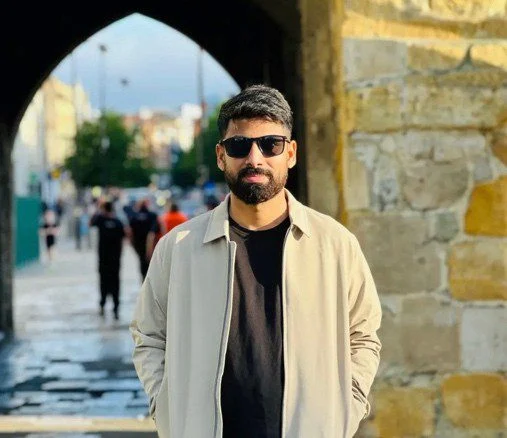
The Journey
Hi, I am Ahsan Ali from Pakistan, where I have completed my Bachelor's in Biotechnology from Quaid-i-Azam University, Islamabad, and M.Phil. in Biotechnology from Pakistan Institute of Engineering and Applied Sciences(PIEAS), Islamabad, Pakistan. My master's research was focused on the development of paper based diagnostic platform for point-of-care detection of plant viruses.
I’m currently pursuing a PhD in Photonics (with a focus on point-of-care diagnostics) at the Optoelectronics Research Centre (ORC), University of Southampton (UK). I chose this PhD because the project is genuinely interdisciplinary and aligns closely with my long-term goal: developing rapid, affordable, and deployable diagnostics for biomedical applications. ORC was a clear choice because it’s described by the University as the largest academic photonics research centre in the UK and one of the world’s leading photonics centres, with a scale of facilities and expertise that supports translational research.
In addition, the University of Southampton is a founding member of the Russell Group (the UK’s research-intensive universities) and is listed as a global top 100 university in the QS World University Rankings, which reflects the strength of the wider research environment supporting my PhD.
UK Research and Innovation (UKRI)-Funded PhD Studentship Details
I was awarded a UK Research and Innovation (UKRI)-funded PhD studentship at the University of Southampton.
The studentship:
- covers my international tuition fees for 4 years
- provides a stipend for 3.5 years at the UKRI rate
- includes a Research & Training Support Grant to support conferences, training courses, and workshops.
Educational Background
Bachelor's in Biotechnology
Quaid-i-Azam University, Islamabad, Pakistan
CGPA: 3.80/4.0
Internship: National Institute of Health (NIH), Pakistan, where I gained hands-on experience in molecular and serological diagnostics for viruses.
Masters of Philosophy in Biotechnology
Pakistan Institute of Engineering and Applied Sciences, Islamabad, Pakistan
CGPA: 3.88/4.0
Research Project: Development of paper-based diagnostic platforms for the detection of plant viruses.
How Did You Prepare to Apply to the University of Southampton?
How Did You Find Information About Scholarships and the University of Southampton?
I used a combination of:
- University websites (especially department pages and funded PhD project listings),
scholarship databases and social media pages
- For UK research-project PhDs specifically, FindAPhD, which was the most practical platform for identifying funded, supervisor-led projects aligned with my background.
- A key lesson was that project-based PhD applications are less about “ranking” and more about fit + supervisor interest + a credible plan to contribute.
Did You Take Any Standardized Tests? If So, How Did You Prepare for Them?
Yes, I have taken IELTS as it is a necessary requirement for a PhD, and I have an overall 7.5 band Score. For preparation, I just used the resources that the British Council provides for test preparation, and they were quite comprehensive. I just prepared for two weeks before my using those resources.
How Did You Prepare to Apply to the UK Research and Innovation (UKRI)-Funded PhD Studentship?
For UKRI-type studentships tied to a specific project, my strategy was:
- Shortlist projects that matched my research history and genuine interests (not just anything funded).
- Carefully review the eligibility criteria, deadline, and required documents early, so nothing is rushed.
- Contact potential supervisors before submitting, briefly, professionally, and with purpose:
- Why the project fits my background,
- what I can contribute immediately, and
- 1–2 thoughtful questions that show I understand the work.
- Prepare and refine the application package: CV, Statement of Purpose, transcripts, and recommendation letters.
- Review everything multiple times to ensure the application tells one coherent story: problem → my evidence of ability → why this lab/project → why now.
How is (was) Your Experience at the University of Southampton?
So far, my experience has been very positive. The research environment is supportive, and I’ve found the administrative systems and supervision structure to be clear and international-student-friendly.
What Do You Think Made Your Application Stand Out?
- I believe the most important factor was research fit. My previous work in paper-based diagnostics aligned closely with the aims of the funded project, so my application looked like a continuation with growth, not a random shift.
- In addition, I think the following strengthened my profile:
- Strong academic performance,
- IELTS 7.5,
- strong recommendation letters that supported my research potential, and
- a project-focused Statement of Purpose that showed clarity: what I want to build, why the approach is realistic, and why I’m ready.
- At ORC, competition is high, and receiving UKRI funding as an international student is especially competitive, so demonstrating that I could contribute effectively from early in the PhD mattered.
What Would You Have Done Differently if You Were Going Through the Process Again?
Overall, I wouldn’t drastically change my process. What helped most was spending time understanding the project deeply and ensuring my application communicated that clearly. If I were to improve anything, I would start even earlier so I could:
- spend more time iterating on the SoP for a sharper structure, and
- Get additional feedback on my CV and statement from people familiar with UK PhD expectations.
What Advice Would You Give Those Looking to Apply for a Similar Scholarship?
- Get clarity before you apply. If you can’t explain (in simple words) why this project, why this lab, and why you, your application will sound generic.
- Be specific and evidence-based. Don’t just say you’re "passionate", show it through your past work and what you learned from it.
- Avoid generic applications. Tailor the CV and SoP to the project. Match your experience to the project tasks.
- Give yourself more time than you expect. Strong applications take multiple rounds of editing.
- Stay persistent. Treat the process as learning; each application improves the next.
Want to submit your
scholarship journey?
Submit Your Story Here!
More Scholarship Recipients

My name is Hajiyev Sarkhan, and I am from Shemkir, Azerbaijan. My academic journey has been shaped by a strong belief that e .... Read more

My name is Nainsi Chauhan, and I am from Mumbai, India. I was born into an economically weak family and raised in an orthodo .... Read more
My name is Swaleha J. Khowaja, and I am from Karachi, Pakistan. I am currently pursuing the MSc in Global Mental Health, a j .... Read more
Leave A Comment