
Ph.D. Structural Biology and Drug Innovation Researcher Aaron from Ireland Shares His Journey of Studying at Università del Piemonte Orientale, Italy
University: Università del Piemonte Orientale, Italy (PROSTAMET MSCA Consortium)
Degree: PhD in Structural Biology and Drug Innovation (Marie Skłodowska-Curie Actions Doctoral Network)
Previous Education: BSc in Biochemistry – University of Limerick, Ireland; MSc in Bioprocessing – University of Limerick, Ireland
Scholarship: Marie Skłodowska-Curie Actions (MSCA) Doctoral Network Fellowship – Funded under Horizon Europe (Salary ~€3,500 gross/month incl. mobility allowance; €600/month family allowance if applicable; International Secondments in Belgium)
Social Media
LinkedIn: linkedin.com/in/aarondmadden/
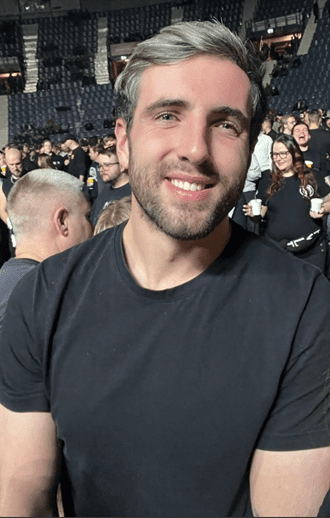
The Journey
Hi! My name is Aaron, and I am a Marie Skłodowska-Curie PhD researcher working in Structural Biology and Drug Innovation, focusing on protein cancer targets involved in prostate cancer and lipid metabolism. This project is hosted by Università del Piemonte Orientale and forms part of the PROSTAMET MSCA Consortium, which aims to develop strategies to prevent prostate cancer progression driven by lipid metabolism, through approaches including epigenetics, biomarker discovery, and drug innovation.
I will carry out 33 months of my PhD at my host university, with a 2-month secondment at the University of Namur and KU Leuven in Belgium. I am originally from Ireland, where I completed both my bachelor’s and master’s degrees in Biochemistry and Bioprocessing at the University of Limerick.
Following my studies, I worked for three years in several roles, including clinical diagnostics research and development, teaching assistance in biological sciences at the University of Limerick, and as a structural biology technician at the VIB-VUB Centre for Structural Biology in Brussels. My passion for learning and scientific research ultimately led me to this MSCA project, where I can contribute to developing new solutions for prostate cancer.
Marie Skłodowska-Curie Actions (MSCA) Doctoral Network Fellowship Details
I received a Marie Skłodowska-Curie Actions (MSCA) Doctoral Network Fellowship funded under Horizon Europe. My host institute is Università del Piemonte Orientale. My start date was November 2024, and I will complete my PhD program in November 2027. I have 2 secondments, which are both in Belgium with the University of Namur and KU Leuven for 1 month each. My salary is ~€3,500 gross/month (including mobility allowance; increases yearly) with a family allowance of €600/month (if applicable).
Educational Background
I hold a Bachelor of Science (BSc) in Biochemistry and a Master of Science (MSc) in Bioprocessing from the University of Limerick.
My academic training provided a strong foundation in core biochemical techniques and a solid understanding of therapeutic production processes. In addition to my studies, I gained over three years of professional experience across three distinct roles, which significantly strengthened my profile and ultimately supported my successful application for an MSCA PhD position. These roles included working as a Research and Development Scientist in immunoassay-based clinical diagnostics, serving as a Teaching Assistant in the Department of Biological Sciences at the University of Limerick, and contributing as a Research Analyst at the VIB-VUB Center for Structural Biology.
How Did You Prepare to Apply to Università del Piemonte Orientale?
I began applying for PhD positions approximately one year before securing my current role. During this time, I attended multiple interviews for various PhD and Marie Skłodowska-Curie (MSCA) positions. When I was offered this position, I accepted immediately, recognising the highly competitive nature of MSCA-funded opportunities.
To identify suitable openings, I regularly used EURAXESS and Scholarshipdb.net to search for advertised PhD and research positions. I also monitored academic job postings on LinkedIn, particularly from lecturers and research groups aligned with my interests. In addition, I proactively contacted principal investigators whose work closely matched my expertise, enquiring about potential vacancies within their laboratories.
I did not take any standardised test for English since I’m a native speaker.
How Did You Prepare to Apply to the Marie Skłodowska-Curie Actions (MSCA) Doctoral Network Fellowship?
I thoroughly researched the scientific field related to the PhD position prior to applying. I carefully reviewed previously published papers by the prospective supervisor to better understand the direction, methodology, and impact of their work. I then tailored my CV and application to directly address the key requirements and focus areas outlined in the job posting.
In preparation for interviews, I expanded my reading beyond the immediate scope of the project, exploring closely related topics to ensure I could confidently discuss the broader scientific context and respond effectively to potential follow-up or in-depth questions.
How is (was) Your Experience at Università del Piemonte Orientale?
My experience so far has been moderate but highly valuable. The level of knowledge and technical expertise within the university is impressive, and the collaborative environment significantly enhances the quality and scope of the research. However, like many academic institutions, there are certain challenges, particularly regarding securing consistent funding, which can impact long-term project planning and resource availability.
How Do You Rate Università del Piemonte Orientale Academically and Why?
My experience has been moderate overall. The university is still relatively young, but it is steadily expanding its research capacity and advancing each year. With continued development, investment, and growing expertise, it has strong potential to become an excellent and highly recognised institution in the future.
How Does Università del Piemonte Orientale Support International Students?
The university offers free Italian language classes, which is a valuable initiative for international students. However, there is still room for improvement in terms of broader support and integration. Many PhD meetings and communications from university representatives are conducted primarily in Italian, which can place non-Italian speakers at a disadvantage. As a result, important information may only become clear months after it has been announced, which can be both frustrating and professionally limiting.
Are Your Classes Conducted in English or Italian?
PhD courses are delivered either in Italian or in English, depending largely on the individual professor’s preference. This lack of consistency can create challenges for international students. If a course is conducted in Italian and you do not speak the language, it becomes difficult to fully engage with the material.
Would Potential Students Have Any Problems Academically Not Knowing Italian?
Yes, since many classes and meetings are conducted in the native language, not knowing it prior to enrolment makes the transition significantly more challenging. Although I am currently learning the language, balancing language acquisition alongside the demands of a PhD adds an additional layer of stress. Managing research responsibilities, coursework, and administrative requirements is already demanding, and doing so while trying to achieve functional proficiency in a new language can be particularly challenging.
What Do You Think Made Your Application Stand Out?
I believe that my professional experience, combined with my strong motivation to continuously develop my scientific knowledge and skills, helped my application stand out. Relocating abroad in pursuit of research opportunities is never an easy decision, as it requires both personal and professional sacrifice. However, when I left Ireland to move to Belgium to further my scientific training, it demonstrated my independence, adaptability, and commitment to advancing my career in science.
During this period, I noticed a clear difference in my PhD applications: I was invited to significantly more interviews across multiple institutions. This experience abroad strengthened my profile and highlighted my willingness to step outside my comfort zone to grow as a researcher.
What Would You Have Done Differently if You Were Going Through the Process Again?
If I were to do it again, I would spend more time researching both the university and the city to better understand the availability of international opportunities and the community. The city is relatively small, and as a result, there are fewer international residents, which is reflected within the laboratory environment as well. While I personally find this manageable and even enriching in some ways, others might feel isolated or find it challenging to integrate without a strong international network.
What Advice Would You Give Those Looking to Apply for a Similar Scholarship?
An MSCA application should be approached as a professional job application and treated with the same level of preparation and strategy. Contacting potential supervisors in advance demonstrates initiative, genuine interest, and a clear commitment to pursuing a career in science. This proactive approach can help you stand out before the formal evaluation process even begins.
It is essential to prepare a strong CV, both in terms of scientific experience and overall presentation. Supervisors often receive hundreds of applications for each MSCA position, so clarity, structure, and impact are crucial. Highlight your key skills, achievements, mobility, and research independence in a concise and compelling way.
Persistence is equally important. Rejection is a normal part of the process, and most candidates face multiple setbacks before receiving an offer. Rather than viewing rejection as failure, treat it as part of the journey and an opportunity to refine your application and interview skills.
Most importantly, maintain your enthusiasm. Science is fundamentally about exploring the unknown and discovering something new. Let that curiosity and passion come through clearly in your application and interviews. Enthusiasm can be just as powerful as technical expertise.
Want to submit your
scholarship journey?
Submit Your Story Here!
More Scholarship Recipients
My name is Hajiyev Sarkhan, and I am from Shemkir, Azerbaijan. My academic journey has been shaped by a strong belief that e .... Read more
My name is Nainsi Chauhan, and I am from Mumbai, India. I was born into an economically weak family and raised in an orthodo .... Read more
My name is Swaleha J. Khowaja, and I am from Karachi, Pakistan. I am currently pursuing the MSc in Global Mental Health, a j .... Read more
Leave A Comment