
Nagoya University Scholarships for International Students 2027
Nagoya University offers access to scholarships that can reduce tuition burden and sometimes support additional costs. Below are top options prioritized by funding level.
When reviewing university scholarships connected to Nagoya University, these are often the first awards worth checking due to the typical scale of support. Global 30 Undergraduate Scholarship is a fully funded award, and the listed benefits often include payment of tuition for 4 years, reimbursement of registration fee through monthly installments, and annual stipend of JPY500,000 for living costs for 4 years.
If you are building a wider scholarship strategy for Nagoya University, external and government programs can be important additions. Here are a few to consider. Japanese Government (MEXT) Scholarship is fully funded, and coverage often includes tuition fees, ¥143,000 to ¥145,000 per month for research students, and ¥117,000 for undergraduate students. ADB–Japan Scholarship Program is fully funded and typically covers full tuition fees, monthly allowance and accommodation, and books and instructional materials.
For more opportunities beyond these highlights, explore the scholarship listings below on this page.
Nagoya University Scholarships for International Students
The scholarships at Nagoya University can help fund your study expenses. There are currently 4 scholarships being offered to international students at the Nagoya University, all with varying requirements, benefits, and application processes. We have compiled them in this list to help you find the scholarship that best fits you.
Undergraduate Scholarships
External Scholarships
There are many degrees that are open to international students right now — find yours.
Nagoya University Admissions
Here are the official admission pages for Nagoya University:
| Degree | Admissions Pages |
|---|---|
| Bachelor's | International Students Admissions Page |
| Master's | International Students Admissions Page |
Nagoya University Application Deadlines
| Degree | Admission Deadline |
|---|---|
| Bachelor's (First Round) | November 19, 2026 |
| Bachelor's (Second Round) | January 19, 2027 |
| Master's (First Round) | January 14, 2026 |
| Master's (Second Round) | May 21, 2026 |
Tuition Fees at Nagoya University for International Students
Indicative annual tuition fee ranges for international students at Nagoya University. Exact fees vary by program, so always confirm the current cost on the university's official tuition fee pages.
| Degree Level | Typical Annual Range |
|---|---|
| Bachelor's Tuition | 535,800 Yen |
| Master's Tuition | 535,800 Yen |
Please note that tuition fees can vary based on the specific program you choose. For the most accurate and current fee information, consult the official tuition fee pages linked above.
Nagoya University Scholarship Recipients
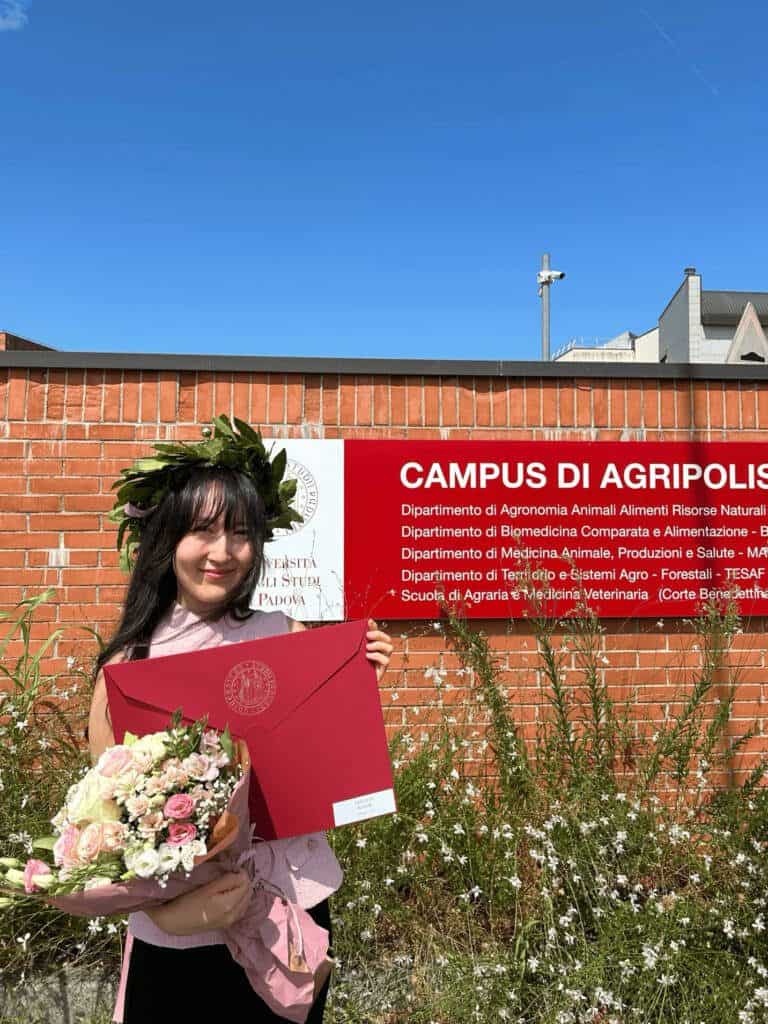
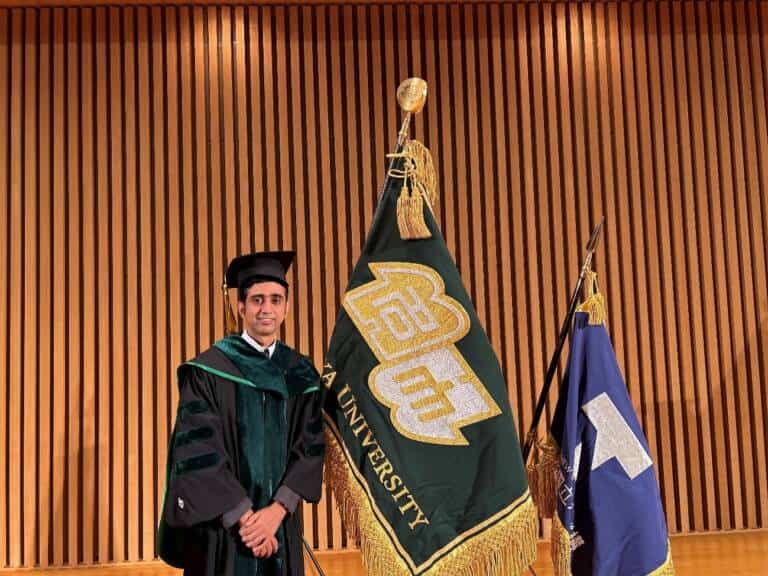
International students who received scholarships to study at Nagoya University, documented by Global Scholarships.


What Scholarship Recipients Say
Advice and insights from international students who successfully secured funding to study at Nagoya University.
"For my bachelor’s degree, I received Nagoya University’s G30 Undergraduate Scholarship, which covered my full tuition for four years and provided an annual stipend of 500,000 JPY."
"The advice that I would give to those looking to apply for MEXT under a university-recommended program is to align your research proposal with the previous or ongoing research of the professors at different universities in Japan."
"I chose Biological Sciences as a major for my Bachelor’s and got accepted into Nagoya University in Japan, which offered me a fully-funded scholarship as well as a monthly stipend to complete my studies."
"This scholarship was especially helpful during my first year, as it eased my transition and supported my adjustment to life in Japan."
"I am studying in their G30 Program, which is all taught in English (no Japanese proficiency required!)."
"I also had the opportunity to intern in various research groups (I completed 7 internship projects!) during my studies (also during holidays), which equipped me with many useful skills in different research settings from wet labs to dry ones, from marine biology to bioinformatics."
Frequently asked questions
Common questions about scholarships, admissions, and studying at Nagoya University.
Most major scholarships connected to Nagoya University (such as G30 admission scholarships, tuition waivers, JASSO, and MEXT) are designed for degree-seeking students who matriculate and study as enrolled students, so they generally don’t work as “online-course-only” scholarships.
Both. Nagoya University has selective G30 International Programs taught entirely in English (and Japanese is not required for admission), and it also has regular degree programs taught in Japanese (which require high Japanese proficiency). This matches what scholarship recipients describe too: Jillian Abigail Sutrisno said, “I am studying in their G30 Program, which is all taught in English (no Japanese proficiency required!).” If you want Japanese-taught options, plan for JLPT-level proficiency; if you want English-taught, focus on the G30 track and English requirements.
It depends on the scholarship. Many university/internal scholarships focus more on enrollment status and academic merit than age, but major government scholarships (especially MEXT) do have age rules that change by category (undergraduate vs. research/graduate). In the recipient stories, ages vary by scholarship type: Jillian noted she was “18 years old” when starting her MEXT-funded undergraduate program, while Muhammad Abdullah pursued a MEXT-funded PhD after completing a bachelor’s degree, a master’s degree, and work experience.
Scholarships cover a wide range of subjects because they usually follow your degree program (not a narrow subject list). You’ll find scholarships across STEM and engineering (e.g., chemical engineering/biotech and civil/structural engineering), business/economics, humanities and social sciences, and also medicine-related graduate fields. For real examples: Jillian studied Chemical Engineering and Biotechnology on MEXT; Muhammad completed a PhD in Structural Engineering on MEXT; and Indranil Enkhtuvshin received the Nagoya University G30 Undergraduate Scholarship while majoring in Japan-in-Asia Cultural Studies (humanities). For medicine: Nagoya University has English-taught G30 graduate options like Medical Science and Public Health, while some medicine-related programs are largely conducted in Japanese; international students can be eligible depending on the specific program and scholarship rules, but language requirements can be the deciding factor.
For admissions into English-taught G30 programs, Nagoya University explicitly welcomes applicants “from any nationality,” and scholarships linked to these programs are commonly aimed at international students. However, some scholarships (especially MEXT) require you to hold the nationality of a country that has diplomatic relations with Japan (and generally exclude Japanese passport holders). Recipient examples show the variety: Jillian (Indonesia), Muhammad (Pakistan), and Indranil (Mongolia) all received scholarships connected to Nagoya University.
For English-taught G30 degree programs, an English proficiency test is required for most applicants (TOEFL/IELTS/Duolingo are commonly accepted), though exemptions may apply if you studied in English for multiple years. For Japanese-taught degree programs, Japanese proficiency (often around JLPT N1) is typically required. Scholarships may follow these same requirements, but some scholarship routes can be more flexible: Muhammad said that for his MEXT route “there is no compulsion to have IELTS, TOEFL, or GRE. You can use an English proficiency certificate from your last institute, and it works.”
Many programs don’t publish a single universal “minimum GPA,” but admissions and scholarships are competitive and rely heavily on your academic record, documents, and fit. In the recipient stories, successful applicants often had strong academics: Jillian reported “My average marks in high school are 95.4%,” and Muhammad reported a bachelor’s CGPA of 3.438/4.0 and a master’s CGPA of 3.408/4.0. Also note that some scholarships have continuation rules: Jillian shared that her scholarship “requires a minimum GPA of 2.3 out of 3 to maintain the scholarship.”
A strong academic background usually means (1) solid grades, (2) clear alignment between your interests and the program, and (3) proof you can thrive in the language of instruction. Scholarship recipients also emphasize “fit” and purpose: Indranil said, “I concentrated on developing my research trajectory and writing a strong letter of motivation,” and he advised narrowing your focus (especially for humanities) to show direction. For research degrees, Muhammad explained that his edge was that his “graduate study research work aligned with the ongoing research work of a Professor in Nagoya University.” For undergrad/STEM, Jillian highlighted strong subject performance (e.g., very high Math/Chem/Physics marks) and consistent preparation.
Document requirements depend on the program, but for undergraduate and graduate applications, common items include your online application, proof of graduation (or expected graduation), academic transcripts, English proficiency evidence (when required), and a reference letter submitted by your referee. Some programs also ask for essays (for example, Indranil noted that when applying for humanities, “they asked me to submit two essays.”). Recipient experiences line up with this: Jillian said she prepared “school transcripts, standardized tests, recommendation letters, and certificates,” and Muhammad emphasized preparing “all the documents and research proposals very carefully” for MEXT.
Yes, many admissions routes have an application fee. For example, the G30 undergraduate online application lists an application fee of JPY 5,000. However, some scholarships may offset this: on the scholarship side, Nagoya University’s scholarship information notes that MEXT can cover costs including the application fee, and recipients describe this in real terms. For instance, Jillian said MEXT “covers full tuition, registration fee, application fee, plane tickets, and provides a monthly stipend.”
There are many degrees that are open to international students right now — find yours.
About the Author: Hyun Lee


Hi, my name is Fazliddin and I’m from Uzbekistan. I want to study at Nagoya university. I have 5.5 IELTS. Since this year I will graduate school, I wanna study at autumn semester.
Hello, please see the Nagoya University Admissions Section for the application procedure. IELTS 5.5 is considered to be a low score, so I recommend raising your IELTS score as well as having additional tests such as SAT/ACT to boost your application.
Hi, my name is Muzaffarxon and I’m from Uzbekistan too. I’m 11 grader now and I have 6.5 IELTS. Can I apply Nagoya’s scholarship?
Hello, Nagoya University does offer Global 30 Undergraduate Scholarships for undergraduate students. You can apply, but I recommend getting your IELTS to 7.5 or higher and also take SAT or ACT to boost your chances.
Hey, I’m Sachintha and I’m from Sri Lanka, but I’m currently residing in Bulgaria and I plan on applying to a japanese university for nursing. Can I do it? I have an IELTS score of 7.5.
With your IELTS score, I think it is possible to get a scholarship. I’m not sure whether you are looking for undergraduate or graduate scholarships, but if you have additional standardized scores like SAT/ACT/GRE, that will be even better. The difficult part though is to find an English programs in Nursing if you plan on studying nursing in English. What you should do is to find Japanese universities that teach nursing in Japan and find the scholarships in those universities. With your score, you have a good chance.
Hi, my name is To’xtasinova Nigora and I am 18 years old . I have 8.0 in IELTS and a good fluency level in Japanese. Can I apply for Nagoya university and can I get a scholarship?
Hello, I think you have a really good chance at getting a scholarship since you have good proficiency in English and Japanese. You should apply!
Hi , I’m Lin Thant Thant. I’m from Myanmar. I’m a first year student in Yangon university of economics. I really want to study Business administration major in Nagoya University. But I don’t have any English test such as IELTS or Duolingo. But I have a plan to take Duolingo next 6 or 7 months. Can I have a chance to try a scholarship from Nagoya University?
Hello, I don’t know if Nagoya accept international transfer students, so you should look into that. Worse case scenario, you can apply as a freshman. Also, you should take a look if Nagoya accepts Duolingo as Asian universities typically don’t accept Duolingo. For undergraduate scholarships, Global 30 Undergraduate Scholarships is available, so please take a look at the application procedure.
Did u get a chance to join ? I’m also interested to give it a shot so may I know some information if you got it .
P.S I’m also from Myanmar.
I have a bachelor’s degree in Electrical Engineering from Nigeria, and my program was taught in English. Am I eligible to apply for a scholarship?
Yes, why not?