
Dongguk University Scholarships for International Students 2027
Funding at Dongguk University can be easier to navigate when you start with the most generous options. Below is a shortlist prioritized by the level of support.
University scholarships associated with Dongguk University often form the core of an applicant’s funding plan. Here are a few notable options to review first. Global Scholarship for Buddhism Students is commonly categorized as partially funded support, and coverage that often includes 50% tuition fee for 1 semester. With Korean Excellence Scholarship, students may receive partially funded support, and coverage frequently includes 30% tuition fee for applicants with TOPIK 3 and 50% tuition fee for applicants with TOPIK 4 or above.
In addition to university awards, students connected to Dongguk University may also consider government and external scholarships. Here are a few widely relevant options. Global Korea Scholarship (GKS) is usually considered fully funded, and typical coverage can include tuition fees, airplane tickets, and living stipend. A strong option is Samsung Global Hope Scholarships which is fully funded and often covers undergraduate level : KRW 3,900,000 per semester and Master's and PhD level : KRW 3,500,000 or KRW 5,000,000 per semester.
You can find more university scholarships and external or government scholarships further down on this page.
Dongguk University Scholarships for International Students
The scholarships at Dongguk University can help fund your study expenses. There are currently 5 scholarships being offered to international students at the Dongguk University, all with varying requirements, benefits, and application processes. We have compiled them in this list to help you find the scholarship that best fits you.
Undergraduate Scholarships
External Scholarships
There are many degrees that are open to international students right now — find yours.
Dongguk University Admissions
Here are the official admission pages for Dongguk University:
| Degree | Admissions Pages |
|---|---|
| Bachelor's | International Students Admissions Page |
| Master's | International Students Admissions Page |
Tuition Fees at Dongguk University for International Students
Indicative annual tuition fee ranges for international students at Dongguk University. Exact fees vary by program, so always confirm the current cost on the university's official tuition fee pages.
| Degree Level | Typical Annual Range |
|---|---|
| Bachelor's Tuition | 6,938,000 – 9,136,000 KRW |
| Master's Tuition | 9,708,000 – 12,822,000 KRW |
Please note that tuition fees can vary based on the specific program you choose. For the most accurate and current fee information, consult the official tuition fee pages linked above.
Dongguk University Scholarship Recipients
International students who received scholarships to study at Dongguk University, documented by Global Scholarships.
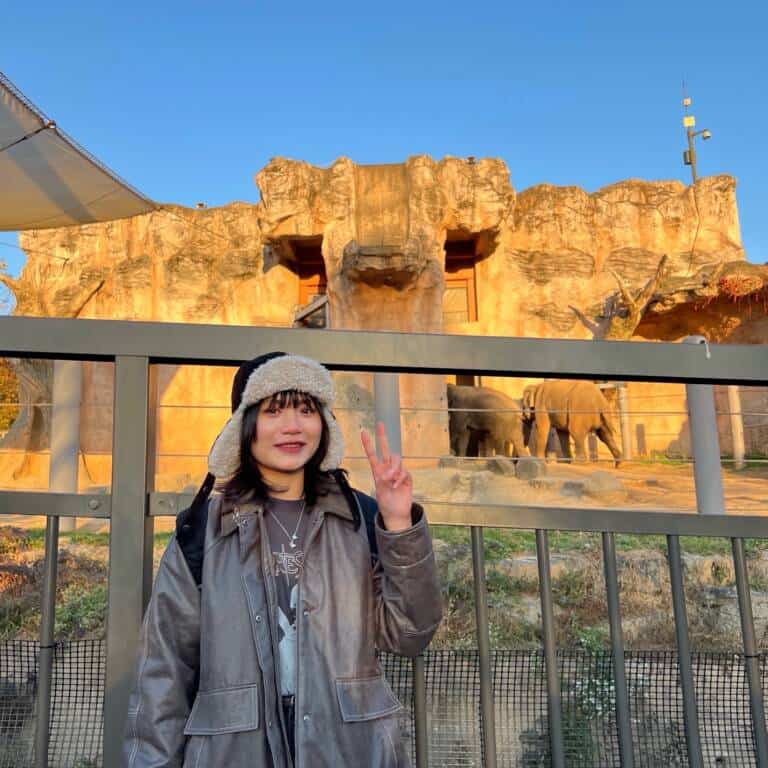

What Scholarship Recipients Say
Advice and insights from international students who successfully secured funding to study at Dongguk University.
"I was awarded the Global Korea Scholarship, a government-funded program that covers full tuition, airfare, monthly allowance, and even a year of Korean language training. It’s administered by the National Institute for International Education, and yes, it’s very competitive but totally worth it."
"Be real and intentional. Understand what the scholarship is looking for, and read the guidelines carefully. But also make sure your unique voice and purpose come through. Don’t just list achievements. Show why you want it and how you’ll make the most of it. And don’t be afraid to ask others for help or feedback."
"Fields of Study: Bachelor’s in Social Welfare & AI, Criminal Policing"
"So far, it’s been an amazing experience. Dongguk has a beautiful campus, and the professors are supportive and approachable. Seoul is such a dynamic city, and it’s been a dream living and studying here. The language can be a bit of a challenge but having a year of Korean language training really helped. I’ve also met scholars from all over the world, which has made the experience even more meaningful."
"Korea is undoubtedly one of the most advanced countries in technology and education. It is also very safe and secure. My experiences here have been truly worthwhile, and I have lived every minute of it to the fullest."
"There are lots of helpful programs like Korean language classes, buddy systems, and cultural events. The international student office helps with visas, housing, and even mental health support. There are also clubs and student communities that help you feel less alone when you’re far from home."
Frequently asked questions
Common questions about scholarships, admissions, and studying at Dongguk University.
Most Dongguk University scholarships are designed for degree-seeking (on-campus) study rather than “online-only” enrollment; for example, exchange-student scholarships are framed around studying at Dongguk and include benefits like tuition/admission fee exemptions. In the recipient stories, Jowellyn Galito mentioned taking online courses (e.g., from University of London and Yale) as preparation, but his funding (GKS) supported an in-person Global MBA at Dongguk—not an online degree.
Both exist. Many programs in Korea are Korean-taught, but Dongguk also offers English-taught options (and some departments explicitly allow “English-only” applicants). In the scholarship stories, Jowellyn said, “All of my MBA classes are in English,” because the Global MBA is designed for international students.
From the undergraduate recipient side, Malapin Vanny also described the growing availability of English-taught coursework and said they met classmates “doing incredibly well academically using only English,” while noting that GKS includes a one-year Korean language course to help students adapt.
Dongguk’s internal tuition-discount style scholarships for international students typically focus on factors like language scores and academic performance (rather than publishing a single, universal age cap). However, major external scholarships commonly used at Dongguk, especially the Global Korea Scholarship (GKS), do have age limits that depend on the track (e.g., undergraduate vs. graduate) and the year’s guidelines.
Many Dongguk scholarships are simply for “international students,” so they’re not limited to one nationality; eligibility is usually framed by your non-Korean status and admission type. The Dongguk scholarship-winner page itself shows winners from different nationalities: e.g., Malapin Vanny (Cambodia) and Jowellyn Galito (Philippines).
If you’re using GKS, nationality rules come from the Korean government (NIIED) and can be country-list-based (varies by program/year), and they also require that you (and typically your parents) are non-Korean citizens, so always verify the exact eligibility list for your cycle.
For admission, Dongguk commonly asks for proof of Korean (TOPIK) or English ability (e.g., TOEFL iBT / IELTS / TEPS), but there are exceptions (for example, certain majors may waive test-score submission, and applicants from English-speaking contexts may qualify via schooling). So, many applicants do need a test, but not everyone.
For scholarships, language scores can directly help. Dongguk publishes tuition-discount scholarships tied to official English scores and TOPIK levels, and it also offers additional scholarship benefits for higher TOPIK performance. In the recipient stories, Jowellyn said, “I took the IELTS and scored 8,” and also emphasized that while English-taught classes helped academically, daily life still benefits from Korean. Malapin likewise noted taking TOPIK and explained that the GKS pathway includes a one-year Korean language course before the degree begins.
Dongguk does not generally advertise one single “minimum GPA” that guarantees admission across all departments; acceptance is department-based and competitive. However, minimum-grade rules often show up clearly in scholarship criteria.
For example, Dongguk’s international-student scholarship policy includes GPA thresholds for maintaining tuition discounts (e.g., falling below certain GPA levels reduces or removes the discount). And for GKS (a common route for Dongguk scholarship recipients), the Korean government’s eligibility typically requires meeting an academic-performance threshold (often expressed as a percentile/CGPA equivalent in the guidelines). In the recipient stories, Malapin reported a high school GPA of 3.7/4.0, while Jowellyn shared an 82/100 GPA and added that “a high GPA isn’t the only thing that matters in scholarships.”
A strong transcript helps, but the “best background” depends on the scholarship type. For tuition-discount scholarships, Dongguk weighs factors like language ability and GPA (and for some tracks, your continued semester GPA matters for renewal). For full funding routes like GKS or SRD, you’ll typically need both academic strength and a compelling, well-supported plan.
The Dongguk winners show two useful patterns: Malapin combined strong grades (3.7/4.0) with standout achievements and advised applicants to “show” dedication through actions. Meanwhile Jowellyn was candid that “Grades weren’t my strongest point,” but said he made up for it with determination, experiences, and a clear, authentic narrative, especially in the personal statement and study plan.
Exact requirements vary by program (undergrad/grad, department, country of education), but Dongguk commonly requires official academic documents and verification (often via apostille or consular authentication) for international admissions, plus additional materials for visa processing after acceptance.
- Academic records: graduation certificate(s) and transcripts, often requiring apostille/consular endorsement depending on where they were issued.
- Country-specific verification (commonly required for some applicants, such as separate academic verification processes for certain education systems).
- Language proof if applicable: TOPIK or official English test scores (unless you qualify for an exception).
- Visa-related documents after acceptance: Dongguk notes that embassies/immigration may request items like a Graduation Certificate and Verification of Deposit (proof of funds), plus passport/residence documents and other standard D-2 visa paperwork.
- Scholarship application materials: for GKS in particular, Malapin warned about rushing “translations” and said documents may need to be “consular-authenticated,” while Jowellyn highlighted polishing the personal statement and study plan and tracking “document requirements” carefully.
Dongguk offers a wide range of programs across humanities, social sciences, business, law, education, arts/film, natural sciences, and engineering/AI-related fields, plus specialized and interdisciplinary options (e.g., fintech/blockchain, biomedical/medical-device-related tracks). There are also medicine- and biomed-related offerings across campuses (with some medicine tracks conducted outside the main Seoul campus depending on the department).
If you want an English-taught business pathway, Dongguk’s Global MBA is a prominent example (and scholarship recipients have confirmed it is taught in English). For STEM, Dongguk lists numerous engineering and AI-related majors and interdisciplinary programs, and for humanities, you’ll find classic departments (history, philosophy, literature) alongside modern fields like media communication.
Yes, Dongguk lists an application fee for admissions (commonly shown as KRW 100,000 for most departments, with certain exceptions). Note that scholarship routes can differ: in the recipient stories, Malapin said, “The scholarship application process is completely FREE of charge,” referring to GKS.
There are many degrees that are open to international students right now — find yours.
About the Author: Hyun Lee


Leave A Comment