
How Ernesto Rivera, a Bolivian Scholar, Secured a Fully Funded PhD in Computer Science at Tokyo Institute of Technology Through the Japanese Government (MEXT) Scholarship
University: University of Geneva; Tokyo Institute of Technology (now Institute of Science Tokyo)
Degree: Bachelor’s in Computer Science; Master’s in Computer Science; PhD in Computer Science
Previous Education: Bachelor’s in Computer Science – University of Geneva, Switzerland (2000–2003); Master’s in Computer Science – University of Geneva, Switzerland (2003–2004)
Scholarship: Simón I. Patiño Scholarship; Japanese Government (MEXT) Scholarship – Fully Funded (Full Tuition, Monthly Living Stipend, Round-Trip Airfare)
Social Media
LinkedIn: linkedin.com/in/rivera-ernesto/

The Journey
My name is Ernesto Rivera, and I am from La Paz, Bolivia. I am a computer scientist. I studied at the University of Geneva in Switzerland (BSc and MSc in Computer Science) on a Patiño scholarship. Then I did my PhD in Computer Science at the Tokyo Institute of Technology (now part of the Institute of Science Tokyo) as a Japanese Government (MEXT) scholar, from 2007 to 2011.
To be honest, my main reason for applying was Asia. In Switzerland, I had lived what a scholarship abroad can give you: studying what you love while learning a new language and a new culture, with a whole continent around you to explore. I wanted to live that again, this time in Asia. Japan let me do it while studying what I like most, computer science.
After Japan, I spent many years building iPhone, iPad, and Mac apps, working remotely from Bolivia. Since last year, my focus has changed a lot. Today I put my computer science, including the AI tools I like to build and use, at the service of real-world projects close to home. I live in Mallasa, just outside La Paz. There I run Barranco, a community cultural space, and work on open projects that others can copy: a protocol for volunteers, a model for small ecotourism routes, and a sustainability registry. I also maintain Desks, an open-source way of working with several AI models on everyday projects.
Simón I. Patiño Scholarship & the MEXT Scholarship Details
Japanese Government (Monbukagakusho / MEXT) Scholarship for graduate study, through the Embassy of Japan in Bolivia
- Institution: Tokyo Institute of Technology (since 2024, Institute of Science Tokyo), Graduate School of Decision Science and Technology. PhD in Computer Science, 2007–2011
- What it covered: a monthly stipend for living costs, full tuition, and the round-trip flight to Japan. I no longer remember the exact amount, and it has changed since then, so check MEXT's current figures.
Were You Offered Any Other Scholarships?
Yes. For my BSc and MSc, I had the Simón I. Patiño Scholarship (Fondation Simón I. Patiño, Geneva) to study Computer Science at the University of Geneva. The foundation supports Bolivian students. When I received it, around 2000, it was only for young Bolivian men starting undergraduate studies at the University of Geneva or the EPFL in Lausanne. It has changed a lot since then. As far as I know, today it mostly gives financial help for ongoing studies, including studies inside Bolivia. It reaches more people that way, even if each scholarship is less of an adventure than mine was. If you are Bolivian, check the foundation's current terms on its website.
I also applied to Germany's DAAD scholarship between my two MEXT applications. I did not get it, but it gave me something important: see question 8.
Educational Background
- Secondary school: Colegio San Ignacio de Loyola, La Paz, graduated 1998
- BSc in Computer Science, University of Geneva, 2000–2003
- MSc in Computer Science, University of Geneva, 2003–2004
Outside the classroom, I represented the University of Geneva at the IBM-ACM SWERC programming contest. In summer 2004 I was a CERN Summer Student, building web and automation systems for the software infrastructure group of the LHC. In 2006 I was a Google Summer of Code developer. Studying abroad in French, and working in international teams, prepared me for a doctorate abroad as much as my grades did.
How Did You Prepare to Apply to the University of Geneva & the Institute of Science Tokyo?
I applied through the embassy route: you apply to the Embassy of Japan in your country, it pre-selects candidates, and MEXT in Tokyo makes the final decision. (There is also a university route, where a Japanese university nominates you.) In the embassy route, you are pre-selected for the scholarship first, and you look for a university second.
Once I was pre-selected, I searched for labs in Japan that worked on e-learning. I wrote to their professors with my research proposal and asked if they would accept me. Several answered, and some sent me letters of acceptance, which I forwarded to the embassy. Then I ranked them: the Tokyo Institute of Technology first and Hiroshima University second. MEXT placed me at my first choice, Tokyo Tech. It turned out very well: Tokyo Tech is one of Japan's top universities for science and technology, and it is in Tokyo, the city I wanted to live in.
The whole process took about a year. I was pre-selected in mid-2006, received MEXT's final answer in February 2007, and started in Japan that same year.
How Did You Find Information About Simón I. Patiño Scholarship & the MEXT Scholarship and University of Geneva & the Institute of Science Tokyo?
I went in person to the embassies in La Paz of the countries where I wanted to live and study, first Japan and then Germany. I asked for the forms, requirements and deadlines. For the Patiño scholarship, my mother knew about it, because she had worked with Patiño alumni.
Did You Take Any Standardized Tests? If So, How Did You Prepare for Them?
None were required for my application. Being able to communicate in English was enough. Once at Tokyo Tech, I had to take the TOEIC.
How Did You Prepare to Apply for the Simón I. Patiño Scholarship & the MEXT Scholarship?
My answer is: the research proposal. I applied to MEXT twice. The first time, I did not include a research proposal, because it was not clearly stated as required. I was not called for the next stage.
Then I applied to Germany's DAAD scholarship, which did ask for a proposal, so I wrote one: nine pages. I did not get the DAAD, but I now had a solid proposal, and with it I applied to MEXT again. This time it worked.
How is Your Experience at the University of Geneva & the Institute of Science Tokyo?
Great, and mostly because of my professor. In MEXT, the professor who hosts you shapes your whole experience. Mine gave me a lot of freedom. For example, he let me study intensive Japanese for a full year, when only six months were expected. Friends in other labs had very strict professors who made them come in even on weekends and did not let them attend Japanese classes at all.
My research was about making lecture videos easier to learn from, with automatic summaries and easy navigation between the summary and the video, also on mobile devices. It received the Dean's Research Achievement Award of my graduate school.
How Do You Rate the University of Geneva & the Tokyo Institute of Technology (now Institute of Science Tokyo) Academically?
10 out of 10. It is one of Japan's top universities for science and technology, and my lab gave me both support and freedom. The infrastructure was great too: labs, football ground, swimming pool, gardens, and lots of activities for foreign students.
How Does the University of Geneva & the Institute of Science Tokyo Support International Students?
There was a special office just for foreign students, which helped with everything: housing, paperwork, anything you needed.
Are Your Classes Conducted in English or Japanese?
A PhD in Japan is research-based, so as a PhD student I had no classes, only lab meetings where each student presented their research in progress. Japanese students presented in Japanese, and foreigners usually in English. Japanese was not required for the PhD.
What Did You Pursue After the Simón I. Patiño Scholarship & the MEXT Scholarship?
Work. I had started making iPhone apps in 2008, when Apple opened the iPhone to developers, during my PhD. After graduating, I led iOS development at CyberAgent in Tokyo. After Japan, I kept building apps for iPhone, iPad and Mac, always working remotely from Bolivia, including work on Camera+, a popular photo app. Since last year I have changed focus to the real-world projects described in question 1.
Would Potential Students Have Any Problems Not Knowing Japanese?
Academically, not really. But you would miss a lot of Japanese life and culture, and you would be very limited in daily life. I would never recommend ignoring the local language to anyone living abroad. Living only in English is like eating at a Japanese restaurant with only the English menu: you get a small part of what is on offer, and miss most of the variety. Besides my Japanese classes, I studied on my own with Remembering the Kanji and Pimsleur Japanese, both great choices.
What Do You Think Made Your Application Stand Out?
Being told no first. After my first application, I was told at the embassy something I still remember almost literally: they had never given a scholarship to a computer scientist, and did not think they ever would, because they gave scholarships to professions that could contribute to Bolivia. That was 2006, and things have surely changed since. Back then, scholarships went to fields seen as more useful for a developing country: agriculture, civil engineering, medicine.
So I wrote my proposal entirely for countries like Bolivia. Its title was "Democratizing e-learning solutions for developing countries". It worked: as far as I know, I became the first computer scientist from Bolivia to receive the MEXT scholarship.
What Would You Have Done Differently if You Were Going Through the Process Again?
Nothing, I think. It went great. If anything, I would have sent a research proposal the first time, even though it was not clearly required. But without that first "no", I might never have written the proposal that got me in.
What Advice Would You Give Those Looking to Apply for a Similar Scholarship?
- Write a strong research proposal, even if it is not required. Mine made the difference, and one good proposal can be reused for several scholarships.
- Make your proposal about your country, not only about you. Show how your field will help where you come from. That is what worked for me.
- A "no" is information. Ask why, and answer it. When I was told computer science would not help my country, I wrote a proposal entirely about how it would.
- Plan for about a year. From pre-selection to final answer took me from mid-2006 to February 2007. Check the embassy's deadlines early.
- Apply again. I got MEXT on my second try, and a scholarship I did not get (DAAD) is what made the second try possible.
- Go to the embassy (today much of it is also online) and ask for the forms, requirements, and deadlines.
- Choose your professor carefully. In MEXT, your supervisor shapes your whole experience. If you can, ask their current students what the lab is like.
- Learn the language, even if your program does not require it. It opens the country to you.
- Know your real reason. Mine was to live in Asia while studying what I love. That reason carried me through two applications.
Want to submit your
scholarship journey?
Submit Your Story Here!
More Scholarship Recipients
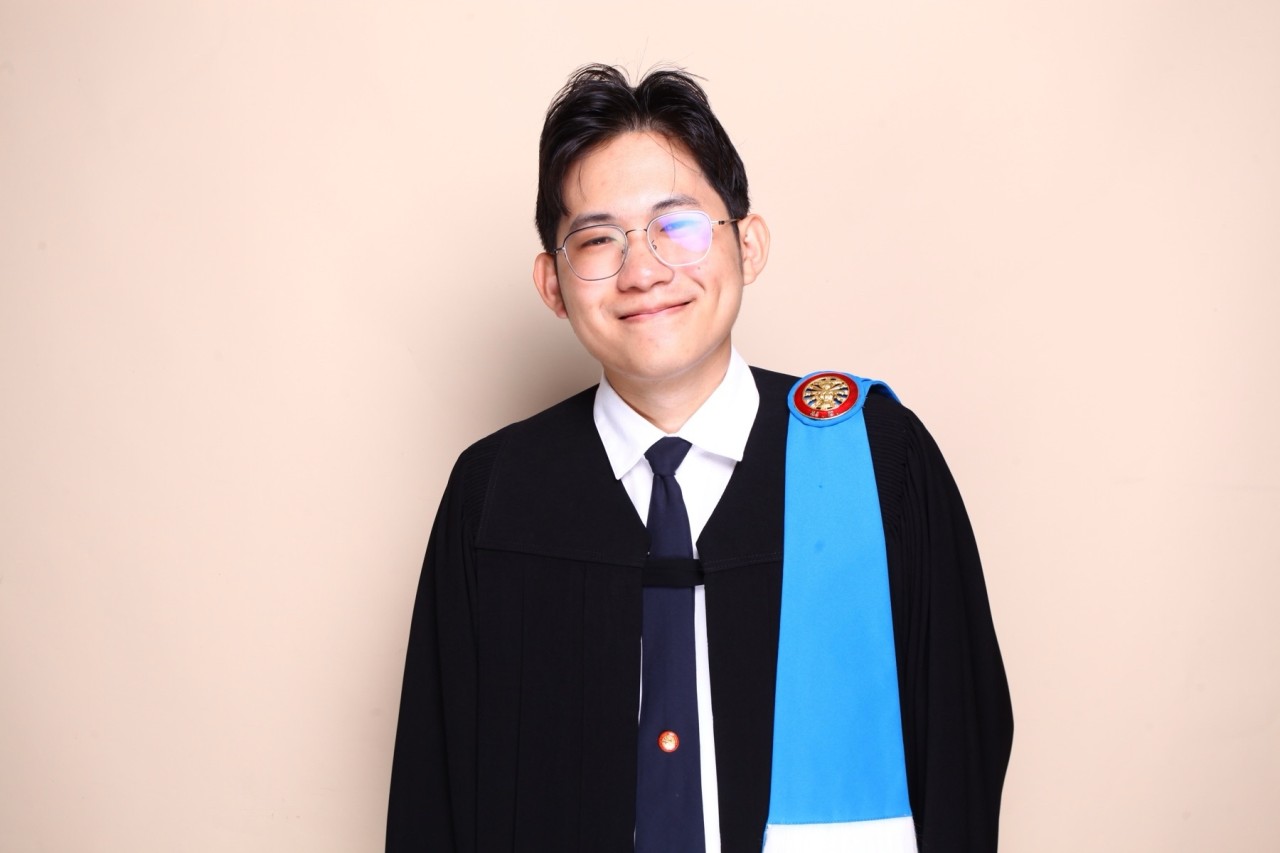
My name is Chay Chanpanha, and I am from Cambodia. My educational journey has taken me across Southeast Asia and East Asia, .... Read more
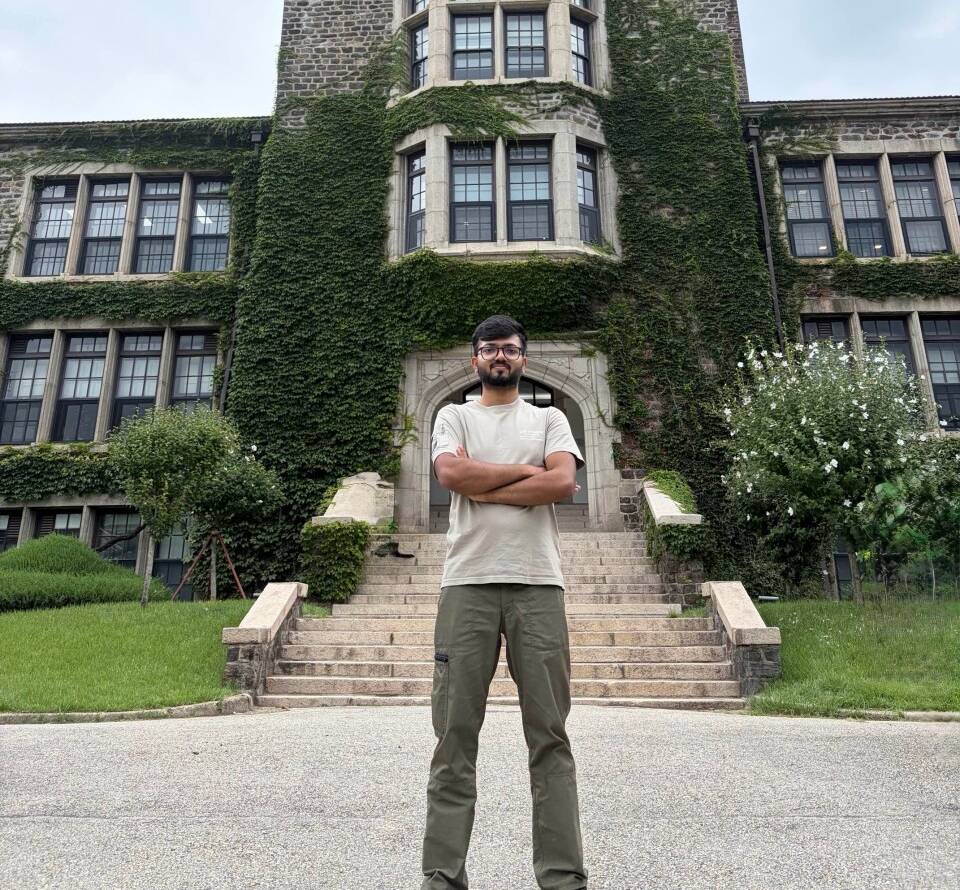
My name is Aman Kumar, and I am from Bihar, India. I am currently pursuing a master's degree in International Trade, Finance .... Read more
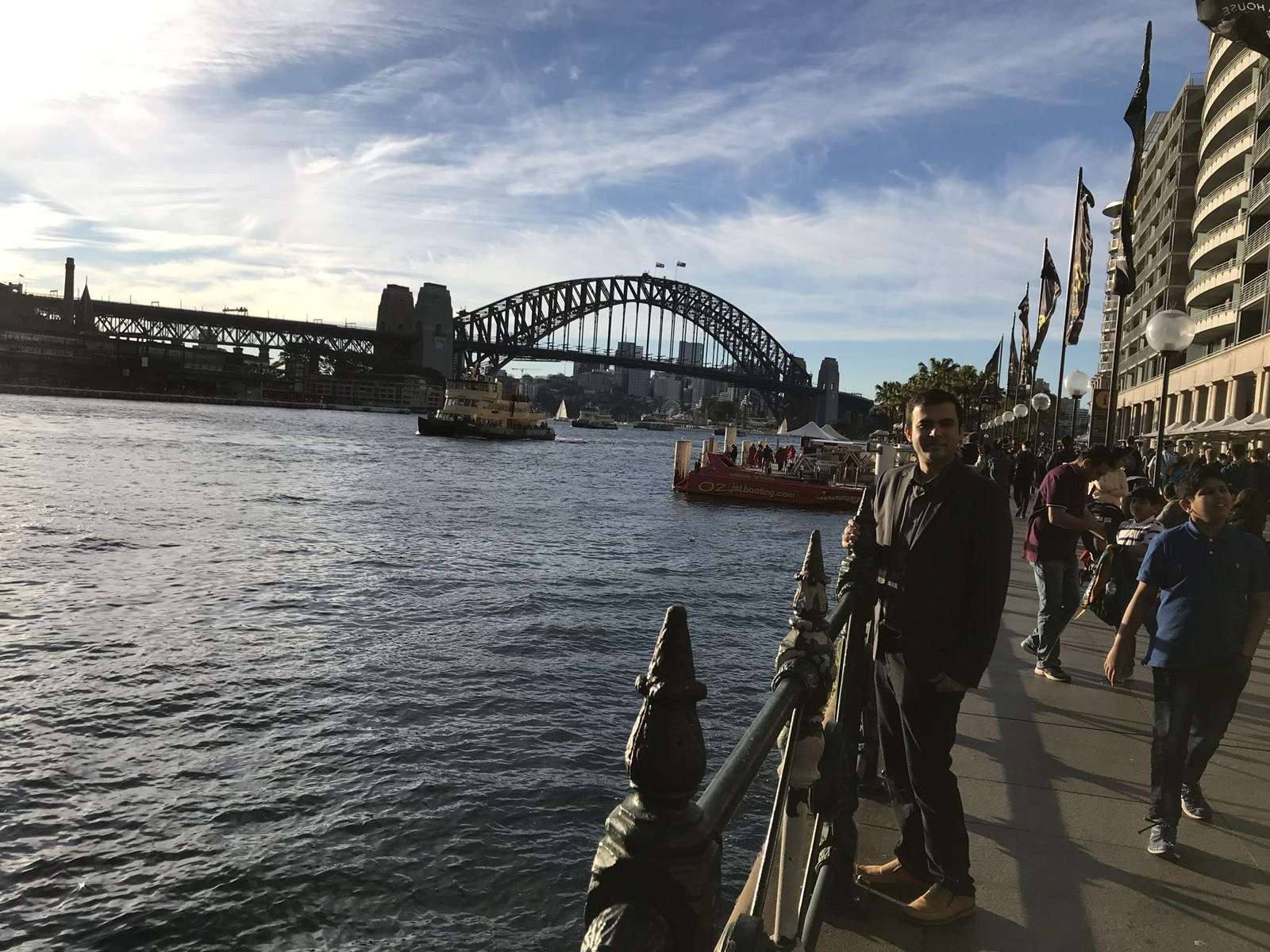
My name is Syed Shah Zeb, and I am from Pakistan. My professional journey has been shaped by a simple but enduring question: .... Read more
Leave A Comment